In precision manufacturing, automotive assembly, aerospace production, and cleanroom environments, surface contamination is the enemy. A single oversized particle, a trace of residual oil, or a fiber shed from the wrong wipe can compromise a finished product, trigger a costly recall, or shut down a production line.
Industrial wiping cloths are not interchangeable commodities. They are engineered solutions — each material, weave, and edge treatment designed for specific contamination profiles, surface sensitivities, and operational environments.
This comprehensive guide walks you through every classification of industrial wiping cloth available today: their material compositions, structural characteristics, ideal applications, and how to select the right wipe for your specific industry — whether you operate a ISO Class 5 cleanroom, a high-volume CNC machining center, or a food processing facility.
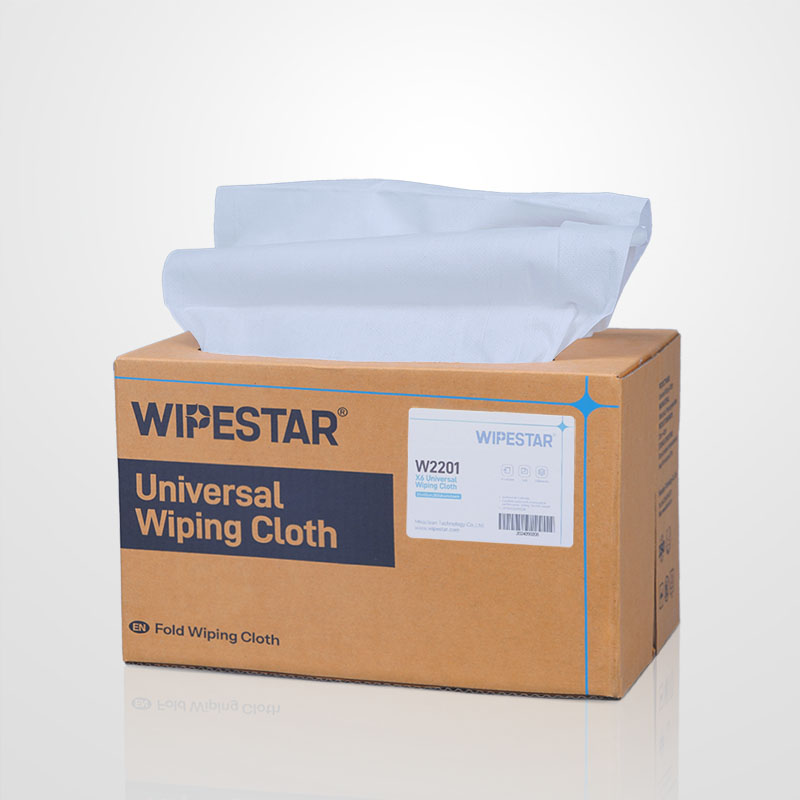
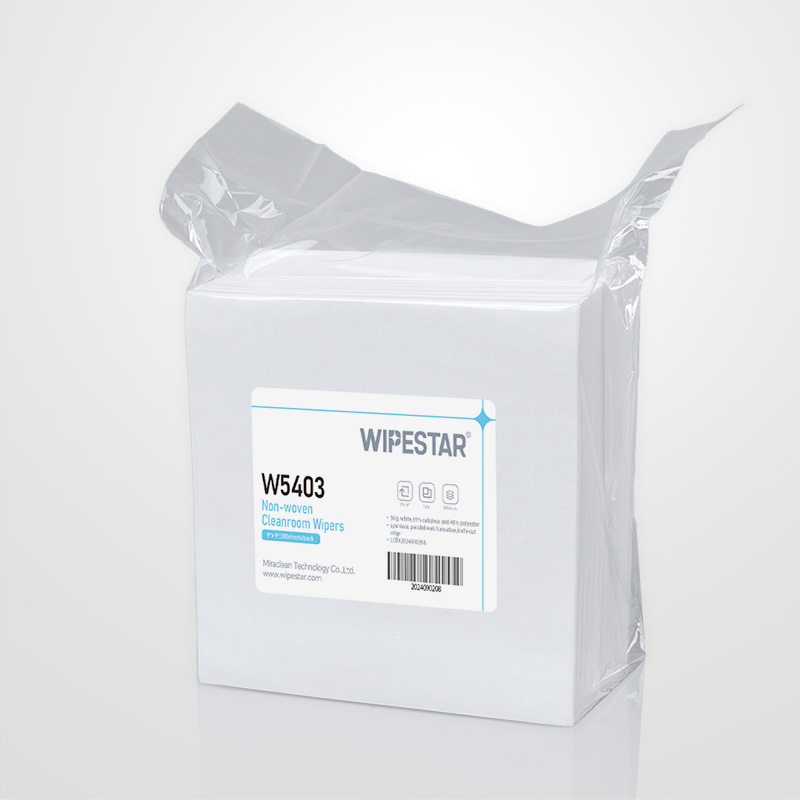
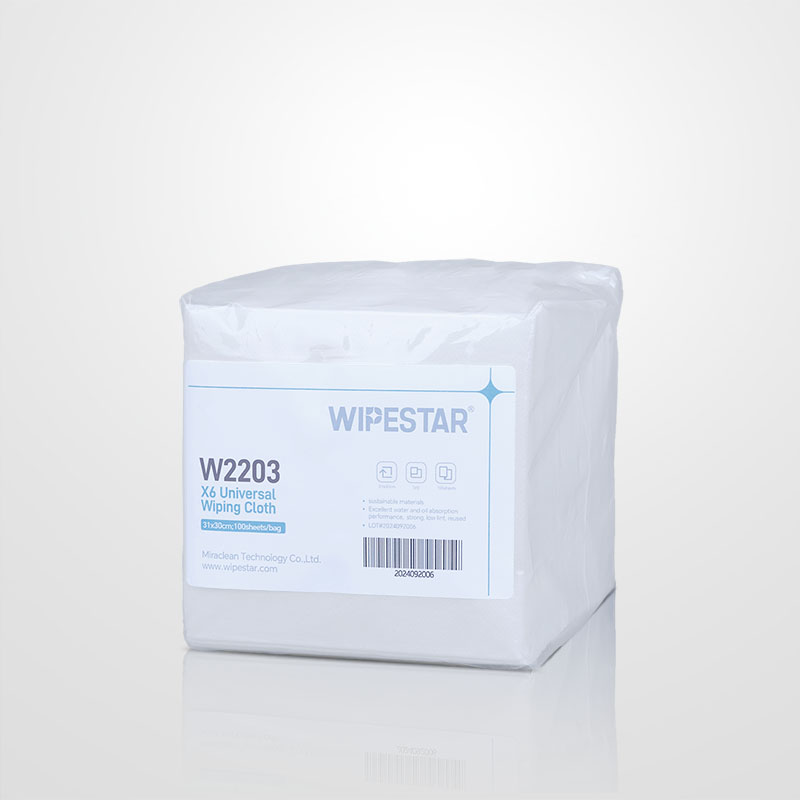
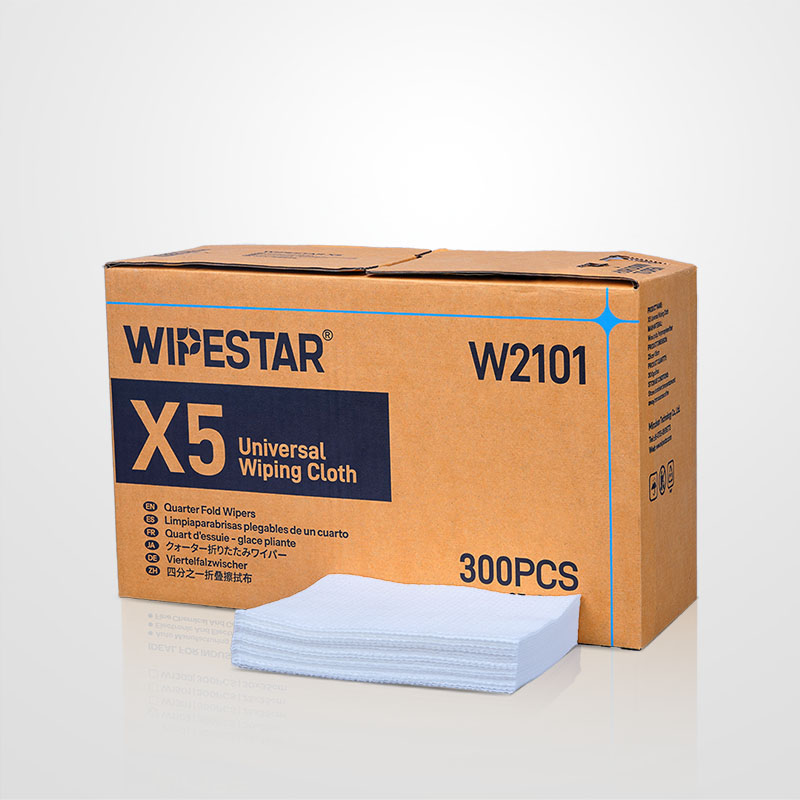
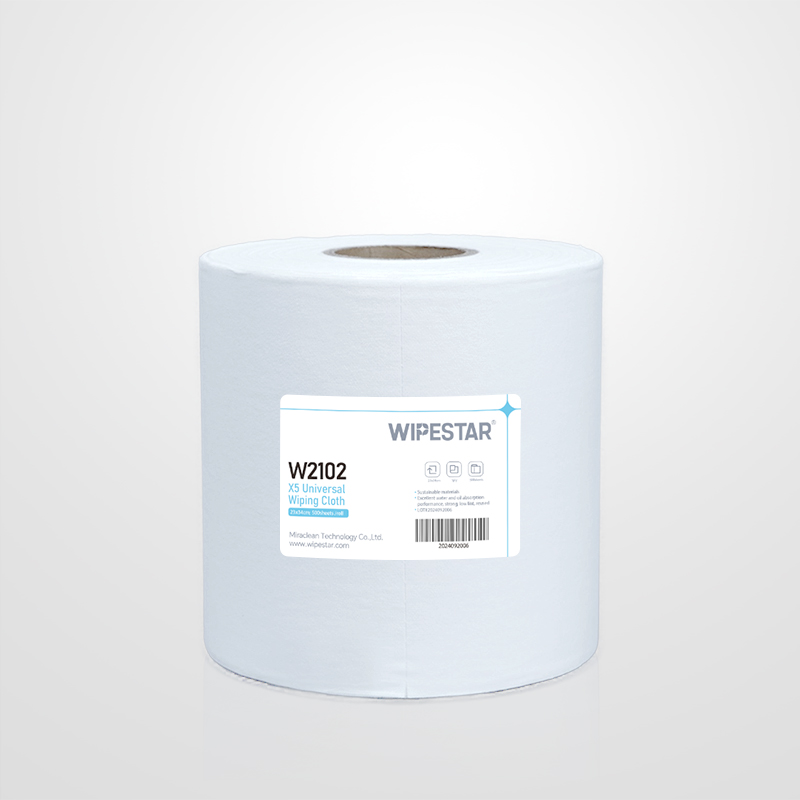
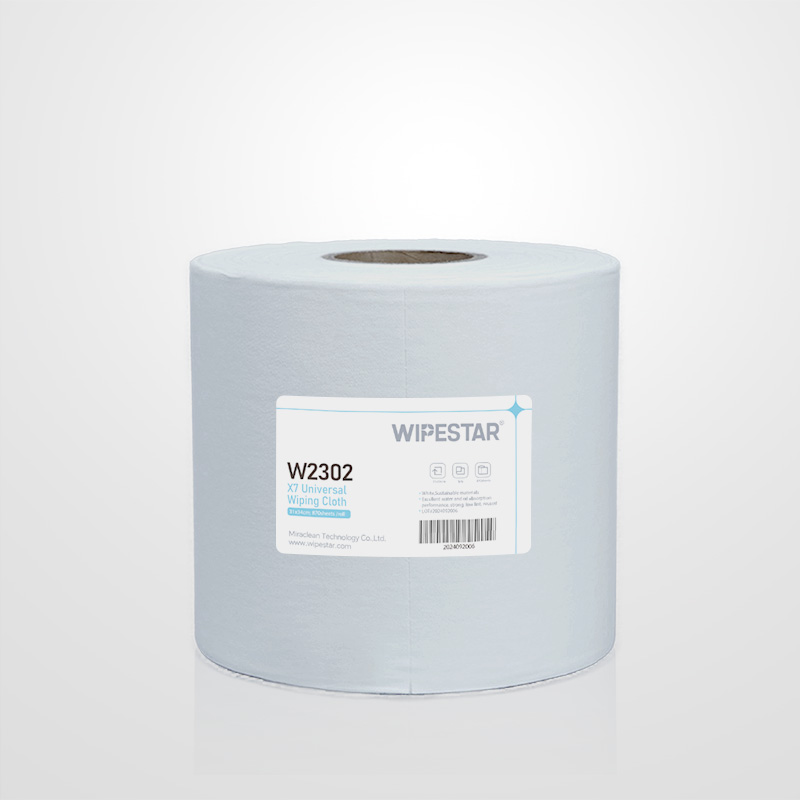
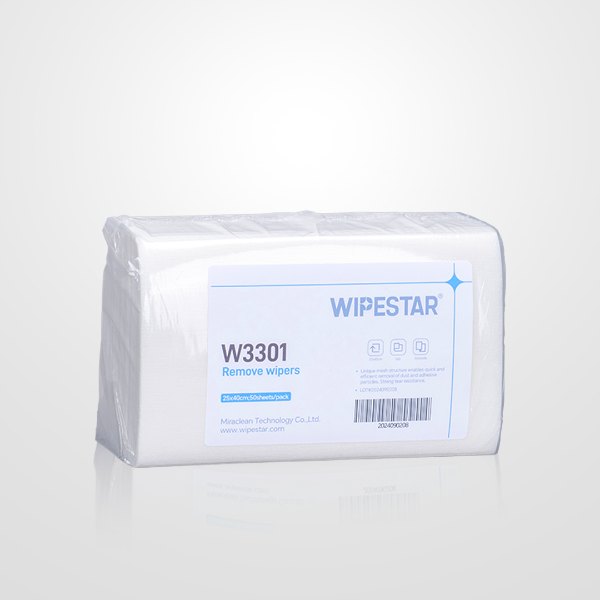
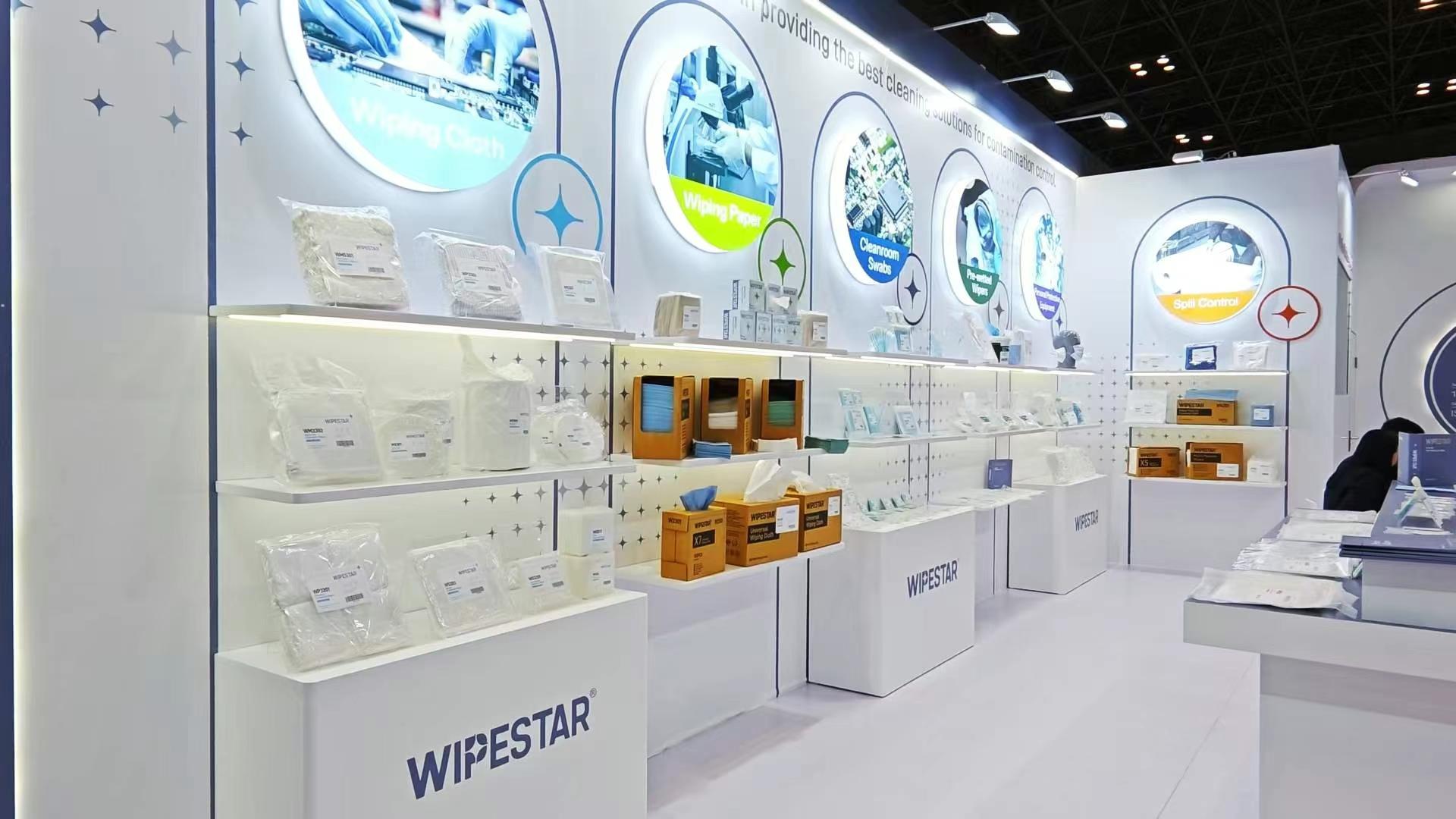
WIPESTAR complete range of industrial wiping cloths for manufacturing, cleanroom, and maintenance applications”
Industrial wiping cloths are high-performance fabric materials manufactured under controlled conditions for the systematic removal of contaminants — including dust, oil, grease, coolants, solvents, and biological residues — from surfaces in regulated and non-regulated environments.
Consistently manufactured to exact GSM (grammage) and material specifications
Tested for particle release and fiber shedding under standard conditions
Chemical-compatible with a defined range of solvents and cleaning agents
Sized and packaged for industrial dispensing systems (flat-stack, quarter-folded, roll, or pouch)
Classified by cleanroom compatibility where required (ISO Class 5 through ISO Class 9)
Part 1: Industrial Wiping Cloth Classification by Material
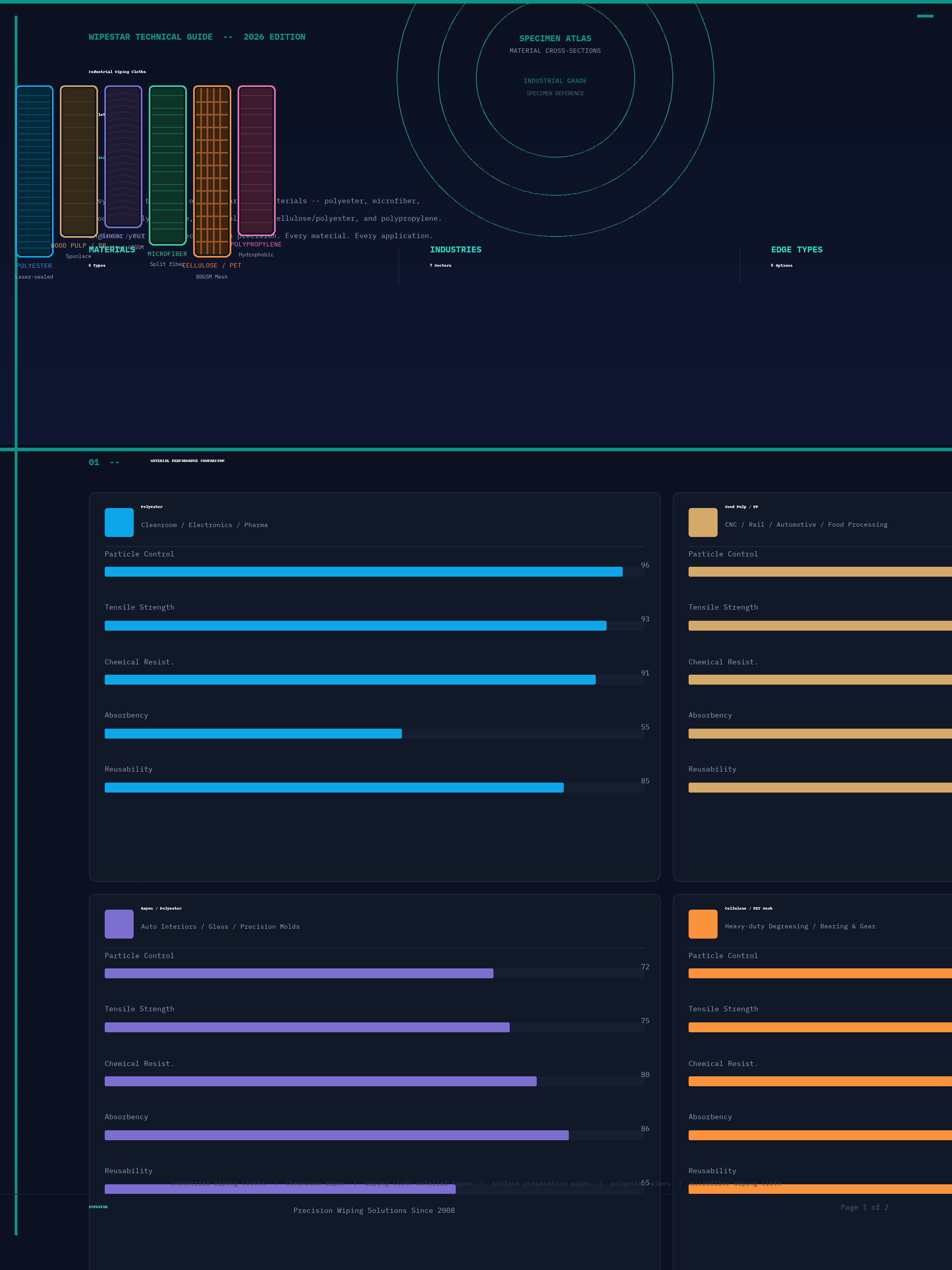
The wipe material determines approximately 80% of a wipe’s performance characteristics. Below are the six primary material categories used in industrial wiping applications today.
1. Polyester Wiping Cloths
Best for: Cleanrooms, electronics assembly, pharmaceutical manufacturing, precision optics
Polyester is the dominant material in cleanroom and precision manufacturing wiping applications. Its closed synthetic fiber structure resists microbial growth, withstands repeated exposure to IPA, acetone, and most industrial solvents, and — when manufactured with sealed edges — generates extremely low levels of particles and extractables.
Cleanroom grades: Polyester wipes are available with laser-sealed, ultrasonic-sealed, or heat-sealed borders. The sealing method determines the cleanroom ISO class for which the wipe is rated:
Laser-sealed edge → ISO Class 5–6 (Class 100–1,000)
Best for: General industrial manufacturing, CNC machining, rail transportation, automotive maintenance, screen printing, food processing
This blended non-woven fabric combines the high liquid-retention capacity of wood pulp with the tensile strength, chemical resistance, and dimensional stability of polypropylene. It is the workhorse wipe for high-volume, daily-use industrial wiping tasks.
Material composition: Typically 50% wood pulp (for absorbency) + 50% polypropylene (for structure and chemical resistance)
Construction: Spunlace (hydroentangled) non-woven process creates a soft but strong fabric with a characteristic stone pattern texture that increases surface friction for effective mechanical cleaning.
Performance highlights:
Exceptional fluid absorption — rapidly wicks water, oil, and coolants
Rapid release — releases absorbed liquid efficiently when wrung or pressed
Reusable — can be laundered and used multiple times (contamination-dependent)
Chemical compatibility — works with IPA, acetone, mineral spirits, and common industrial solvents
Surface safe — soft enough not to scratch machined metal or painted surfaces
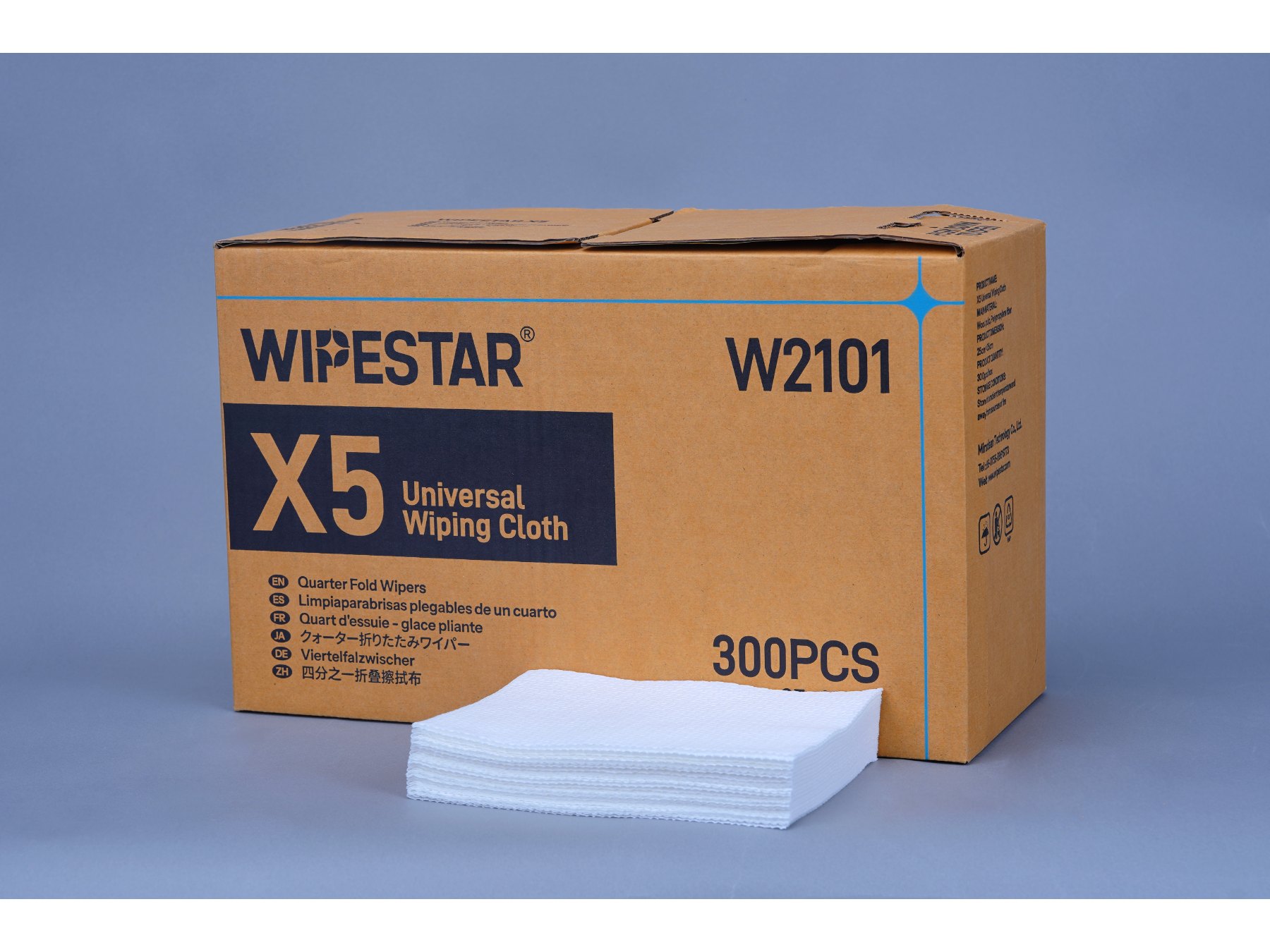
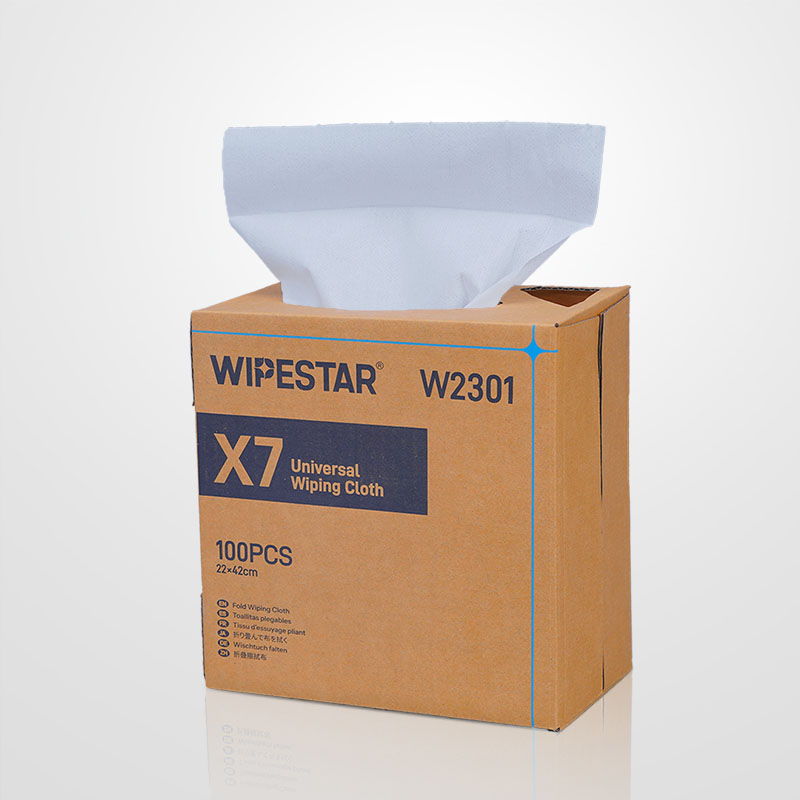
W2101 Universal Wiping Cloth (Wood pulp/Polypropylene, 25cm x 35cm, Stone pattern, Spunlace non-woven) — ideal for CNC machining, rail transport, and automotive manufacturing
WIPESTAR products in this category:
W2101Universal Wiping Cloth (X5) — Wood pulp/PP, 25cm x 35cm, Stone pattern, 300 sheets/box
Industry applications: Bearing and gear transmission equipment manufacturing | Rail transportation equipment manufacturing and maintenance | Automotive manufacturing and maintenance | CNC machine tool coolant and chip management | Screen printing ink and residue removal | Food processing surface sanitation
3. Rayon / Polyester Wiping Cloths
Best for: Surface-sensitive precision applications, automotive interiors, mirror roller production, precision mold manufacturing, glass and ceramics production
Rayon/polyester blends deliver a softer, more flexible fabric than wood pulp/PP wipes while maintaining strong absorbency and chemical compatibility. Rayon provides the absorbency and softness; polyester adds dimensional stability and tear resistance.
Material composition: Typically 50% Rayon + 50% Polyester
Construction: Knitted (interlock) or woven construction — knitted versions offer superior stretch recovery and surface conformability for curved or irregular surfaces.
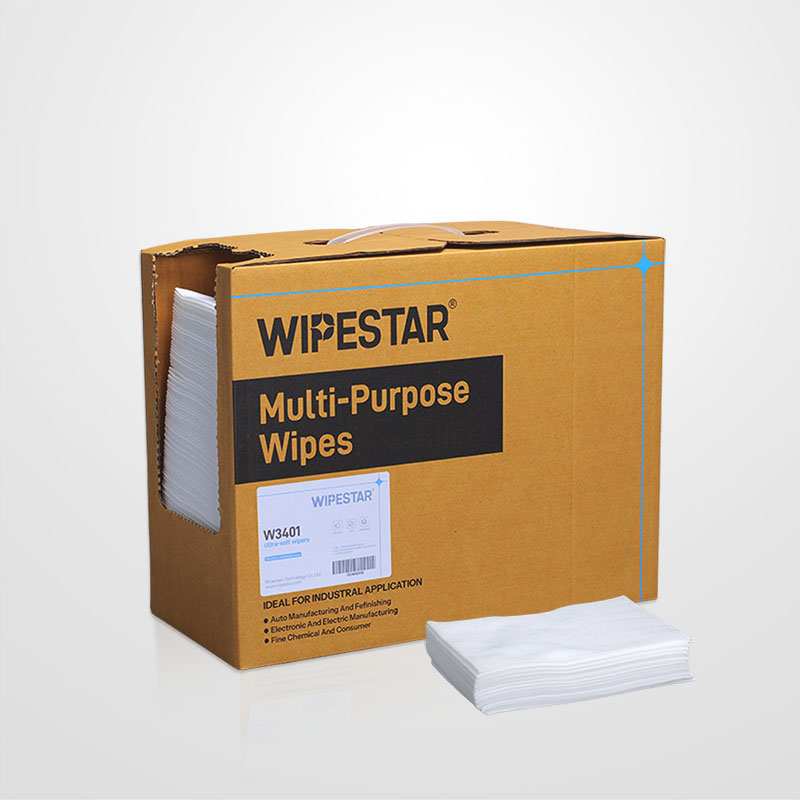
W3401 Ultrasoft Surface Preparation Wipe (50% Rayon / 50% Polyester, 65 GSM, 25cm x 30cm, Knitted plain, Quarter-folded) — gentle on sensitive surfaces like automotive interiors and precision optics
WIPESTAR product example: The W3401 Ultrasoft Surface Preparation Wipe (50% Rayon / 50% Polyester, 65 GSM, 25cm x 30cm, Quarter-folded, Plain-knit, 240 sheets/box) is formulated for surface-sensitive precision manufacturing — including mirror roller production, precision mold manufacturing, and glass and ceramics processing.
Industry applications: Rail transportation equipment manufacturing and maintenance | Automotive interiors | Mirror roller and rolling mill production | Precision mold manufacturing | Glass and ceramics production
4. Cellulose / Polyester Wiping Cloths
Best for: Heavy-duty industrial degreasing, oil removal, tough stain cleaning, bearing and gear transmission equipment maintenance
Cellulose/polyester blends are the heavyweight champions of industrial wiping. Cellulose delivers extraordinary liquid-holding capacity (cellulose fibers can retain many times their own weight in water or oil), while polyester adds structural integrity and durability.
Key differentiator: Mesh surface texture — many cellulose/polyester wipes feature a mesh pattern on one or both surfaces, which increases mechanical friction for aggressive scrubbing and scraping of stubborn residues.
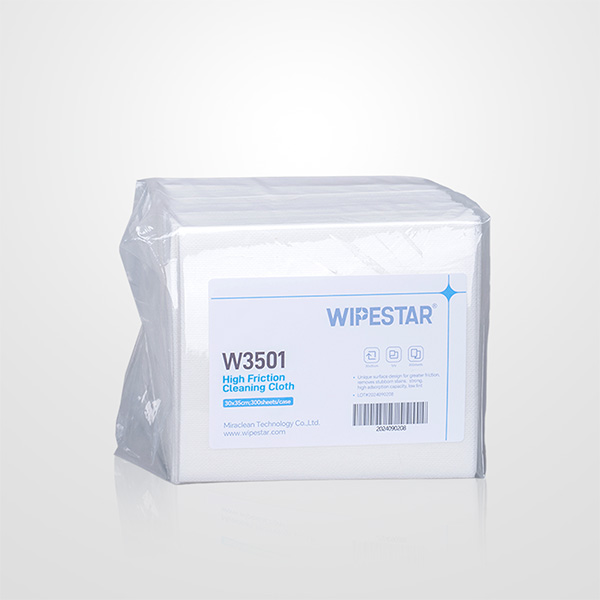
W3501 Heavy Duty Surface Preparation Wipe (Cellulose/Polyester, 80 GSM, 30cm x 35cm, Mesh pattern, Knitted) — high-friction surface for aggressive oil and grease removal
WIPESTAR product example: The W3501 Heavy Duty Surface Preparation Wipe (Cellulose/Polyester, 80 GSM, 30cm x 35cm, Mesh pattern, Knitted, Quarter-folded, 300 sheets/box, 4 boxes/case) is the go-to wipe for bearing and gear transmission equipment, rail transportation maintenance, and automotive manufacturing — anywhere tough oil stains demand high-friction mechanical removal.
Performance highlights:
Maximum liquid retention — holds large volumes of oil, grease, and coolant
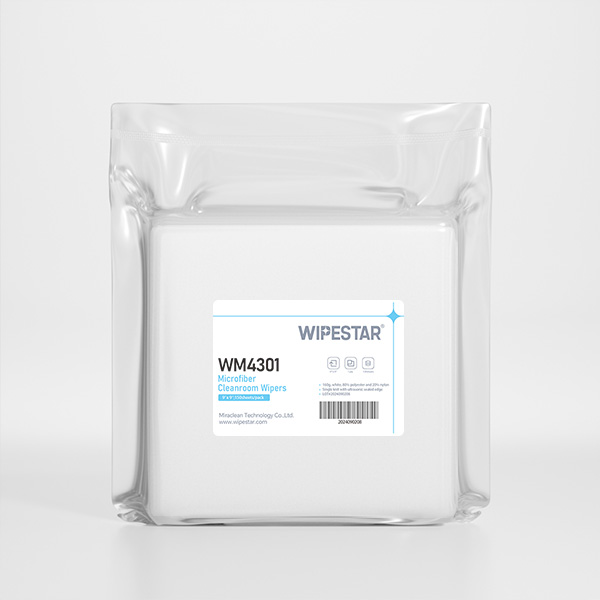
Microfiber wipes are constructed from ultra-fine synthetic fibers — typically split polyester and polyamide (nylon) — that are processed during manufacturing to create millions of microscopic hooks or wedges within each fiber bundle. This split microfiber structure is what sets them apart from conventional wipes.
Split microfiber structure — microscopic hooks capture particles and liquids deep within the wipe rather than redistributing them across the surface
Key performance characteristics:
Characteristic
Microfiber vs. Conventional Wipe
Particle capture
3-5x better than standard polyester
Absorbency
Up to 8x own weight in water
Surface contact
~95% surface contact vs. ~30% for woven cotton
Durability
200+ wash cycles possible
Chemical compatibility
Water-based and solvent cleaning agents
How microfiber works: The split fibers create a capillary action that draws particles and liquids into the wipe rather than pushing them across the surface. This makes microfiber the preferred choice for critical surface cleaning where contamination must be captured, not redistributed.
6. Polypropylene (PP) Wiping Cloths
Inherently hydrophobic. Preferred for aqueous cleaning agents, acid/base environments. Low extractables. Thermally stable (autoclavable to 121C). Chemically inert. Available with sealed edges for ISO-rated cleanrooms.
Part 2: Edge Type Classification
Edge Type
Method
Particles
Best ISO
Use Case
Cut Edge
Mechanical knife
Moderate-High
Non-ISO / ISO 9
General industrial, CNC, transport
Heat-sealed
Thermal fusion
Low
ISO 7-8
General cleanroom, pharma, food
Laser-sealed
Precision laser
Very Low
ISO 5-6
Semiconductor, electronics, aerospace
Ultrasonic (Narrow)
Ultrasonic welding
Ultra Low
ISO 5-6
Optics, precision assembly, medical
Ultrasonic (Wide)
Wide ultrasonic
Very Low
ISO 6-7
Heavy industrial cleanrooms, aerospace
Part 3: Structure Classification
Structure
Process
Characteristics
Best For
Spunlace
High-pressure water jets
Soft, strong, good absorbency
Universal wiping, surface prep
Knitted
Interlocking loops
High durability, excellent absorbency, stretch recovery
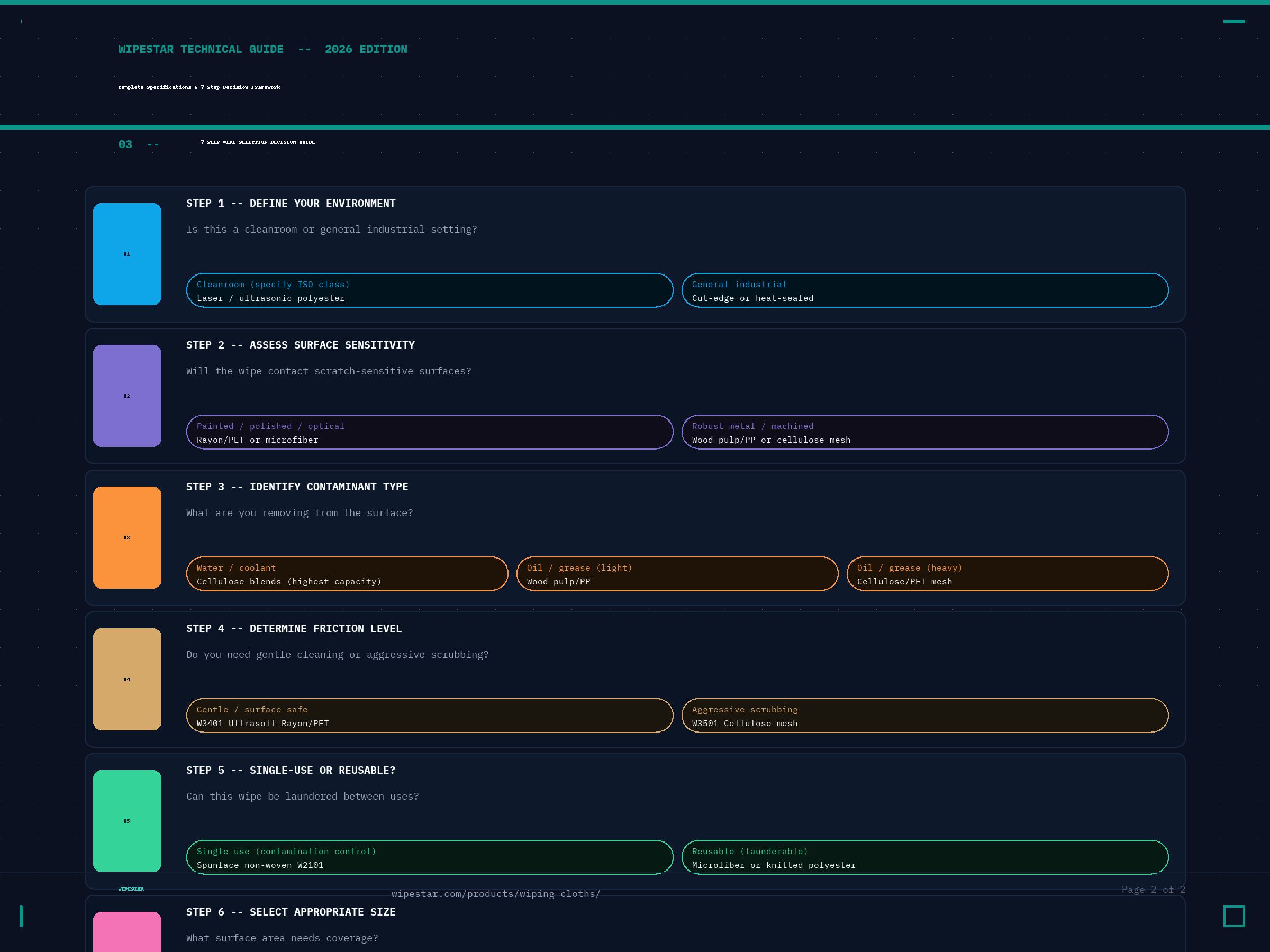
Choose reusability — Reusable (microfiber 200+ cycles, knitted polyester 50+ cycles) vs. Single-use (W2101 spunlace for contamination control)
Select size — Small precision areas 4″-6″ (cleanroom wipes) | Medium 9″ (surface prep) | Large 12″+ (universal cloths, oil rolls)
Verify chemical compatibility — IPA/acetone/solvents (all WIPESTAR materials compatible) | Strong acids/bases (PP preferred) | Food-contact (confirm with supplier)
Part 7: Featured Products
Product
Material
GSM
Size
Structure
Packaging
Best For
W2101 Universal Wiping Cloth
Wood pulp/PP
—
25x35cm
Spunlace, Stone
300/box
CNC, Rail, Automotive, Screen Printing
W3401 Ultrasoft Surface Prep
Rayon/PET
65
25x30cm
Knitted, Plain
240/box, 6/case
Auto Interiors, Glass, Molds, Ceramics
W3501 Heavy Duty Surface Prep
Cellulose/PET
80
30x35cm
Knitted, Mesh
300/box, 4/case
Heavy-duty Degreasing, Bearing & Gear
FAQ (SEO Schema Ready)
Q: What is the difference between cut-edge and sealed-edge wiping cloths?
Cut-edge wipes are mechanically trimmed and generate loose fibers during use. Sealed-edge wipes (laser, ultrasonic, or heat-sealed) fuse the fabric edges during manufacturing, dramatically reducing fiber shedding. For any cleanroom or precision application, sealed-edge wipes are essential.
Q: What does GSM mean for industrial wiping cloths?
GSM (grams per square meter) measures the areal density — or thickness/weight — of the wipe fabric. Higher GSM wipes (e.g., 80 GSM W3501) are thicker, more absorbent, and more durable, ideal for heavy-duty degreasing. Lower GSM wipes (e.g., 65 GSM W3401) are softer and more flexible, preferred for surface-sensitive precision cleaning.
Q: Which wiping cloth material is best for heavy oil and grease removal?
Cellulose/polyester mesh wipes — like the WIPESTAR W3501 Heavy Duty Surface Preparation Wipe (80 GSM, Mesh pattern) — are purpose-built for heavy oil and grease removal. The mesh texture increases mechanical friction while the high cellulose content provides extraordinary fluid retention.
Q: Can WIPESTAR wiping cloths be used with isopropyl alcohol (IPA)?
Yes. All WIPESTAR wiping cloth materials — polyester, rayon/polyester, cellulose/polyester, polypropylene, and wood pulp/polypropylene — are fully chemically compatible with isopropyl alcohol, acetone, and most common industrial solvents.
Q: How many times can industrial wiping cloths be reused?
Reusability depends on the wipe material, contamination profile, and wash protocol. Microfiber wipes can withstand 200+ wash cycles. Knitted polyester wipes are reusable for 50+ cycles. Spunlace non-woven wipes like the W2101 are generally designed for single-use in contamination-critical applications.
Q: What cleanroom ISO classes do WIPESTAR cleanroom wipes cover?
WIPESTAR cleanroom wipes are available for ISO Class 5 through ISO Class 8. Laser-sealed and ultrasonic-sealed polyester/microfiber wipes are rated for ISO Class 5-6. Heat-sealed wipes cover ISO Class 7-8. Cut-edge and general-purpose non-woven wipes are suitable for ISO Class 8-9 and non-rated industrial environments.
Choosing the right industrial wiping cloth directly impacts product quality, contamination control outcomes, operator safety, and total cost of use. With a clear understanding of wipe materials, edge types, and structural formats, procurement engineers and facility managers can make evidence-based selections that align wipe performance precisely with their application requirements.