If you're specifying ESD cleanroom wipers for electronics manufacturing, semiconductor assembly, or hard disk production, you've probably run into conflicting claims about anti-static vs. ESD performance, laser-sealing requirements, and cleanroom classification compatibility. This FAQ covers everything about the
WIPESTAR WP3302 ESD Polyester Cleanroom Wipers — a workhorse product for static-sensitive manufacturing environments worldwide.
Product Overview
The
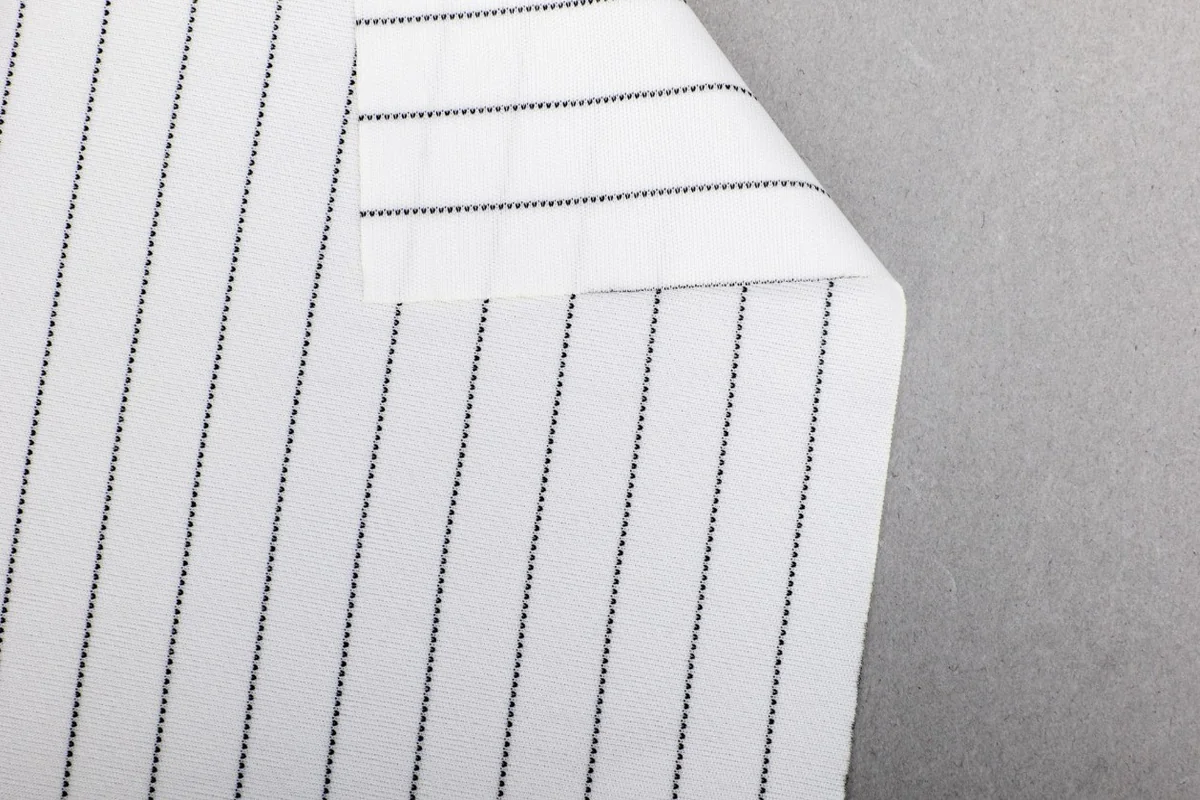
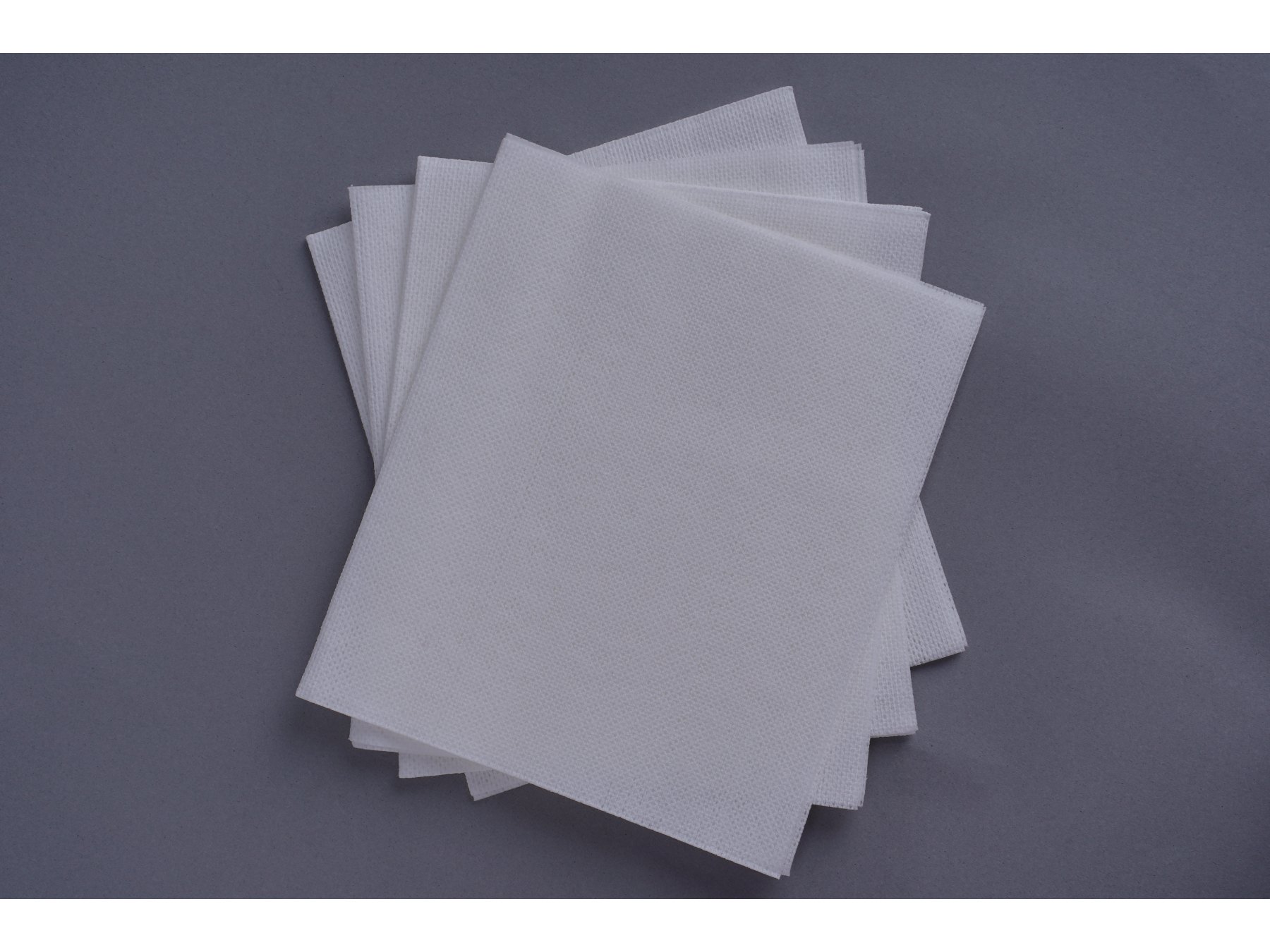
WP3302 ESD Polyester Cleanroom Wipers are 100% continuous filament polyester knit wipers with integrated static dissipative fibers. At 120 GSM with laser-sealed edges, they combine controlled ESD performance with minimal particle generation — a combination that's hard to find in a single wipe. The WP3302 is validated for ISO Class 5-8 environments and is commonly specified in semiconductor, HDD, and microprocessor manufacturing.
Frequently Asked Questions
What are ESD cleanroom wipers and why do they matter?
ESD (Electrostatic Dissipative) cleanroom wipers are specialized wiping cloths designed to prevent static electricity damage during cleaning in electronics manufacturing environments. Unlike regular cleanroom wipers, they actively conduct static charge away from sensitive surfaces at a controlled rate — typically measured in surface resistance (ohms). Even static discharge below human perception threshold (under 3,000V) can destroy modern semiconductors. ESD wipers like the
WIPESTAR WP3302 maintain friction voltage below 100V, which is well within safe range for sensitive components.
Browse all ESD and cleanroom wipers →
What is the WP3302 ESD cleanroom wiper made of?
The
WP3302 is made from 100% continuous filament polyester knit fabric with integrated static dissipative fibers woven directly into the structure. At 120 GSM weight, it has enough body for effective wiping without being too stiff. The surface resistance value sits between 10^5 and 10^11 ohms — the standard ESD dissipative range that prevents charge buildup without creating a hard ground short circuit. The spacing between static dissipative fibers is 8mm, providing consistent charge dissipation across the entire wipe surface.
How is WP3302 different from anti-static wipers?
This distinction matters more than most people realize. "Anti-static" means a material resists generating static charge — useful, but passive. "ESD" (Electrostatic Dissipative) means the material actively channels existing charge away at a controlled rate. The
WP3302 dissipates static charge in under 1.5 seconds, keeping friction voltage below 100V. Anti-static surface coatings degrade over wash cycles — the WP3302's integrated dissipative fibers maintain performance structurally. For any environment handling unprotected semiconductors, microprocessors, or HDD components, you need ESD, not just anti-static.
What does "laser-sealed edge" mean and why does it matter?
Laser sealing uses a focused laser beam to melt and fuse the wipe edges, creating a clean, bonded edge that resists fiber shedding under stress. Standard cut-edge wipers unravel at the edges during use — fine polyester filaments break free and become contamination. Heat-sealed edges are better but can still release particles under aggressive wiping.
WP3302 laser-sealed edges are particularly important in electronics manufacturing where even micron-level particles can cause defects. If you're cleaning wafer carriers, PCB assembly tooling, or precision optical surfaces, sealed edges aren't optional — they're essential.
What cleanroom classifications is WP3302 suitable for?
The
WP3302 is validated for Class 100 through Class 100,000 environments (ISO 14644-1 Class 5 through Class 8). This covers the vast majority of electronics and semiconductor manufacturing environments. Each batch is produced in a Class 100 cleanroom and tested per IEST methods for particle counts, LPC, and ionic contamination before shipping. For ISO Class 3-4 environments (Class 1-10), we recommend discussing your specific requirements with our technical team — tighter particle specifications may require enhanced packaging controls or alternative products.
What are the available sizes for WP3302 ESD wipers?
The
WP3302 comes in four standard sizes: 4"×4" (10×10cm), 6"×6" (15×15cm), 9"×9" (23×23cm), and 12"×12" (30×30cm). The 9"×9" is the most commonly stocked size for general electronics cleaning. Smaller 4"×4" and 6"×6" work well for precision component cleaning and tight-access areas. The 12"×12" size covers larger surface areas like bench tops, tooling platens, and equipment enclosures. Custom sizes are available for high-volume OEM programs.
What applications is the WP3302 designed for?
The WP3302 was built around specific high-stakes applications:
- Semiconductor assembly production lines — die attach, wire bonding, and encapsulation stages involve extremely static-sensitive die.
- Hard disk or HDD head manufacturing — modern HDD heads have read/write elements sensitive to microscopic static discharge.
- Microprocessor and electronics handling — CPU, GPU, and ASIC packaging and testing environments.
- Anti-static sensitive environments generally — anywhere uncontrolled static discharge could affect product yield.
The common thread: environments where static damage means scrap, rework, or field failures.
How does WP3302 perform in HDD manufacturing specifically?
Hard disk drives are uniquely sensitive to static because the read/write heads float on an air bearing nanometers above the disk surface. Any static discharge — even one you can't feel — can alter magnetic properties or damage head elements. The
WP3302's combination of controlled static dissipation (friction voltage under 100V), minimal particle generation (laser-sealed edges), and good absorbency makes it suitable for head stack assembly, actuator arm cleaning, and media contamination control. HDD manufacturers and their tier-1 suppliers typically specify ESD-rated laser-sealed polyester wipers as a minimum requirement.
Can WP3302 ESD wipers be laundered and reused?
Yes — and unlike surface-treated materials, the WP3302's ESD performance holds up through repeated laundering because the dissipative fibers are structurally integrated. We recommend laundered WP3302 primarily for non-critical production areas (tooling maintenance, facility cleaning) rather than active manufacturing zones. Before reuse in any production cleaning, re-test surface resistance with a calibrated resistance meter. Most facilities get 20-40+ usable wash cycles before the polyester fabric itself starts to degrade enough that fiber integrity becomes a concern. Always follow your cleanroom laundry protocol — contamination control matters as much as ESD performance.
What solvents are WP3302 wipers compatible with?
100% polyester knit handles a wide range of common cleanroom solvents:
IPA (isopropyl alcohol) — the standard for electronics cleaning, works excellently with WP3302.
Acetone — fine for occasional use; avoid prolonged saturation.
DI water — excellent compatibility.
Methanol and ethanol — good compatibility. Avoid strong alkalis (pH >10) and prolonged exposure to ketones, which can eventually degrade the polyester fiber over time. For specialized chemistries, request a compatibility data sheet or test a corner of the wipe before full-scale use.
What certifications and test reports does WP3302 come with?
Every production lot of
WP3302 ships with a Certificate of Conformance including: surface resistance (10^5–10^11 Ω verified), static dissipation time (less than 1.5 seconds confirmed), and batch cleanroom origin. Optional test reports — available upon request — cover IEST-RP-CC004 particle counts, LPC (Liquid Particle Count), IC (Ionic Contamination), and FTIR fiber identification. If your quality system requires ISO 9001 documentation, IEST compliance letters, or specific statistical data (Cp/Cpk on resistance values),
contact WIPESTAR technical support before ordering.
How should WP3302 ESD wipers be stored?
Store sealed WP3302 bags in a clean, dry environment with moderate, controlled humidity (30-50% RH is ideal). Keep packaging sealed until use to prevent contamination and moisture absorption. Avoid storing near volatile chemicals or solvents that could vapor-contaminate the wipes. ESD wipers are more humidity-sensitive than standard polyester wipers — excessive dryness can reduce static dissipation efficiency, while high humidity can affect some electronic assembly processes. A sealed ESD-safe cabinet or cleanroom storage shelf is the right environment. Don't stack heavy items on top of wipe boxes — compressed wipes lose their loft and some absorbency.
Can WP3302 be used in automated cleaning or dispensing equipment?
Yes. The 120 GSM weight gives WP3302 enough body to work reliably in semi-automated wiping stations and wipe-dispenser systems. Weights below 100 GSM tend to curl or jam in mechanical feeders; heavier weights above 140 GSM may not fold cleanly in standard dispensers. At 120 GSM, the WP3302 sits in the sweet spot for most common dispensing equipment. For fully robotic or high-speed automated systems, contact WIPESTAR to confirm the specific equipment model and wiping protocol — we've integrated WP3302 into several automated cleaning stations without issues.
How do I choose between WP3302 and other WIPESTAR ESD wipers?
The
WP3302 is WIPESTAR's standard 100% polyester ESD cleanroom wiper — 120 GSM, laser-sealed, ISO Class 5-8. If your application needs a lighter weight or different edge treatment, check the full
cleanroom wipers product range. For heavier oil and grease cleaning in semi-clean environments, the W3501 (cellulose/polyester, cut edge) is better suited. For applications requiring foam tips rather than cloth,
WIPESTAR cleanroom swabs cover precision cleaning in gaps and hard-to-reach areas. Not sure which product fits?
Request a sample evaluation kit with your top candidates.
Where can I buy WP3302 ESD cleanroom wipers?
The
WP3302 product page has current pricing and an RFQ form. WIPESTAR ships globally — standard lead time is 5-10 business days for in-stock quantities. For volume pricing (cases or more), recurring procurement programs, or custom configurations (special sizes, pre-saturation, custom packaging),
contact the WIPESTAR sales team directly. Free samples are available — we recommend requesting samples plus test reports for any first-time evaluation in critical electronics manufacturing applications.
Need a question answered that isn't here? Talk to WIPESTAR's technical team — we regularly add new FAQs based on real customer questions.