

Why Your Choice of Wiping Paper Matters More Than You Think
Walk through any cleanroom, electronics assembly line, or precision manufacturing floor, and you will notice one thing in common: wiping paper everywhere. Not the kind you grab from a bathroom dispenser. We are talking about engineered consumables designed to remove contaminants without creating new ones.
It sounds simple. Wipe a surface, move on. But anyone who has spent time in contamination-controlled environments knows the real story. The wrong wiping paper sheds fibers onto a freshly polished lens. A cheap sheet leaves streaks on a printed circuit board before soldering. An underperforming product fails to absorb solvent fast enough, and suddenly you are dealing with rework, scrap, or worse — a field failure traced back to a single careless wipe.
Choosing the right wiping paper is not just about cleaning. It is about protecting yield, reducing defects, and keeping your process in control. This guide walks through the key factors to consider, with real examples from industrial settings.
The Basics: What Makes Industrial Wiping Paper Different
Everyday tissue or paper towels are designed for kitchens and bathrooms. They are soft, cheap, and loaded with loose fibers. In an industrial context, those loose fibers become particles — the enemy of clean surfaces.
Industrial wiping paper is manufactured under controlled conditions using selected raw materials. The most common base is 100% wood pulp, chosen for its natural absorbency and low particle release. Some advanced products blend cellulose with synthetic fibers like polyester to increase tensile strength without sacrificing cleanliness. The fiber bonding method also plays a major role — hot air penetration bonding (TAD process), hydrospun reinforcement, and thermal pressing each produce different structural characteristics that affect how the paper performs in real use.
Three things separate a professional-grade wipe from a consumer one:
- Particle generation — measured as fiber or particle shedding per square meter during wiping
- Absorbency rate — how quickly the material takes in water, oil, or solvent
- Wet strength — whether the sheet holds together when soaked with chemicals
Get any one of these wrong, and your cleaning process introduces more problems than it solves. A wiping paper that sheds particles at 15 units per square meter might cost half as much as one shedding at 4 units — but on a semiconductor line, that difference translates directly into yield loss measured in thousands of dollars per wafer lot.
Understanding Ply and Why It Changes Everything
One of the first decisions you face is ply count. Wiping paper comes in 1-ply, 2-ply, and 3-ply configurations, and each serves a different purpose.
1-Ply: Light-Duty Precision
Single-layer sheets work well for delicate tasks — wiping optical lenses, cleaning sensitive display panels, or applying small amounts of solvent to a localized area. They are thin, flexible, and conform easily to curved surfaces. The tradeoff is lower absorbency and tear resistance.
The P1101 Delicate Task Wipes from Wipestar, for example, are a 1-ply wood pulp sheet sized at 11cm × 21cm. Compact enough for spot cleaning without wasting material.
2-Ply: The Workhorse
Two-layer sheets strike a balance. They absorb more liquid, hold up better under pressure, and still maintain acceptable particle generation levels. For general-purpose wiping in manufacturing — cleaning jigs, wiping down workbenches, removing flux residue — 2-ply is often the default choice.
3-Ply: Maximum Absorbency and Strength
When you are dealing with heavy oil spills, thick solvents, or surfaces that need firm scrubbing, 3-ply is the way to go. The added layer increases both absorbency capacity and structural integrity.
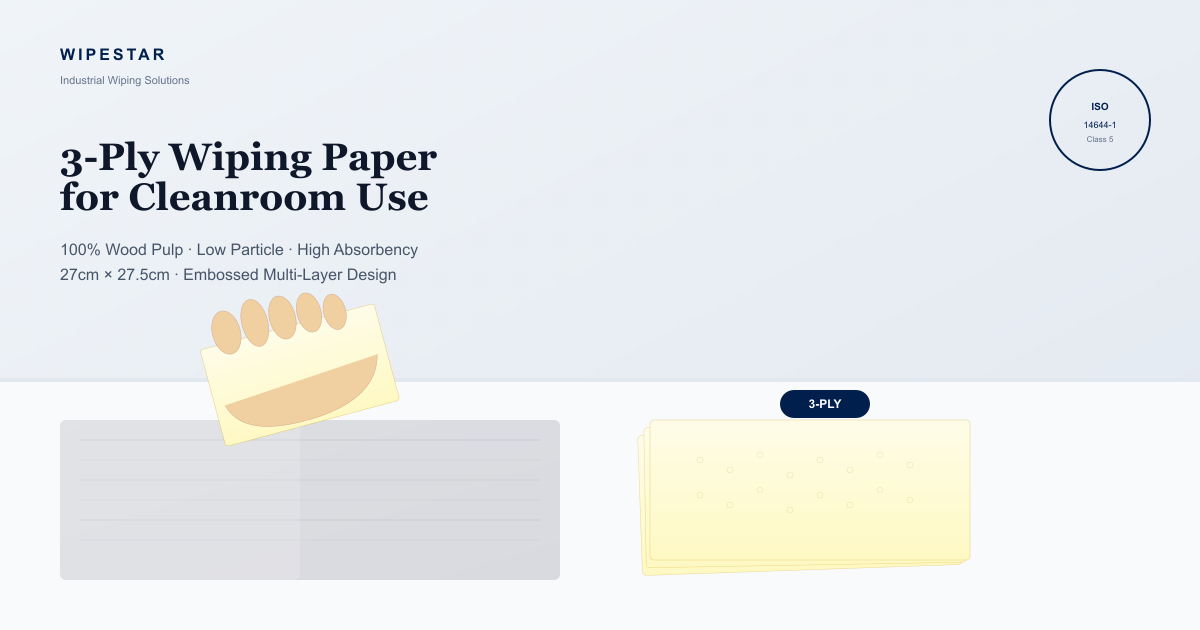
The P2302 Standard Wiping Paper is a good example. It uses 100% wood pulp in a 3-ply construction at 27cm × 27.5cm. The multi-layer embossed design adds friction, which translates to better mechanical removal of stubborn contaminants. Even when wet, the sheet maintains its strength — a critical factor when working with solvents like IPA or acetone.
Matching Wiping Paper to Your Industry
Different industries have different contamination tolerances. A fingerprint on a steel beam is irrelevant. A fingerprint on a semiconductor wafer can kill the chip. The wiping paper you choose must match the sensitivity of your application.
Semiconductor and Microelectronics
This is the most demanding sector. Wafer fabrication environments require ISO Class 5 or better, which means fewer than 3,520 particles (≥0.5μm) per cubic meter of air. Wiping paper used in these fabs must have ultra-low particle shedding — often below 0.5μm/m³ — and must not introduce ionic contaminants like sodium or chloride onto wafer surfaces.
According to industry data, the 0609 dust-free paper specification has become a standard reference in semiconductor cleaning processes, with adoption exceeding 72% in advanced 3nm wafer lines. The material’s surface resistivity, typically maintained between 10⁶–10⁹Ω, also provides essential electrostatic discharge (ESD) protection during handling.
Optics and Display Manufacturing
Optical components and display panels are scratched easily. The wiping paper must have a smooth surface texture with minimal roughness — typically under 0.1μm microscopic roughness — to avoid creating micro-scratches. A leading OLED panel manufacturer reported a 40% reduction in screen scratch rates after switching to a controlled-roughness wiping paper on their 8.5-generation production line.
Automotive and Aerospace
These industries deal with heavy oils, hydraulic fluids, and metal shavings. The wiping paper needs high absorbency and strong wet tensile strength. In aerospace maintenance, the material must also meet low outgassing requirements — NASA’s Jet Propulsion Laboratory has tested cleanroom wiping papers that release less than 0.28μg/g of volatile organic compounds in vacuum conditions.
Food and Pharmaceutical
In food processing and pharmaceutical manufacturing, the wiping paper must be safe for incidental food contact and resistant to sanitizing agents. Products that maintain their bacterial filtration efficiency (BFE) above 99.95% after multiple sterilization cycles are preferred. Compliance with standards like YY/T 0698-2017 provides assurance.
Practical Tips for Selecting the Right Product
Beyond material and ply, a few practical considerations often get overlooked:
Sheet Size and Format
Larger sheets cover more surface area but may be wasteful for small-component cleaning. A 27cm × 27.5cm sheet works great for wiping down a workbench, but it is overkill for cleaning a 2cm lens element. Think about your most common tasks and pick sizes that match — you will use less material and generate less waste.
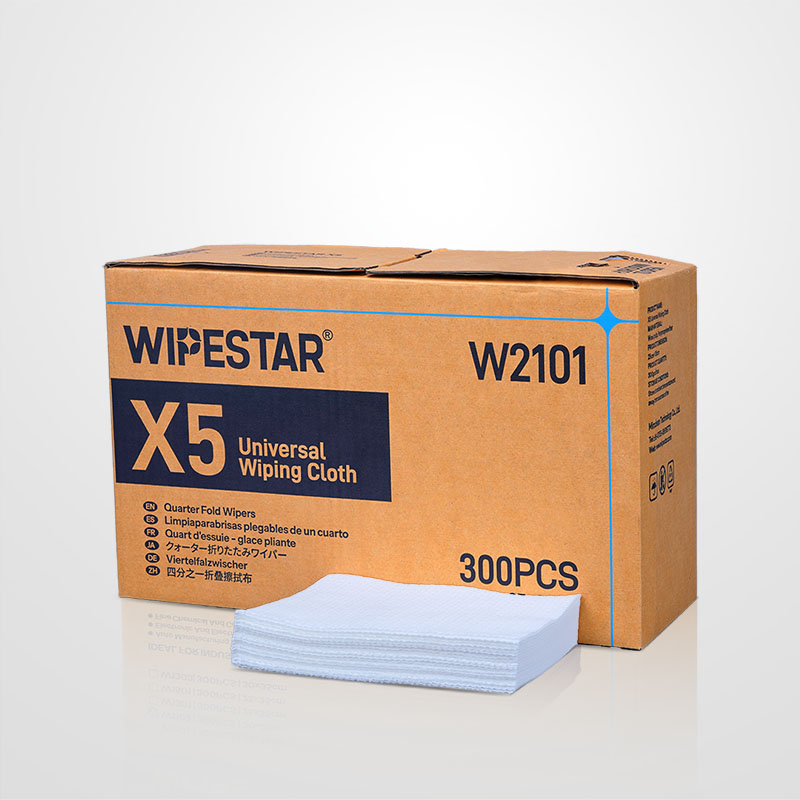
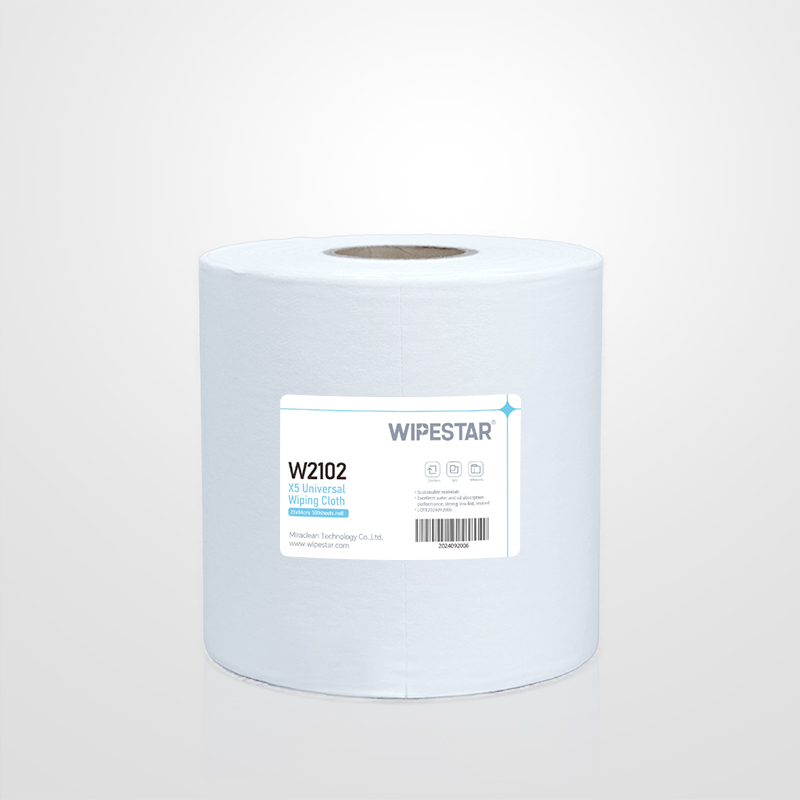
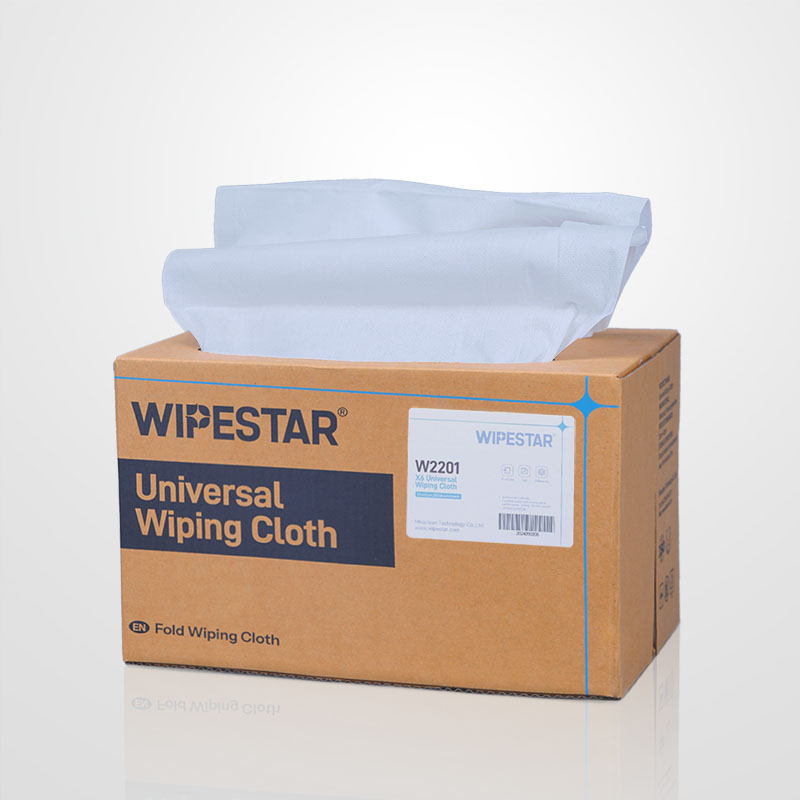
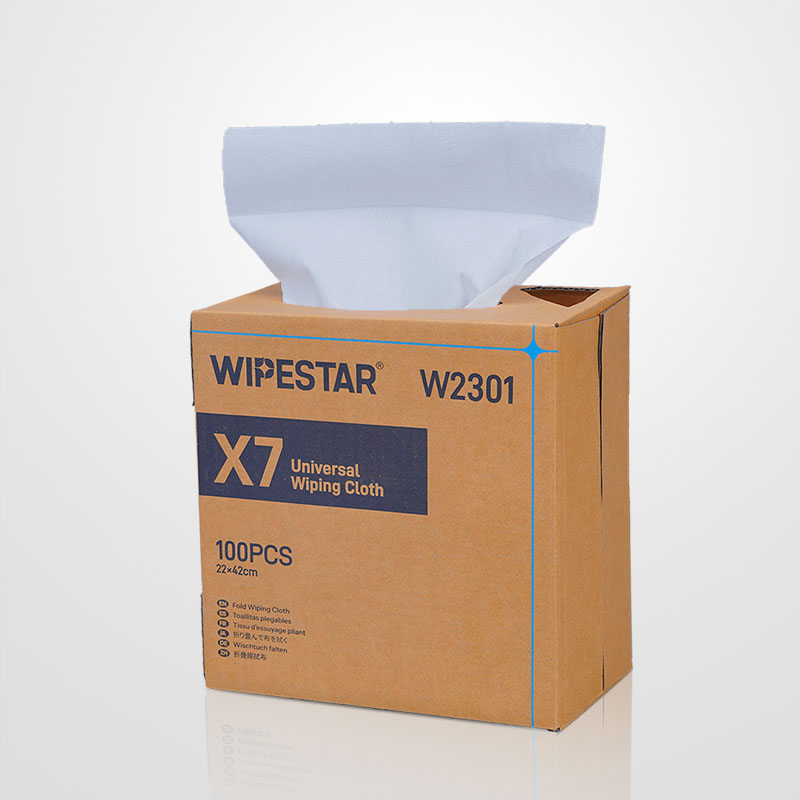
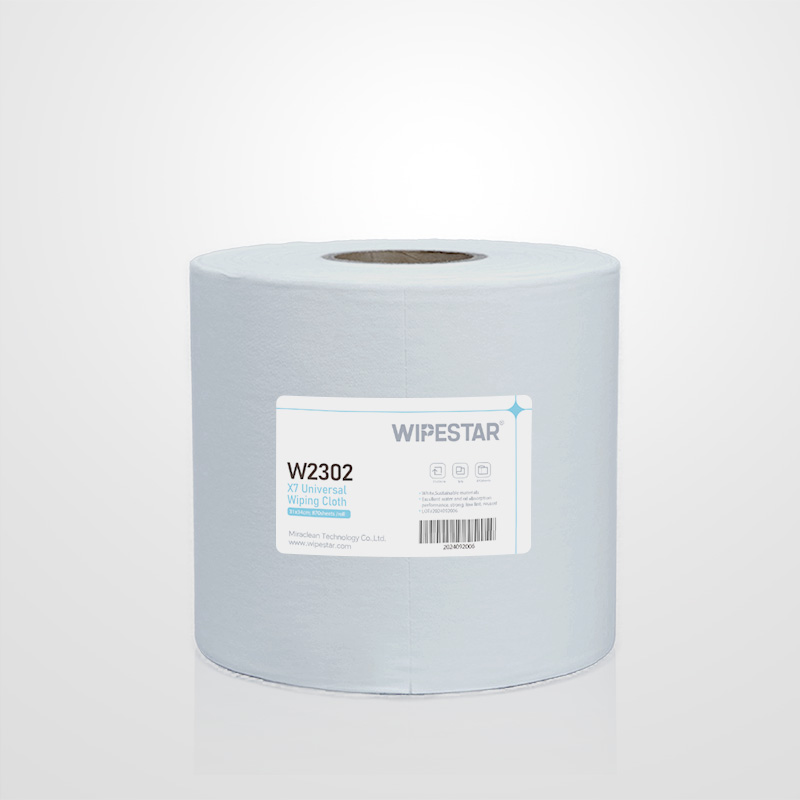
Folded formats (like interfolded dispensing) reduce waste and contamination from handling. When sheets are folded in a box, each pull gives you one clean sheet without touching the others. Roll formats work better for high-volume production lines where speed matters and operators tear off sheets as needed.
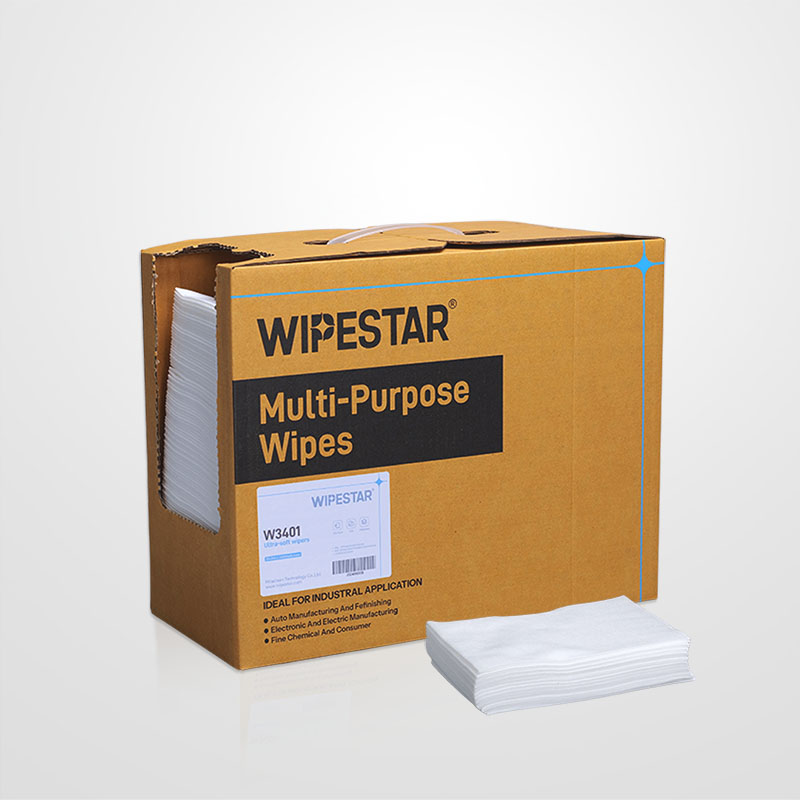
The Wipestar wiping paper range offers both foldable and large roll designs, letting you match the format to your workflow rather than forcing a one-size-fits-all approach.
Color Coding
It may sound minor, but color matters in controlled environments. Yellow wiping paper is common in standard industrial applications because it contrasts well against most surfaces, making it easy to spot any residue left behind. White sheets are preferred in cleanroom settings where visual cleanliness must be obvious.
Solvent Compatibility
Not all paper holds up when wet. If your process involves IPA, acetone, or other aggressive solvents, test the wiping paper in actual conditions before committing to a bulk order. The P2302 Standard Wiping Paper is specifically noted for maintaining strength even when saturated with solvents — a property that comes from its 100% wood pulp construction and embossed bonding.
Environmental Considerations
Sustainability is no longer optional in many procurement policies. Large OEMs and contract manufacturers increasingly require suppliers to demonstrate environmental responsibility, and wiping paper is no exception. Products that carry biodegradation certifications like ISO 14855 can decompose significantly faster than conventional materials — some within 28 days under industrial composting conditions.
The EU’s PPWR (Packaging and Packaging Waste Regulation) is accelerating demand for eco-friendly wiping consumables across European manufacturing. Facilities that switch early to certified biodegradable wiping paper not only meet regulatory requirements but often reduce disposal costs, since compostable materials can enter industrial waste streams rather than hazardous disposal channels.
If your facility operates under ISO 14001 environmental management, sourcing wiping paper with verified biodegradation data strengthens your compliance documentation and audit trail.
Common Mistakes to Avoid
After working with hundreds of manufacturing teams, a few patterns repeat. Some are obvious. Others only surface after you have been burned.
- Buying on price alone. The cheapest wiping paper almost always has higher particle generation. The cost of a single defect caused by fiber contamination can exceed the savings from months of “budget” purchases. One electronics manufacturer reported saving $470,000 per year on a single production line after switching from generic wipes to a controlled-specification product — not because the new paper was cheaper, but because rework and scrap dropped dramatically.
- Ignoring the spec sheet. Particle count, absorbency rate, and tensile strength are not marketing numbers — they are measurable parameters. Ask your supplier for test data. If they cannot provide third-party lab results for particle shedding and absorbency, that is a red flag.
- Using one product for everything. A 3-ply heavy-duty sheet is overkill for cleaning an optical sensor. A 1-ply delicate wipe will fall apart degreasing a metal fixture. Match the product to the task. A tiered inventory with two or three SKUs costs less in total than overusing premium material on low-sensitivity jobs.
- Skipping the trial. Before placing a large order, get samples. Test them in your actual process with your actual solvents and surfaces. What works in one factory may not work in another. Run at least a two-week trial across different operators to account for technique variations.
- Forgetting about ESD. In electronics manufacturing, static discharge can damage components invisibly. If your wiping paper does not have controlled surface resistivity (typically 10⁶–10⁹Ω), you may be introducing electrostatic risk every time an operator wipes a board or fixture.
Building a Wiping Paper Strategy for Your Facility
The most efficient facilities do not stock one type of wiping paper. They build a tiered system that puts the right product in the right place:
- Delicate task wipes — 1-ply, small format, for precision optics, camera modules, and fine electronics. These are used at individual workstations where operators handle sensitive components.
- Standard wiping paper — 2-ply or 3-ply, general-purpose for assembly lines, maintenance bays, and equipment cleaning. This is your highest-volume SKU and should be selected carefully for absorbency and wet strength.
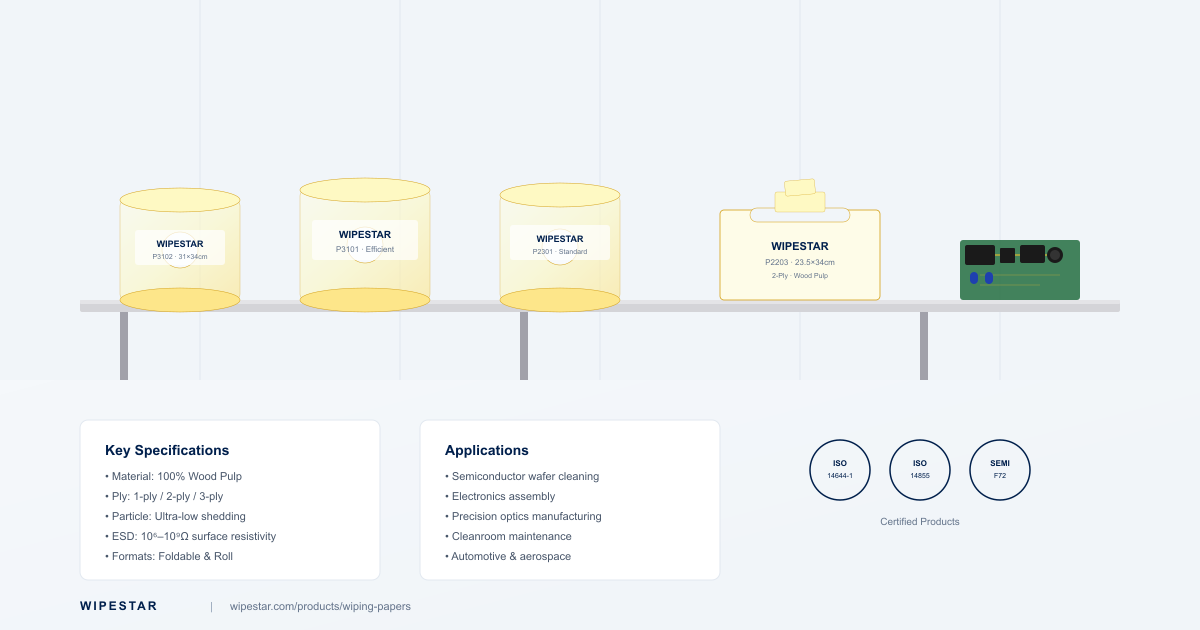
- Efficient wiping paper — larger format, high-absorbency for heavy-duty cleanup, spill response, and degreasing operations. These often come in roll format for fast dispensing.
This approach ensures each task gets the right tool without overpaying for premium material on low-sensitivity jobs. It also simplifies inventory management — instead of dozens of random products from multiple suppliers, you standardize on a focused range with clear specifications for each tier.
The full Wipestar wiping paper catalog is organized into these exact categories — Standard, Efficient, and Delicate Task — making it straightforward to build your inventory from a single source. Each product listing includes size, ply, material, and color specifications, so you can cross-reference against your process requirements without guesswork.
Final Thoughts
Wiping paper is one of those consumables that nobody thinks about until something goes wrong. A contaminated wafer run. A scratched lens before shipment. A failed sterility test traced back to a fiber left behind by a low-quality wipe.
The good news is that selecting the right product does not require a chemistry degree. Start with your cleanliness requirements, match the ply and material to your process conditions, test before buying in bulk, and do not cut corners on the one consumable that touches every surface in your facility.
For a complete overview of available options, browse the Wipestar wiping paper collection, or read their detailed breakdown of dust-free paper applications across industries to understand how material science translates into real-world cleaning performance.
Tags: cleanroom · contamination control · dust-free paper · industrial cleaning · wiping paper

Comments & Feedback