Language

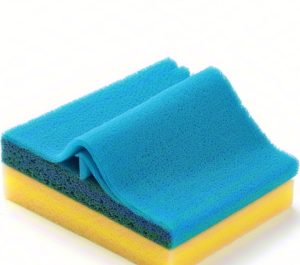
<p style="text-align: center;"><span style="font-size: 18px;"><img src="https://img.wipestar.com/uploads/allimg/20241105/1-241105101351K3.jpg" title="A worker cleaning delicate equipment and components with wipes" alt="A worker cleaning delicate equipment and components with wipes" width="618" height="465"/></span></p><p><span style="font-size: 18px;">Industrial wipes are widely used in factories as auxiliary tools in industrial production. During the production process, large-scale equipment and machinery in workshops often retain oils and other contaminants, which can impact product quality and the lifespan of machinery. To maintain and clean these systems, regular wiping is essential. Industrial wipes, with their strong oil and water absorption, and anti-static properties, serve the purpose of effectively removing oil and contaminants from factory equipment and products.</span></p><p><span style="font-size: 18px;">Industrial wipes find extensive application in laboratories, electronics, chemical industries, and precision instruments. For example, precision instrument manufacturers require high levels of precision, and their products are often costly, making strict adherence to industry standards necessary. These wipes play a critical role in maintaining production lines and ensuring product quality, thereby reducing production costs and boosting profitability.</span></p><p><span style="font-size: 18px;">Since the invention of textiles, humans have been using rags to clean. The advent of industrial wipes began with the Industrial Revolution, where machinery required frequent lubrication and cleaning, often demanding clean wipes to prevent dust particles from damaging equipment. By the 1920s, wipes became a booming business, often utilizing sanitized recycled clothing.</span></p><p><span style="font-size: 18px;">After World War II, disposable wipes emerged in the industry, incorporating materials like nylon to enhance durability. Today's industrial environments require specialized, high-performance wipes.</span></p><p><span style="font-size: 18px;"><br/></span></p><h2><span style="font-size: 20px;">Types of Industrial Wipes Based on Material:</span></h2><ol class="list-number1"><li><span style="font-size: 18px;">Cotton Wipes: Made primarily from cotton, these wipes offer excellent water absorption and softness, suitable for general cleaning and wiping.</span></li><li><span style="font-size: 18px;">Linen Wipes: Made from linen fibers, these wipes are highly durable and resistant to dirt, ideal for surfaces needing heavy-duty cleaning or environments with high cleanliness requirements.</span></li><li><span style="font-size: 18px;">Polyester Wipes: Made from polyester fibers and treated for high durability, fast-drying, and anti-static properties. Commonly used in electronics and labs where high cleanliness is essential.</span></li><li><span style="font-size: 18px;">Nylon Wipes: Known for their abrasion resistance, elasticity, and tensile strength, these wipes are ideal for surface polishing and cleaning in machinery and automotive manufacturing.</span></li><li><span style="font-size: 18px;">Polypropylene Wipes: Made from woven polypropylene, these wipes have excellent chemical resistance and mechanical strength, ideal for applications requiring high chemical resistance, such as chemical labs and electroplating.</span></li><li><span style="font-size: 18px;">Sponge Wipes: With a soft, water-retentive texture, these wipes are suitable for cleaning glassware, mirrors, and other smooth surfaces.</span></li><li><span style="font-size: 18px;">Microfiber Wipes: With finer fibers than regular textiles, these wipes effectively remove dust, dirt, and bacteria, suitable for high-cleanliness industries like medical and food production.</span></li><li><span style="font-size: 18px;">Nonwoven Fabric Wipes: Made using nonwoven production technology, these wipes have a unique fiber entanglement structure, providing various weights and thicknesses. Common applications include chemical bonding, thermal bonding, needle-punched nonwoven, spunlace, melt-blown, and spunbond nonwoven processes.</span><ul style="list-style-type: disc;"><li><p><strong><span style="font-size: 18px;">Spunlace Nonwoven Wipes</span></strong><span style="font-size: 18px;">: Spunlace is a fiber bonding processing technique that uses fine high-pressure water jets to continuously spray and interlace fibers. The originally loose fibers move, interweave, and twist under the effect of high-speed water jets, which further consolidates the fiber web, forming a spunlace nonwoven fabric with certain strength and shape. The materials used for spunlace nonwoven products are diverse, mainly including cellulose fibers, polyester fibers, polypropylene (PP) fibers, wood pulp fibers, polyamide fibers, and some functional fibers. Spunlace nonwoven fabric is soft, resistant to pilling and shedding, making it an excellent wiping material. Its products have been widely used in manufacturing disposable wet wipes, household kitchen wipes, electronic industry wipes, mechanical equipment cleaning wipes, and precision instrument surface cleaning wipes.</span></p></li><li><p><strong><span style="font-size: 18px;">Spunbond Nonwoven Wipes</span></strong><span style="font-size: 18px;">: Spunbond is a melt-spinning technology for producing nonwoven fabrics. The main working principle involves heating and melting polymer materials, which are then extruded from spinnerets. The molten filaments cool, stretch, and split into fibers under high-speed airflows, forming a fiber web that is then bonded into fabric. Spunbond nonwoven fabric is made from thermoplastic polymer materials, commonly using PP, polyethylene (PE), polyethylene terephthalate (PET), polyurethane (PU), polylactic acid (PLA), polyamide 6 (PA6), and others. When hydrophobic polymers are used, the fabric needs to undergo hydrophilic treatment to meet the hydrophilic requirements of wiping cloths. Compared to single-component spunbonding technology, bicomponent spunbonding technology can produce a fluffy, pleasant-textured fabric, making it a new type of wiping material. Currently, common bicomponent spunbond nonwoven fabric types include sheath-core (S/C type), side-by-side (S/S type), and split-type (S/P type) fibers. Among them, split-type fibers can be “opened” and simultaneously consolidated using spunlace, allowing both fiber opening and web consolidation to be done in one step, eliminating the traditional alkali-reduction process. This method enables the efficient production of high-end ultrafine fiber spunlace nonwoven fabric, which is widely used due to its excellent softness, superior wiping performance, and higher strength.</span></p></li><li><p><strong><span style="font-size: 18px;">Melt-Blown Nonwoven Wipes</span></strong><span style="font-size: 18px;">: Melt-blown is also a melt-spinning technology for producing nonwoven fabrics. The main working principle involves using high-speed, high-temperature airflows to blow polymer melts, rapidly stretching them into ultrafine fibers, which are then solidified by their residual heat to form nonwoven fabric. The raw materials for melt-blown nonwoven fabric are mainly high-melting index thermoplastic polymers, which are suitable for high-speed air stretching and fiber fine-tuning. This creates a 3D fiber network structure with a large surface area, small pores, and high porosity. Therefore, melt-blown nonwoven wipes have strong absorption, high stain removal capability, do not damage the surface of objects, and shed minimal fibers. They are widely used in industrial production and daily cleaning applications. Melt-blown nonwoven fabric has excellent oil affinity and oil absorption properties, making it commonly used for oil-absorbing wipes. Furthermore, through grafting, blending, and other methods, the melt-blown materials can be modified to further enhance their oil absorption and wiping capabilities.</span></p></li><li><p><strong><span style="font-size: 18px;">Composite (Quilt) Nonwoven Wipes</span></strong><span style="font-size: 18px;">: Nonwoven wipes made from different spinning processes and raw materials have various characteristics that make them suitable for different usage scenarios. However, wipes made from a single nonwoven material often have some drawbacks that limit their scope of use. For example, full wood pulp spunlace nonwoven fabric is environmentally friendly and highly absorbent but has low strength, poor tear resistance, and low abrasion resistance. Spunbond nonwoven fabric has higher strength and better abrasion resistance, but its fiber diameter is relatively large, and the pore volume is low, resulting in weaker stain removal and contamination absorption abilities. Melt-blown nonwoven fabric has finer fibers and higher porosity, making it stronger in stain removal and absorption, but its strength is lower, and its abrasion resistance is poor. Therefore, by combining nonwoven fabrics made using different production techniques, their strengths can complement each other, further expanding the application range of nonwoven wiping materials.</span></p></li></ul></li></ol><p><span style="font-size: 18px;"></span></p><p><span style="font-size: 18px;"></span></p><h2><span style="font-size: 18px;"><br/></span></h2><h2><span style="font-size: 20px;">Wipestar W5423 Non-woven Wipers – The Essential Solution for Industrial Cleaning</span></h2><p><span style="font-size: 18px;">The <a href="https://www.wipestar.com/products/859.html" target="_self">W5423 Non-woven Cleanroom Wipers</a> are crafted with a 55% cellulose and 45% polyester blend using advanced spunlace technology, offering exceptional solvent absorption, strong chemical resistance, and efficient degreasing for industrial use. Designed to perform in sensitive environments, these wipers are ideal for electronics, semiconductor, optics, and biomedical industries. Their soft, low-lint, and highly absorbent material ensures superior cleanliness, making them perfect for applications such as PCB board manufacturing, LCD production, and precise cleaning tasks requiring minimal fiber shedding.</span></p><p style="text-align: center;"><a href="https://www.wipestar.com/products-wiping-cloth/" target="_self"><img src="https://img.wipestar.com/uploads/allimg/20241105/1-241105102G0121.jpg" title="VIEW WIPESTAR’S LINE OF WIPING PRODUCTS" alt="VIEW WIPESTAR’S LINE OF WIPING PRODUCTS" width="900" height="600"/></a></p><p><br/></p>
Tags:No tag
RELATED RESOURCES
Sub-fine Cleanroom Wipes: How ...
Asia Dirtless Cloth: Cleaning Innovation Solutions...
More
Pharmaceutical Equipment Clean...
Pharmaceutical Equipment Cleaning Validation: TOC ...
More
Industrial wipes: technologica...
In the fields of industrial equipment maintenance ...
More
4-inch dust-free cloth micron-...
In the fields of precision manufacturing and micro...
More
The Cleaning Revolution of Pow...
How Industrial Wipes Revolve ManufacturingIn the e...
More
Precision manufacturing worksh...
Analysis on upgrading equipment cleaning standards...
More
Related Products
Room 101, Building 1, Angeer Factory, No.4, Hetian Road, Shatian Community, Kengzi Street, Pingshan District, Shenzhen, Guangdong, P.R. China 518122
info@wipestar.com
+86-755-89616775
+86-755-89616773
Related Products
RELATED RESOURCES