

Industrial wiping paper is a critical engineered consumable for cleanrooms, semiconductor fabrication, automotive machining, and precision manufacturing.If you work in semiconductor fabrication, automotive machining, or any precision manufacturing environment, you already know that the wrong cleaning material can cost you thousands — sometimes millions — in defective output. Industrial wiping paper isn’t just a rag substitute. It’s a engineered consumable that directly impacts yield rates, surface integrity, and compliance. In this guide, we’ll break down how these materials actually work, where they matter most, and how to pick the right one for your operation.
What Makes Industrial Wiping Paper Different from Regular Paper?
Most people outside the industry assume all paper towels are basically the same. They’re not. Industrial wiping paper is manufactured using processes that are closer to textile engineering than papermaking.
The most common production method is spunlace nonwoven technology, where high-purity wood pulp fibers are mechanically entangled with ultrafine polyester filaments. The result is a porous, honeycomb-like matrix that absorbs liquids aggressively while shedding minimal particles. Compare that to a cotton rag, which might leave behind lint, residual oils, or even microbial contaminants on the surface you just “cleaned.”
A quality inspection report from a German automotive manufacturer found that wiping paper with a basis weight of 80g/m² — used alongside plasma cleaning processes — reduced residual oil contamination on CNC machine guide rails to below 0.3mg/cm². That’s a 260% improvement over traditional cotton cloth cleaning. The numbers speak for themselves.
For facilities that need a reliable standard-grade option, the P2203 Standard Wiping Paper is a solid starting point. It’s a 2-ply wood pulp sheet sized at 23.5cm x 34cm, designed for general industrial wiping tasks where consistent absorbency and low lint generation are non-negotiable. You can browse the full wiping papers catalog to compare options across standard, efficient, and delicate-task categories.
Why Cleanroom Standards Dictate Your Wiping Material Choice
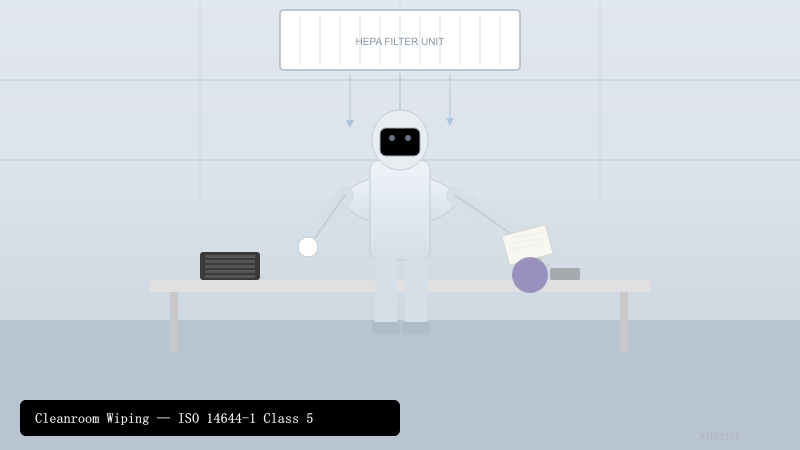
Not all cleanrooms are created equal, and neither are the wiping materials approved for use inside them. If your facility operates under ISO 14644-1 Class 5 or stricter, you need wiping paper that meets specific particle-shedding limits.
Particle Control in Semiconductor Manufacturing
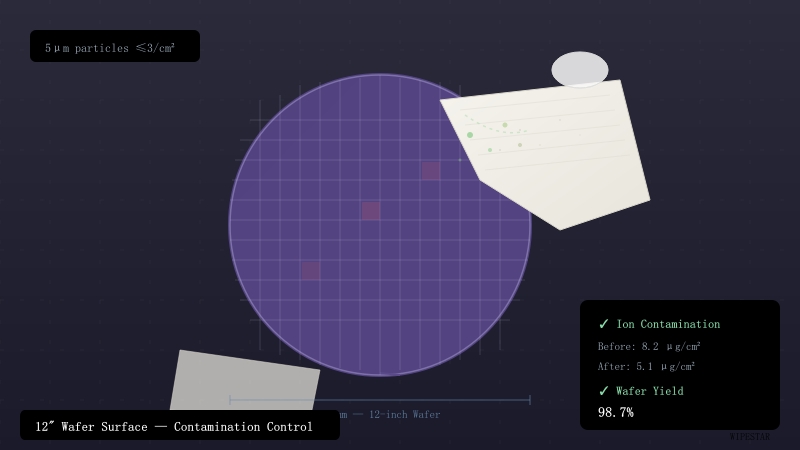
In semiconductor fabs, a single stray fiber on a wafer surface can kill a die. Cleanroom-grade wiping paper certified to ISO 14644-1 Class 5 uses laser edge sealing technology to limit fiber shedding to 5μm particles at ≤3/cm². That’s an extraordinarily tight tolerance.
Real-world data backs this up. A yield analysis from a TSMC supplier showed that after switching to antistatic wiping paper, ion contamination on 12-inch wafer surfaces dropped from 8.2μg/cm² to 5.1μg/cm². That reduction pushed chip yield rates above the industry baseline of 98.7%. When your fab processes thousands of wafers per month, a 1-2% yield improvement translates directly to hundreds of thousands of dollars in recovered revenue.
The multi-gradient pore structure of these materials also matters for PCB board cleaning, where flux residues and microscopic metal debris need to be captured simultaneously without cross-contamination.
Electrostatic Discharge (ESD) Considerations
One thing people overlook: standard paper wipes can generate static charge during use. In electronics manufacturing, that’s a recipe for latent component damage. Antistatic variants incorporate conductive fibers or topical treatments that dissipate charge safely, protecting both the product and the operator.
Matching Wiping Paper to Your Industry Application
The “best” wiping paper doesn’t exist. What exists is the best wiping paper for your specific process. Here’s how the major sectors approach the decision.
Automotive & CNC Machining
Machine shops deal with cutting fluids, hydraulic oils, and metal shavings daily. You need wiping paper with high basis weight (typically 60-90g/m²) and strong wet tensile strength. The paper shouldn’t fall apart mid-wipe when soaked in coolant. Look for products with good solvent resistance if you’re cleaning with IPA or acetone-based degreasers.
For heavier-duty tasks, the P3102 Efficient Wiping Paper provides a larger 31cm x 34cm format suited to bigger surface areas, while delicate work like optical component cleaning might call for the P1101 Delicate Task Wipes at a more compact 11cm x 21cm.
Medical Device & Pharmaceutical
Medical device sterilization requires wiping materials that can withstand gamma irradiation without degrading or releasing harmful byproducts. A cooperative factory working with Johnson & Johnson demonstrated that properly irradiated medical-grade wiping paper maintained biological load within the ≤10CFU/g international standard range throughout the sterilization cycle.
If you’re wiping down cleanroom surfaces between production runs, traceability matters too. You want documentation showing lot numbers, material composition, and sterilization certificates. Don’t just buy the cheapest option on the shelf.
Lithium Battery & Chemical Processing
Electrolyte cleaning in lithium battery production presents unique challenges. Standard cellulose-based papers break down when exposed to organic solvents like dimethyl carbonate (DMC). Sulfonated polypropylene fiber layers — found in specialized VOCs treatment wipes — achieve a DMC trapping rate of 98%.
One critical safety note: under OSHA regulations, waste wipes contaminated with organic solvents must be stored per UN1203 hazardous goods classification and transported in sealed double-layer HDPE explosion-proof containers. Cutting corners here isn’t just non-compliant — it’s dangerous.
Cost, Sustainability & the Recycling Angle
The economics of industrial wiping paper have shifted significantly in recent years. Traditional thinking was that disposable wipes were cheaper than reusable options when you factored in laundering. That’s no longer universally true.
A lifecycle evaluation from a 3M cooperative project showed that polyester fiber wiping paper recycled using supercritical CO₂ technology could be reused for up to 12 operating cycles in automotive spraying workshops. The total cost per cycle came out 43% lower than equivalent single-use products. For high-volume operations, that kind of savings compounds fast.
This approach also aligns with ISO 14001 environmental management systems, which more and more OEMs require from their suppliers as a condition of doing business. If you’re bidding on contracts from major automotive or electronics brands, sustainability credentials aren’t optional anymore — they’re table stakes.
How to Choose: A Quick Decision Framework
When evaluating wiping paper for your facility, run through these questions:
- What contaminants are you removing? Oils, solvents, particles, biological agents — each demands different fiber chemistry.
- What’s your cleanroom classification? ISO Class 5 and above requires certified low-lint, low-particle products.
- What solvents will contact the wipe? Verify chemical compatibility before purchasing. A wipe that works with IPA might dissolve in MEK.
- Is ESD a concern? If you’re handling electronics, specify antistatic grades.
- What’s the real cost per wipe? Factor in absorbency rate, sheet size, and whether reusability is feasible in your process.
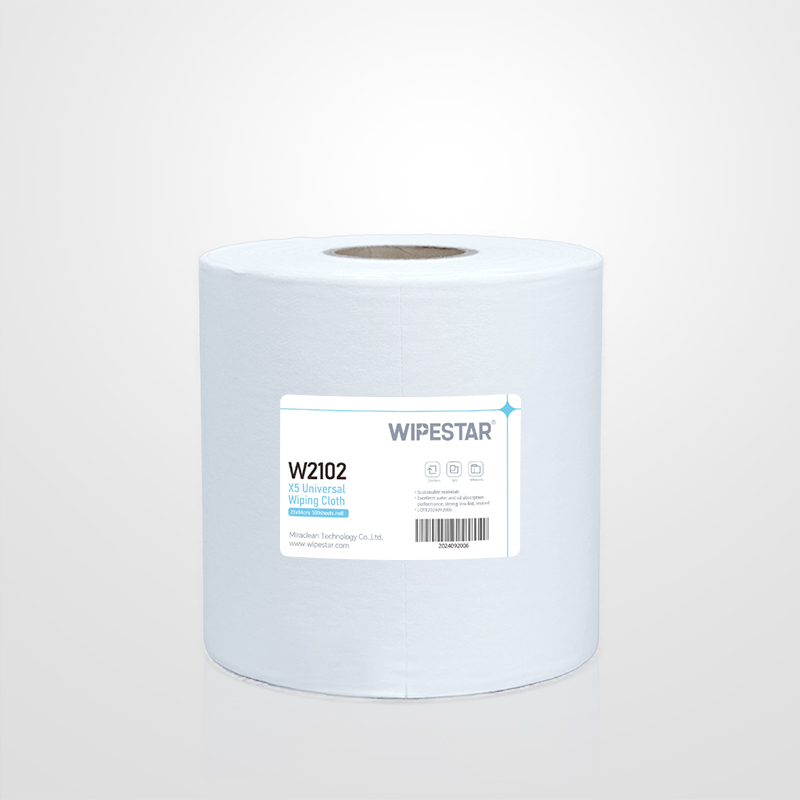
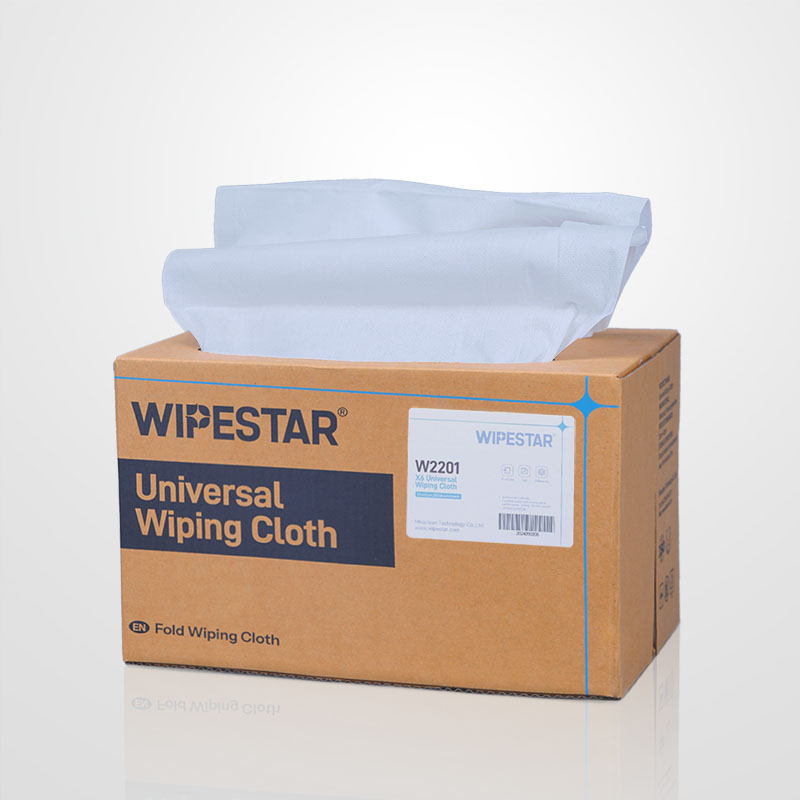
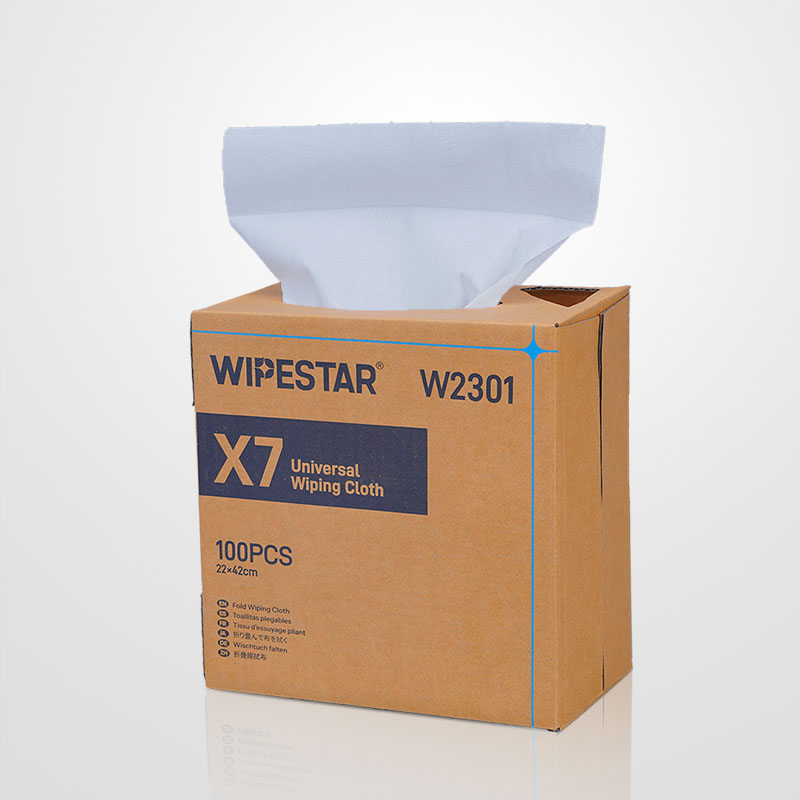
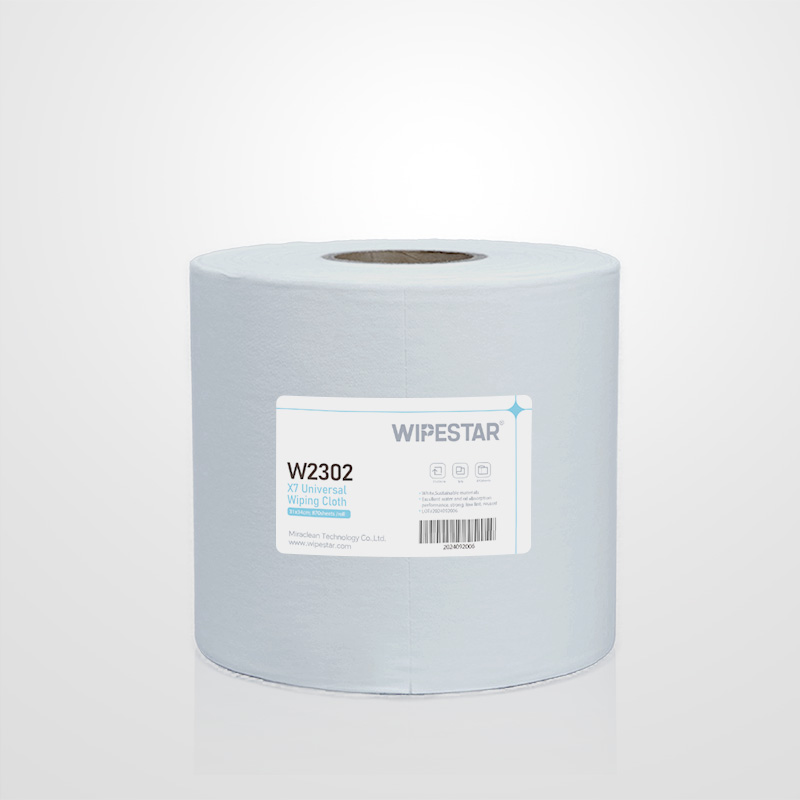
For a comprehensive comparison across categories, the WIPESTAR wiping papers range covers standard, efficient, and delicate-task options with full specifications for size, ply, material, and color coding.
The key takeaway
Industrial wiping paper is one of those consumables that gets ignored until something goes wrong — a yield drop, a contamination event, a failed audit. The technology behind these materials has come a long way from generic shop rags. Spunlace nonwovens, laser-sealed edges, antistatic treatments, and solvent-specific fiber blends are all engineered solutions to real manufacturing problems.
The smart move is to match your wiping material to your actual process conditions rather than grabbing whatever’s cheapest. Your yield rates, compliance standing, and long-term operating costs will reflect that decision.
Tags: cleanroom consumables · Cleanroom Wipes · industrial wiping paper · lint free wipes · low particle wipes · precision manufacturing wipes · semiconductor cleaning · spunlace nonwoven wipes · wafer cleaning · wiping paper for cleanrooms


Comments & Feedback