

Labs are unforgiving environments. You spend hours preparing a sample, calibrating an instrument, or running an assay — and then a stray fiber from a paper towel lands where it shouldn’t. The result is a contaminated result, a failed run, or worse, a damaged instrument that takes weeks to service.
It sounds dramatic, but anyone who’s worked in analytical chemistry, life sciences, or materials testing has seen it happen. The cleaning tools you use in a lab aren’t a minor detail. They’re part of the process.
This guide covers what to look for in laboratory cleaning wipes and swabs, where different products fit, and how to avoid the common mistakes that introduce contamination instead of removing it.
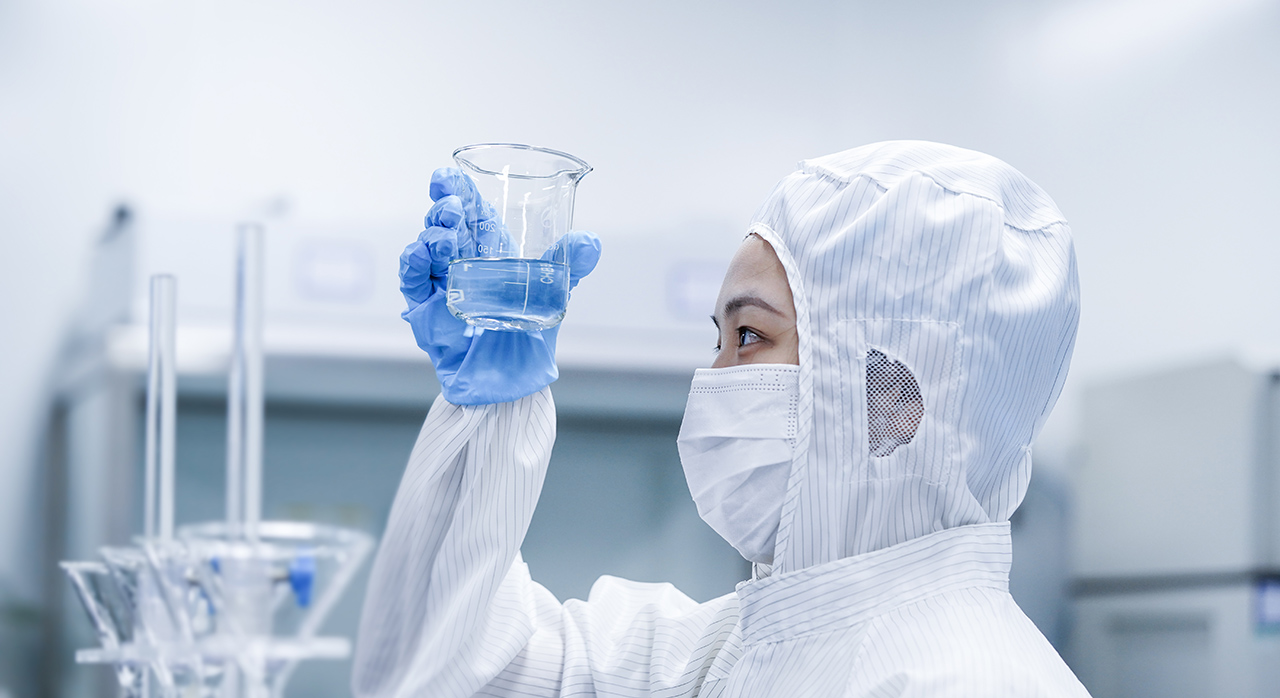
Why Standard Cleaning Products Don’t Work in Labs
The problem with regular paper towels and shop rags in a lab setting isn’t just that they look unprofessional. It’s that they actively create problems.
Standard paper towels shed cellulose fibers with every wipe. Under a microscope, a surface you just “cleaned” with a paper towel is covered in debris. For most household tasks, that doesn’t matter. For optical surfaces, analytical balances, spectroscopy equipment, or any surface that feeds into a measurement — it matters a lot.
The same goes for standard cotton swabs. The fiber structure of cotton is inherently loose, and those fibers end up on whatever you’re cleaning. In a lab context, that’s contamination you introduced yourself.
Proper lab cleaning consumables are designed around a different principle: remove contamination without adding any. Low fiber shedding, controlled particle generation, no adhesive residues, and compatibility with the solvents you’re actually using.
Laboratory Cleaning Wipes: What the Material Tells You
The material composition of a wipe determines most of its performance characteristics. Here’s what you’ll typically encounter when sourcing laboratory wipes:
- Polyester — The lowest particle generation of common wipe materials. Good solvent resistance, holds up to repeated IPA and acetone exposure. The standard choice for optical cleaning, instrument surfaces, and any application where fiber contamination is a serious concern.
- Cellulose/Polyester blend — Better absorbency than pure polyester, slightly higher particle count. Works well for general bench cleaning, spill response, and equipment wipe-downs where you need the wipe to actually absorb liquid rather than just push it around.
- Rayon/Polyester — Soft, high absorbency, low abrasion. Often used for surface preparation and delicate instrument cleaning where you need a gentle touch.
- Wood pulp/Polypropylene — Higher absorbency for heavier contamination. More appropriate for general lab maintenance and support areas than for critical instrument cleaning.
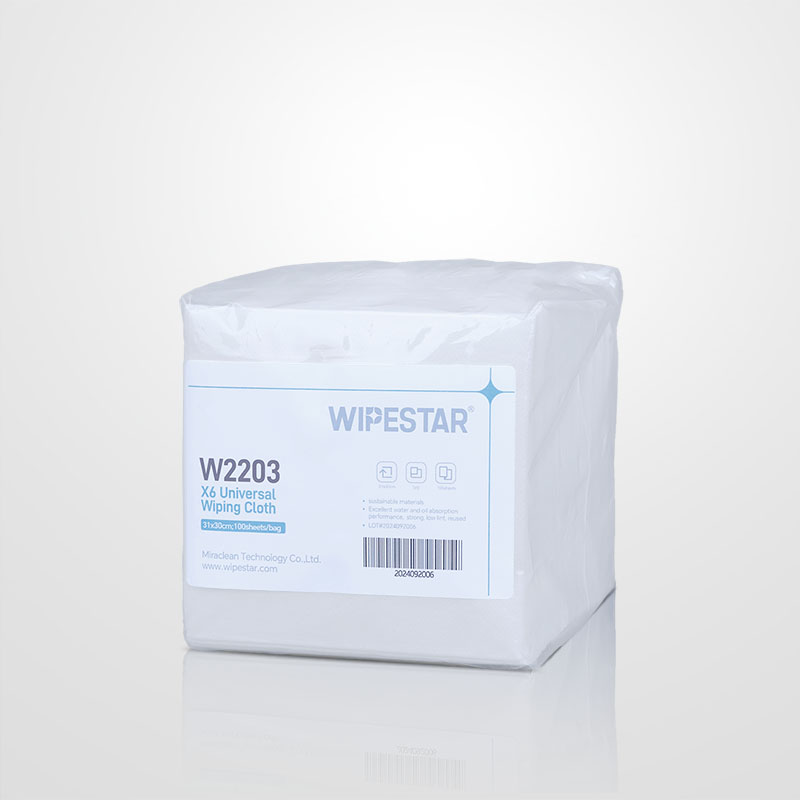
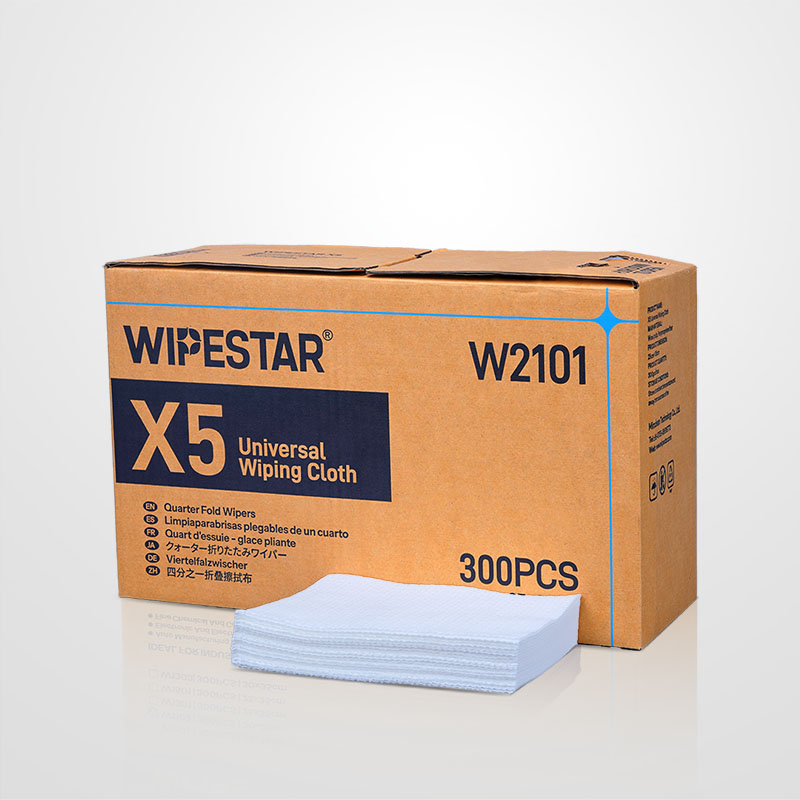
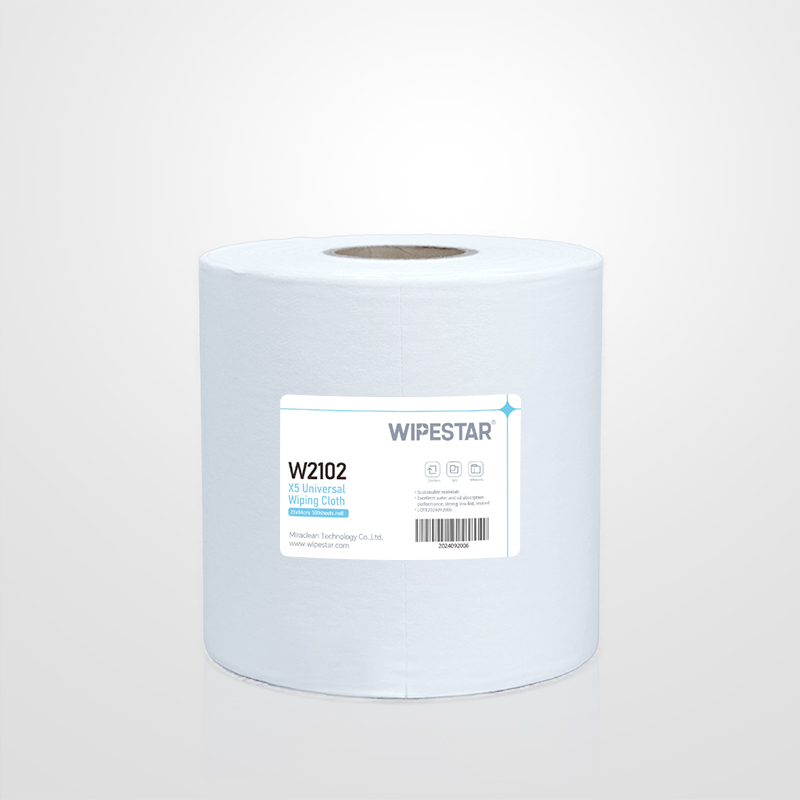
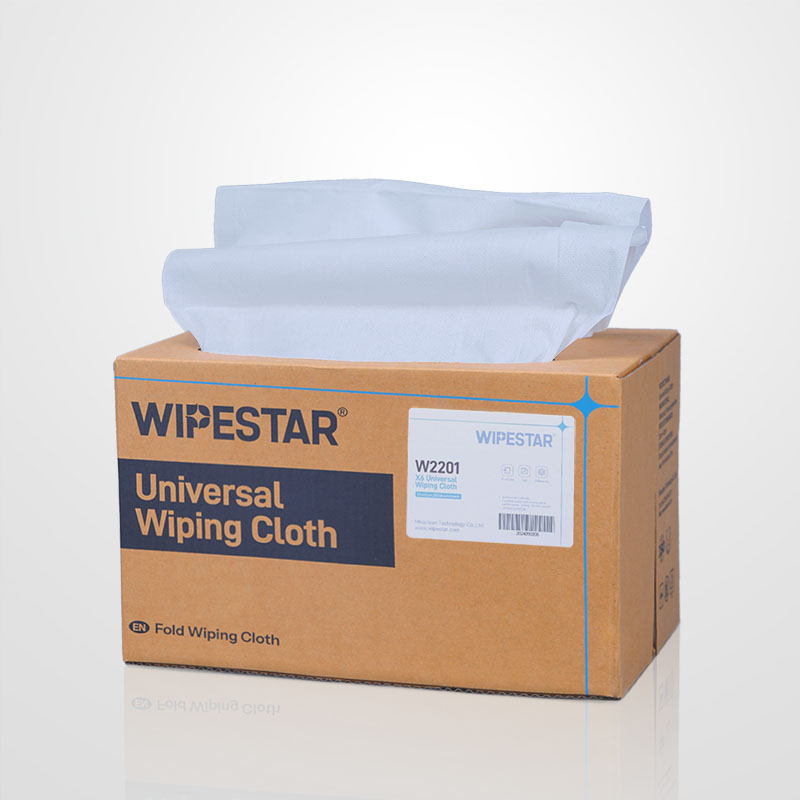
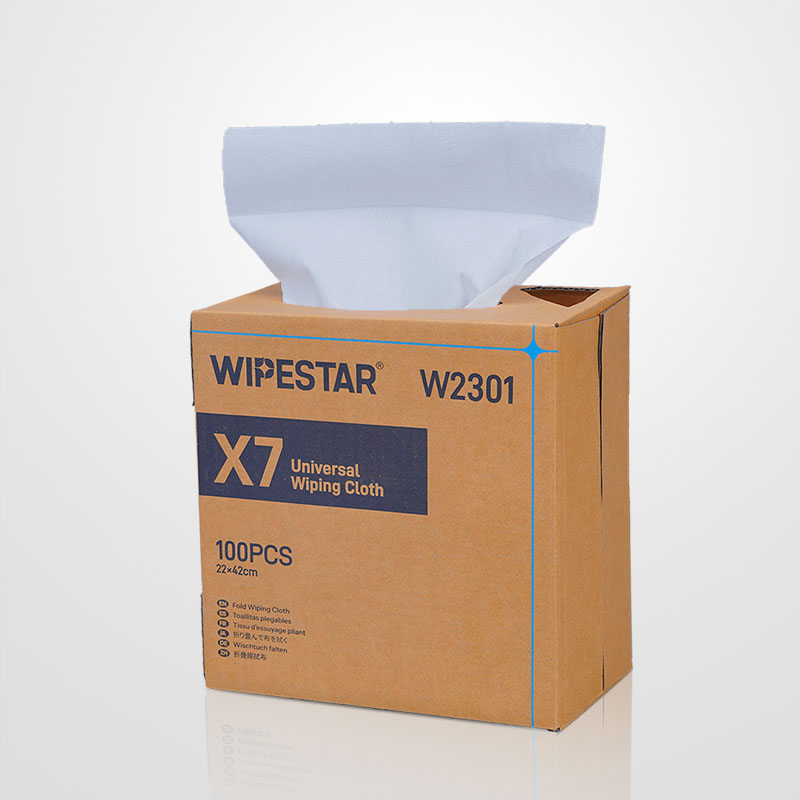
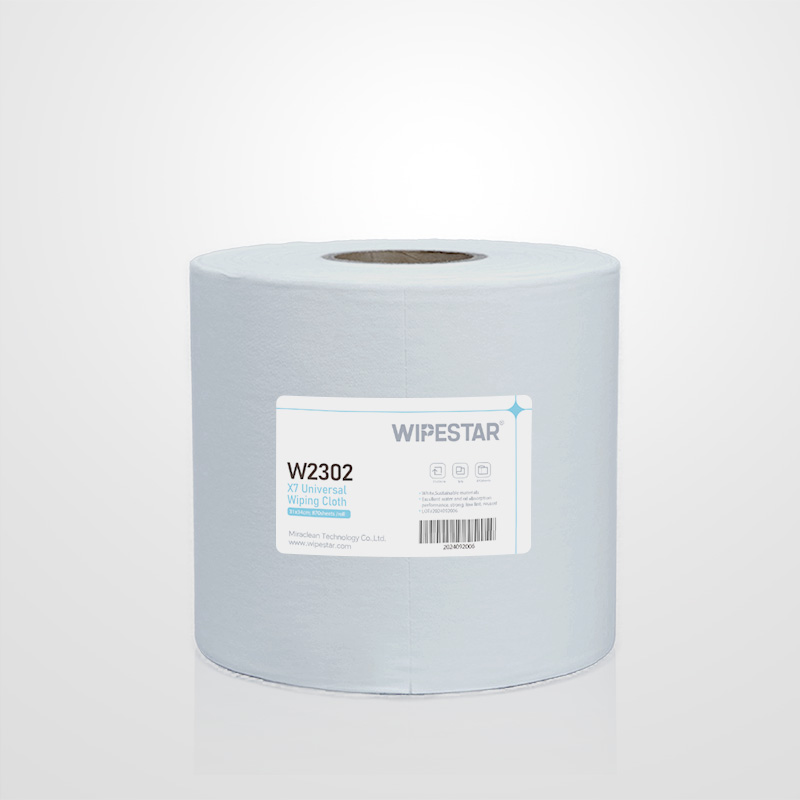
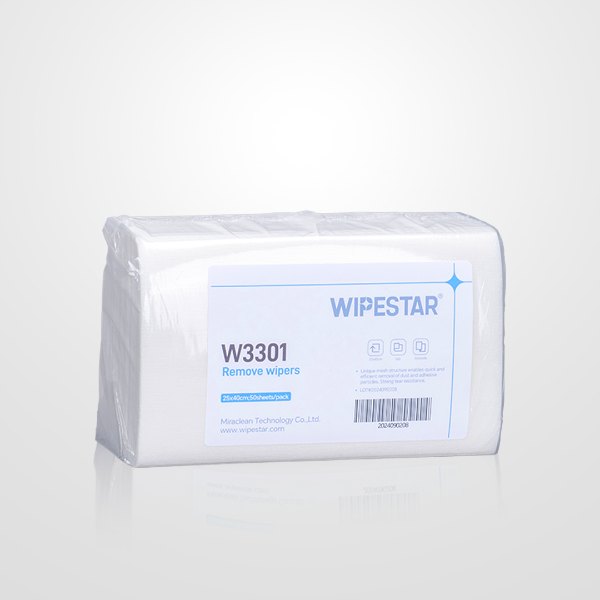
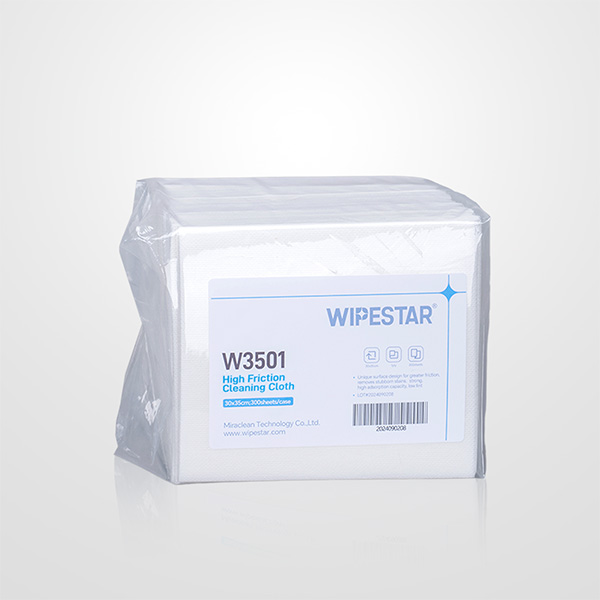
WIPESTAR’s wiping cloths range covers all these material types, from general-purpose options to validated cleanroom wipers for labs operating within classified environments.
One thing worth paying attention to: edge type. Cut-edge wipes shed more particles at the border than sealed alternatives. For critical applications — optical cleaning, precision instrument maintenance — heat-sealed or ultrasonic-sealed edges make a real difference.
Where Lab Wipes Actually Get Used
The range of applications in a typical research or analytical lab is broader than most people think when they first start sourcing cleaning consumables. A few common scenarios:
Optical and spectroscopy equipment. Lenses, mirrors, detector windows, fiber optic connectors. These surfaces are sensitive to both particles and chemical residues. A wipe that leaves even trace amounts of NVR (non-volatile residue) can affect readings. Polyester wipes with low NVR content are the standard here.
Analytical balances and weighing areas. Contamination on a balance pan or surrounding surface affects measurement accuracy. Dust-free lab wipes that don’t shed particles onto the weighing area are essential for maintaining calibration integrity.
Chromatography and sample preparation. Bench surfaces, vials, connectors, and tubing fittings all need regular cleaning. Solvent-compatible wipes that don’t leave residue are critical — any contamination here ends up in your sample.
General bench and equipment maintenance. Day-to-day surface cleaning between experiments, equipment wipe-downs at the end of a shift, spill response. This is where a good multi-purpose wipe earns its place — versatile enough for most daily tasks without requiring specialized products for every situation.
Lab Swabs: Precision Cleaning Where Wipes Can’t Go
Flat surfaces are straightforward. The challenge comes with connectors, ports, instrument gaps, pipette tips, and any geometry where a wipe simply won’t fit or can’t apply consistent pressure.
That’s the job of laboratory cleaning swabs. The same low-contamination principles apply, but now tip geometry and shaft length become the key variables.
Foam-tipped swabs (polyurethane) are the most common choice for general lab precision cleaning. The open-cell structure absorbs solvent and captures particles effectively, and the soft foam is gentle on delicate surfaces. Polyester-tipped swabs offer lower particle generation for more critical applications.
A few things to check before committing to a swab product:
- Bonding method — Is the tip attached with adhesive or thermal bonding? Adhesive-bonded tips can leave residue on surfaces. Hot-pressed bonding is cleaner.
- Shaft length — Match the length to your access requirements. Too short and you’re forcing awkward angles; too long and you lose control of the tip.
- Tip size — Larger tips cover more surface area but can’t reach tight spaces. Pointed or narrow tips access confined areas but require more passes for broader surfaces.
- Solvent compatibility — Verify the foam or fiber material holds up to your cleaning solvent without degrading or releasing particles.
Matching Products to Lab Type
Not all labs have the same requirements. Here’s a practical breakdown:
| Lab Type | Key Cleaning Needs | Recommended Products |
|---|---|---|
| Analytical / Metrology | Optical surfaces, balance pans, instrument housings | Polyester wipers, foam swabs |
| Life Sciences / Biotech | Biosafety cabinets, bench surfaces, equipment prep | Cellulose/polyester wipes, polyester swabs |
| Materials Testing | Sample prep surfaces, equipment maintenance | Multi-purpose wipes, foam swabs |
| R&D / Prototype Labs | Mixed tasks, varied equipment, general maintenance | Universal wiping cloths, foam swabs |
| Cleanroom-Adjacent Labs | ISO-classified zones, validated cleaning protocols | Sealed-edge cleanroom wipers, ISO-validated swabs |
The Contamination You Don’t See
One thing that doesn’t get enough attention in lab cleaning discussions: residue from the cleaning tool itself.
NVR — non-volatile residue — is what’s left behind after a solvent evaporates. A wipe that leaves even trace NVR on an optical surface, a balance pan, or a chromatography fitting introduces a variable into your measurements. It’s invisible to the naked eye, but it shows up in your data.
This is why the manufacturing quality of laboratory cleaning wipes matters beyond just the material. WIPESTAR produces its wiping cloths and swabs under ISO 9001-certified quality management, with products tested for particle generation, NVR, and ionic contamination. That documentation is what lets you defend your cleaning protocol when results are questioned.
Practical Tips for Lab Cleaning Consumable Selection
A few things that come up repeatedly when labs are evaluating cleaning products:
Don’t assume “lint-free” means low particle. The term is used loosely. Ask for actual particle count data and NVR test results. Reputable manufacturers have this documentation ready.
Test with your actual solvents. Compatibility data sheets cover common solvents, but if you’re using something less standard, test the wipe material before committing to a large order. Some materials degrade with repeated exposure to certain solvents.
Match the product to the task. You don’t need a validated ISO 5 wiper for general bench cleaning. Tiering your consumable selection by application saves cost without compromising critical areas.
Consider packaging. For labs with strict contamination protocols, individually wrapped or cleanroom-packaged consumables reduce the risk of contamination before the wipe even reaches the work surface.
WIPESTAR Products for Laboratory Use
WIPESTAR manufactures a full range of lab cleaning consumables suitable for research, analytical, and controlled laboratory environments:
- Wiping cloths — Polyester, cellulose/polyester, rayon/polyester, and wood pulp blends. Multiple sizes and edge types including cut, heat-sealed, laser-sealed, and ultrasonic-sealed options.
- Cleanroom swabs — Foam, polyester, ESD-safe, and cotton options. Multiple lengths from 60mm to over 180mm, various tip geometries for different access requirements.
- W1503 multi-purpose wipes — Cellulose/polyester construction, low debris shedding, oil absorbent, dry and wet use. A practical choice for general lab bench and equipment cleaning.
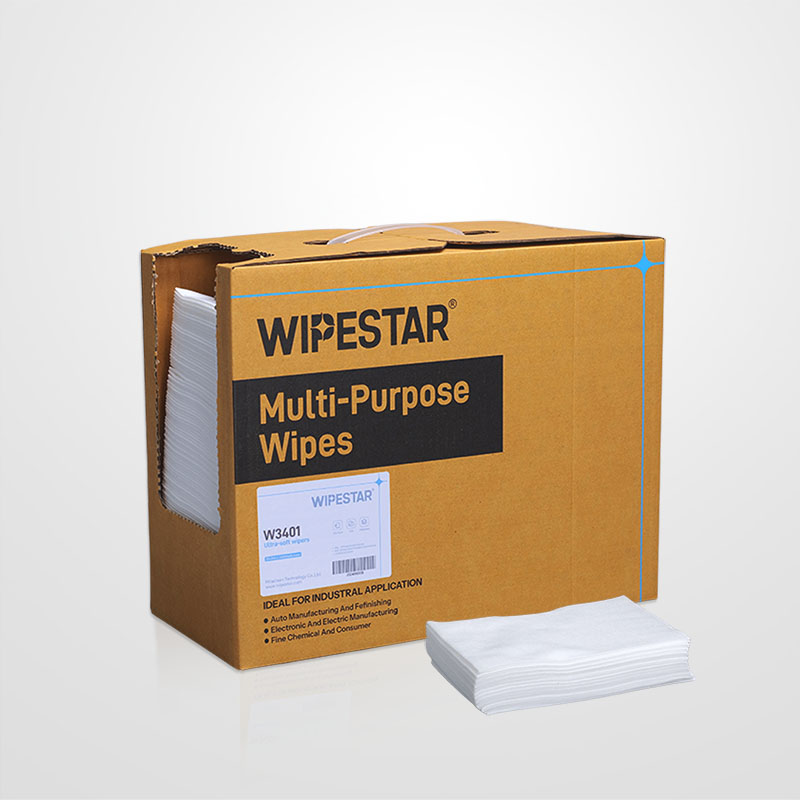
- W3401 ultrasoft surface preparation wipes — Rayon/polyester, 25cm × 30cm, for delicate surfaces and final prep before sensitive measurements.
- Full product catalog — Including surface preparation wipes, SMT stencil wiping rolls, oil absorbent cloths, and more.
Frequently Asked Questions
What type of wipes are safe to use in a laboratory?
Labs should use low-particle, lint-free wipes made from polyester, cellulose/polyester blends, or rayon/polyester materials. These minimize fiber shedding and residue that could interfere with experiments or contaminate samples. Standard paper towels or shop rags shed fibers and leave residue — avoid them for anything near instruments or samples.
Can laboratory wipes be used with IPA and acetone?
Yes. Quality laboratory cleaning wipes made from polyester or cellulose/polyester blends are compatible with isopropyl alcohol (IPA), acetone, methanol, and other common lab solvents. Always verify chemical compatibility for your specific solvent and surface before use, particularly for delicate coatings or optical elements.
What’s the difference between lab wipes and cleanroom wipes?
Cleanroom wipes are manufactured and tested to meet specific ISO classification standards for particle counts, NVR, and ionic contamination. Laboratory wipes may share similar materials but aren’t always validated to the same ISO standards. For labs operating within classified cleanroom zones, ISO-validated wipes are the right choice.
For samples, technical documentation, or volume pricing on WIPESTAR laboratory cleaning consumables, contact the team at info@wipestar.com or visit www.wipestar.com.
Related: Wiping Cloths · Cleanroom Swabs · All Products · Cleanroom Industry
Tags: analytical instrument cleaning · cellulose polyester wipes · dust-free lab wipes · lab cleaning consumables · lab surface wipes · lab wipes IPA compatible · laboratory cleaning wipes · laboratory contamination control · laboratory swabs · lint-free lab wipes · low particle lab wipes · polyester lab wipes · research lab cleaning · WIPESTAR laboratory products



Comments & Discussion