If you’ve ever walked a medical device manufacturing floor, you know the feeling. Everything looks impossibly clean — and it has to be. A single particle that lands on a surgical implant during packaging doesn’t just fail inspection; it could end up inside a patient. That’s the reality of this industry, and it shapes every consumable decision made on those floors.
Choosing the right medical devices cleanroom wipes and consumables isn’t about buying the most expensive option — it’s about understanding what your process actually needs and matching it to the right product. This guide breaks down what we see working across medical device manufacturing environments worldwide.
Why Medical Device Manufacturing Has Unique Cleanroom Requirements
Most industries talk about cleanrooms. Medical device manufacturing lives in them. The regulatory framework — FDA 21 CFR Part 820 in the US, MDR in Europe, NMPA in China — doesn’t just require cleanliness. It requires documented proof of cleanliness at every stage.
That changes the calculus in a few ways:
- Traceability matters as much as performance. Every wipe lot used in a critical cleaning step is potentially part of your audit trail. Products that come with batch-level test reports aren’t just nice to have — they’re often a regulatory requirement.
- Secondary contamination is the hidden enemy. Using a wipe that sheds fibers is worse than using no wipe at all. You’ve introduced the very contamination you were trying to remove.
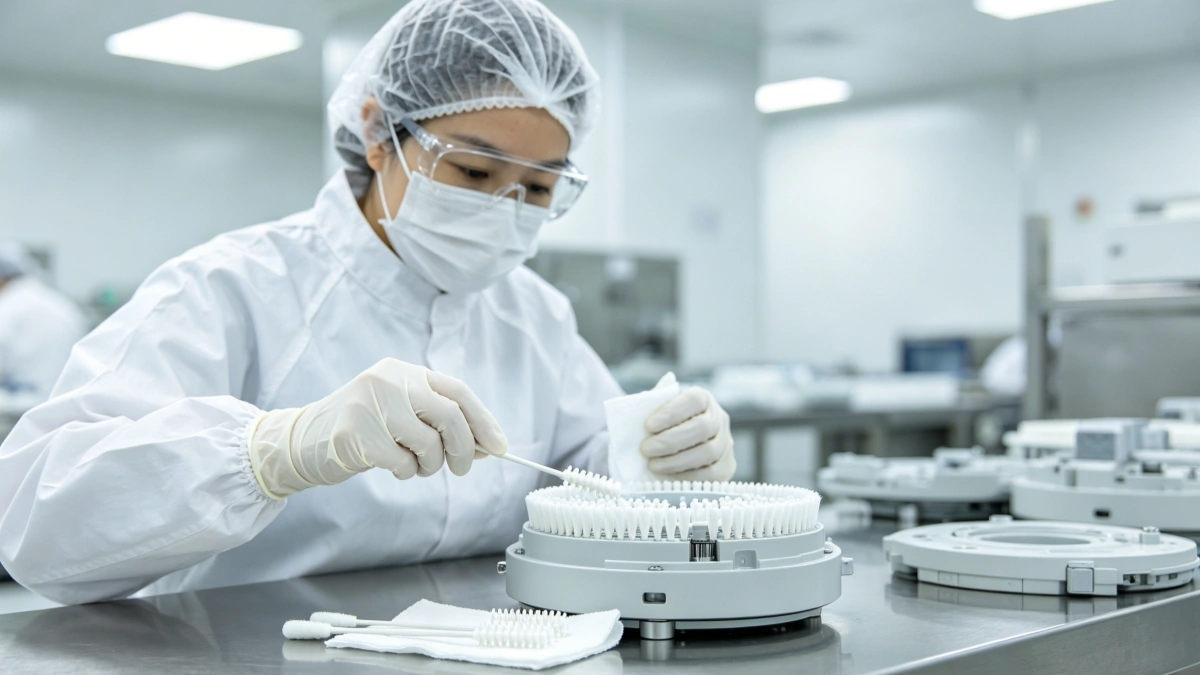
- Gap cleaning is non-negotiable. Surface wiping handles the obvious areas. But connectors, tool recesses, and equipment gaps are where contamination hides — and that’s where cleanroom swabs become essential.
- Sterilization compatibility is mandatory. Wipes used pre-sterilization must survive gamma irradiation, autoclaving, or EtO gas without degrading or releasing residues.
The Three Main Categories of Medical Device Cleanroom Consumables
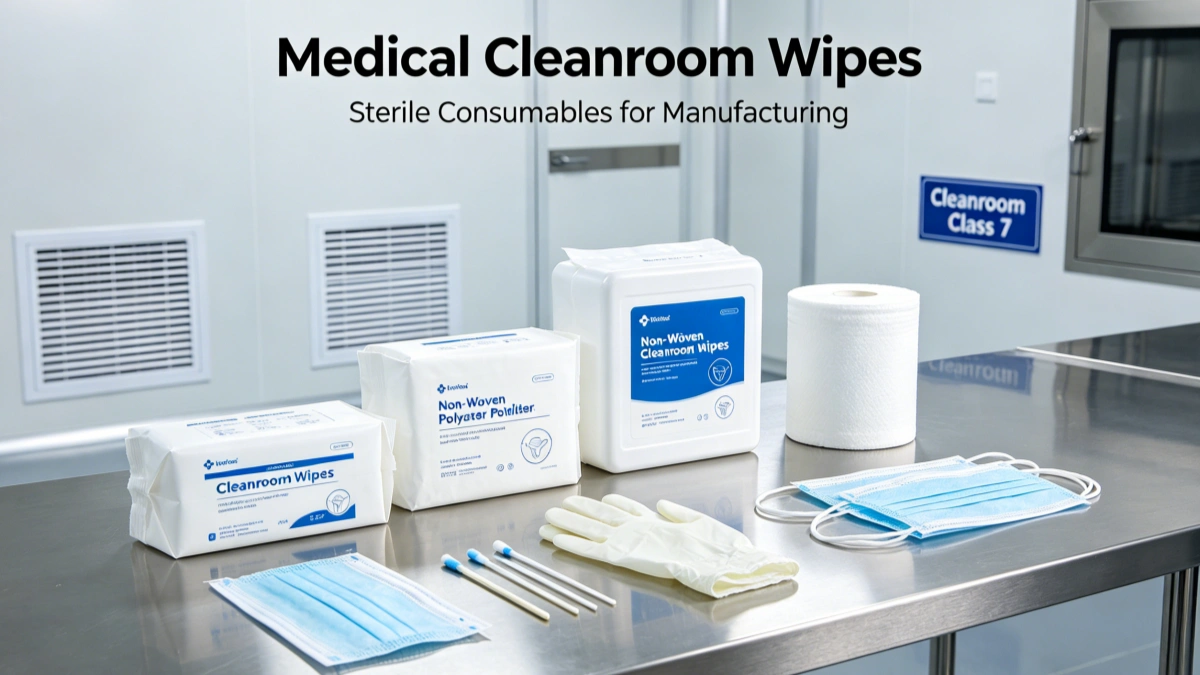
Cleanroom Wipes for Surface Cleaning
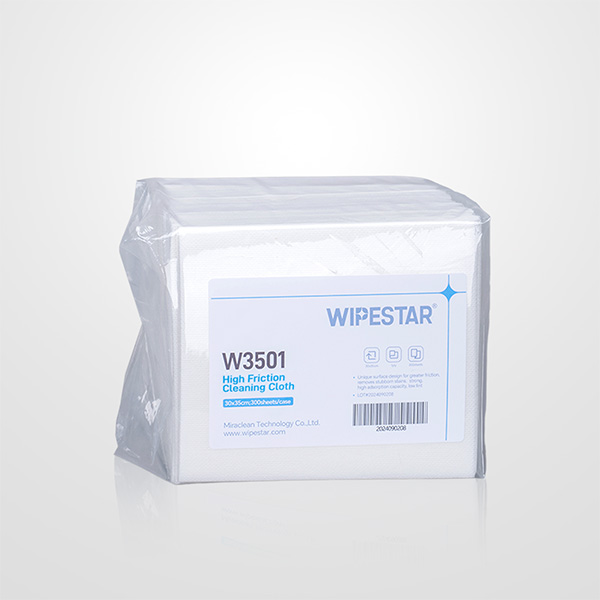
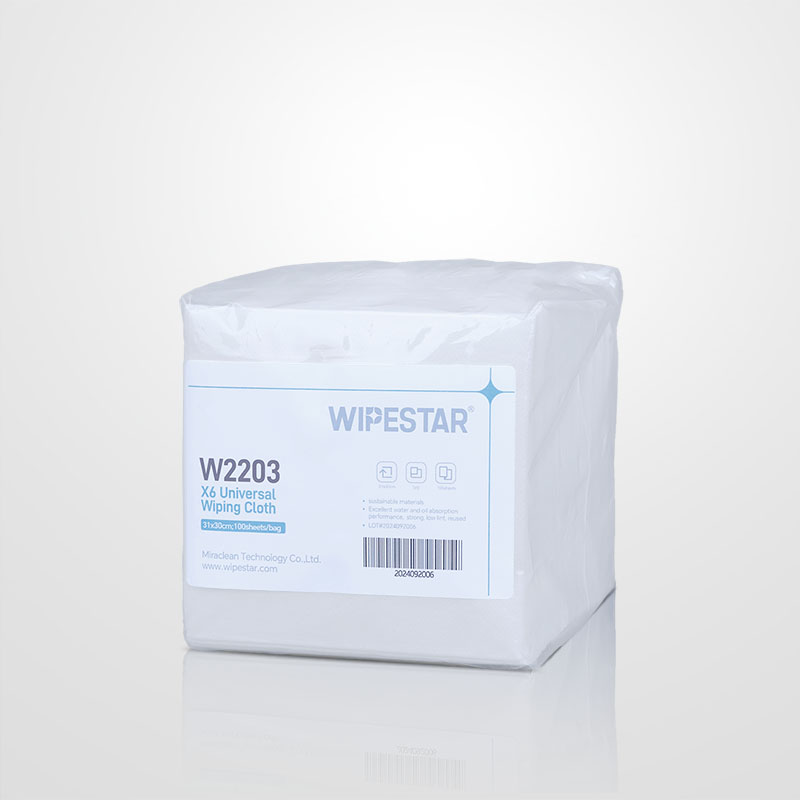
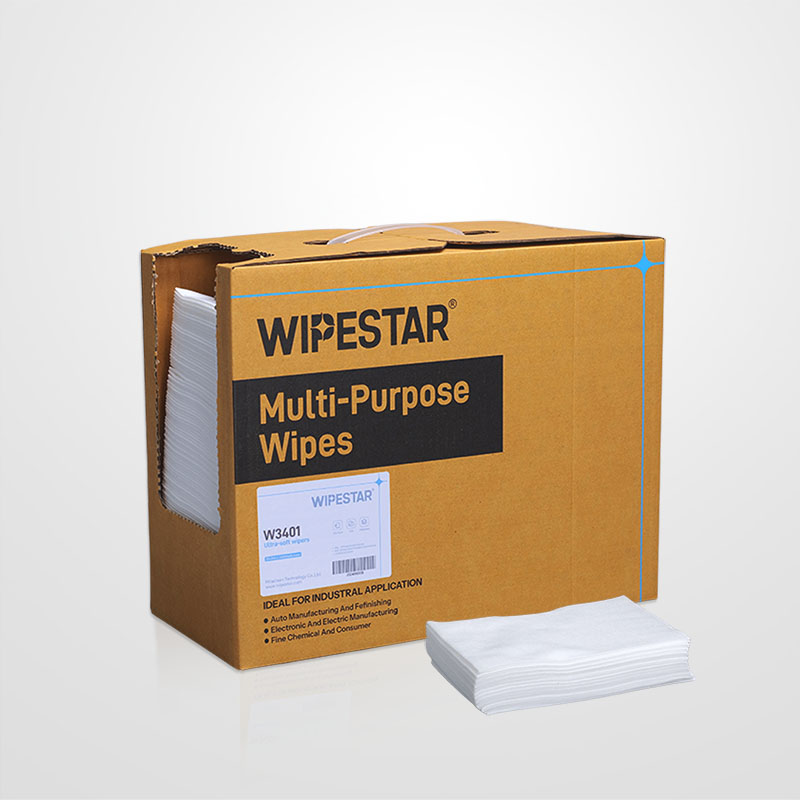
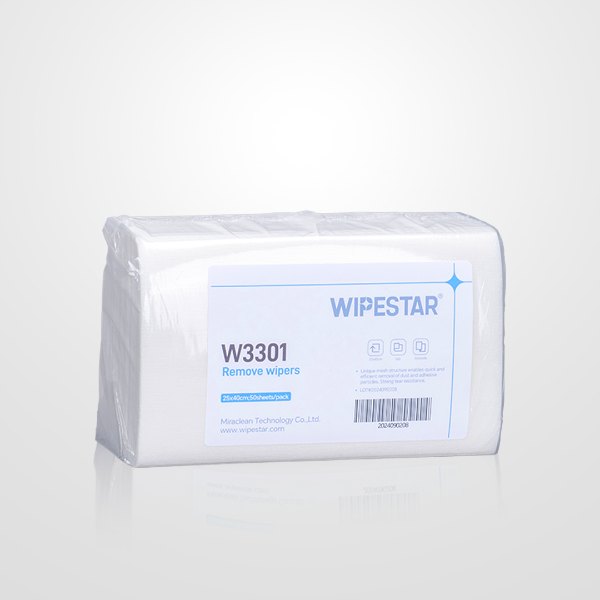
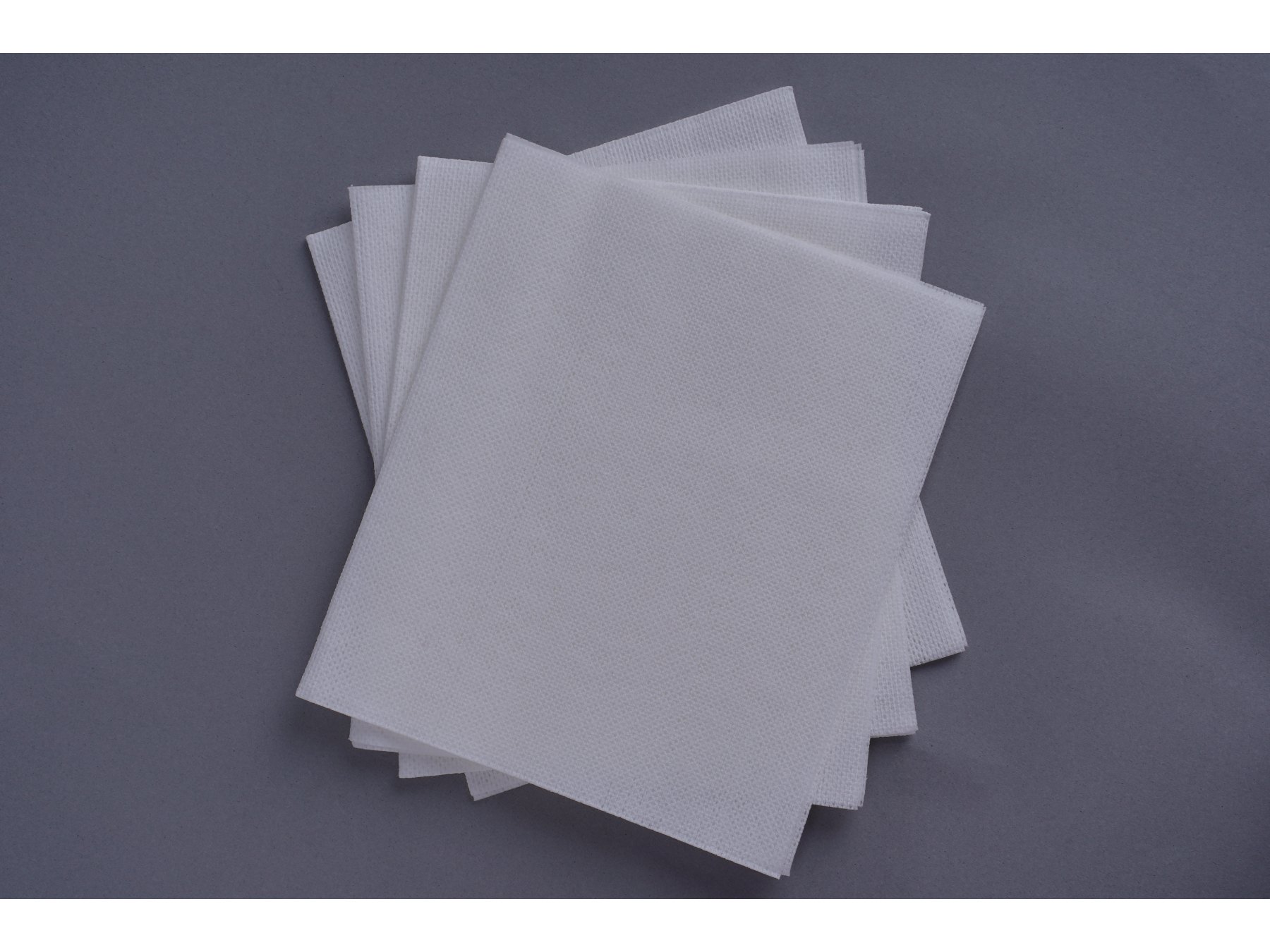
Surface wiping covers the most area in any cleanroom cleaning protocol. In medical device manufacturing, this means everything from wiping down packaging stations to pre-cleaning tooling before assembly. The key specification is low particle and fiber release — the wipe itself can’t be a contamination source.
For cleanroom wipes in medical device settings, laser-sealed or ultrasonic-sealed edges are standard for ISO Class 5-7 environments. Cut-edge wipes are acceptable for lower-class controlled environments but are worth reconsidering if you’re running into recurring particle failures.
Material choice depends on your cleaning application:
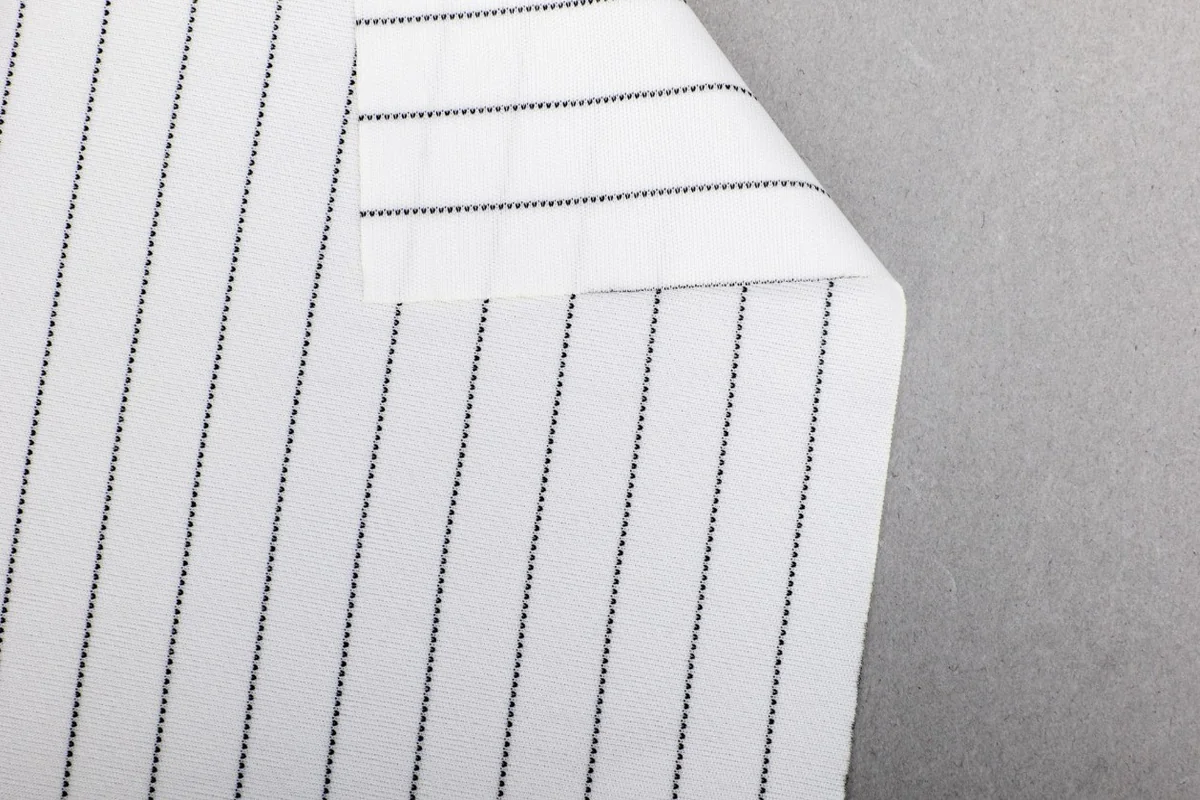
- 100% polyester knit — lowest fiber release, excellent chemical resistance (IPA, acetone, DI water), compatible with most sterilization methods. Ideal for precision device assembly areas.
- Cellulose/polyester blends — higher absorbency, better wet strength, more economical. Better suited for packaging areas and facility cleaning than active manufacturing zones.
- Polypropylene — excellent chemical resistance to acids and solvents, hydrophobic. Good choice for pharmaceutical-cleanroom crossover environments.
Cleanroom Swabs for Precision Cleaning
Here’s where a lot of medical device manufacturers cut corners — and regret it later. Flat surfaces are easy to wipe. The 3D geometry of assembly tooling, connector ports, and equipment recesses is where contamination accumulates and causes problems.
Cleanroom swabs designed for medical device manufacturing cover a range of tip materials and sizes:
- Polyurethane foam swabs — excellent absorption, soft enough for sensitive components, chemically compatible with IPA and common solvents. Sizes from 60mm to over 180mm cover different tool geometries.
- Polyester knit swabs — low particle release, good for precision cleaning where absorbency is less critical than contamination control.
- TOC validation swabs — specifically designed for Total Organic Carbon testing during cleaning validation. If you’re running TOC as part of your release protocol, these swabs are non-negotiable — standard swabs can introduce false positives.
The WIPESTAR swab range spans from compact 60-80mm tips for tight spaces up to 180mm+ swabs for deep tooling recesses. Matching the swab length to the tool geometry isn’t optional — undersized swabs won’t reach the contamination zone.
Dust-Free Wiping Papers for Equipment and Tool Cleaning
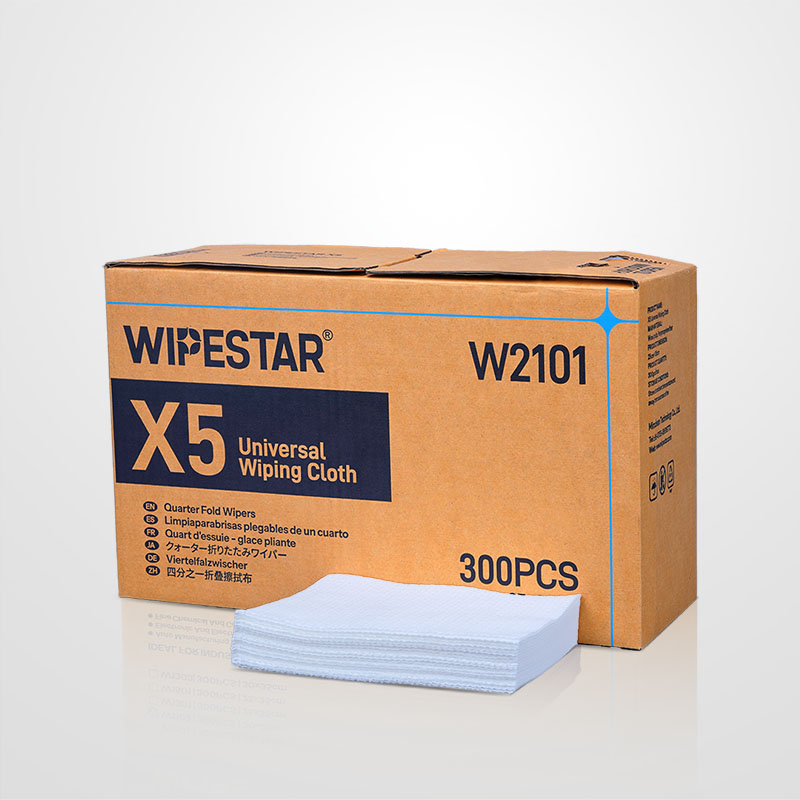
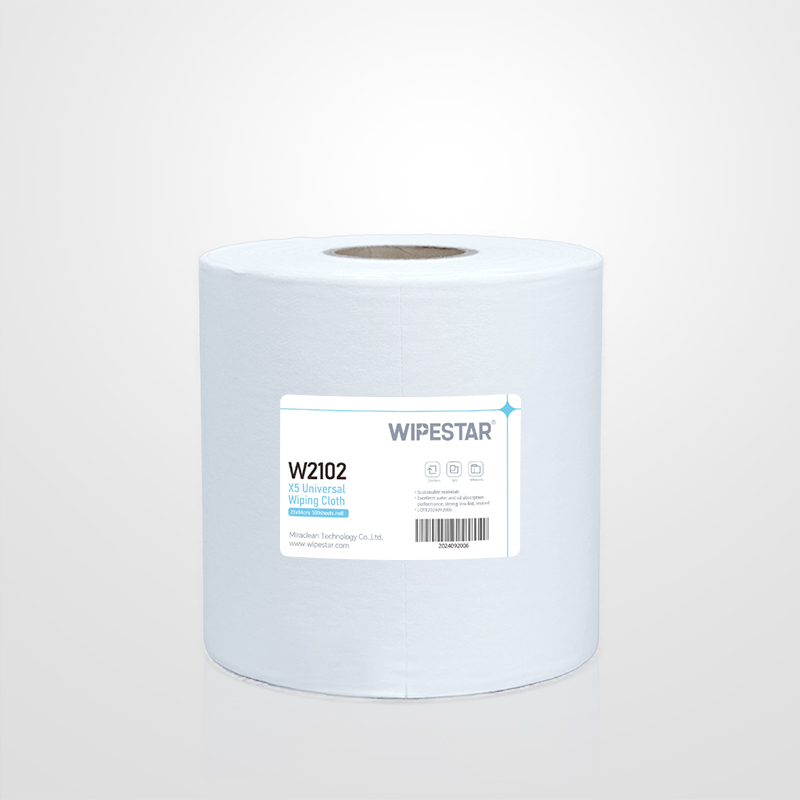
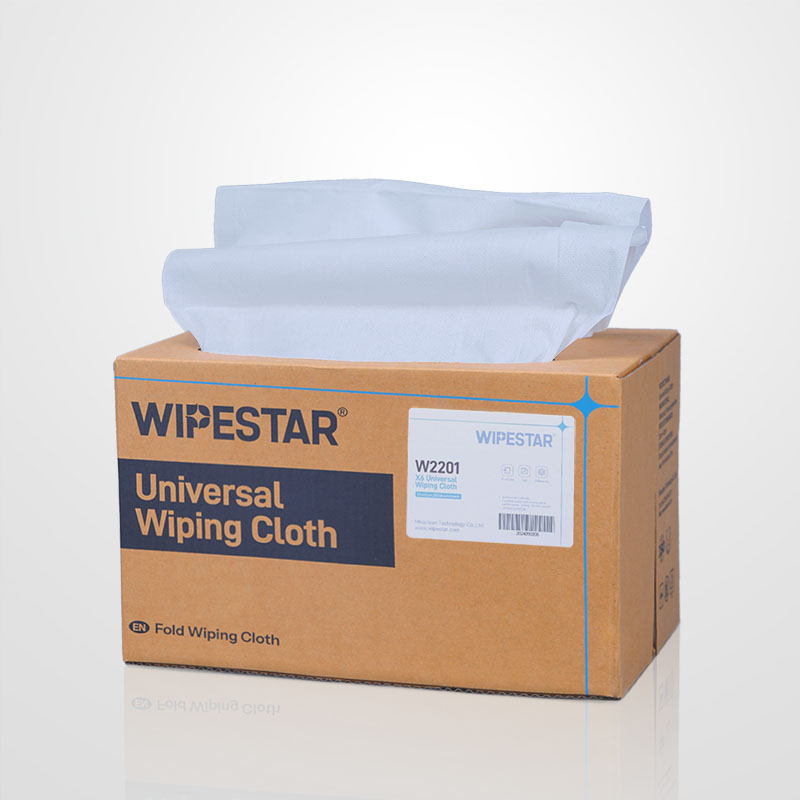
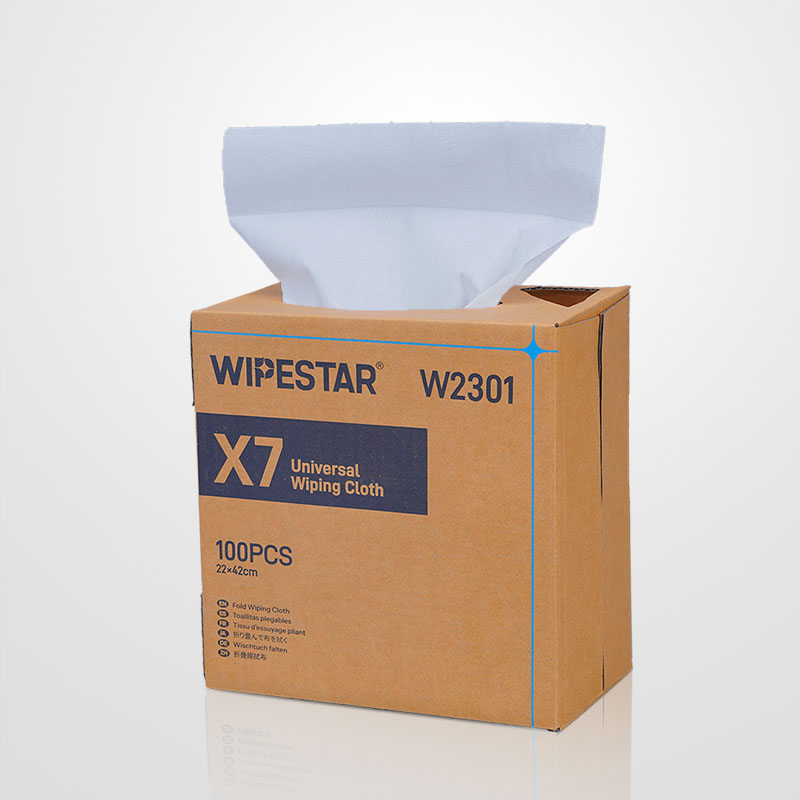
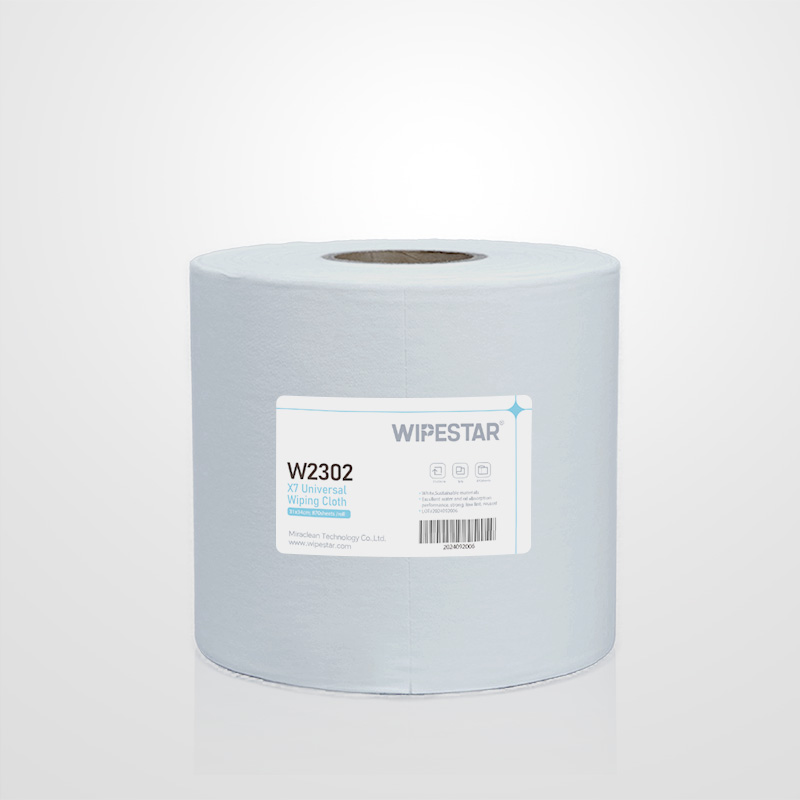
Outside the ISO-rated cleanroom — in the transition areas, material staging zones, and equipment maintenance bays — you still need controlled-lint cleaning materials. Dust-free wiping papers are the workhorse here. They’re specifically manufactured to collect dust and particles from equipment surfaces without shedding their own fibers.
The gram weight and ply structure of wiping papers affect both absorbency and durability:
- 1-ply efficient papers — lightweight, economical, suitable for light-duty wiping and equipment dusting.
- 2-ply and 3-ply standard papers — better wet strength, higher absorbency, preferred for tool cleaning and solvent wiping in transition areas.
The critical point: not all “wiping papers” are dust-free. Standard paper towels or hygiene-grade papers are manufactured to different standards. Industrial wiping papers certified for cleanroom-adjacent use undergo particle and NVR testing — the difference is measurable under a microscope.
What Regulatory Standards Actually Require
Medical device manufacturers operate under some of the strictest contamination control requirements in any industry. Here’s what that translates to in practical terms for your consumables:
ISO 13485 and Cleanroom Classification
ISO 13485 certification doesn’t specify which wipes to use — but it does require documented evidence that your cleaning processes are controlled. That means the consumables you use are part of your quality management system. Products with certificates of conformance, batch test reports, and documented shelf life are baseline requirements for most audited facilities.
Your cleanroom classification (ISO Class 5 through ISO Class 8) dictates acceptable particle levels for all incoming materials, including cleanroom consumables. Higher classification = tighter particle specifications = more expensive consumables. Don’t overspecify — but definitely don’t underspecify.
Sterilization Compatibility
If your devices go through gamma irradiation, EtO sterilization, or autoclaving, the consumables used in pre-sterilization assembly need to survive those processes without degrading. Common failure modes:
- Color bleed — dyes from colored wipes migrating into packaging
- Residue release — surface treatments or coatings breaking down under radiation
- Physical degradation — fabric integrity failing after sterilization cycles
White, undyed, 100% polyester knit wipes are the safest choice for pre-sterilization environments. Anything with added treatments needs compatibility verification before use.
Cleaning Validation and TOC Testing
For devices requiring cleaning validation (reusable devices, combination products), your cleaning protocol includes Total Organic Carbon (TOC) testing. The swabs used in TOC sampling must be specifically validated for low background TOC levels — using the wrong swab introduces measurement error that can cause false failures or false passes.
WIPESTAR’s TOC cleaning validation swabs are designed to minimize their own TOC contribution, giving you accurate data from your cleaning validation studies.
Building a Contamination Control Protocol That Works
We see a lot of medical device manufacturers overcomplicate their cleaning protocols. Here’s a simpler framework:
Zone Your Cleaning
Not every area needs the same level of consumable. Split your facility into zones:
- Core ISO cleanroom (Class 5-7): Laser-sealed polyester wipes, foam or polyester swabs with batch test reports, single-use only.
- Transition areas and staging: High-quality wiping papers and industrial wipes, still lint-controlled but with broader acceptance criteria.
- Maintenance and facility areas: Heavy-duty industrial wipes, color-coded to prevent cross-contamination into clean zones.
Document Everything
Batch traceability isn’t just for regulatory audits — it’s for your own root cause analysis. When a contamination event happens (and eventually one will), you want to be able to pull the lot number of every wipe and swab used in that area over the preceding shift. WIPESTAR products ship with batch-level documentation that makes this straightforward.
Validate Before You Standardize
If you’re switching suppliers or product grades, run a cleaning validation study before fully rolling out. The cost of a short study is trivial compared to the cost of a product recall triggered by contamination you didn’t detect in time.
Frequently Asked Questions
What’s the difference between cleanroom wipers and industrial wipes in medical device manufacturing?
Cleanroom wipers are manufactured, packaged, and tested to strict contamination-control standards — particle counts, fiber release, NVR (non-volatile residue), and ionic contamination are all specified and verified. Industrial wipes are manufactured for durability and absorbency, not for controlled contamination levels. In medical device manufacturing, using industrial-grade wipes inside or adjacent to cleanrooms introduces an uncontrolled variable that audits will flag.
How do I choose the right wipe for my medical device cleanroom class?
Match the wipe specification to your cleanroom class. ISO Class 5-6 (Class 100-1000) environments require laser-sealed polyester or equivalent. ISO Class 7-8 (Class 10,000-100,000) can accept heat-sealed or ultrasonic-sealed alternatives. Cut-edge wipes are generally limited to controlled-but-non-classified areas. When in doubt, request the product’s particle count data sheet and compare it against your cleanroom’s particle limits.
Why are TOC validation swabs different from regular cleanroom swabs?
TOC validation swabs are manufactured with controlled background carbon levels. Regular cleanroom swabs may contain organic residues from manufacturing — adhesives, handle treatments, packaging materials — that contribute to the TOC reading even when the surface being tested is clean. Using the wrong swab in TOC cleaning validation can cause false failures (clean surfaces appearing contaminated) or hide true failures. It’s a surprisingly common and expensive mistake.
Can I reuse cleanroom wipes in medical device manufacturing?
Single-use is the standard for ISO-rated cleanroom zones. Reuse introduces cross-contamination risk and lot traceability problems. For transition areas and facility cleaning outside the cleanroom, reusable wipers are acceptable if laundered under a validated cleanroom laundry protocol. Never launder cleanroom-grade wipers in a standard laundry — you’ll spread contamination.
How should medical device cleanroom consumables be stored?
Store sealed original packaging in a clean, dry environment at controlled temperature (typically 15-30°C) and moderate humidity (30-60% RH). Keep packaging sealed until the point of use — opening a bag of cleanroom swabs starts the clock on potential contamination. FIFO (first in, first out) rotation is essential for products with shelf life limits. Some sterilized or treated products have expiry dates that are strictly enforced in regulated environments.
Get the Right Consumables for Your Medical Device Facility
WIPESTAR supplies cleanroom wipes, swabs, and wiping papers to medical device manufacturers globally. Every product ships with batch-level documentation suitable for inclusion in your quality management system. Sample requests, volume pricing, and technical specifications are available through our contact page.
If you’re evaluating a protocol change or need help specifying the right product for a specific application, our technical team can review your requirements and recommend options. Browse the full product range or get in touch directly.
Published April 2026. Product specifications and availability subject to change. Verify current specifications against WIPESTAR product data sheets before specifying for regulated manufacturing processes.