

If you work in pharmaceuticals, electronics assembly, or any controlled-environment manufacturing, you already know the stakes. A single stray fiber on a circuit board can cause a field failure. A contaminated surface in a cleanroom can derail an entire production batch. And yet, the humble wiping cloth is one of the most overlooked pieces of the contamination control puzzle.
Non-woven cleanroom wipers sit at the intersection of material science and practical cleaning. They are not your average shop rag. They are engineered, tested, and classified for use in environments where particle counts are measured and monitored. This guide breaks down what makes them different, which industries depend on them, and how to choose the right type for your application.
What Exactly Is a Non-Woven Cleanroom Wiper?
The term “non-woven” refers to how the fabric is made. Unlike woven textiles — which use interlaced threads on a loom — non-woven fabrics are produced by bonding fibers together through mechanical, chemical, or thermal processes. In the case of cleanroom wipers, the most common method is spunlace technology, which uses high-pressure water jets to entangle fibers into a cohesive sheet.
The result is a fabric that doesn’t shed. No loose threads, no lint, no particle generation. That’s the whole point.
Most professional-grade non-woven cleanroom wipers combine two materials: cellulose and polyester. A typical blend like 55% cellulose and 45% polyester gives you the best of both worlds. The cellulose component delivers excellent liquid absorption — it soaks up solvents, water, and oils quickly. The polyester component adds chemical resistance and structural integrity, so the wipe doesn’t fall apart when you’re scrubbing a stubborn residue with IPA or acetone.
You can browse the full range of wiping cloths to see how different material combinations serve different cleaning needs.
Why “Non-Woven” Over “Woven” — And When It Makes a Difference
The woven vs. non-woven debate isn’t about one being universally better. It’s about fit for purpose.
Woven polyester wipers (like knitted polyester) are the go-to for the most stringent cleanroom classes — think ISO Class 3–5 semiconductor fabs. They can be laser-cut or ultrasonic-sealed to eliminate edge particles, and they withstand hundreds of wash cycles. But they’re expensive.
Non-woven wipers fill a critical middle ground. They offer strong particle-trapping capability, high absorbency, and solvent compatibility at a lower cost per wipe. For ISO Class 6–8 environments, general cleanroom maintenance, surface preparation, and production line wipe-downs, non-woven is often the practical choice.
Key Advantages of Non-Woven Cleanroom Wipers
- Fast absorption: Cellulose fibers pull in liquids rapidly, cutting wipe-down time on large surfaces.
- Strong solvent resistance: The polyester content holds up against IPA, acetone, and other common cleaning agents without disintegrating.
- Low particle generation: Spunlace bonding means fibers are locked in place — no lint, no contamination.
- Soft texture: Won’t scratch polished surfaces, optical components, or sensitive electronics.
- Cost-effective: Significantly cheaper per unit than woven alternatives, especially for high-volume operations.
- Color options: Blue, white, and other color-coded variants help with cross-contamination control in multi-zone facilities.
Industries That Depend on Non-Woven Cleanroom Wipers
Cleanroom wipers are not a niche product. They show up in more places than most people realize. Here’s where they make the biggest impact.
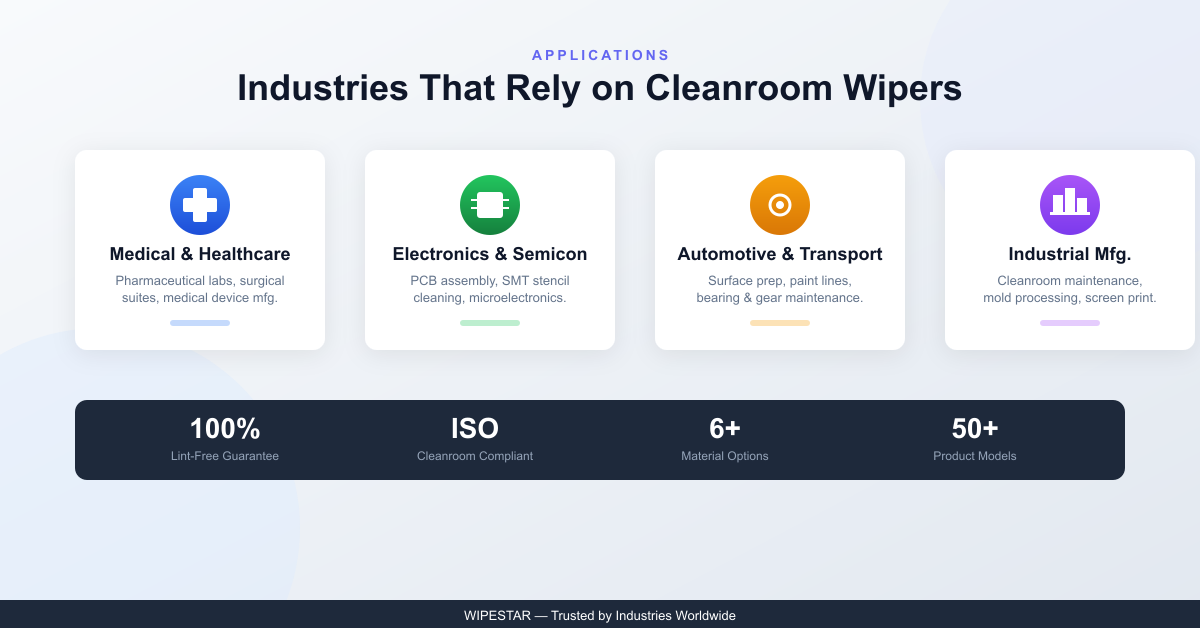
Medical and Pharmaceutical
Hospitals, pharmaceutical manufacturing plants, and medical device production lines operate under strict regulatory frameworks. ISO 14644 cleanroom standards and GMP (Good Manufacturing Practice) guidelines dictate not just what you clean with, but how clean your cleaning materials are.
Non-woven wipers are used to wipe down equipment surfaces, clean connectors and gaps in diagnostic instruments, and prep surfaces before sterile packaging. The lint-free property is critical — stray fibers in a pharmaceutical filling line can compromise drug safety.
The industries served by cleanroom consumables span from surgical suites to vaccine production, and the demand for certified, traceable wiping products keeps growing.
Electronics and Semiconductor
This is where cleanroom culture was born. Wafer fabrication, PCB assembly, SMT stencil cleaning, and flat panel display manufacturing all require particle-free surfaces at every stage.
Non-woven wipers handle the routine tasks — wiping workbenches, cleaning jigs and fixtures, prepping surfaces before conformal coating. For the ultra-critical steps (wafer handling, EUV lithography), facilities typically use woven polyester. But day-to-day? Non-woven does the heavy lifting.
Automotive and Transportation
Surface preparation before painting, cleaning bearing and gear transmission equipment, wiping down molds — automotive and rail transportation manufacturing rely on cleanroom-grade wipers more than you’d think.
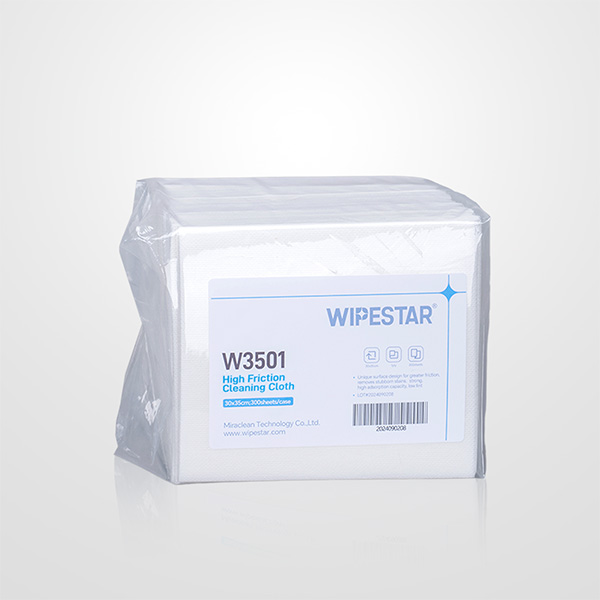
The W3501 heavy-duty surface preparation wipe is a good example: it uses a specially treated mesh surface to increase friction, making it effective at removing tough grease and oil from industrial components. The cellulose/polyester blend holds up under repeated use, which matters when you’re going through hundreds of wipes per shift.
General Industrial Manufacturing
From screen printing to mold processing, from optical lens cleaning to precision metalworking — any process where a contaminant-free surface directly affects product quality benefits from proper wiping materials.
The key insight is this: you don’t need to be running a Class 100 cleanroom to benefit from cleanroom wipers. Any facility that cares about surface quality, particle control, or chemical compatibility should be using engineered wipes instead of rags.
How to Choose the Right Non-Woven Cleanroom Wiper
Not all non-woven wipers are interchangeable. Here’s what to evaluate before placing an order.
Material Composition
The cellulose-to-polyester ratio determines absorbency vs. durability. Higher cellulose = more absorbent but less chemical-resistant. Higher polyester = tougher but less absorbent. For general-purpose cleaning, a 55/45 or 50/50 blend works well.
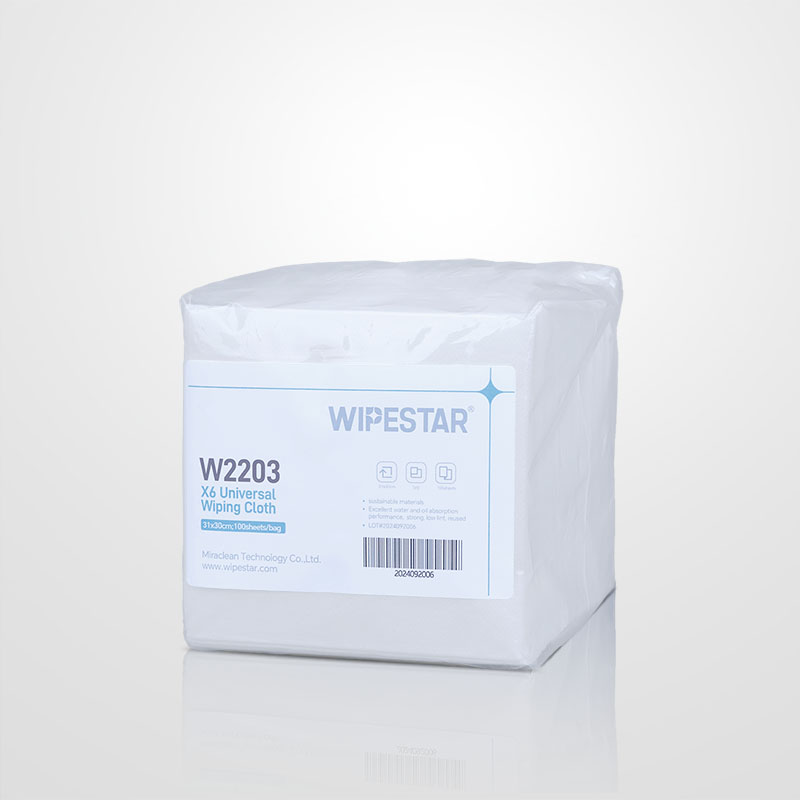
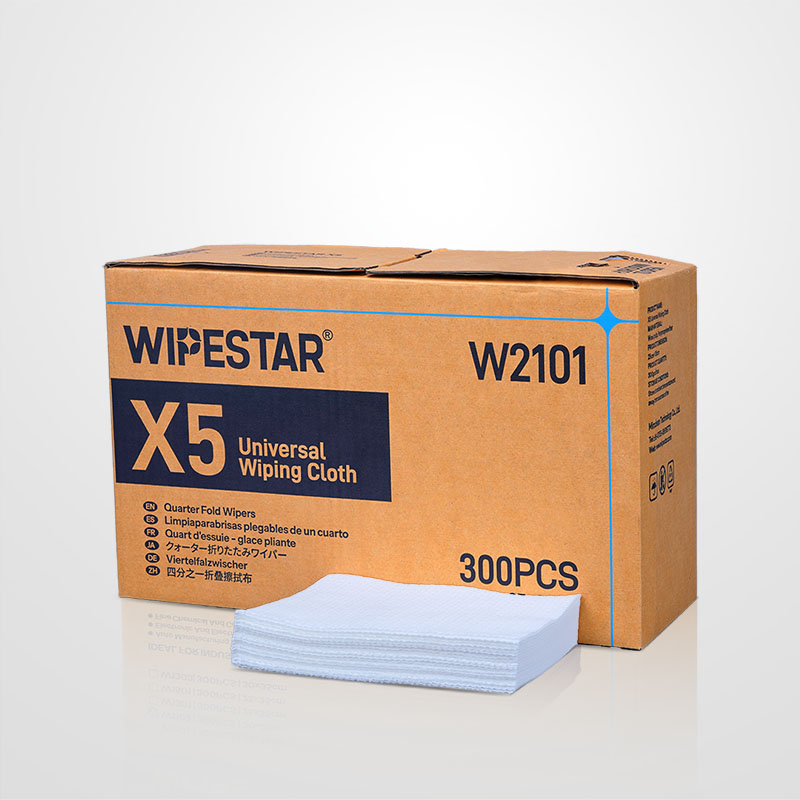
Some applications benefit from alternative materials like rayon/polyester (softer, better for sensitive surfaces) or wood pulp/polypropylene (economical for high-volume, lower-spec tasks). The W2101 universal wiping cloth, for instance, uses a 50% rayon and 50% polyester blend that’s especially gentle on surfaces while still handling solvents like IPA and acetone.
Weight (GSM)
GSM — grams per square meter — tells you how thick and heavy the fabric is. Lighter wipes (40–60 GSM) are fine for light-duty dusting. Heavier wipes (80+ GSM) handle grease removal and heavy solvent use. Match the weight to the task.
Size and Fold
Cleanroom wipers come in standard sizes: 4″, 6″, 9″, and 12″ squares are the most common. Larger wipes cover more surface area per stroke. Smaller wipes are better for detail work and tight spaces. Pre-folded wipes save time on the production floor.
Edge Treatment
Cut edges are standard for non-woven wipers and are perfectly adequate for most applications. If you’re working in a higher-class cleanroom, look for heat-sealed or laser-sealed edges to minimize particle release from the cut boundaries.
Packaging and Cleanroom Compatibility
Wipers should be packaged in cleanroom-compatible bags — typically vacuum-sealed or double-bagged to prevent recontamination during storage and transport. If you’re bringing wipes into an ISO Class 5 or better environment, consider pre-saturated options or wipers that can be wetted with your specific cleaning solution before introduction.
Common Mistakes When Using Cleanroom Wipers
Even the best wiper won’t perform if it’s used incorrectly. Here are the issues we see most often.
Using the Wrong Wiper for the Solvent
Not all non-woven materials resist all solvents equally. Acetone, for example, can degrade certain cellulose-heavy blends faster than IPA. Always check the chemical compatibility chart before pairing a wipe with a cleaning agent.
Reusing Disposable Wipers
Non-woven wipers are generally designed for single use. Reusing them redistributes the contaminants you just picked up. If you need a reusable option, step up to a heavier-weight wipe with higher polyester content — or switch to a woven alternative.
Ignoring the Fold Technique
Fold the wipe into quarters and use each face once. This gives you eight clean surfaces from a single wipe. It sounds basic, but proper folding technique is one of the easiest ways to reduce wipe consumption and improve cleaning results.
Storing Wipers Outside the Cleanroom
Wipers stored in an uncontrolled environment will accumulate ambient particles before you ever open the package. Keep them in the cleanroom ante-area at minimum, and only bring in what you need for the shift.
The WIPESTAR Range: What’s Available
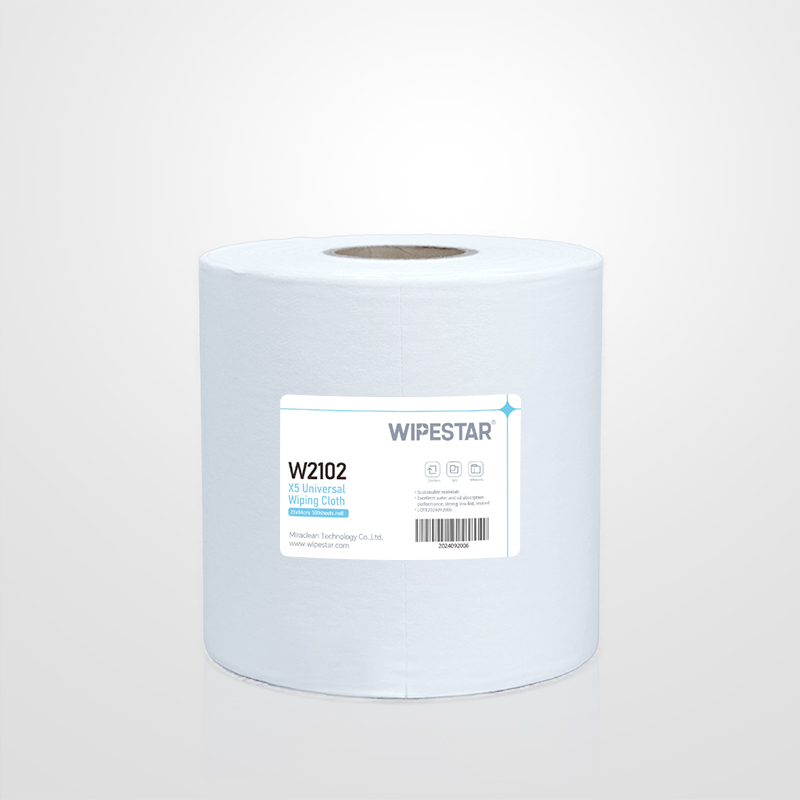
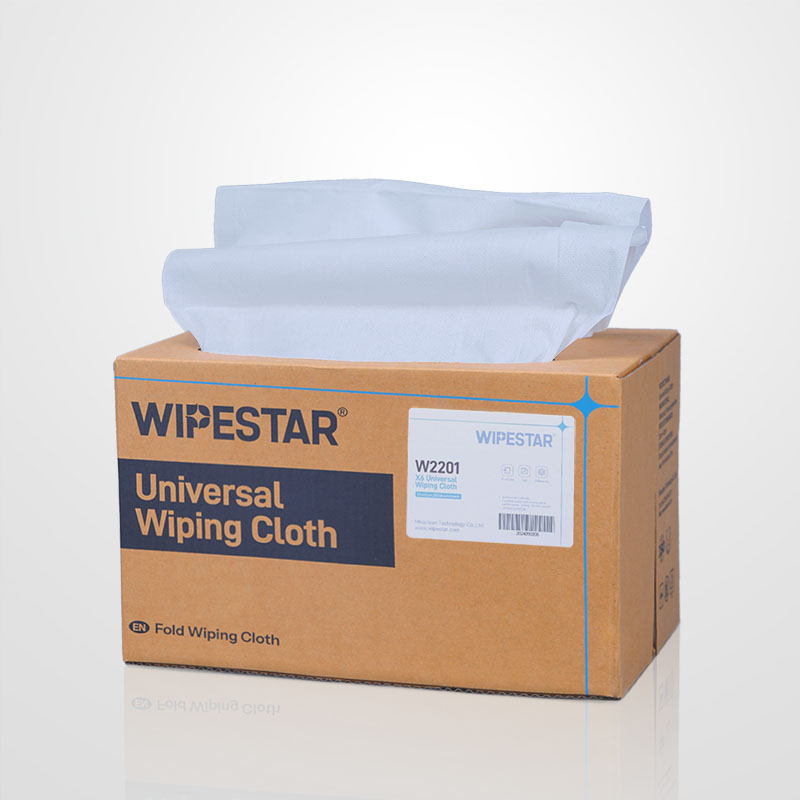
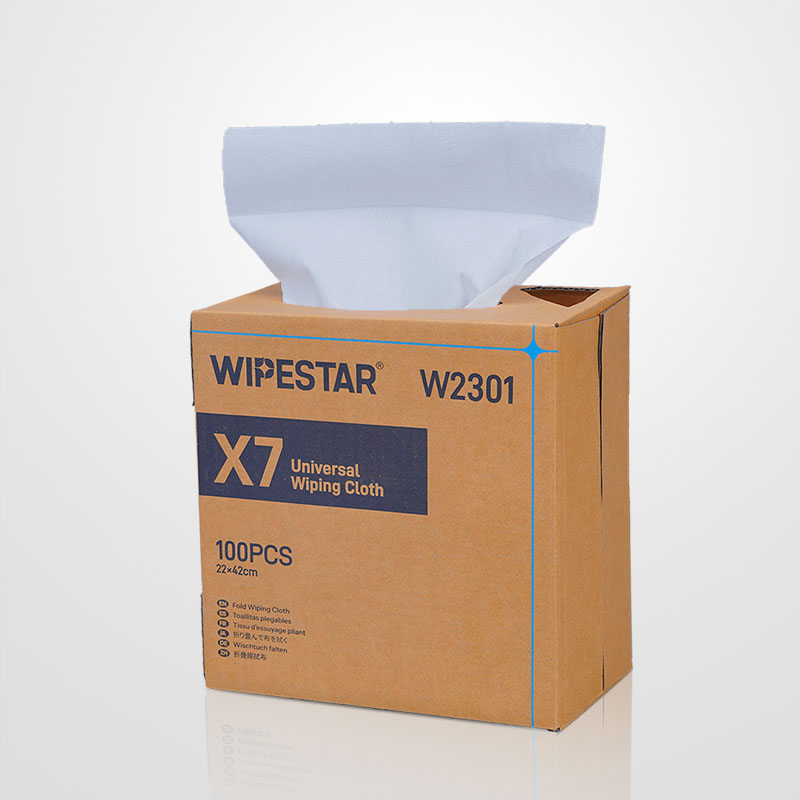
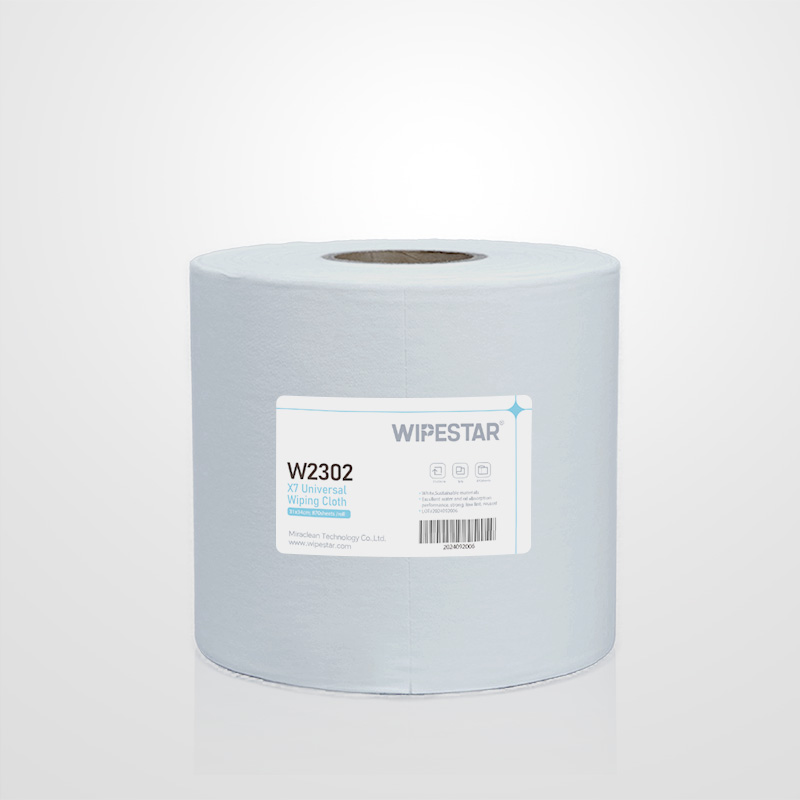
WIPESTAR manufactures a full line of non-woven cleanroom wipers across multiple material blends, sizes, and specifications. Whether you need a universal wiping cloth for everyday production line use, a heavy-duty surface preparation wipe for industrial degreasing, or a color-coded option for zone-specific contamination control, there’s a product designed for it.
The product lineup covers:
- Universal wiping cloths — wood pulp/polypropylene blends in multiple sizes for general-purpose cleaning
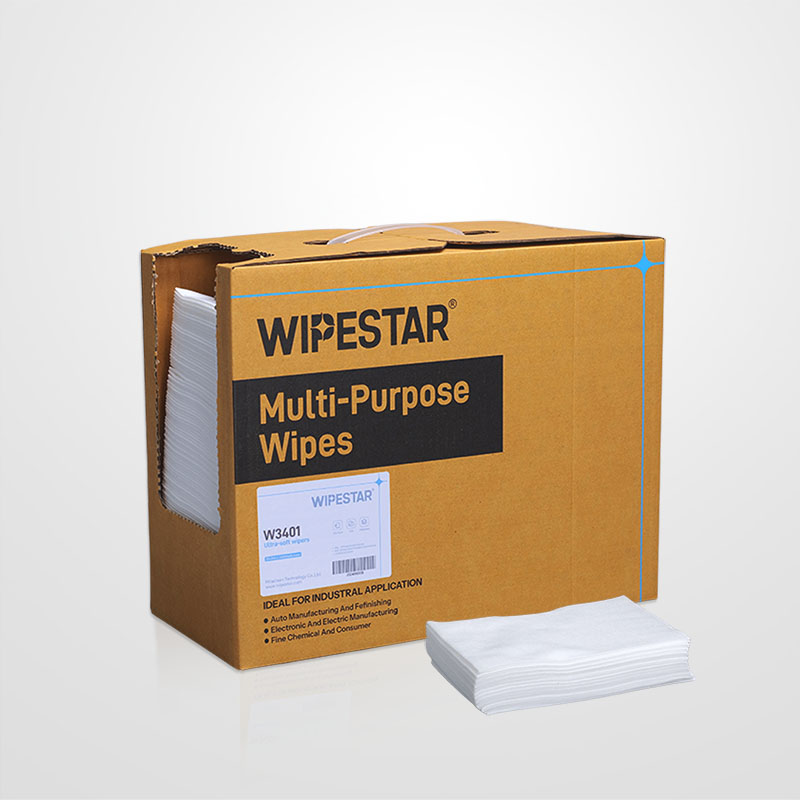
- Surface preparation wipes — including mesh-textured, ultrasoft, and heavy-duty options
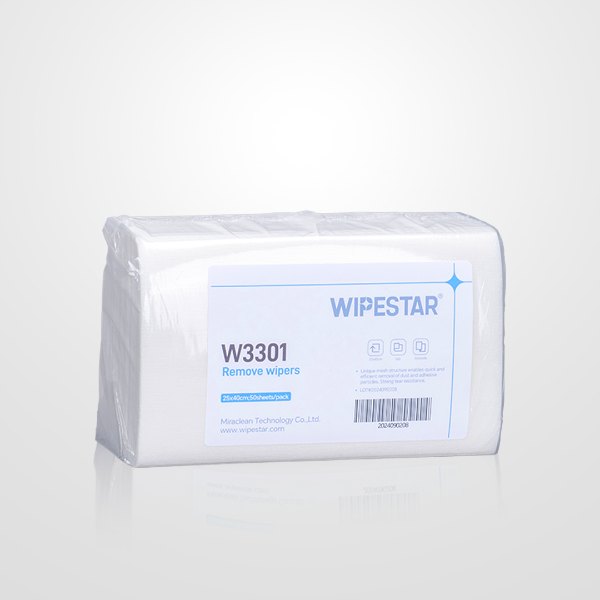
- Cleanroom wipers — cellulose/polyester blends in white, blue, and other color-coded variants
- Oil absorbent cloths — for spill cleanup and industrial maintenance
- SMT stencil wiping rolls — continuous rolls for automated stencil cleaning systems
Each product is manufactured under controlled conditions and tested for particle generation, absorbency, and solvent resistance. If you’re evaluating options for a new facility or rethinking your current consumable spend, the full wiping cloths catalog is worth a close look.
Non-Woven vs. Woven: Making the Right Call for Your Facility
Facility managers often ask whether they should go all-in on non-woven or maintain a mix. The honest answer depends on your cleanroom classification and budget.
If you’re running ISO Class 3–5 environments — wafer fabs, advanced packaging lines, optical coating rooms — you’ll need woven polyester wipers for the most critical tasks. But even in those facilities, non-woven wipers handle 70–80% of the actual wiping: bench tops, cart surfaces, shoe covers, gowning areas, general equipment wipe-downs.
For ISO Class 6–8 environments, non-woven wipers can cover nearly everything. They deliver the particle control you need without the premium price tag. And in non-classified but cleanliness-sensitive areas — packaging lines, inspection stations, incoming material prep — non-woven is the clear winner on cost-effectiveness alone.
The Cost Equation
Budget matters. A woven polyester wiper might cost $0.50–$1.50 per sheet depending on size and sealing method. A comparable non-woven wiper runs $0.05–$0.20. When a facility uses 5,000–10,000 wipes per month, that difference is real money. The trick is using the right wipe in the right place — premium where it counts, practical where it doesn’t.
Frequently Asked Questions
Can non-woven cleanroom wipers be used with IPA?
Yes. Most cellulose/polyester non-woven wipers are compatible with isopropyl alcohol (IPA). The polyester component resists degradation from common solvents including IPA, acetone, and ethanol. Always verify compatibility with your specific wiper model before use, especially if you’re working with aggressive or unusual cleaning agents.
How many times can I reuse a non-woven wiper?
Generally, non-woven wipers are designed for single use. They absorb contaminants during cleaning, and reusing them risks redepositing those particles. If reuse is necessary for cost reasons, limit it to non-critical wiping tasks and never reuse a wiper that has contacted solvents or oils.
What’s the difference between GSM and material type in cleanroom wipers?
GSM (grams per square meter) measures the weight and thickness of the fabric — higher GSM means a heavier, more absorbent wipe. Material type determines chemical compatibility, texture, and lint characteristics. A 60 GSM cellulose/polyester wipe and an 80 GSM version of the same material will have similar chemical properties but different absorbency levels. Choose GSM based on task intensity and material based on the substances you’re cleaning.
Do blue cleanroom wipers perform differently from white ones?
The color itself doesn’t affect cleaning performance. Blue, white, and other color-coded wipers exist for contamination control — they help operators visually distinguish between wipes assigned to different zones, processes, or chemical streams. Some facilities use blue wipes in one area and white in another to prevent cross-contamination.
Final Thoughts
A cleanroom is only as clean as its weakest process step. Wiping is one of those steps that happens dozens — sometimes hundreds — of times per shift, and the difference between a purpose-built wiper and an improvised rag compounds over time in defect rates, rework costs, and compliance risk.
Non-woven cleanroom wipers made from cellulose and polyester blends hit a practical sweet spot: high performance, broad chemical compatibility, and manageable cost. For most controlled-environment applications outside the most extreme semiconductor settings, they’re the right tool for the job.
Take the time to match the material, weight, and size to your actual cleaning tasks. Your cleanroom — and your product yield — will be better for it.
Tags: cellulose polyester wipes · cleanroom consumables · cleanroom wiping cloths · lint-free wipers · surface preparation wipes

Comments & Feedback