Static electricity doesn’t announce itself. One moment your production line is running smoothly, the next you’re looking at damaged semiconductors or corrupted hard drive heads. If you’re working in electronics manufacturing, you already know that ESD cleanroom wipers aren’t just another consumable — they’re protection against costly failures.
We’ve seen facilities lose entire batches of microprocessors because someone grabbed the wrong wiping cloth. The WP3302 ESD polyester cleanroom wipers were designed specifically to prevent that scenario.
Why ESD Protection Matters in Cleanroom Environments
Here’s something that doesn’t get discussed enough: static discharge as low as 100 volts can damage modern semiconductors. Most people can’t even feel static below 3,000 volts. That gap between human perception and component vulnerability is where expensive mistakes happen.
Traditional cleanroom wipers might be great at particle control, but they often generate static during use. When you’re wiping down a wafer carrier or cleaning around HDD heads, that static has to go somewhere. Without proper dissipation, it goes straight into your product.
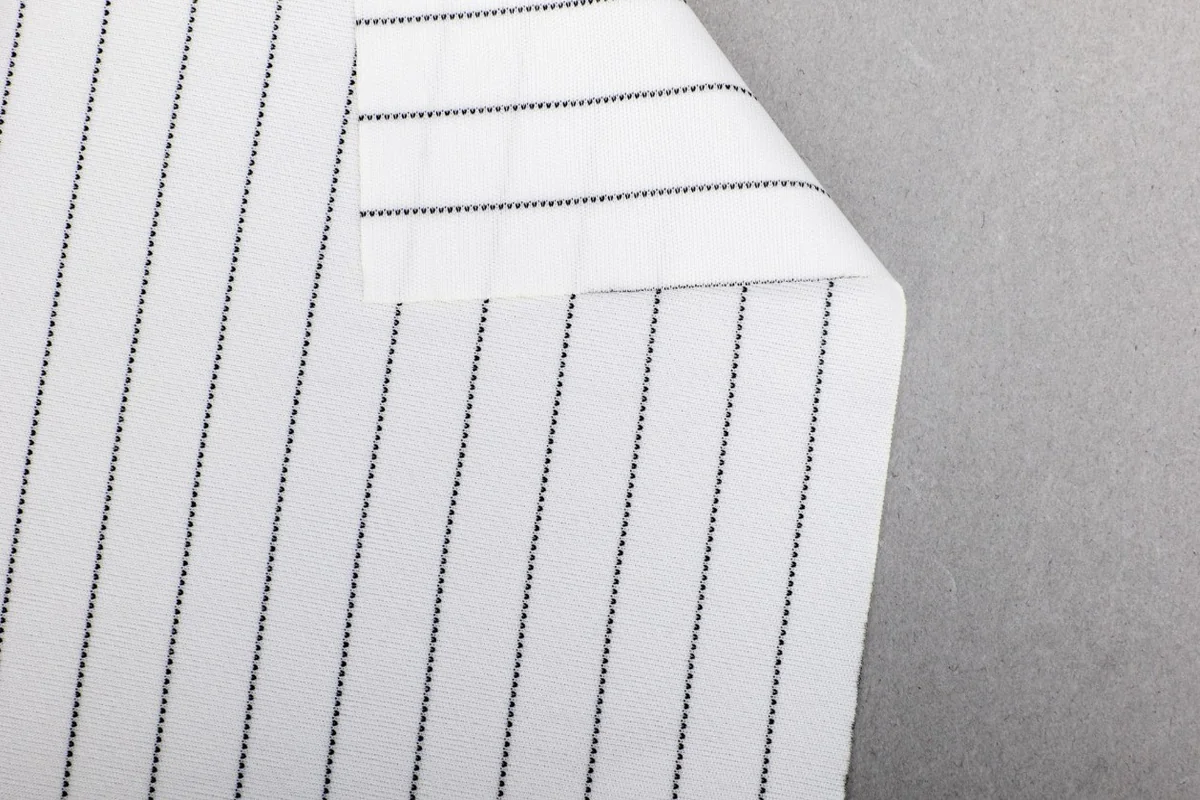
The WP3302 addresses this with static dissipative fibers woven directly into the polyester knit. These fibers create a controlled path to ground, preventing charge buildup while you work. Surface resistance stays between 10^5 and 10^11 ohms — the sweet spot for effective ESD protection without creating a hard ground hazard.
What Makes WP3302 Different
We’ve tested plenty of so-called “anti-static” wipers that turned out to be regular polyester with a surface treatment. That treatment wears off. WP3302 uses 100% continuous filament polyester with integrated static dissipative fibers — the ESD protection is structural, not superficial.
Key Specifications at a Glance
| Specification | Value |
|---|---|
| Material | 100% Continuous Filament Polyester |
| Weight | 120 GSM |
| Surface Resistance | 10^5 – 10^11 Ω |
| Static Dissipation Time | < 1.5 seconds |
| Friction Voltage | < 100V |
| Edge Sealing | Laser or Ultrasonic |
| Available Sizes | 4″×4″, 6″×6″, 9″×9″, 12″×12″ |
| Cleanroom Class | Class 100 – 100,000 (ISO 5-8) |
| Packaging | 150 sheets/bag, 10 bags/case |
The laser-sealed edges are worth calling out specifically. Cut-edge wipers shed fibers — that’s just physics. Heat-sealed edges are better but can still release particles under stress. Laser sealing melts the edge cleanly, creating a bond that holds up to aggressive wiping without contributing contamination.
Where WP3302 ESD Wipers Excel
We’ve shipped these wipers to facilities across the semiconductor supply chain. Here’s where they consistently outperform alternatives:
Semiconductor Assembly Lines
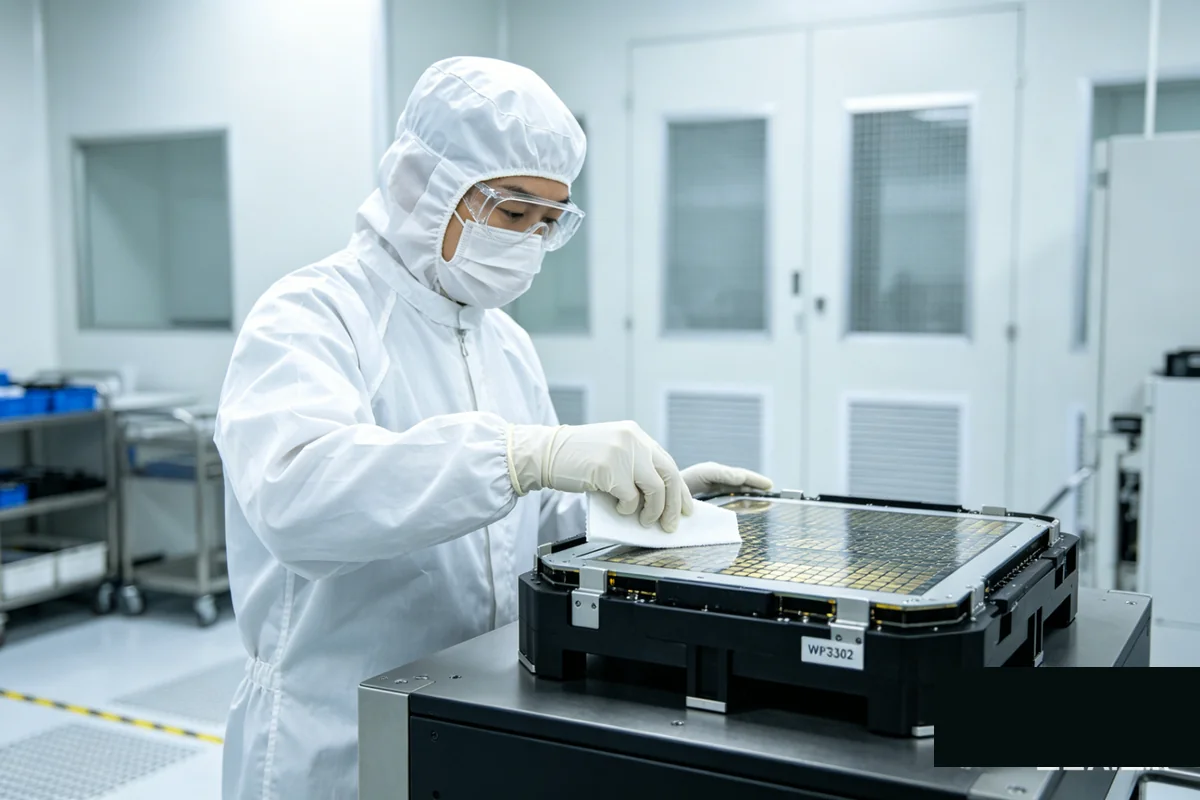
Die attach, wire bonding, encapsulation — every step involves handling static-sensitive components. The WP3302’s friction voltage below 100V means you can wipe down tooling and fixtures without introducing charge that could zap a die.
Hard Drive Manufacturing
HDD heads are notoriously sensitive. Even microscopic static discharge can alter the magnetic properties or damage the read/write elements. The WP3302’s combination of low particle generation and controlled static dissipation makes it suitable for head stack assembly environments.
Microprocessor Handling
Modern CPUs and GPUs pack billions of transistors into spaces measured in nanometers. The margin for error is essentially zero. These wipers help maintain that margin during packaging, testing, and final inspection.
How WP3302 Compares to Other ESD Wipers
Not every ESD wiper is created equal. Here’s what we’ve learned from side-by-side testing:
Surface-treated polyester starts with good ESD properties but degrades with washing. After 5-10 laundry cycles, resistance values drift out of spec. WP3302’s integrated fibers maintain consistent performance through repeated use and cleaning.
Carbon-loaded materials offer excellent conductivity but can leave black residue on sensitive surfaces. That’s unacceptable for optical components or polished wafers. WP3302 uses clear dissipative fibers — no color, no residue.
Cellulose blends absorb well but generate more particles and don’t hold ESD properties consistently in low-humidity environments. For critical electronics work, 100% polyester knit is the reliable choice.
Quality Control You Can Verify
Every batch of WP3302 wipers is produced in a Class 100 cleanroom and tested for:
- Surface resistance (10^5 – 10^11 Ω)
- Static dissipation time (< 1.5 seconds)
- Particle generation (IEST-RP-CC004)
- LPC (Liquid Particle Count)
- IC (Ionic Contamination)
- FTIR (Fiber identification)
Test reports ship with each lot. If your quality system requires traceability, we’ve got you covered.
Practical Usage Tips
Getting the most from your ESD cleanroom wipers isn’t complicated, but there are a few things that make a difference:
Ground your work surface. The wiper dissipates static, but it needs somewhere to send that charge. A properly grounded mat completes the circuit.
Use appropriate solvents. WP3302 handles IPA, acetone, and most common cleanroom solvents well. Avoid strong bases or prolonged exposure to ketones — they’ll eventually degrade the polyester.
Don’t reuse across different areas. A wiper used in general assembly shouldn’t migrate to wafer prep, even if it looks clean. Cross-contamination is real.
Store properly. Keep sealed bags in a controlled environment. Humidity extremes can affect ESD performance over time.
Available Configurations
The WP3302 comes in four standard sizes to match different tasks:
- 4″×4″ (10×10 cm): Precision work, small components
- 6″×6″ (15×15 cm): General wiping, tooling maintenance
- 9″×9″ (23×23 cm): Surface prep, equipment cleaning
- 12″×12″ (30×30 cm): Large area coverage, bench tops
Custom sizes and packaging are available for high-volume programs. We’ve done everything from pre-saturated wipes to color-coded edge marking for process control.
Frequently Asked Questions
What’s the difference between ESD and anti-static wipers?
“Anti-static” generally means the material resists static buildup. ESD (Electrostatic Dissipative) means it actively conducts static away at a controlled rate. For electronics manufacturing, you want ESD — it provides measurable, consistent protection rather than just reducing charge generation.
How long do WP3302 wipers maintain ESD properties?
With proper care, through dozens of laundry cycles. The dissipative fibers are structural, not a coating. We recommend testing surface resistance periodically if you’re reusing wipers in critical applications — most facilities test monthly or quarterly.
Can WP3302 be used with automated wiping equipment?
Yes. The 120 GSM weight provides enough body for automated dispensers and robotic wiping systems. We’ve integrated these into several semi-automated cleaning stations without issues.
What cleanroom classifications are suitable?
WP3302 is validated for Class 100 through Class 100,000 environments (ISO 14644-1 Class 5-8). For ISO 3-4 (Class 1-10) applications, we recommend our laser-sealed polyester wipers with additional packaging controls.
Request Samples or Pricing
If you’re evaluating ESD cleanroom wipers for your facility, we’d be happy to send samples. We’ll include test data and can arrange for on-site ESD auditing if needed.
For volume pricing or custom configurations, contact our team directly. We support programs from small R&D labs to high-volume semiconductor fabs.
Published: April 2025. Specifications subject to change. Verify current data with WIPESTAR technical support before specifying for critical applications.