

If you’ve ever spent any time on a production floor, you already know how fast things go sideways. Oil splatters, dust settles, solvent residue builds up — and before you know it, your quality checks are failing and your rework costs are climbing. One of the quickest fixes nobody thinks about until it’s too late? Switching to the right wiping material.
General-purpose paper towels and whatever rags you can grab from a drawer aren’t doing you any favors. Engineered multi-purpose wipes are a different story entirely — they’re built for consistent, controlled cleaning across all kinds of surfaces and conditions. They handle solvents, soak up liquids fast, and leave behind barely anything in terms of debris. That last point matters more than people realize, especially in aerospace assembly, automotive manufacturing, and electronics production.
We’re going to walk through the W1502 Multi-Purpose Wipes from WIPESTAR in detail: what they’re made of, how they actually perform on the floor, where they work best, and how to figure out whether they’re the right wipe for your operation. No fluff, just the stuff that helps you make a better decision.
What Are Multi-Purpose Wipes, Anyway?
Let’s start with the obvious question.
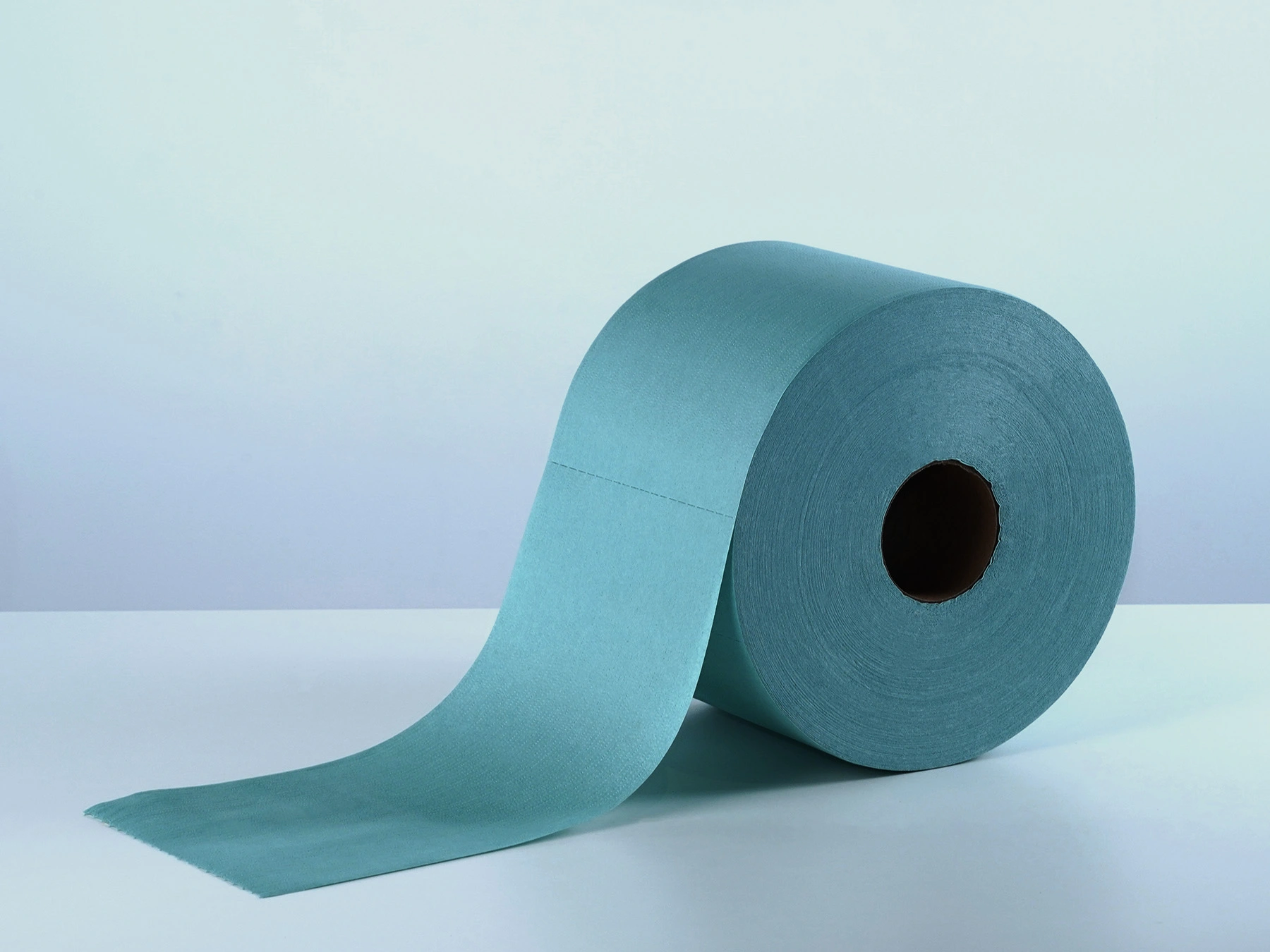
Multi-purpose wipes are engineered nonwoven cloths designed for cleaning, surface preparation, and material handling across all kinds of industrial settings. They’re not the same as the paper towel sitting next to your sink at home — these are industrial-grade materials made to take a beating. They hold up under repeated wiping, they absorb a lot of liquid without falling apart, and they resist tearing even when fully saturated.
The W1502 model is built from low-debris-shedding materials that genuinely won’t leave behind dust or fibers after you wipe a surface. That sounds like a small thing. In practice, it can mean the difference between passing a quality inspection and having to re-work an entire batch of components. In semiconductor work, aerospace cleaning, or optical assembly, one stray fiber can cost you hours.
What makes the W1502 worth paying attention to is its combination of properties. High dry strength for handling dry wiping jobs. Strong wet tensile strength so the cloth doesn’t turn to mush when it soaks up solvent. Broad compatibility with cleaning agents — isopropyl alcohol, acetone, you name it. Most wipes on the market give you one or two of these things. The W1502 gives you all of them in one package.
Key Features That Actually Matter on the Floor
There are five or six characteristics that determine whether a wiping material actually works in a real industrial environment. Here’s how the W1502 performs on each one.
Low Lint and Debris Shedding Performance
You’d be surprised how many “industrial” wipes out there still shed fibers like crazy. The moment you wipe a supposedly clean surface and see little white strands left behind — that’s the wipe working against you.
The W1502’s nonwoven fabric construction is engineered specifically to keep debris shedding to an absolute minimum. Because the material structure is homogeneous — no loose fiber bundles woven into it — there are very few things that can break free during wiping. The result is straightforward: cleaner surfaces after every pass, not surfaces that look different but are still contaminated.
This is the feature that makes the W1502 especially useful in aerospace component cleaning, optical lens handling, and electronic assembly stations. If contamination sensitivity is a real concern in your operation, this is where you start evaluating wipes — not the price per sheet.
Dry and Wet Tensile Strength
A wipe that’s strong when dry but falls apart the moment it gets wet isn’t much of a wipe at all. It’s a liability.
The W1502 maintains its structural integrity even when fully saturated with liquid or solvent. That means you can apply firm, controlled pressure without the cloth shredding in your hands. For tasks like cleaning machined metal parts, wiping adhesive residue off surfaces, or handling equipment after solvent application, that kind of reliability is non-negotiable.
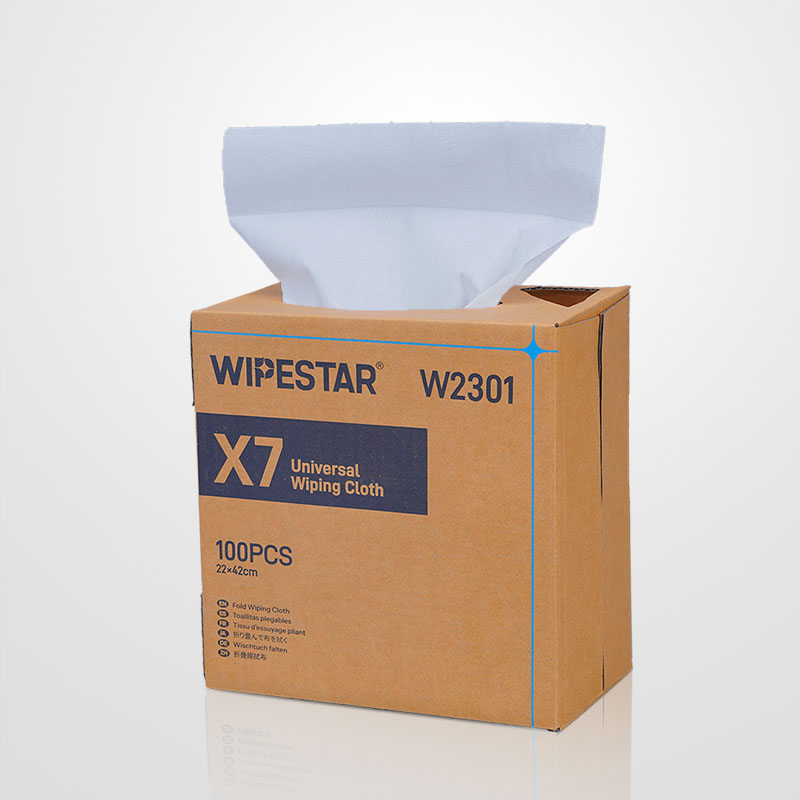
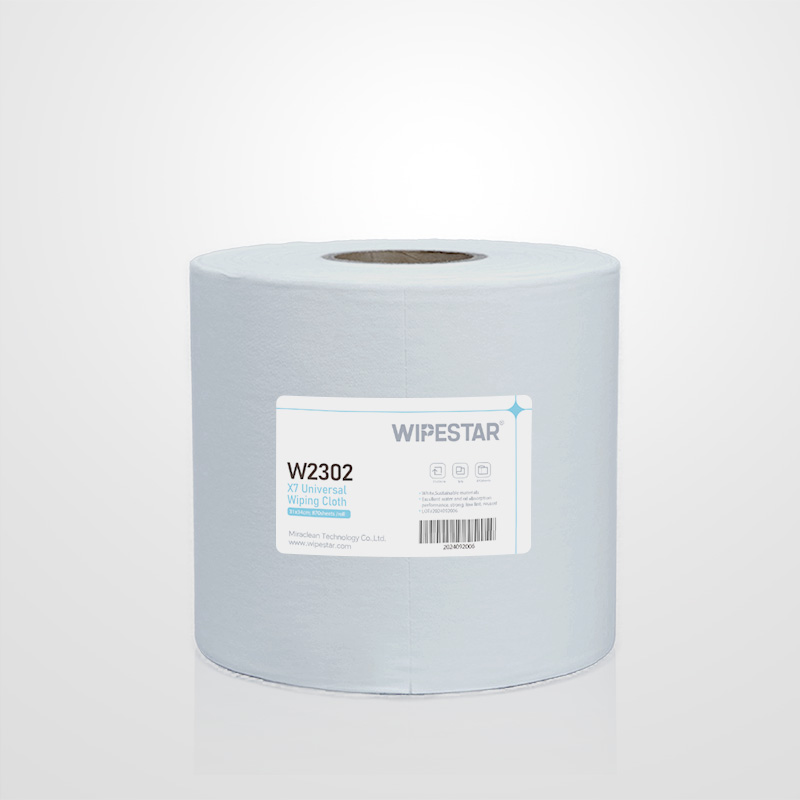
If you want to compare how different materials hold up under these conditions, take a look at WIPESTAR’s full range of Universal Wiping Cloths. They’ve got models built for different strength requirements across the industrial spectrum.
Fast Liquid and Solvent Absorption
On a busy production floor, nobody wants to stand around waiting for a surface to dry. The W1502 absorbs liquid quickly — one or two passes rather than five or six. The material wicks moisture away from the wiping surface and holds it within the cloth structure, which prevents re-depositing liquid back onto the surface you’ve already cleaned.
That speed adds up in terms of workflow. Less waiting, more moving. Whether you’re clearing cutting fluid, cleaning solvent residue from a workstation, or wiping down tools between tasks, faster absorption means faster throughput.
The wipe also handles a wide range of common industrial solvents without degrading. You can pair it confidently with isopropyl alcohol for electronics cleaning or acetone for adhesive removal — and it won’t come apart on you mid-task.
Product Forms for Real-World Operations
Not every wiping job looks the same, and WIPESTAR clearly thought about that when designing the W1502 lineup. The product comes in multiple formats designed for different operational setups:
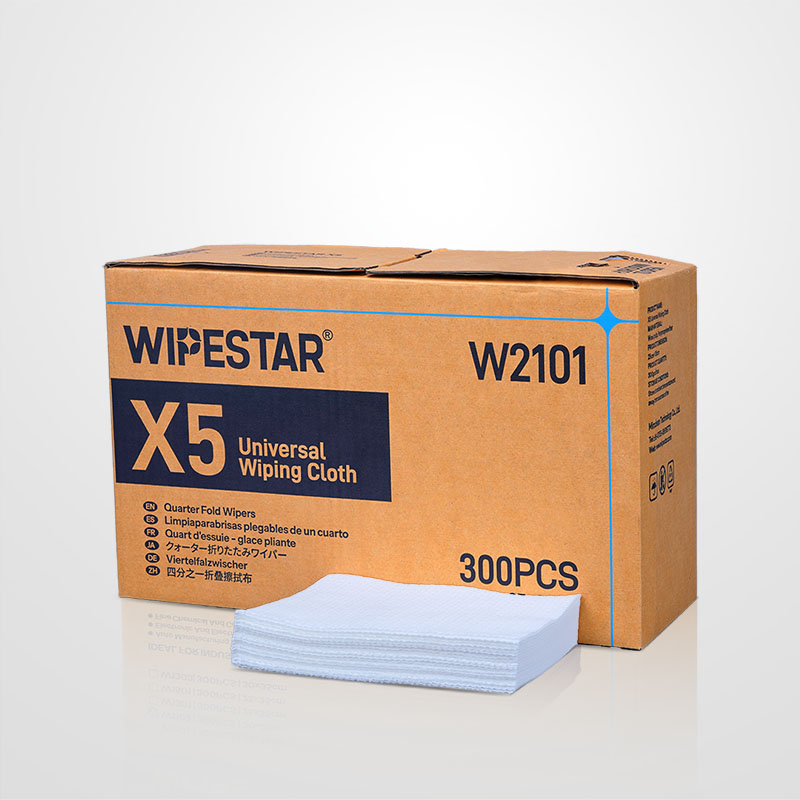
- Pop-up box dispensers — Single-sheet dispensing at workstations for controlled, one-at-a-time use. Keeps wipes clean and accessible without fumbling through a stack.
- Stacked flat sheets — Ideal for flat-surface wiping tasks where you need maximum control over the wiping motion. Often used in precision assembly and surface prep.
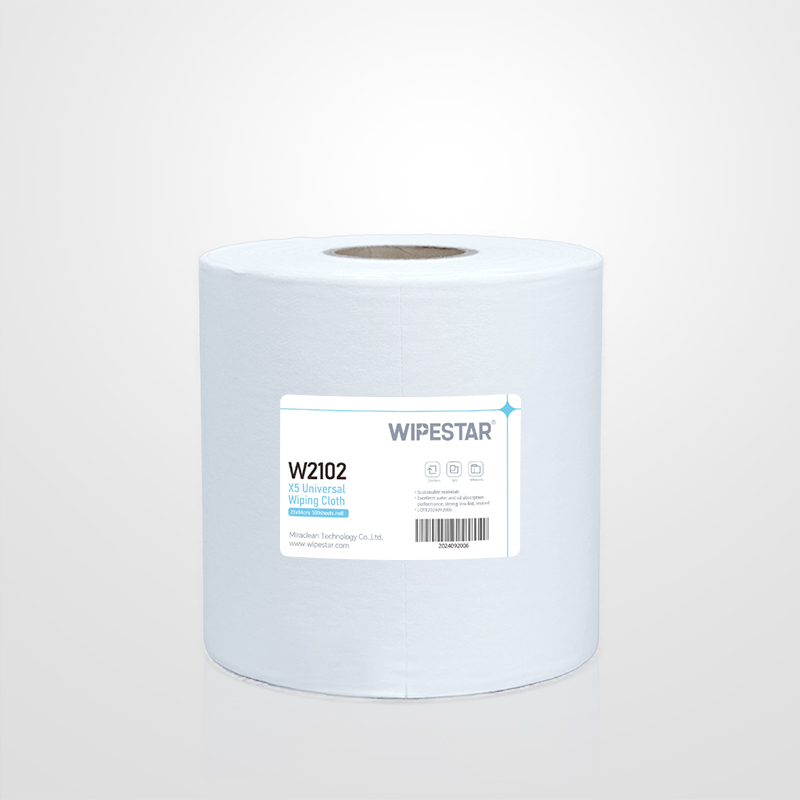
- Bulk packaging — For high-volume production environments where minimizing packaging waste and replenishment frequency matters.
Each format is built to reduce waste and make the wiping process as efficient as possible in its target setting. If your facility has specialized dispensing equipment or unique layout requirements, WIPESTAR’s team can help configure the right format — it’s worth asking them directly rather than settling for whatever’s in the catalog.
Choosing Between Product Forms: A Quick Reference
Here’s a simple way to think about it:
- Workstation-based cleaning tasks — go with pop-up box format for speed and hygiene.
- Flat-surface or precision cleaning — stacked flat sheets give you more control.
- Large-area or heavy-volume wiping — bulk packaging is the most cost-effective option.
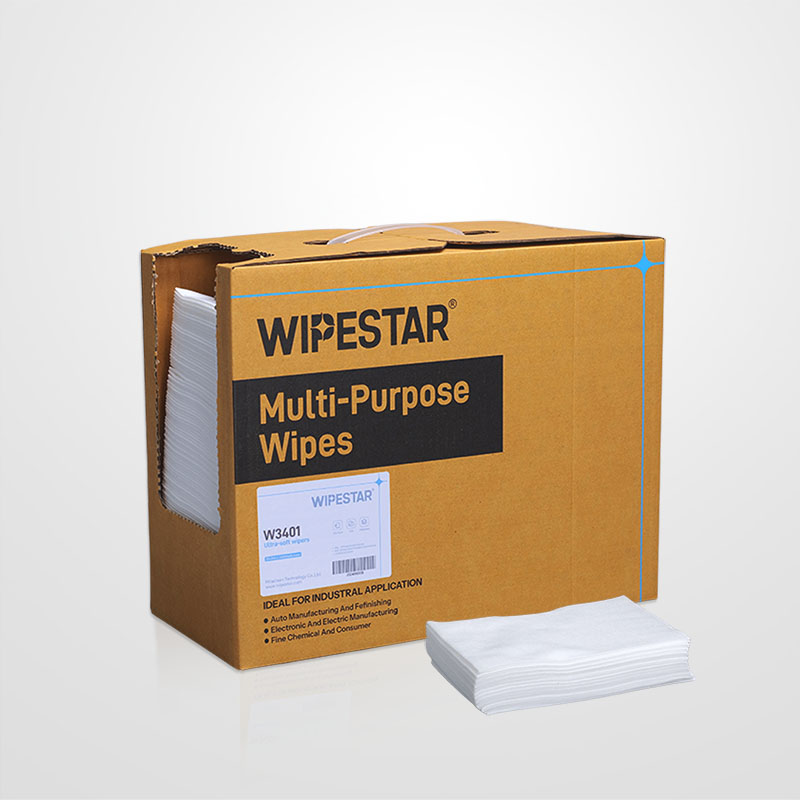
For more specialized surface preparation needs — particularly in regulated environments like aerospace or medical device manufacturing — take a look at the W3401 Ultrasoft Surface Preparation Wipes, which are designed with softer textures specifically for sensitive surfaces.
How the W1502 Stacks Up Against Other Wiping Options
The wipe market is crowded, and not all options perform the same way. Here’s where the W1502 fits relative to the alternatives you’re most likely considering.
Versus Polyester Wipes
Polyester wipes are a common sight in cleanrooms and semiconductor facilities. They’re extremely low-lint and chemically resistant, which makes them ideal for the most sensitive applications. The tradeoff is cost — they’re significantly more expensive per sheet — and compatibility with certain aggressive solvents can be an issue.
The W1502 occupies a different space. It offers broader solvent compatibility at a more accessible price point, making it the practical choice for general industrial environments where ultra-high-purity cleanroom conditions aren’t the requirement. If you’re running a standard manufacturing floor rather than a semiconductor fab, the W1502 is going to give you better value for the vast majority of tasks.
Versus Cellulose/Polyester Blend Wipes
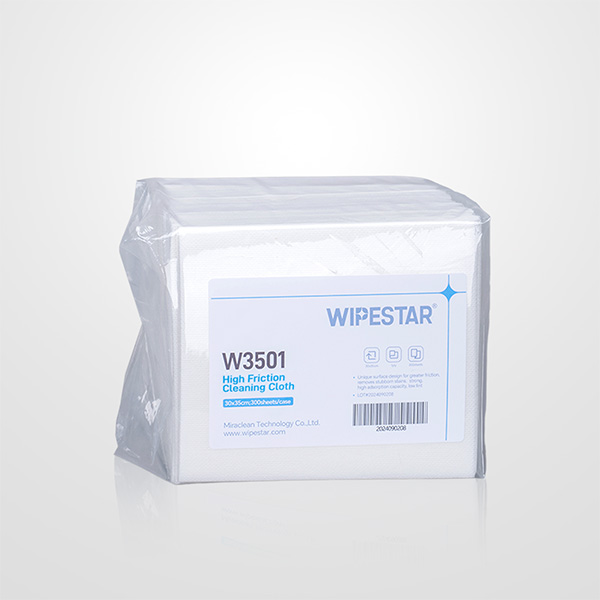
Cellulose/polyester blends combine the absorbency of natural fibers with the structural strength of polyester. It’s a useful combination. The W3501 Heavy Duty Surface Preparation Wipes are a good example — they feature a specially treated mesh surface that increases friction, which makes them particularly effective at cutting through tough grease and heavy oil deposits.
The W1502 takes a different approach. It prioritizes low-lint performance and broad surface compatibility over maximum abrasive power. That makes it the better choice when you’re cleaning delicate surfaces or when scratching is a genuine risk. For heavy-duty degreasing jobs where abrasion is an advantage rather than a problem, the W3501 is the stronger option.
Versus Microfiber Cloths
Microfiber is everywhere in automotive detailing and general cleaning, and it does a decent job. But in industrial settings, it has some real limitations. Microfiber traps small particles very effectively — which sounds good until you realize those particles can work free again under mechanical stress. It also generally doesn’t hold up well with aggressive solvents, and heavy use can lead to fiber release that creates the exact contamination problem you’re trying to solve.
The W1502’s engineered nonwoven structure gives it a clear advantage in these conditions. It maintains its integrity under tougher mechanical and chemical stress while still delivering the low-lint performance that microfiber can’t reliably guarantee in demanding industrial environments.
Where You’re Most Likely to See the W1502 in Action
The W1502’s balanced performance profile means it shows up across a wide range of industries. Here are the most common ones.
Automotive Manufacturing and Maintenance
From wiping down components during assembly to cleaning tools between operations, the W1502 handles the mix of oils, lubricants, and solvents that show up everywhere in automotive production. Its wet strength means it won’t disintegrate when it soaks up cutting fluid, and its low-lint performance helps maintain the clean surfaces required for painting and coating processes. For more demanding degreasing tasks in this sector, many facilities pair it with the W3501 Heavy Duty Surface Preparation Wipes for heavy grease removal before switching to the W1502 for final surface cleaning.
Aerospace Assembly and Maintenance
Aerospace environments are serious about foreign object debris (FOD). Every stray particle is a potential problem. The W1502’s minimal debris shedding makes it suitable for aircraft interior cleaning, surface preparation before coating, and general maintenance wiping throughout the facility. For the most delicate aerospace surfaces — optical instruments, avionic components — the W3401 Ultrasoft Surface Preparation Wipes are worth having in your toolkit as a dedicated option for sensitive applications.
Electronics and Precision Manufacturing
When you’re working with circuit boards, optical components, or precision instruments, a single stray fiber or particle can cause defects that aren’t visible until much later — and much more expensive to fix. The W1502’s low-lint, high-absorbency profile makes it well-suited for wiping down components before assembly, cleaning solvent residue from work surfaces, and routine maintenance in electronics manufacturing environments.
CNC and Machine Tool Operations
CNC machines generate a constant mix of heat, coolant, and metal chips. The W1502 absorbs coolant and wipes away chips without breaking apart, making it a reliable choice for between-cycle cleaning and tool change maintenance. Its compatibility with common machine shop solvents adds to its versatility here.
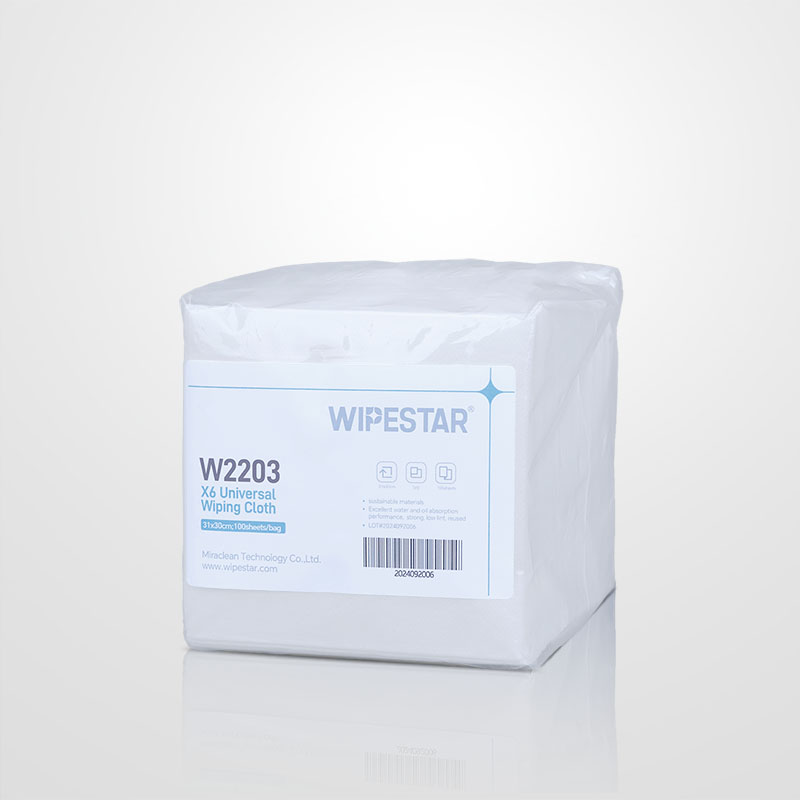
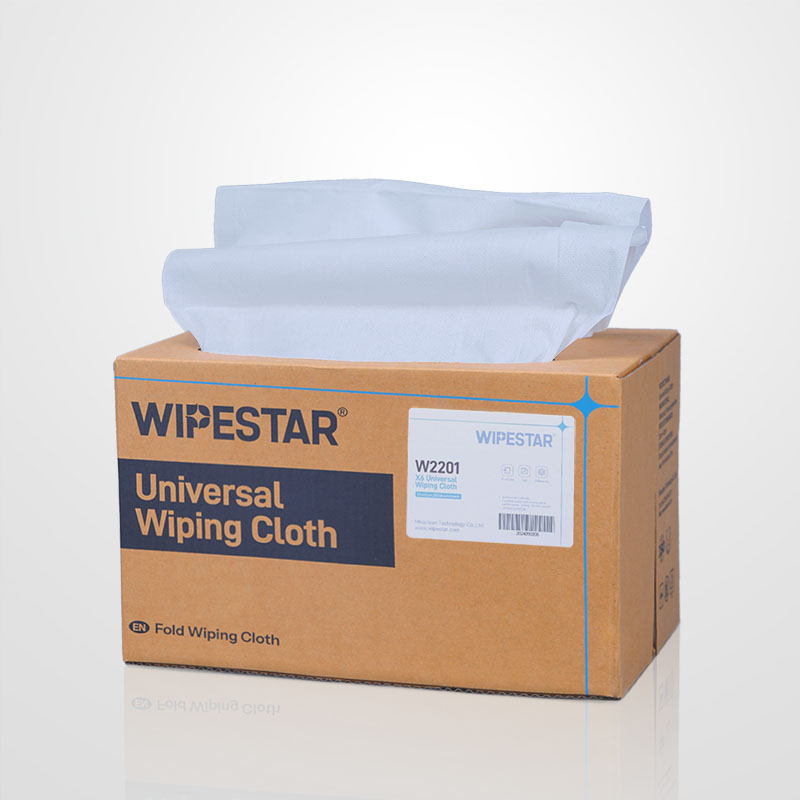
For larger-scale wiping tasks or continuous cleaning lines, WIPESTAR’s W2201 Universal Wiping Cloth (X6) is designed specifically for heavy industrial use and high-volume production environments, offering larger sheet dimensions and enhanced solvent absorption capacity that the W1502 doesn’t aim to provide.
Practical Tips for Getting Better Results with Wiping Materials
Most people don’t think much about how they use wipes — you grab one and wipe. But a few small adjustments can genuinely improve your results and reduce waste at the same time.
Use a fresh wipe for each critical cleaning step. This sounds obvious, but it gets ignored constantly. A contaminated wipe doesn’t clean surfaces — it redistributes contaminants. For any quality-sensitive step — surface prep before coating, final wipe-down before assembly — a clean, fresh cloth every time.
Fold, don’t crumple. Folding a wipe into quarters and using each section sequentially gives you four clean wiping surfaces from a single cloth. Crumpling uses only a small fraction of the cloth’s wiping area and concentrates contamination into a small spot. Folded quarters is the standard in industrial cleaning for good reason.
Pre-wet the wipe before applying solvents. Applying solvent directly to a surface can lead to pooling and dripping onto areas you didn’t intend to clean. Apply solvent to the wipe first, then wipe the surface — you get better control and more consistent coverage.
Store wipes properly between uses. Keep wipes in their original sealed packaging or dispenser until you’re ready to use them. Ambient exposure leads to moisture absorption and contamination that degrades performance. A wipe that’s been sitting in open air for a few days is not the same wipe it was when it came out of the box.
How to Pick the Right Wipe for Your Specific Application
Choosing a wiping material comes down to a few straightforward questions. Answer them honestly and you’ll land on the right product every time.
How contamination-sensitive is your environment? If particle contamination is a serious concern — in aerospace, optics, or electronics — low-lint performance is your top priority. The W1502 performs well here. For semiconductor or pharmaceutical cleanrooms, you’ll need laser-sealed or heat-sealed edge wipes from WIPESTAR’s dedicated cleanroom product line.
What are you actually wiping? General surface cleaning, light oil removal, and dust clearing — the W1502 handles these well. Heavy grease and stubborn adhesive residues — you want more abrasive power, which is where the W3501 Heavy Duty Surface Preparation Wipes with its treated mesh surface makes more sense.
What solvents are you using? The W1502 works reliably with most common industrial solvents. If you’re using particularly aggressive or specialized chemicals, verify compatibility with your specific solvent before committing to a full deployment.
How are you dispensing and packaging? Controlled single-sheet dispensing at workstations — pop-up format. Flat-surface wiping — stacked sheets. Machine-integrated or high-volume continuous cleaning — bulk formats or a dedicated wiping roll system. WIPESTAR can help configure the right format for your setup if you ask.
Frequently Asked Questions
What makes the W1502 different from standard industrial paper towels?
The biggest difference comes down to material engineering and performance consistency. Standard paper towels shed fibers heavily, fall apart when wet, and vary significantly from sheet to sheet. The W1502 is manufactured with controlled nonwoven construction that delivers consistently low lint, high wet strength, and reliable solvent compatibility across every single sheet. In environments where contamination and surface quality matter, that consistency is the real value — not just lower per-sheet cost.
If you’re evaluating your current wiping setup, it often makes sense to compare your existing material against WIPESTAR’s Universal Wiping Cloth range side by side in your actual operating conditions. What looks comparable on paper can perform very differently when it’s soaked in solvent and being worked hard against a machined surface.
Can the W1502 be used with aggressive solvents and cleaning chemicals?
Yes, the W1502 is compatible with most common industrial solvents including isopropyl alcohol, acetone, and a broad range of mild to moderate cleaning agents. However, if you’re working with highly specialized or aggressive chemical formulations, it’s worth verifying compatibility with your specific solvent before full-scale deployment. WIPESTAR offers product samples specifically for this purpose — it’s a much better approach than finding out after you’ve committed to a bulk order.
For applications requiring maximum chemical resistance alongside low-lint performance — such as pharmaceutical manufacturing or advanced electronics assembly — WIPESTAR’s W3401 Ultrasoft Surface Preparation Wipes and their dedicated cleanroom wipe product lines may offer more appropriate specifications for your regulated environment.
Wrapping Up
The W1502 Multi-Purpose Wipes aren’t the most specialized wipe in WIPESTAR’s catalog, and they’re not trying to be. What they are is a well-balanced, versatile option that delivers low-lint performance, strong wet and dry strength, and broad solvent compatibility — all in one product at a price point that makes sense for general industrial use.
Whether you’re running an automotive assembly line, managing an aerospace maintenance facility, or handling electronics manufacturing, the W1502 is worth a closer look. It’s the kind of wiping material that doesn’t draw attention to itself because it’s too busy doing its job reliably.
That said, no single wipe covers every possible scenario. For heavy-duty degreasing, the W3501 Heavy Duty Surface Preparation Wipes are worth having in your rotation. For the most contamination-sensitive cleanroom tasks, WIPESTAR’s dedicated cleanroom wipe line is the safer bet. Matching the wipe to the task — not grabbing whatever’s closest — is where you get the real payoff.
If you’re evaluating wiping options for your facility, WIPESTAR offers product samples so you can verify performance in your actual conditions before committing. That kind of hands-on testing is worth more than any specification chart, and it’s free to request.
Tags: industrial cleaning cloths · low lint wipes · manufacturing cleaning wipes · nonwoven wiping material · solvent compatible wipes · W1502 multi-purpose wipes · WIPESTAR wipes


Comments & Discussion