One of the most common questions I get from manufacturing managers and procurement leads is some variation of this: “We’ve been using X5 wipes and they work fine — but we’ve heard the X6 might be better for our application. Is the upgrade worth it?”
My honest answer is: it depends entirely on what you’re cleaning, how often you’re cleaning, and what happens to the wipe when it’s wet. The X5, X6, and X7 grades in the WIPESTAR universal wiping cloth range are genuinely different products with genuinely different performance characteristics. The W2202 X6 occupies a specific sweet spot that makes it the right choice for a specific set of industries — and knowing where that sweet spot is makes the decision much easier than guessing based on price alone.
Let me walk through what the X6 actually delivers, what it doesn’t, and which applications it was designed for.

The X6 Grade: Where It Sits in the Universal Range
If you’re not familiar with the WIPESTAR grading system, the X5, X6, and X7 designations refer to the weight, construction density, and durability of the non-woven fabric. X5 is the lighter grade — economical, adequate for general light-duty cleaning, prone to breaking down faster when saturated with heavy oils or subjected to repeated mechanical stress. X7 is the heaviest — the most durable, the best wet strength, the right choice for the harshest industrial cleaning conditions. X6 sits in the middle, and that middle position is exactly where many precision manufacturers need it to be.
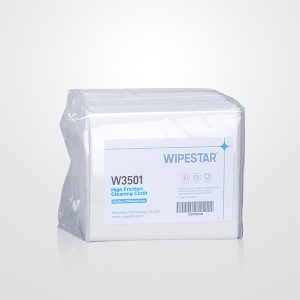
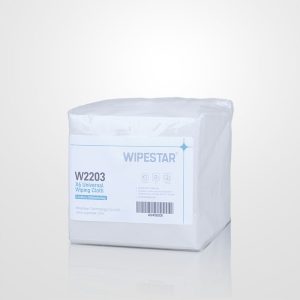
The W2202 is the X6 in the range — specifically, the 12-inch format universal wiping cloth made from a wood pulp and polypropylene non-woven blend. It’s not the lightest wipe in the catalog and it’s not the heaviest. What it is, is a wipe that maintains its structural integrity when saturated with coolant or cutting fluid, holds together through repeated wringing, and still delivers enough absorption capacity to handle the fluid loads that precision manufacturing generates.
Why Wood Pulp and Polypropylene
The wood pulp component is what gives the W2202 its fast absorption — wood pulp fibers wick moisture and oils into the body of the cloth rapidly through capillary action. Polypropylene contributes chemical resistance and wet strength. In a manufacturing environment where you’re dealing with coolants, lubricants, light cutting oils, and general aqueous soils, this combination handles the majority of cleaning situations without the cloth falling apart mid-task.
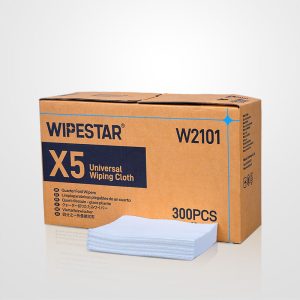
The polypropylene component also means the W2202 maintains reasonable performance when exposed to solvents, though the W2101 rayon-polyester blend is the better choice when solvent resistance is the primary requirement — the polyester component holds up better than polypropylene to repeated IPA or acetone contact.
The Difference Between X5, X6, and X7 in Plain Terms
Think of it this way: if an X5 wipe handles a moderate spill and needs replacing after one or two uses, an X7 wipe handles a severe spill and lasts through five to ten uses before degrading. The X6 handles the moderate-to-severe spill — the situations that come up every day in most precision manufacturing environments. That mid-range performance is exactly what makes the W2202 the wipe that keeps getting reordered by the same facilities month after month.
Where the W2202 X6 Performs Best
The W2202’s applicable industries give you a good roadmap for where it fits. I’ve worked with manufacturing teams across all seven of these sectors and the pattern is consistent: the W2202 earns its place wherever the cleaning cycle involves regular exposure to water-based fluids, mechanical soils, or a combination of both.
CNC Machine Tools and Precision Machining
CNC machining generates the full range of soils in a single shift — coolant splash, chip buildup, light lubricant residue, and general shop contamination. The W2202 handles the end-of-shift wipe-down better than lighter wipes because it doesn’t become saturated and fall apart after the first pass. A single X6 cloth can handle a larger percentage of a machine enclosure wipe-down than an X5 cloth would manage. That’s a real cost difference over a year of daily machine maintenance.
Aerospace Manufacturing and Maintenance
Aerospace environments have two competing pressures: the need for a clean wipe that doesn’t introduce contamination, and the need for a wipe tough enough to handle the range of soils that aerospace manufacturing produces. The W2202’s wood pulp/polypropylene construction strikes that balance — fast absorption for water-based fluids, adequate chemical resistance for the solvents used in aerospace surface prep, and enough mechanical durability to handle the repeated use that aerospace maintenance programs demand.
Rail Transportation Equipment
Rail transit maintenance involves large surface areas — undercarriages, bogie components, traction motor housings — that accumulate a combination of grease, dust, moisture, and brake dust. The X6 grade handles this mix better than X5 because the heavier construction doesn’t disintegrate when it encounters the combination of heavy hydrocarbon soils and water that rail equipment accumulates. The 12-inch format covers enough surface area per wipe to make end-of-shift maintenance rounds practical.
Automotive Manufacturing
Automotive assembly lines generate high volumes of light soils — fingerprints, light oils from assembly tooling, dust from bodywork — combined with periodic deeper cleaning between shift changeovers. The W2202 handles both: the routine light cleaning throughout the shift, and the heavier floor-to-fixture wipe-downs at shift end. The reusable-but-limited reusability of the X6 grade fits the automotive cost model — durable enough to get multiple uses from each cloth without the premium cost of a specialist wipe.
Screen Printing
Screen printing operations deal with a specific soil profile: ink buildup, substrate debris, and cleaning solvent residue. The W2202 handles ink cleanup on screens and squeegees better than a lighter wipe because ink-saturated X5 cloths break down and leave fiber residue in the mesh. The X6 construction holds together through the ink load. For facilities running multi-color or high-volume print runs, the W2202 reduces the frequency of mesh replacement caused by contamination from degraded wipe fragments.
Bearing and Gear Transmission Equipment
Bearing and transmission housings accumulate a combination of lubricant residue, fine metal particles, and moisture ingress — often all three in the same maintenance cycle. The W2202 handles the combination effectively because the wood pulp absorbs the moisture and light oils while the polypropylene component provides the structural integrity to scrub the heavier lubricant deposits without disintegrating. The reusable characteristic — limited but real — means each cloth can handle more than one bearing housing before replacement.
Food Processing
Food processing facilities have specific requirements around wipe performance: fast absorption for water and process fluids, compatibility with food-safe cleaning agents, and sufficient durability to handle the repeat-cleaning cycles that food environment sanitation programs require. The W2202’s wood pulp/polypropylene construction meets these requirements without the premium cost of specialized food-grade wipes for general facility cleaning tasks. Color-coding — available across the universal range — supports the cross-contamination control programs that food safety audits require.

What the W2202 Doesn’t Do — And What to Use Instead
Being direct about product limitations is part of my job, and the W2202 has them.
Not for Heavy Hydrocarbon or Machining Oil Cleanup
If your primary cleaning challenge is bulk machining oil — the kind that pools on machine tool drip trays and saturates everything it contacts — the W2202 will handle the cleanup but will saturate quickly and require frequent replacement. The W4204 Heavy Duty Oil Cleaning Cloths made from meltblown polypropylene are the right tool for that application. They absorb significantly more oil per cloth and are washable and reusable in a way that changes the cost equation for high-volume oil handling.
Not for Sensitive Polished Surfaces
The W2202 is a general-purpose industrial wipe, not a surface-gentle wipe. For polished mirror-finish surfaces, optical components, or precision mold faces where surface scratches accumulate into quality defects, the W3401 Ultrasoft Surface Preparation Wipes — rayon/polyester at 65 GSM — are the correct choice. The 50/50 rayon-polyester microfiber construction of the W3401 provides the gentleness those surfaces need.
Not for Cleanroom-Classified Environments
The W2202 is manufactured to general-purpose industrial wipe standards. For ISO Class 5-8 cleanroom environments, you need classified cleanroom wipes with sealed edges and particle count documentation. The WIPESTAR cleanroom wiping cloths are the right specification for those environments.
Where the X6 Fits in a Tiered Wipe Program
The most effective facilities I work with don’t use one wipe for everything. They tier their cleaning program based on the soil profile and surface sensitivity of each zone. The W2202 is typically the workhorse wipe for the majority of production floor zones, with specialist products handling the edge cases.
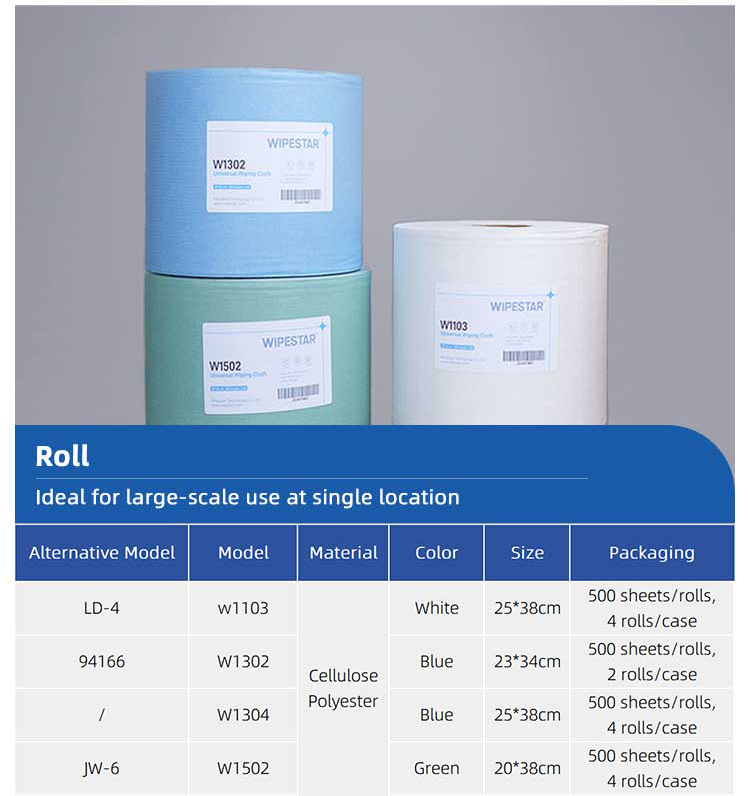
A practical three-tier setup looks like this: W2202 X6 for the main production floor — CNC machines, assembly stations, tooling areas. W2101 X5 for lighter tasks — wiping down components before staging, general dust removal, lighter fluid pickup. W3102 Microfiber Surface Preparation Wipes for precision mold and tooling maintenance where the heavier 280 GSM microfiber construction provides the cleaning action that X6 doesn’t quite deliver.
What the W2202 Does Better Than Most Alternatives
If you’re evaluating the W2202 against other universal wiping cloth options in the market — not just the WIPESTAR range — here are the performance areas where the X6 grade consistently stands out.
Wet strength under load. The polypropylene component maintains its fiber bonding when the cloth is wet and under mechanical stress. Many lighter alternatives — paper towels, lightweight non-wovens, generic industrial wipes — lose structural integrity when saturated, which means they smear rather than clean and require more cloths per task. The X6 grade extends the usable life of each cloth under wet conditions significantly.
Absorption speed. Wood pulp fibers have natural hydrophilicity — they attract and wick water-based fluids fast. In a manufacturing context, that translates to fewer passes per surface to achieve a clean, dry result, which compounds into meaningful time savings across a full shift.
Fluid load handling. The combination of fast absorption and wet strength means the W2202 handles the fluid volumes that precision manufacturing produces — CNC coolant splashes, rail lubricant seepage, automotive process fluids — without becoming ineffective before the task is complete. One cloth for a larger area rather than multiple cloths for a smaller one.
Specifications at a Glance
| Specification | Detail |
|---|---|
| Model | W2202 Universal Wiping Cloth (X6) |
| Grade | X6 — medium-heavy duty |
| Material | Wood pulp / Polypropylene |
| Construction | Non-woven spunlace |
| Edge Type | Cut Edge |
| Color | White |
| Primary Strengths | Fast absorption, strong wet strength, solvent-compatible |
| Reusability | Limited reuse (multiple uses per cloth) |
| Category | Universal Wiping Cloth |
Contact and Ordering
The W2202 is available through the WIPESTAR product catalog with global shipping for bulk orders. If you’re evaluating the X6 grade for a new application or need to build a tiered wipe program for your facility, Carolina, our Product Specialist, can provide compatibility data, sample units, and pricing for volume orders.
Reach us at info@wipestar.com or by phone at +86-755-89616775. We’re based in Shenzhen, Guangdong, and ship globally.