English
 Chinese



Walk into any factory floor, and you’ll find industrial wipes within arm’s reach. They’re everywhere — and for good reason. The right wipe removes oil, particles, and contaminants from equipment and products without introducing new fibers or residues. The wrong one wastes time, damages surfaces, or worse — triggers a quality failure that costs real money.
But choosing an industrial wipe isn’t straightforward. The market is flooded with materials, technologies, and claims that can overwhelm even experienced procurement teams. Cotton, polyester, microfiber, nonwoven, spunlace, meltblown — which material fits your application? How do you evaluate nonwoven technologies? How do you balance performance against cost?
This guide consolidates everything you need to make an informed decision — from material science and manufacturing processes to selection criteria and real-world application scenarios. Whether you’re maintaining CNC machinery, cleaning optical lenses, or managing oil spill cleanup on a factory floor, you’ll find the answer here. For ISO 14644-classified cleanroom environments (ISO Class 1–8), see our companion guide: How to Choose Cleanroom Wipers by ISO Class & Material.
Why Professional Industrial Wipes Outperform Traditional Rags
For decades, many factories relied on recycled clothing and cut-up textiles as makeshift cleaning rags. They were cheap, available, and seemingly “good enough.” But the hidden costs tell a different story — one that shows up in quality defects, equipment damage, and inflated labor budgets.
Experimental data from real production environments paints a clear picture:
| Metric | Traditional Rags | Professional Industrial Wipes |
|---|---|---|
| Average wiping efficiency | 42% of professional-grade | 100% (baseline) |
| Liquid absorption rate | 3× self-weight (±35% fluctuation) | 6–8× self-weight (consistent) |
| Fiber shedding | 5× above ISO 14644-5 limits | Within specification |
| Raw material traceability | Unknown (textile scraps, old clothes) | Certified, documented supply chain |
| Labor cost share | Up to 60% of total cleaning cost | Significantly lower (standardized sizing) |
| Storage space | Bulk, irregular shapes | 75% less space (standardized packaging) |
| Waste weight | Heavy when saturated | 80% lighter — cuts disposal costs |
The advantages of professional industrial wipes come down to three factors:
- Standardized sizing — Pre-cut sheets eliminate trimming, reduce waste, and speed up cleaning workflows. No more sorting through irregular rags.
- Controlled cleanliness — Manufactured under documented conditions with consistent fiber structure, low linting, and verified absorption rates. No microbial contamination from unknown sources.
- Superior absorption — Engineered fiber networks absorb 2–3× more liquid per wipe, meaning fewer passes, less solvent usage, and faster cleaning cycles. In automotive manufacturing tests, professional wipes cut single-device cleaning time by 75%.
Professional wipes also eliminate three hidden wastes that plague traditional rag operations: sorting waste (time spent separating usable rags from waste), movement waste (walking to retrieve rags from storage), and quality waste (rework caused by fiber contamination). These savings compound across every shift, every line, every day.
Industrial Wipe Materials Explained
The material composition of a wipe determines its absorption capacity, durability, chemical compatibility, and cleanliness performance. Here’s a comprehensive breakdown of every major material category used in industrial wiping:
Cotton Wipes
The original industrial wipe material. Cotton fibers offer natural softness and good water absorption, making them suitable for general-purpose cleaning in non-critical environments.
- Best for: General equipment wipe-down, water-based spills, low-sensitivity applications
- Strengths: Soft, economical, widely available, biodegradable
- Limitations: Moderate absorption (3× self-weight), higher particle shedding, inconsistent quality when sourced from recycled textiles
Linen (Flax) Wipes
Linen fibers are naturally stronger and more durable than cotton, with excellent resistance to dirt and repeated washing. They’ve been used in industrial cleaning for centuries.
- Best for: Heavy-duty scrubbing, environments requiring high durability
- Strengths: High tensile strength, resistant to pilling, maintains structure under abrasion
- Limitations: Higher cost, less absorbent than cotton, stiffer feel limits precision wiping
Polyester Wipes
The workhorse of modern industrial wiping. Polyester fibers are inherently clean, chemically resistant, and produce minimal particle shedding when manufactured under controlled conditions. Available in various deniers and knit/weave constructions.
- Best for: Solvent wiping, cleanroom environments (ISO 4–8), PCB assembly, equipment maintenance
- Strengths: High cleanliness, excellent solvent resistance, cost-effective at volume, durable wet and dry, anti-static variants available
- Limitations: Lower absorbency than microfiber; less effective on oil-based contaminants without pre-wetting
Nylon Wipes
Nylon offers superior abrasion resistance, elasticity, and tensile strength compared to most synthetic fibers. It’s often blended with polyester to enhance durability in demanding applications.
- Best for: Surface polishing, machinery cleaning, automotive manufacturing, adhesive removal
- Strengths: Excellent abrasion resistance, high elasticity, strong tensile performance
- Limitations: Higher moisture absorption than polyester (can swell), less chemically resistant to strong acids
Polypropylene (PP) Wipes
Polypropylene fibers excel in chemical resistance — they resist most acids, alkalis, and organic solvents at room temperature. This makes them the go-to material for chemical processing environments.
- Best for: Chemical labs, electroplating facilities, acid/alkali cleaning, oil absorption
- Strengths: Outstanding chemical resistance, low moisture absorption, lightweight, economical
- Limitations: Lower heat resistance (softens above 140°C), less durable under mechanical abrasion
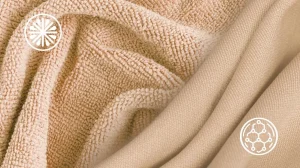
Microfiber Wipes
Microfiber’s split-fiber construction creates thousands of microscopic hooks per fiber bundle, dramatically increasing surface contact area. It is typically an 80% polyester / 20% nylon blend, and microfiber outperforms all other materials for oil, fingerprint, and film removal.
- Best for: Optical components, glass surfaces, precision instruments, fingerprint removal, display cleaning
- Strengths: Superior oil and fingerprint removal, excellent capillary action, fast absorption, captures sub-micron particles
- Limitations: Higher cost per sheet; nylon component may not be compatible with all aggressive chemicals
Sponge Wipes
Sponge-based wipes combine a soft, water-retentive texture with gentle surface contact, making them ideal for cleaning smooth, scratch-prone surfaces.
- Best for: Glassware, mirrors, laboratory equipment, smooth polished surfaces
- Strengths: High water retention, scratch-free contact, reusable multiple times
- Limitations: Harbors bacteria if not properly sanitized, not suitable for precision cleanroom environments, slower drying

Nonwoven Technologies: Spunlace, Spunbond & Melt-Blown
Nonwoven wipes are manufactured using fiber-bonding processes rather than traditional weaving or knitting. This creates unique performance characteristics that make nonwoven wipes the most versatile category in industrial cleaning. Here’s how the three main nonwoven technologies compare:
Spunlace Nonwoven (Hydroentangled)
Spunlace technology uses fine, high-pressure water jets to continuously spray and interlace fibers. The originally loose fibers move, interweave, and twist under the effect of high-speed water jets, forming a fabric with defined strength and shape. Materials include cellulose, polyester, polypropylene, wood pulp, polyamide, and functional fibers.
- Best for: Precision instrument cleaning, electronic equipment, LCD/OLED panels, disposable wet wipes
- Strengths: Soft, low-lint, resistant to pilling, excellent wiping performance, diverse material options
- Limitations: Lower tensile strength than woven fabrics; not ideal for heavy scrubbing
Spunbond Nonwoven (Melt-Spun)
Spunbond technology heats and melts polymer materials, extrudes them through spinnerets, and cools/stretches the filaments under high-speed airflows to form a fiber web that is then thermally bonded. Common materials include PP, PET, PE, PU, PLA, and PA6. Bicomponent spunbond (sheath-core, side-by-side, or split-type fibers) produces fluffier, higher-performance fabrics.
- Best for: Heavy-duty industrial cleaning, general-purpose wiping, composite wipe structures
- Strengths: Higher strength and abrasion resistance, good dimensional stability, economical at scale
- Limitations: Larger fiber diameter means lower stain removal and absorption compared to spunlace or meltblown
Melt-Blown Nonwoven
Melt-blown technology uses high-speed, high-temperature airflows to blow polymer melts, rapidly stretching them into ultrafine fibers. The resulting 3D fiber network has a large surface area, small pores, and high porosity — creating exceptional absorption and stain removal properties.
- Best for: Oil-absorbent wipes, spill cleanup, hydraulic component cleaning, automotive applications
- Strengths: 8× oil absorption capacity, strong stain removal, minimal surface damage, low fiber shedding
- Limitations: Lower tensile strength and abrasion resistance; often used in composite structures for reinforcement
Composite (Laminated) Nonwoven Wipes
Each nonwoven technology has trade-offs: full wood pulp spunlace is absorbent but weak; spunbond is strong but coarse; meltblown absorbs well but tears easily. Composite wipes solve this by laminating different nonwoven layers together, combining the strengths of each technology.
| Technology | Fiber Size | Absorption | Strength | Lint Level | Best Application |
|---|---|---|---|---|---|
| Spunlace | Fine | High | Medium | Very Low | Precision wiping, cleanrooms |
| Spunbond | Coarse | Medium | High | Medium | Heavy-duty, general industrial |
| Melt-Blown | Ultrafine | Very High (oil) | Low | Low | Oil absorption, spill cleanup |
| Composite | Varies | Optimized | Optimized | Low | Multi-purpose, high-performance |
10 Selection Criteria for Industrial Wipes
Choosing the right industrial wipe requires evaluating performance across multiple dimensions. Here are the 10 most important criteria — and what the technical specifications actually mean:
| # | Criterion | What to Look For | Why It Matters |
|---|---|---|---|
| 1 | Absorption Capacity | 6–8× self-weight for professional-grade; verify in accordance with IEST-RP-CC004.4 | Determines how much liquid a single wipe handles — fewer wipes needed, lower cost per clean |
| 2 | Absorption Rate | Speed of liquid uptake (seconds to saturation) | Faster absorption = fewer passes = shorter cleaning cycles |
| 3 | Lint & Particle Release | Low-lint certification; verify fiber shedding meets your environment’s requirements | Excessive fiber shedding contaminates products and equipment — the leading cause of rework in precision manufacturing |
| 4 | Chemical / Solvent Resistance | Compatibility with IPA, acetone, NMP, and your specific solvents | A wipe that degrades in a solvent contaminates the surface and wastes product |
| 5 | Anti-Static Properties | Surface resistance rating (typically 10⁶–10⁹ Ω); ESD-safe certification | ESD damage to electronic components is invisible and catastrophic — verify anti-static specs for sensitive environments |
| 6 | Tensile Strength | Resistance to tearing during use; woven > knitted > nonwoven | Prevents wipe breakup during scrubbing — broken fibers become contaminants |
| 7 | Non-Volatile Residue (NVR) | Residue remaining after solvent evaporation; lower is better | Residue interferes with coating, bonding, and assembly processes |
| 8 | Silicone-Free Certification | FTIR test confirming absence of silicone compounds | Silicone contamination destroys paint adhesion and semiconductor wafer yields |
| 9 | Edge Sealing Quality | Ultrasonic > heat-sealed > laser-cut > cold-cut | Unsealed edges release fibers with every wipe — the most overlooked contamination source |
| 10 | Cost per Clean (not per sheet) | Factor in absorption, durability, rework rates, and disposal costs | A cheaper wipe with higher rework and disposal costs is the most expensive option |
Key takeaway: Never evaluate wipes by price per sheet alone. A wipe that costs 20% less but causes 5% more rework is dramatically more expensive overall. Always request the manufacturer’s test data and match it against your specific process requirements.
For ISO-classified cleanrooms: The criteria above apply universally, but cleanroom environments require additional verification including APC (Airborne Particle Count), LPC (Liquid Particle Count), and IC (Ion Chromatography) data matched to your specific ISO class. For a detailed breakdown of cleanroom-specific testing standards and edge sealing processes, see our Cleanroom Wiper Selection Guide.
Application Scenarios by Industry
Different industries have radically different wiping requirements. A wipe that performs perfectly in a CNC workshop may be completely unsuitable for a semiconductor fab. Here’s how to match your wipe to your industry:
🏭 General Industrial & Manufacturing
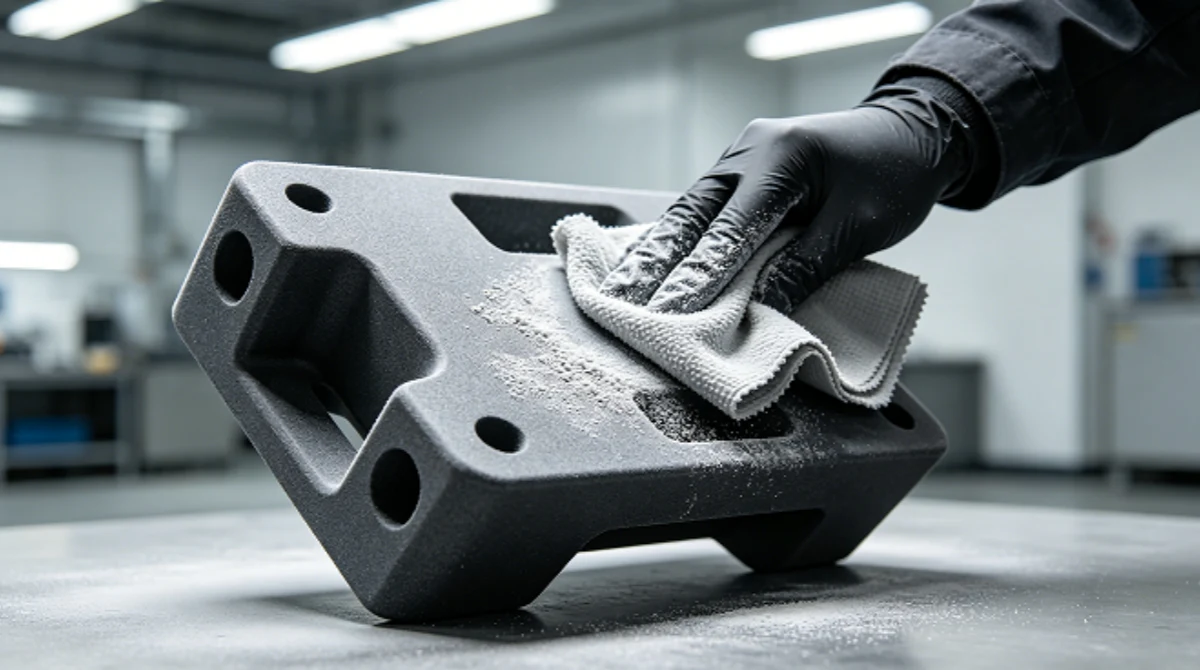
Typical tasks: CNC machine cleaning, assembly line maintenance, mold cleaning, metal/glass/ceramic part wiping
Recommended: Heavy-duty nonwoven (wood pulp + polyester), PP-wood pulp spunlace
Key requirement: Absorption capacity and abrasion resistance for rough surfaces and oil/grease removal
📱 Electronics & Semiconductor
Typical tasks: PCB cleaning, solder paste removal, LCD/OLED panel wiping
Recommended: Polyester knit, microfiber (optical), ESD-safe variants
Key requirement: Ultra-low lint, silicone-free, anti-static certified
For ISO-classified cleanroom applications (wafer fab, flat panel display), see our Cleanroom Wiper Selection Guide
💊 Pharmaceutical & Medical
Typical tasks: Equipment wipe-down, non-critical area cleaning, facility maintenance
Recommended: Nonwoven (general), polyester (equipment), silicone-free for GMP areas
Key requirement: Material traceability, chemical compatibility with disinfectants
For sterile cleanroom environments (aseptic filling, ISO 5 critical areas), see our Cleanroom Wipes for Pharmaceutical Environments
🚗 Automotive & Aerospace
Typical tasks: Engine assembly cleaning, paint prep, hydraulic system maintenance, optical sensor cleaning
Recommended: Microfiber (precision), meltblown PP (oil), polyester (general)
Key requirement: Solvent compatibility, oil absorption, lot traceability for aerospace applications
🔬 Precision Instruments & Optics
Typical tasks: Optical lens cleaning, spectrometer maintenance, laser component preparation
Recommended: Microfiber (0.1 denier), sub-microfiber polyester, ultrasonically sealed edges
Key requirement: Scratch-free contact, ultra-low particle release, chemical compatibility
For cleanroom-grade specifications (ISO 1–5 environments), see our Cleanroom Wiper Selection Guide
🪨 Oil & Chemical Processing
Typical tasks: Oil spill cleanup, chemical tank maintenance, electroplating line wiping
Recommended: Meltblown PP (8× oil absorption), polypropylene spunlace (chemical resistance)
Key requirement: Chemical resistance to specific acids/alkalis, high oil affinity, disposal cost management
Each industry has unique contamination risks and cleanliness requirements. The key is matching your wipe’s material, absorption, and cleanliness specifications to the demands of your specific application — not over-specifying (which wastes money) or under-specifying (which risks quality failures).
For industries operating in ISO-classified cleanrooms — semiconductor fabrication, pharmaceutical sterile production, aerospace assembly — the selection criteria become significantly more stringent. Our Cleanroom Wiper Selection Guide covers ISO class requirements, edge sealing processes, and performance testing in detail.
How to Choose: Decision Framework
Step 1: Define Your Contamination Type
| Contamination | Best Material | Why |
|---|---|---|
| Oil, grease, fingerprints | Microfiber > Meltblown PP | Split fibers or ultrafine pores maximize oil contact and absorption |
| General dust and particles | Polyester | Inherently clean, cost-effective for particle removal |
| Adhesive or sticky residue | Woven polyester/nylon | Needs high tensile strength and abrasion resistance |
| Solvent residue and films | Sub-microfiber > Spunlace | Fine fibers absorb residue more effectively per pass |
| Heavy liquid spills | Meltblown nonwoven | Highest absorbency for bulk liquid removal |
| Chemical solutions (acids/alkalis) | Polypropylene | Resists most chemicals at room temperature |
Step 2: Match to Your Environment
| Environment Type | Recommended Wipe Category | Key Consideration |
|---|---|---|
| General factory floor | Heavy-duty nonwoven, PP-wood pulp spunlace | Abrasion resistance, oil/grease absorption, cost efficiency |
| Assembly & production lines | Standard nonwoven, polyester | Consistent sizing, moderate lint requirements, solvent compatibility |
| Precision manufacturing (non-cleanroom) | Polyester, microfiber | Low lint, anti-static, silicone-free |
| Oil & chemical environments | Meltblown PP, polypropylene spunlace | Chemical resistance, high oil absorption capacity |
| ISO-classified cleanrooms | Polyester, microfiber, ultrasonically sealed | Match wipe grade to your specific ISO class |
For ISO-classified cleanroom environments (ISO 1 through ISO 8), wiper selection depends on your exact particle count class, edge sealing requirements, and performance test data. This is covered in depth in our Cleanroom Wiper Selection Guide, which includes ISO class-by-class recommendations and edge sealing process comparisons.

Step 3: Verify the Specs
Before placing an order, request the manufacturer’s test data for these critical parameters:
- Absorption capacity & rate — per IEST-RP-CC004.4 standard
- Lint / particle release — documented shedding levels appropriate for your environment
- Chemical compatibility — confirmed resistance to your specific solvents and cleaning agents
- NVR (Non-Volatile Residue) — residue remaining after solvent evaporation
- Material composition — silicone-free certification if required for your process
If a supplier can’t provide these test results, that’s a red flag — regardless of how competitive their pricing is.
For cleanroom procurement: You’ll also need APC/LPC particle counts, FTIR analysis, and IC (Ion Chromatography) data. See the Performance Testing section of our Cleanroom Wiper Selection Guide for a full explanation of what each test measures.
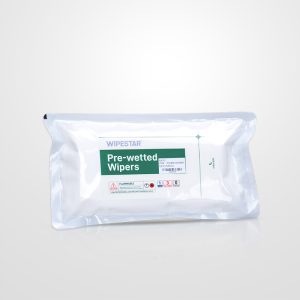
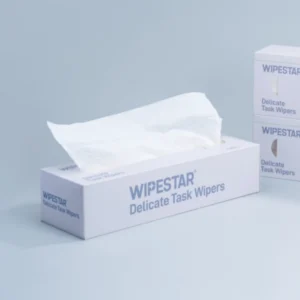
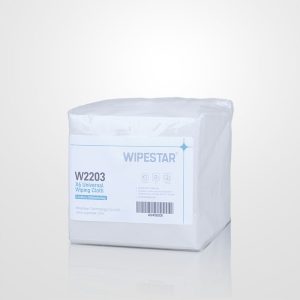
WIPESTAR Industrial Wipe Product Solutions
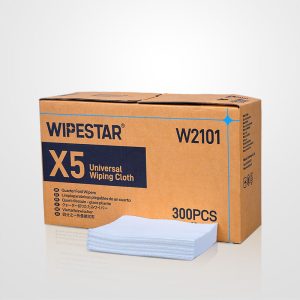
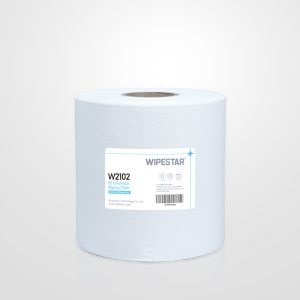
WIPESTAR manufactures a complete range of industrial wipes engineered for different applications, materials, and cleanliness levels. Here’s a quick-reference guide to our product lines:
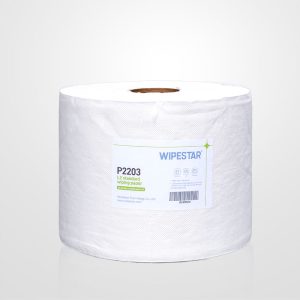
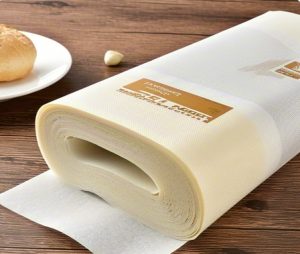
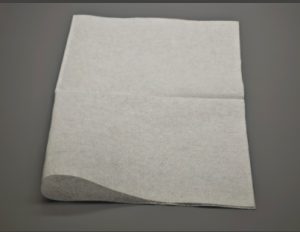
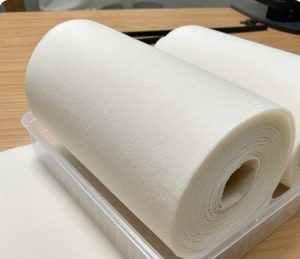
L2/L3 Standard Wiping Paper
Material: Imported wood pulp (non-specialized)
Best for: Liquid/filling line cleaning, mold cleaning, metal/glass/ceramic/plastic part wiping, metal roller cleaning
Surface: Smooth surfaces (avoid sharp edges)
Key advantage: Economical for high-volume general-purpose cleaning tasks
L4 High-Efficiency Wiping Paper
Material: Heavy-duty imported wood pulp
Best for: Precision bearing cleaning, screen printing residue removal
Surface: Smooth surfaces (avoid sharp edges)
Key advantage: Higher absorption and strength than standard wood pulp for demanding tasks
X6/X7/X8 Performance Wipes
Material: PP-wood pulp spunlace nonwoven (RoHS / anti-static)
Best for: Multi-color printing ink cleanup, beverage line cleaning, pharmaceutical equipment, transformer oil film removal, engine assembly cleaning
Surface: Moderately rough surfaces; reusable
Key advantage: Anti-static certified, versatile across multiple industrial applications
Heavy-Duty Multi-Purpose Wipes
Material: Wood pulp-polyester spunlace nonwoven (silicone-free)
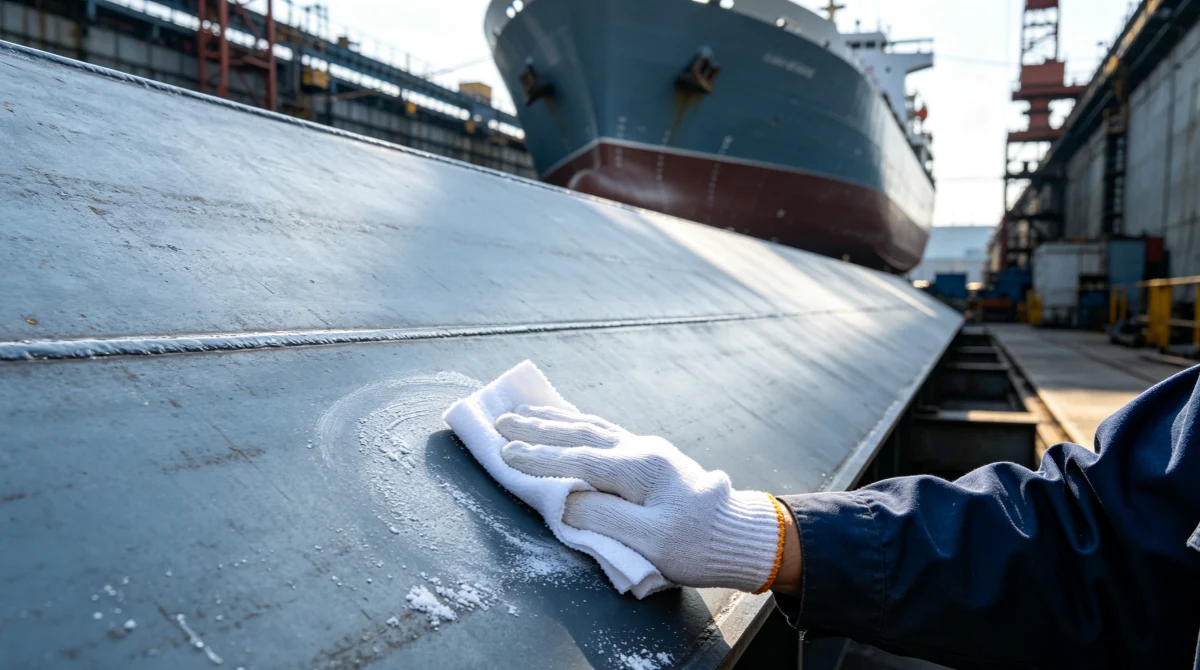
Best for: Carbon fiber post-paint cleaning, large oil tank interior cleaning, pharmaceutical/food facility surfaces, high-gloss product finishing
Surface: Moderately rough; wet use recommended
Key advantage: Silicone-free certification for paint-sensitive applications
Oil Absorbent Wipes
Material: Meltblown polypropylene (8× oil absorption)
Best for: Automotive windshield adhesive removal, hydraulic system component cleaning, oil spill response
Surface: Moderately rough; wet use recommended
Key advantage: Industry-leading oil absorption at 8× self-weight
W5423 Non-Woven Cleanroom Wipers
Material: 55% cellulose / 45% polyester spunlace
Best for: Electronics, semiconductor, optics, biomedical — PCB manufacturing, LCD production, precision cleaning
Key advantage: Exceptional solvent absorption, strong chemical resistance, low-lint, high absorbency for cleanroom environments
Browse the full WIPESTAR product catalog → with complete specifications, test data sheets, and volume pricing.
Frequently Asked Questions
Ready to Choose the Right Industrial Wipes?
WIPESTAR offers a complete range of industrial wipes from standard wood pulp to cleanroom-grade polyester and oil-absorbent meltblown, with full test data sheets and technical support for your procurement process.
Last updated: April 28, 2026 · Published by WIPESTAR