English
 Chinese



Walk into any medical device manufacturing facility and you’ll find cleanroom wipes everywhere — on workbenches, in gowning rooms, next to assembly stations, tucked into maintenance carts. They’re one of the most frequently used consumables in the building, and one of the most under-specified. Most facilities end up with whatever the previous purchasing manager ordered, or whatever the distributor had in stock. That’s a problem.
The wrong wipe doesn’t just clean poorly. It introduces contamination. A wipe that sheds fibers deposits particles on the very surface you’re trying to clean. A wipe that reacts with your solvent leaves a chemical residue. A wipe without batch documentation creates a traceability gap that shows up as a non-conformance during your next FDA audit. Getting this right matters — and it’s not complicated once you understand what you’re actually choosing between.
This guide covers the practical decisions: which product categories apply to medical device manufacturing, how material composition affects performance, and what compliance requirements actually mean for your consumable selection.
Why Medical Device Manufacturing Demands More from a Wiping Cloth
Most industries use wipes to clean up messes. Medical device manufacturing uses wipes to prevent them. That’s a fundamentally different job description, and it changes what “good enough” actually means.
A surgical implant that picks up a stray fiber during packaging doesn’t fail a visual inspection — it passes. The contamination is invisible. The problem shows up later, inside a patient. That’s the stakes. And it’s why the regulatory frameworks governing this industry — FDA 21 CFR Part 820, ISO 13485, EU MDR — don’t just require clean facilities. They require documented evidence that cleaning processes are controlled, repeatable, and traceable.
For cleanroom wipes, that translates into three non-negotiable requirements:
- Low particle and fiber generation. The wipe itself cannot be a contamination source. Every fiber it releases is a potential defect.
- Chemical compatibility. The wipe must survive contact with your cleaning agents — IPA, DI water, acetone, disinfectants — without degrading or leaving residue.
- Batch-level documentation. Certificates of conformance, particle count test reports, and lot traceability are part of your quality management system, not optional extras.
Standard shop rags and paper towels fail all three. That’s not a knock on them — they’re designed for different jobs. But in a medical device cleanroom, they’re the wrong tool.
The Three Product Categories You Actually Need
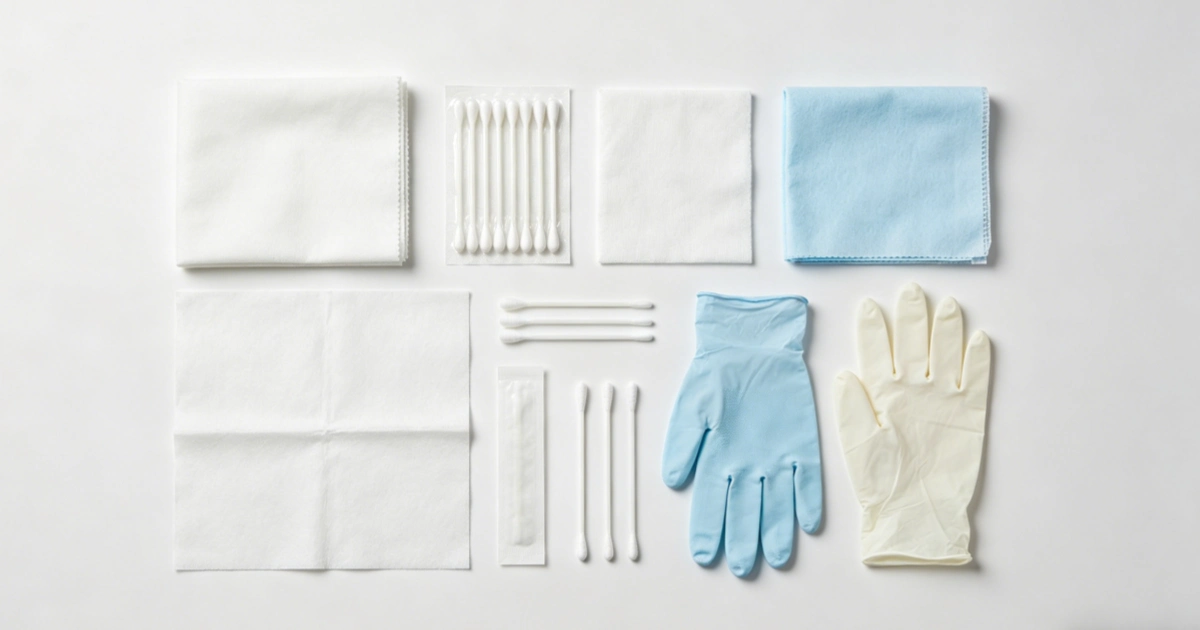
Medical device facilities typically draw from three categories of cleanroom consumables. Each covers a different part of the cleaning workflow, and substituting one for another creates gaps.
Cleanroom Wiping Cloths — Surface Cleaning in Classified Zones
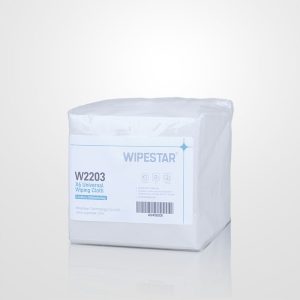
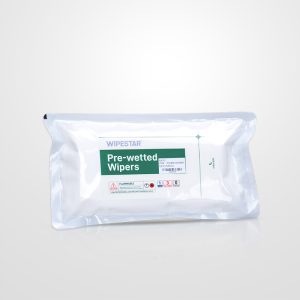
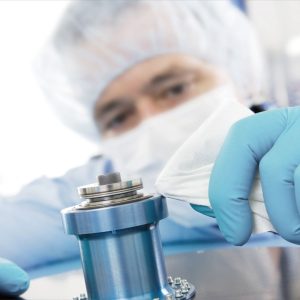
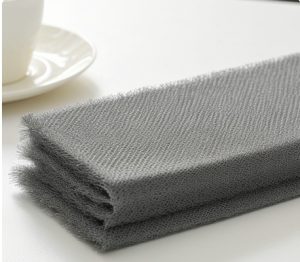
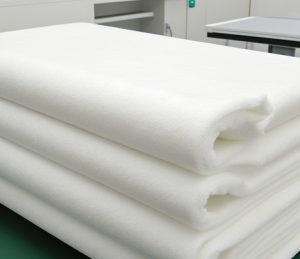
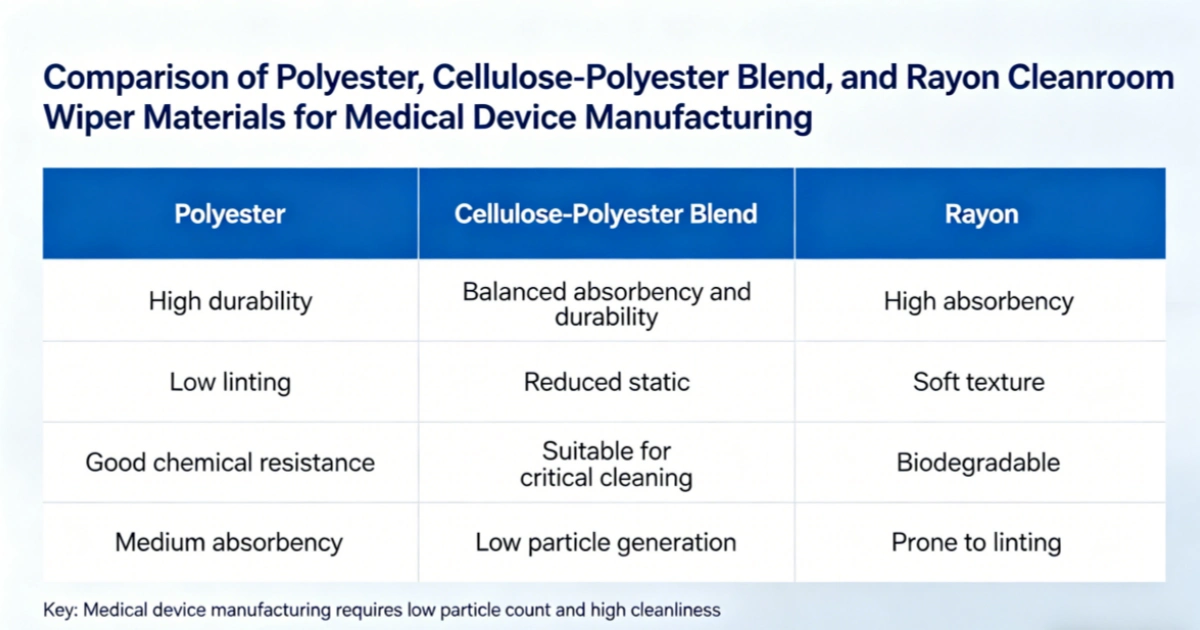
This is the core category. Cleanroom wiping cloths handle surface cleaning across workbenches, equipment housings, tooling, and packaging stations inside your ISO-classified zones. The material composition determines performance:
- 100% polyester knit — lowest fiber release, excellent chemical resistance, compatible with most sterilization methods. The standard choice for ISO Class 5–7 environments. Laser-sealed or ultrasonic-sealed edges are required at these classifications.
- Cellulose/polyester blends — higher absorbency, better wet strength, more economical. A 55/45 or 50/50 blend handles IPA and common solvents well. Suitable for ISO Class 7–8 and transition areas.
- Rayon/polyester blends — softer texture, gentler on polished and sensitive surfaces. Good for optical components and precision instrument housings. The W3401 Ultrasoft Surface Preparation Wipes use this blend specifically for applications where surface marring is a concern.
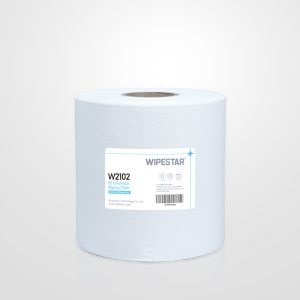
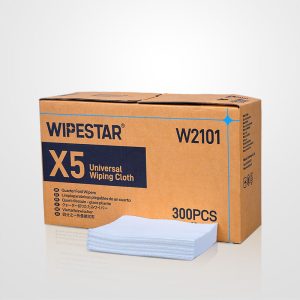
- Wood pulp/polypropylene — economical, high absorbency, suitable for lower-classification controlled areas and transition zones. The W2101 Universal Wiping Cloth is a widely used option in this category.
Edge treatment matters as much as material. Cut edges are acceptable for ISO Class 8 and below. For Class 5–7, laser-sealed or ultrasonic-sealed edges are the standard — they prevent the edge fraying that releases particles during use.
Cleanroom Swabs — Precision Cleaning in Gaps and Recesses
Flat surfaces are easy. The 3D geometry of medical device assembly tooling, connector ports, instrument recesses, and equipment gaps is where contamination accumulates and causes problems. Cleanroom swabs are the tool for these areas — and they’re frequently the missing piece in facilities that wonder why their surface wipe-downs aren’t solving their particle problems.
Tip material selection follows the same logic as wiper material:
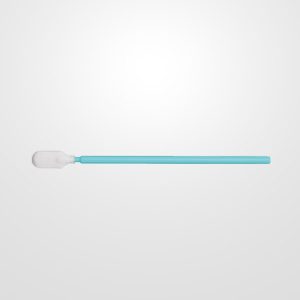
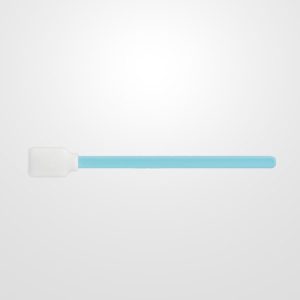
- Polyurethane foam tips — excellent absorption, soft enough for sensitive components, chemically compatible with IPA and common solvents. The most versatile option for general precision cleaning. Available in sizes from 60mm to over 180mm to match different tool geometries.
- Polyester knit tips — lower particle release than foam, better for applications where contamination control matters more than absorbency. Good for connector cleaning and precision instrument maintenance.
- TOC validation swabs — a separate category entirely. These are manufactured with controlled background carbon levels specifically for Total Organic Carbon testing during cleaning validation studies. Using a standard cleanroom swab for TOC sampling introduces measurement error that can cause false failures or false passes. If your facility runs TOC as part of its cleaning validation protocol, these are not optional.
Dust-Free Wiping Papers — Equipment and Tool Cleaning Outside Classified Zones
Not every cleaning task happens inside the ISO-rated cleanroom. Material staging areas, equipment maintenance bays, transition zones, and packaging areas all need controlled-lint cleaning materials — but they don’t necessarily need the same specification as your Class 6 assembly room.
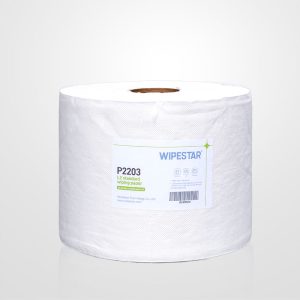
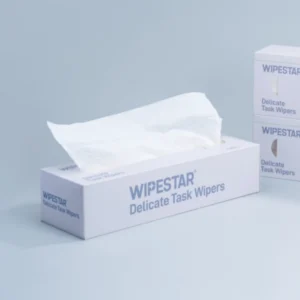
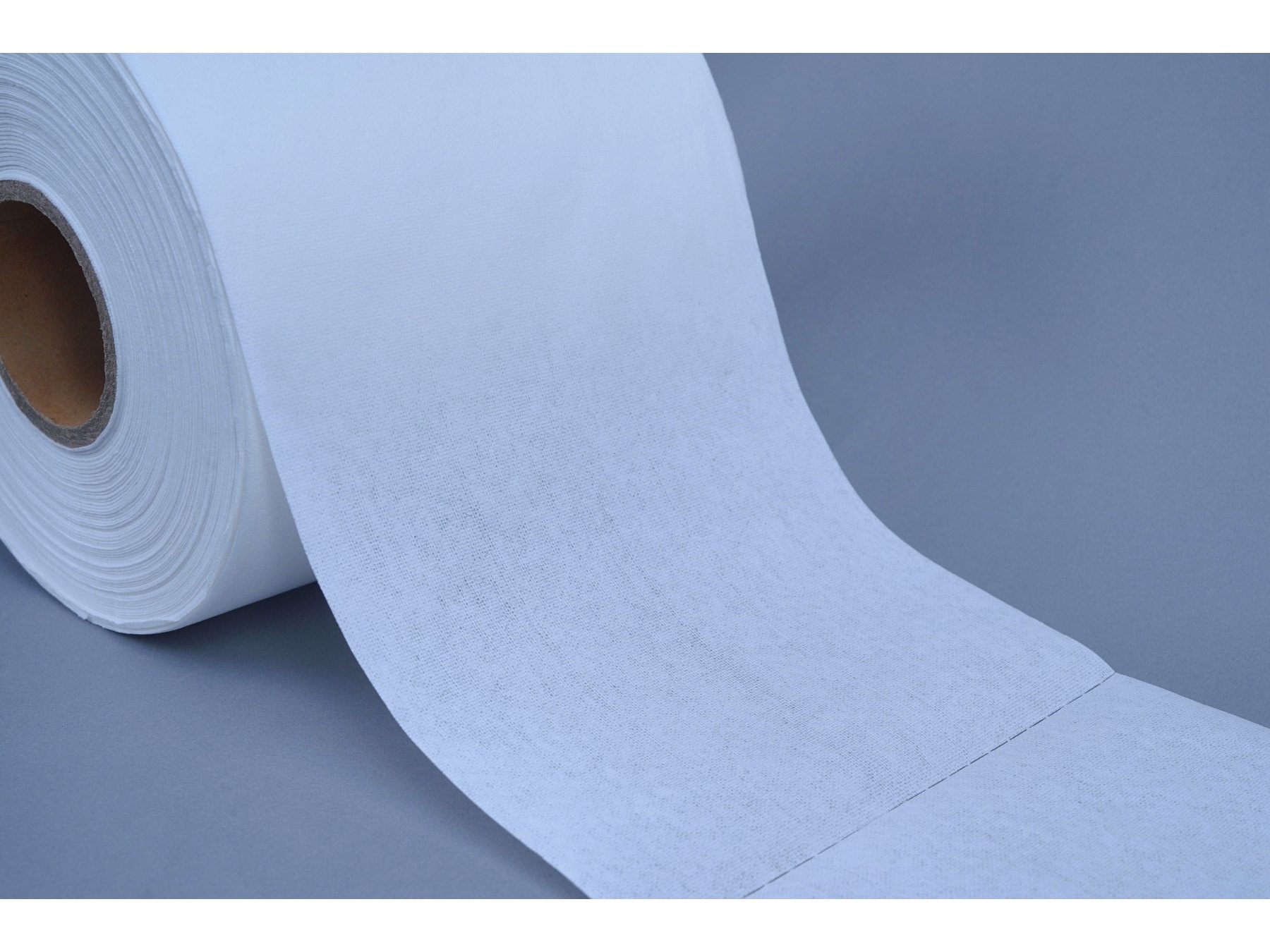
Dust-free wiping papers fill this role. They’re manufactured specifically to collect dust and particles from equipment surfaces without shedding their own fibers — a meaningful distinction from standard paper towels, which shed constantly. The product range covers 1-ply efficient papers for light-duty dusting through 3-ply standard papers for tool cleaning and solvent wiping.
The practical rule: use wiping papers in areas where you need lint control but not full cleanroom-grade particle specifications. Use wiping cloths where particle counts matter.
Matching Products to Your ISO Cleanroom Classification
ISO 14644-1 cleanroom classifications set the particle limits for your environment. Your consumables need to meet those limits — which means the wipes you bring in can’t generate more particles than your cleanroom is rated to handle. Here’s how the categories map:
ISO Class 5–6 (Class 100–1,000)
The most demanding environments in medical device manufacturing — sterile fill-finish areas, implant assembly, precision optical component handling. Requirements: laser-sealed or ultrasonic-sealed 100% polyester wipers, single-use only, packaged in cleanroom-compatible double-bagged format. Batch test reports (particle counts, NVR, ionic contamination) are standard documentation requirements. Swabs should be polyester or foam with verified low-particle specifications.
ISO Class 7 (Class 10,000)
Assembly areas, packaging stations, and general production lines. Heat-sealed or laser-sealed cellulose/polyester blends are appropriate here. Particle count data sheets are still required for quality documentation. Foam swabs cover most precision cleaning needs at this classification.
ISO Class 8 (Class 100,000)
Controlled but less stringent — incoming material prep, equipment maintenance areas, gowning rooms. Cut-edge wipers are acceptable. Wood pulp/polypropylene blends work well for high-volume, cost-sensitive applications. Wiping papers handle equipment and tool cleaning in adjacent areas.
What Compliance Actually Requires from Your Consumables
ISO 13485 and FDA 21 CFR Part 820 don’t specify which wipes to buy. What they require is that your cleaning processes are controlled and documented — and that includes the materials used in those processes.
In practice, that means:
- Certificates of Conformance for every lot used in a critical cleaning step. These should include particle count data, NVR (non-volatile residue) levels, and fiber identification (FTIR).
- Lot traceability. When a contamination event occurs, you need to pull the lot number of every wipe and swab used in the affected area over the preceding shift. Products without batch-level documentation create a traceability gap.
- Cleaning validation compatibility. If your devices require cleaning validation (reusable devices, combination products), the swabs used in TOC sampling must be validated for low background TOC. Standard swabs introduce measurement error.
- Sterilization compatibility verification. Wipes used in pre-sterilization assembly must be verified compatible with your sterilization method — gamma, EtO, or autoclave. White, undyed, 100% polyester is the safest baseline for pre-sterilization environments.
The documentation burden is real, but it’s manageable when you’re sourcing from suppliers who build it into their standard product offering. WIPESTAR ships batch-level documentation with every order — certificates of conformance, test reports, and shelf life data — formatted for inclusion in ISO 13485 quality management systems.
Four Mistakes That Show Up in Audits
These aren’t hypothetical. They’re the issues that come up repeatedly in medical device manufacturing quality reviews.
Using industrial wipes inside classified zones
Industrial wipes — even good ones — aren’t manufactured to cleanroom particle specifications. They shed fibers, may contain chemical residues from manufacturing, and don’t come with the documentation your QMS requires. The cost difference between industrial and cleanroom-grade wipes is small. The audit risk is not.
Reusing single-use wipers
Non-woven wipers are designed for single use. Reusing them redistributes the contamination you just picked up. It also breaks lot traceability — you can no longer document which lot was used in which area at which time. In a regulated environment, that’s a non-conformance waiting to happen.
Using the wrong swab for TOC sampling
Standard cleanroom swabs contain organic residues from manufacturing that contribute to TOC readings. Using them in cleaning validation studies produces unreliable data. TOC validation swabs exist specifically to solve this problem — they’re manufactured with controlled background carbon levels. If your facility runs TOC validation, this is a straightforward fix with significant impact on data quality.
Storing wipes outside controlled conditions
Wipes stored in an uncontrolled environment accumulate ambient particles before you open the package. Keep sealed packaging in a clean, dry area at controlled temperature (15–30°C) and humidity (30–60% RH). Implement FIFO rotation. Don’t stack heavy items on wipe boxes — compressed wipes lose absorbency and structural integrity.
Building a Practical Consumable Specification
The goal isn’t to buy the most expensive wipe on the market. It’s to match the right product to each zone and task in your facility. A simple framework:
- Map your zones. ISO Class 5–6 core areas, Class 7–8 production areas, transition zones, maintenance areas. Each zone has different requirements.
- Identify your cleaning tasks. Surface wiping, precision gap cleaning, equipment maintenance, solvent application. Each task has a best-fit product category.
- Match material to chemistry. Verify that your wipe material is compatible with every cleaning agent used in that zone. Get the compatibility data sheet from your supplier.
- Confirm documentation requirements. What does your QMS require for each product? Certificates of conformance? Particle count reports? FTIR? Make sure your supplier can provide it.
- Validate before you standardize. If you’re switching products or suppliers, run a short evaluation before full rollout. The cost of a validation study is trivial compared to a contamination event.
WIPESTAR’s medical devices product range covers all three consumable categories — wiping cloths, cleanroom swabs, and wiping papers — with batch-level documentation included as standard. Sample requests and volume pricing are available through the contact page. If you’re evaluating a protocol change or need help specifying products for a specific cleanroom class, the technical team can review your requirements directly.
Published April 2026. Verify current product specifications against WIPESTAR data sheets before use in regulated manufacturing processes.