English
 Chinese



If you’ve worked in a food processing facility, you’ve probably noticed something that outsiders miss: how much of the job is about keeping surfaces clean in environments that are, by definition, wet, oily, and constantly in motion. Conveyor belts carry product through zones that vary from ambient to refrigerated. Slicks of oil and moisture build up on equipment housings. And somewhere in that environment, someone has to wipe it all down — repeatedly, correctly, and without introducing new problems.
That last part is where a lot of operations quietly cut corners. They reach for whatever wipe is cheapest, or the same paper towels that have always been used. What they don’t think about is what that wipe leaves behind — the lint, the fiber shedding, the residue, the potential for cross-contamination between zones. In an industry where a single lapsed hygiene control can trigger a recall, those details matter more than most people realize.
This guide is for food processors, facility managers, and quality teams who want to make better decisions about what they’re actually wiping with. We’ll cover the standards that drive wipe selection, the product types available, how to match them to actual tasks, and the practical gaps we see most often.
Why Wiping Standards in Food Processing Are Different
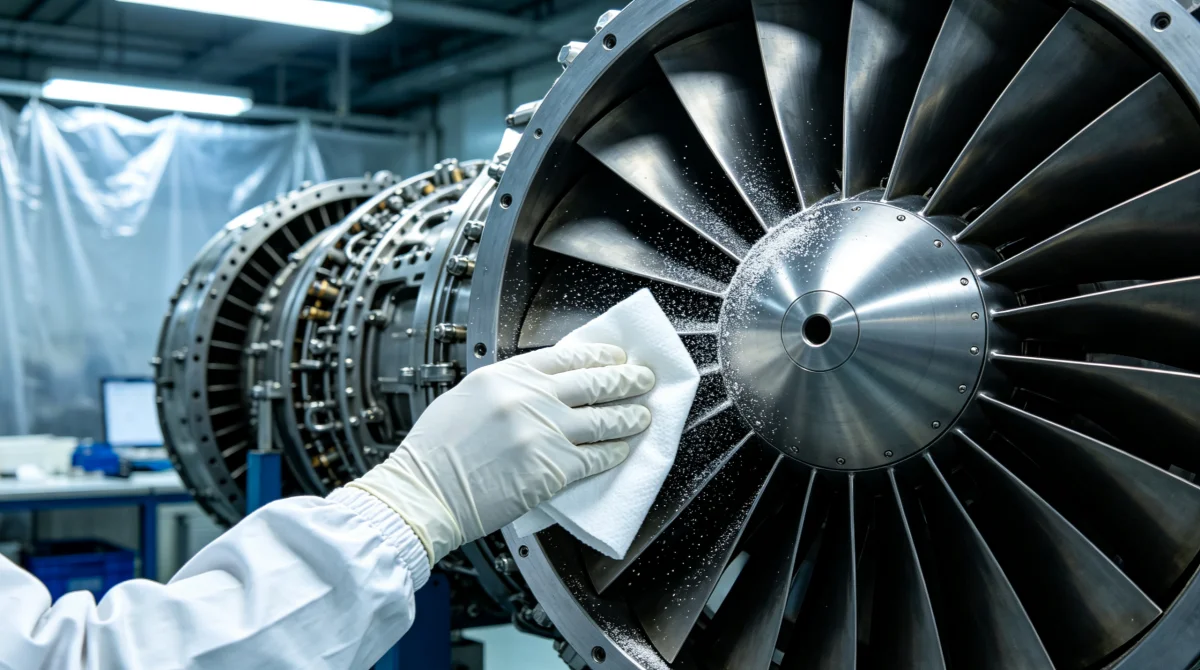
A wipe that works fine in a general manufacturing environment can fail in a food processing facility for reasons that have nothing to do with absorbency or durability. Food safety regulations add specific requirements around fiber release, chemical residue, and cross-contamination control that go beyond what most industrial wipe specifications cover.
The core regulatory frameworks driving wipe selection in food processing include:
- HACCP (Hazard Analysis Critical Control Point) — requires documented hygiene controls at every stage where contamination risks exist. The wipes used in those controls are part of the documentation, not afterthoughts.
- FDA Food Safety Modernization Act (FSMA) — shifts food safety from reactive to preventive. That means your cleaning protocols, including wipe specifications, need to be validated before problems occur, not investigated after them.
- EU General Food Law and local equivalents — require traceability and hygiene verification across the supply chain, including the materials that touch food-contact surfaces.
- ISO 22000 Food Safety Management — sets the standard for food safety management systems internationally, with specific requirements for equipment hygiene and cleaning validation.
What this means practically: a wipe used to clean a food-contact surface isn’t just a cleaning tool. It’s a food safety control point. It needs to clean effectively, not introduce fibers or chemical residues, and be compatible with the sanitizers and disinfectants your facility uses. Anything less is a compliance gap.
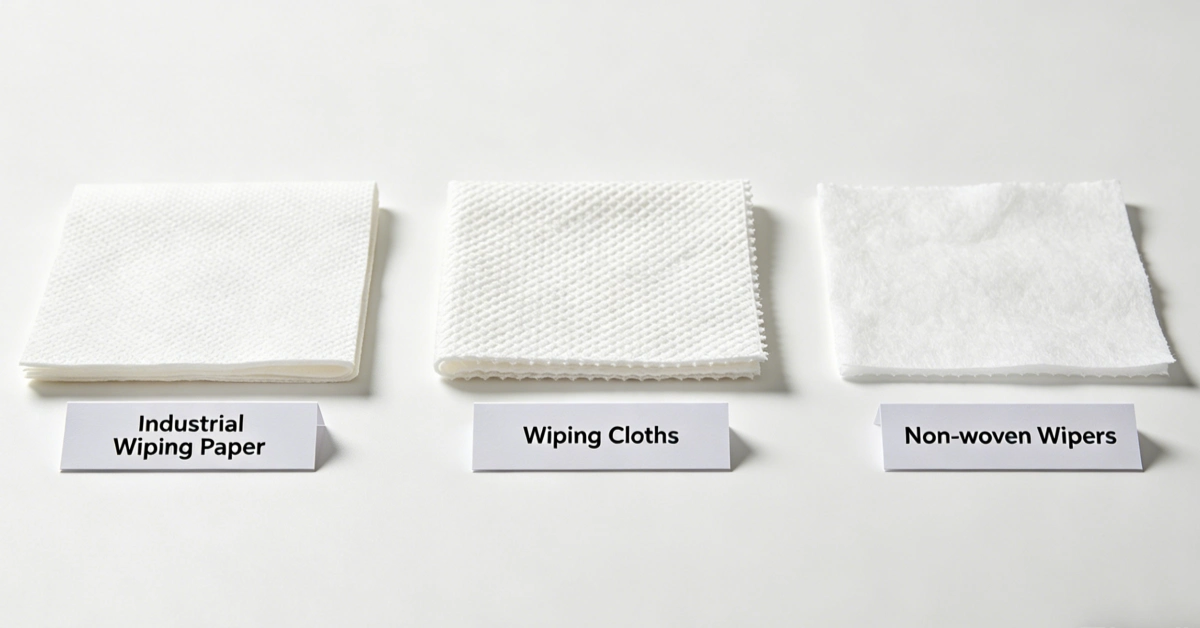
The Three Wipe Categories That Matter in Food Processing
Dust-Free Wiping Papers — The Everyday Workhorse
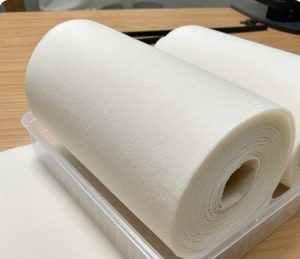
Most people don’t think of wiping paper as a specialized product. But in food processing, the difference between standard paper towels and purpose-made industrial wiping paper is significant — and it shows up in fiber control and absorbency.
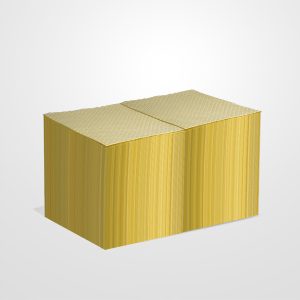
Industrial wiping papers like the P3101 Efficient Wiping Paper are manufactured with a structure that resists lint shedding while absorbing liquids and oils quickly. Standard paper towels — the kind you find in a washroom — are not manufactured to the same fiber control standards. They shed. In a food processing environment, every fiber that lands on a food-contact surface is a potential contamination event.
The wiping paper range spans three main categories:
- 1-ply efficient papers — lightweight, fast-absorbing, economical. Good for light-duty wiping, surface dusting, and areas where heavy contamination isn’t present. The P3101 is a widely used option in this category — its 31cm x 34cm size covers a useful surface area without being unwieldy.
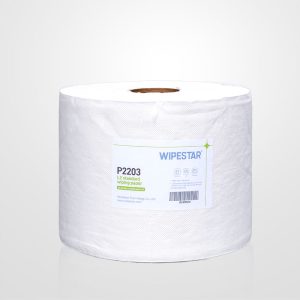
- 2-ply standard papers — heavier construction, better wet strength. Handles grease, oil, and moisture more effectively than 1-ply. The P2203 Standard Wiping Paper is built for environments where wiping strength matters.
- 3-ply standard papers — maximum thickness and absorbency for heavy-duty tasks. Available in white and yellow; yellow is sometimes used in color-coding systems to designate food-contact zone use.
Wiping Cloths — For Tough Cleaning Jobs
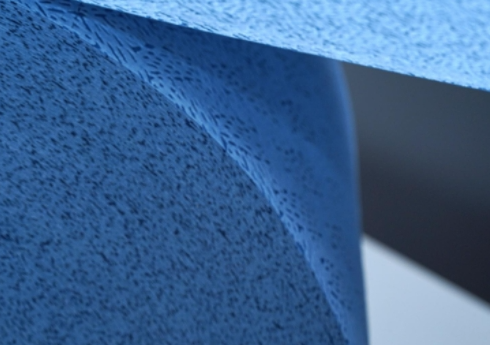
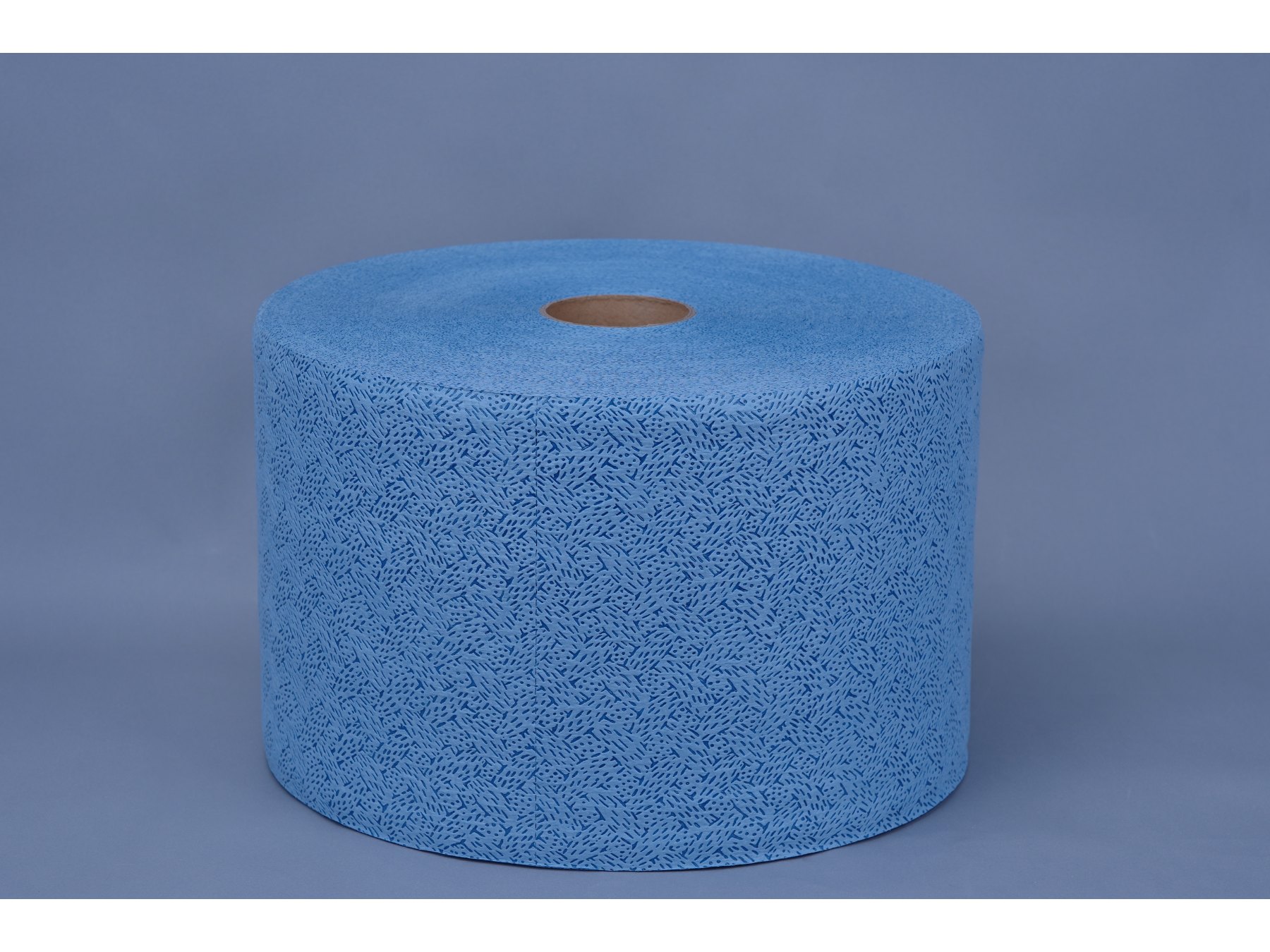
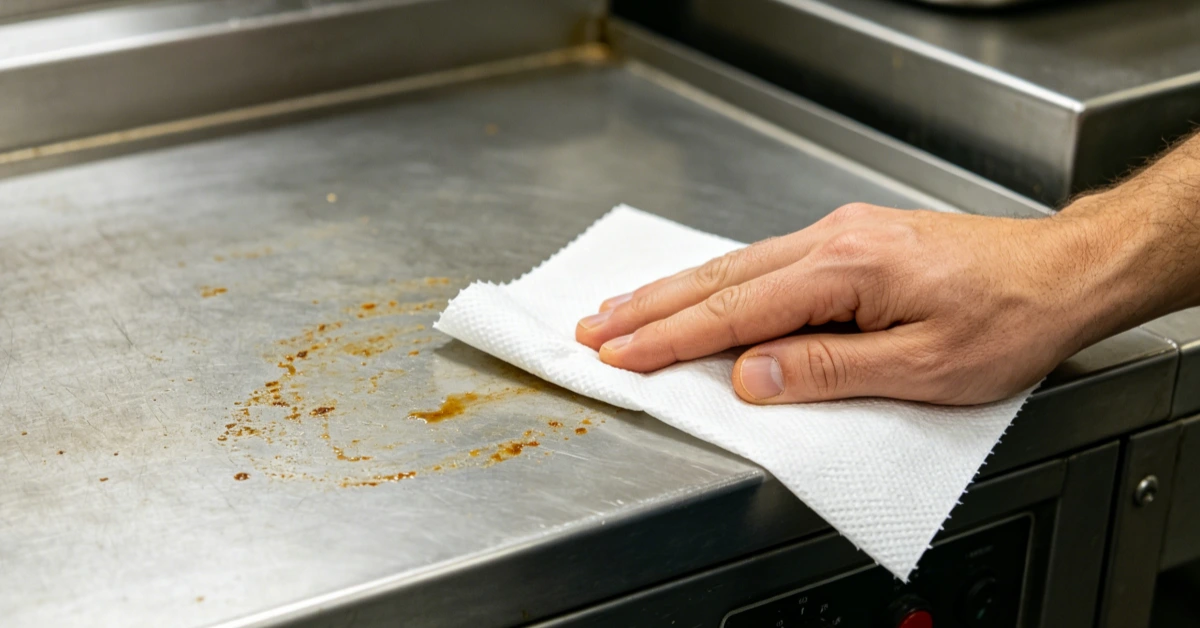
When you’re dealing with baked-on residues, heavy grease deposits, or equipment that needs more than a quick wipe-down, wiping cloths outperform paper every time. The material construction — typically cellulose/polyester blends or wood pulp/polypropylene — provides the combination of absorbency and mechanical strength that handles stubborn soils.
The material selection affects performance in predictable ways:
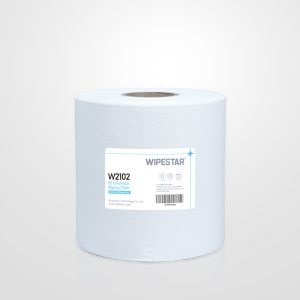
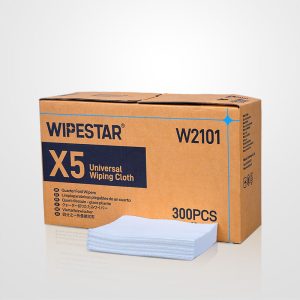
- Wood pulp/polypropylene blends — excellent absorbency, good wet strength, economical for high-volume use. The W2101 Universal Wiping Cloth is one of the most commonly used in food processing for its balance of performance and cost.
- Cellulose/polyester blends — faster drying than wood pulp, better chemical resistance, longer useful life. Handles sanitizers and degreasers better without degrading.
- Heavy-duty surface preparation wipes — specifically designed for removing tough residues. The W3501 Heavy Duty Surface Preparation Wipes use a specially treated mesh surface that increases friction, making them more effective at scrubbing baked-on grease and oil from equipment housings.
One practical point: color-coded wiping cloths are common in food processing for cross-contamination control. Assigning different colors to different zones — raw processing, ready-to-eat areas, general facility — gives operators a visual indicator that reduces the risk of wiping a clean zone with a cloth that was just used in a raw product area.
Non-Woven Cleanroom Wipers — Where the Lines Blur
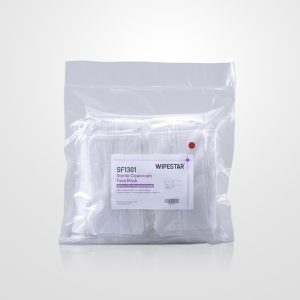
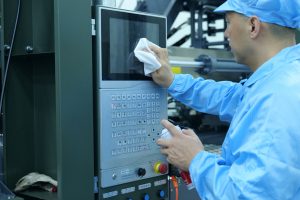
Here’s where things get interesting. Non-woven cleanroom wipers — typically made from cellulose/polyester spunlace — are widely used in pharmaceutical and electronics manufacturing. But they also have a growing role in food processing facilities, particularly those operating under higher-tier certifications like FSSC 22000 or BRCGS.
The spunlace non-woven construction produces a fabric where fibers are mechanically entangled rather than woven, which means no loose threads, no lint, and strong particle-trapping capability. For food processing, this matters in a few specific areas:
- Equipment precision cleaning — places where residual product builds up in crevices and recesses, like conveyor chain links, seal surfaces, and filling nozzle housings.
- Zone transition cleaning — the cleaning that happens at the boundary between raw and RTE (ready-to-eat) zones, where contamination risk is highest.
- Environmental monitoring surfaces — areas where product contact surfaces are swabbed for microbiological verification. A lint-free wipe is essential here — any fiber left behind can compromise the sample.
Matching Wipes to Cleaning Tasks in Food Processing
One of the most common mistakes we see in food processing facilities is using the same wipe type for every cleaning task. That approach wastes money on premium products for simple jobs and — more seriously — under-protects high-risk areas by using insufficient products where contamination control really matters.
Daily Surface Wiping — Pre-Operation
Before production starts, every food-contact surface gets a quick wipe-down. The priority here is speed and lint-free results. 1-ply or 2-ply wiping papers handle this well — fast to deploy, low cost per use, and the absorbency handles the light condensation and residue that builds up during off-hours. Color-coded paper (white for RTE zones, for example) helps reinforce the zone discipline.
Mid-Shift Spill and Residue Control
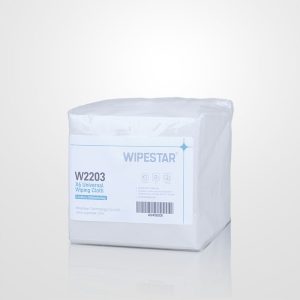
Product spills, oil drips, and moisture buildup happen constantly during production. This is where heavier 2-ply or 3-ply wiping papers and wiping cloths earn their keep. Wood pulp/polypropylene cloths like the W2203 Universal Wiping Cloth are well-suited to this task — they absorb quickly, wring out well, and handle the physical stress of frequent use without disintegrating.
Post-Shift Deep Cleaning and Sanitization
After production ends, the real cleaning begins. Equipment gets disassembled where possible, surfaces are treated with alkaline or acidic cleaners, rinsed, and then sanitized. This is where material selection becomes critical. Cellulose/polyester blends and non-woven wipers handle sanitizer contact better than standard paper towels — they don’t break down or leave fiber residue when wet with diluted sanitizers.
For this phase, the wiping papers handle the initial soil removal, and wiping cloths handle the sanitizer application and final wipe-down. The sequence matters: soil removal first, then sanitizer, then rinse where required. Skipping steps or using insufficient product creates biofilm risk.
Environmental Monitoring and Validation
Modern food safety programs include routine surface testing — ATP swabs, microbial surface tests, and visual inspections. The wipe used to prepare the surface for testing (or to collect the sample in some swab-based protocols) needs to be lint-free. Any fiber left behind can interfere with the test and give a false result. For this task, non-woven wipers are the right choice.
What the Regulations Actually Say About Cleaning Materials
Most food safety regulations don’t prescribe specific wipe products — they prescribe outcomes. Your cleaning process must be effective, documented, and validated. But that doesn’t mean the regulations are silent on materials. Here’s what the main frameworks imply for wipe selection:
HACCP and Pre-Requisite Programs
HACCP plans identify critical control points where hygiene failures could cause harm. At each CCP, your documented cleaning procedure — including what wipe is used, in what quantity, and how often — becomes part of your food safety documentation. If an auditor asks why you chose a particular wipe, you need an answer that goes beyond “it was on sale.”
FDA FSMA and Preventive Controls
Under FSMA’s Preventive Controls for Human Food rule, facilities must have a Food Safety Plan that includes validated cleaning protocols. “Validated” means documented evidence that your cleaning process works — which means the products used in that process need to be specified, and that specification needs to be based on something other than habit. Switching from a paper towel to a industrial wiping paper is a documented process change if it’s part of your CCP.
BRCGS and FSSC 22000
These global food safety standards go further than basic HACCP, requiring documented supplier approval, incoming material specifications, and cleaning validation. For wipe suppliers, that means providing certificates of conformance, material safety data sheets, and composition information. If your current wipe supplier can’t give you that documentation, that’s a supplier approval gap under either standard.
The Three Mistakes We See Most Often
Using paper towels instead of industrial wiping papers
Paper towels are designed for hand drying. They absorb moisture effectively but shed fibers continuously during use. In a food processing environment, those fibers land on food-contact surfaces and become foreign body contamination. It’s not a theoretical risk — it’s a documented cause of recalls. Industrial wiping papers are manufactured to lower fiber release standards. The cost difference is minor. The risk difference is not.
No color-coding system for wiping materials
Without a color-coding system, operators have no visual way to distinguish between wipes assigned to different zones. The risk of carrying contamination from a raw processing area to a ready-to-eat zone via a wiping cloth is real and has caused documented cross-contamination events. Simple color-coding — assign specific wipe colors to specific zones — is one of the cheapest and most effective contamination controls available.
Not specifying sanitizer compatibility
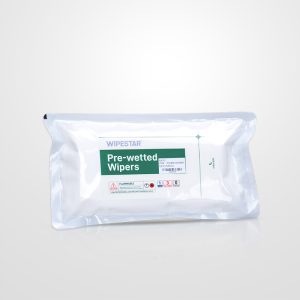
Not all wipes hold up equally well when wet with sanitizers. Some cellulose-based wipes lose structural integrity when exposed to acidic sanitizer formulations. Some polypropylene blends are fine with quaternary ammonium compounds but degrade with chlorine-based sanitizers. Before specifying a wiping cloth or paper for a sanitization protocol, check the compatibility data. WIPESTAR provides material compatibility information for all products on request.
Building a Practical Wipe Specification for Your Facility
You don’t need to overhaul your entire cleaning program. Start with what you actually have:
- Audit your wipe use by zone. Walk the facility and note where each wipe type is currently used. Identify where paper towels are being used in place of industrial papers, and where industrial papers are being used where cloths would perform better.
- Map wipe types to cleaning tasks. Assign the right product category to each cleaning step: pre-operation surface wipe, mid-shift spill control, post-shift deep clean, sanitizer application, environmental monitoring prep.
- Establish a color-coding system. Even two colors — one for raw zones, one for RTE zones — dramatically reduces cross-contamination risk with minimal operational overhead.
- Verify sanitizer compatibility. Pull the compatibility data for every wipe type currently in use against every sanitizer used in each zone. Replace products that don’t hold up.
- Document everything. Your food safety plan needs to specify wipe products by name or product code, not by generic category. Update SSOPs (Sanitation Standard Operating Procedures) with specific product references.
WIPESTAR supplies wiping papers and cloths for food processing facilities, with documentation packages suitable for inclusion in food safety plans under HACCP, BRCGS, FSSC 22000, and FSMA requirements. Browse the product range or get in touch directly to discuss requirements for a specific facility type or certification level.