English
 Chinese



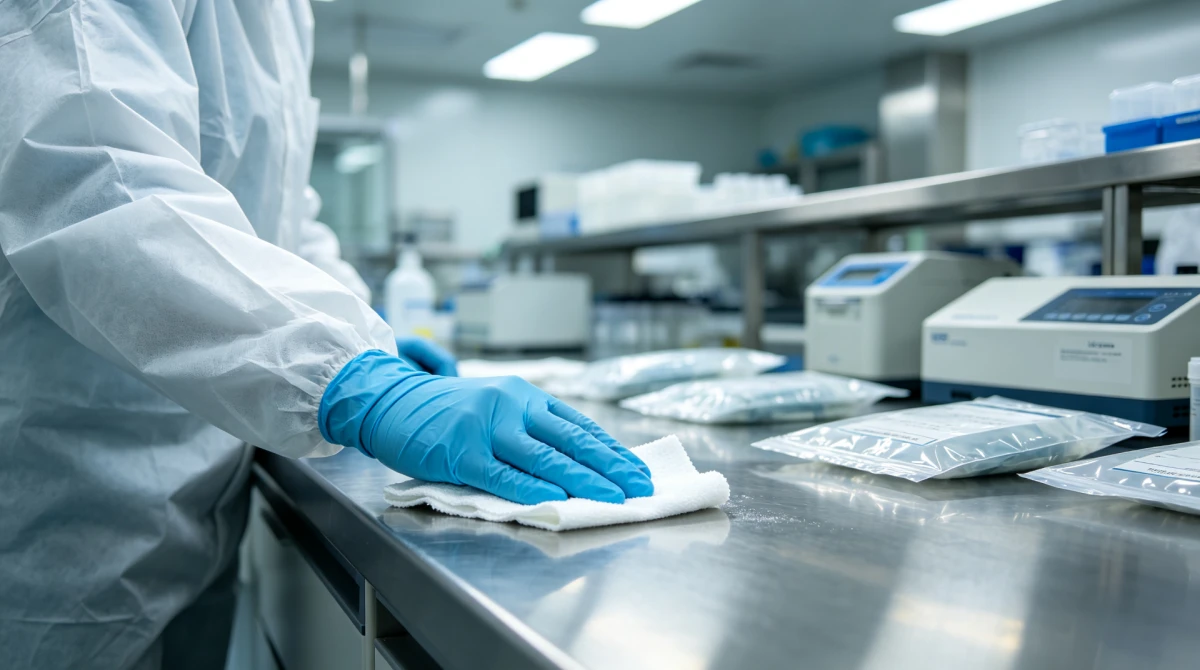
There’s a reason wiping cloths end up on every workbench, under every sink, and stacked in every maintenance closet across manufacturing facilities worldwide. They work. The right one, used in the right place, makes cleaning faster, more effective, and more consistent. The wrong one creates problems that take longer to fix than the time it would have taken to pick the right product in the first place.
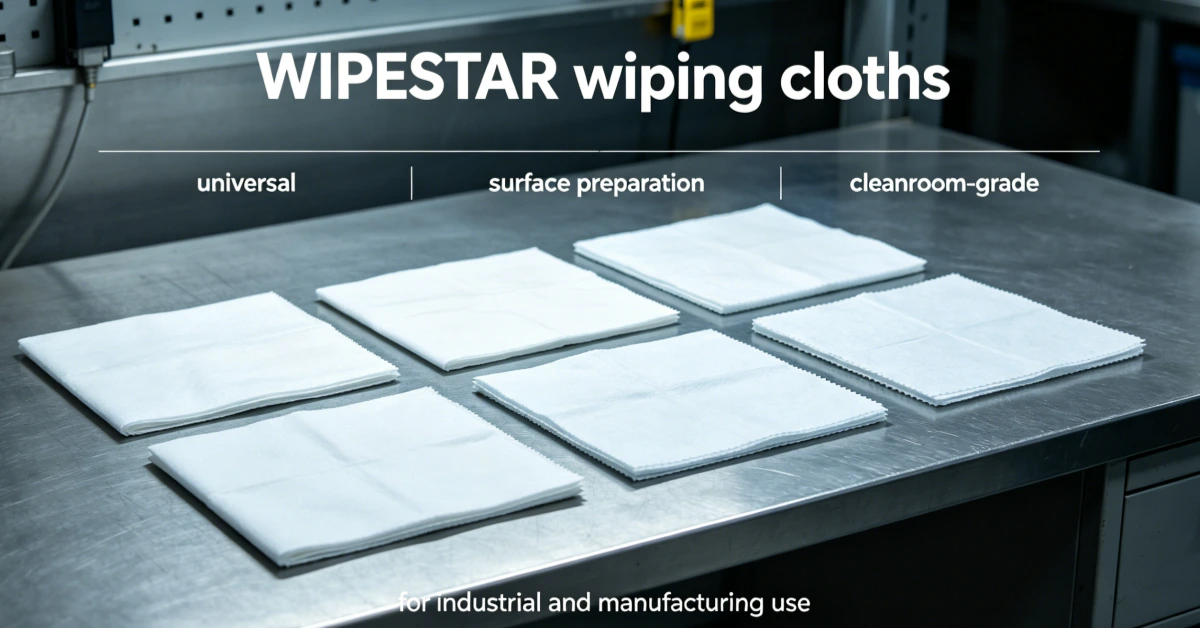
If you’re trying to make sense of the WIPESTAR wiping cloth range, this is the guide. We’ve organized the product line by what actually matters when you’re choosing a wipe — material composition, cleaning task, and the environment you’re working in. No fluff, no marketing language. Just the practical differences between each product family and where each one fits.
The Three Things That Actually Matter When Choosing a Wiping Cloth
Before getting into specific products, it helps to know what you’re actually choosing between. Most of the decision comes down to three factors.
Material Composition
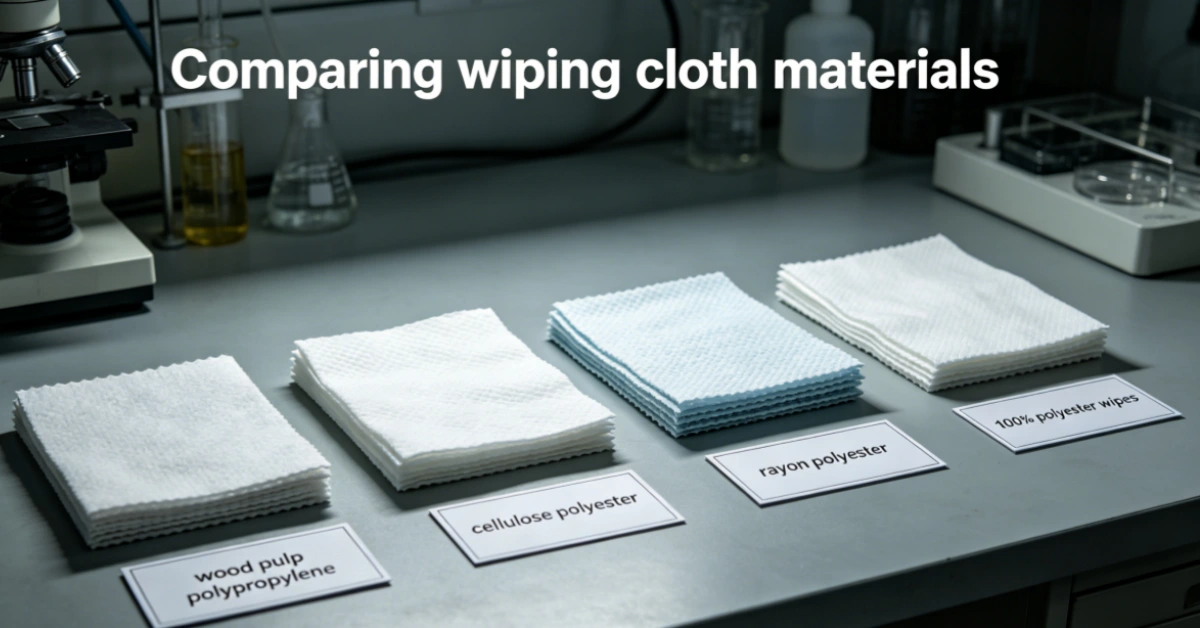
What the cloth is made of determines its absorbency, chemical resistance, surface gentleness, and cost. WIPESTAR’s range uses seven main material combinations, each with a distinct performance profile:
- Wood pulp/Polypropylene — the workhorse combination. High absorbency, good wet strength, economical. Handles water, oils, and light solvents. The material blend that makes up the majority of the Universal Wiping Cloth range.
- Cellulose/Polyester — better chemical resistance than wood pulp/polypropylene, faster drying, more durable through repeated use. Good choice when sanitizers and degreasers are part of the cleaning routine. Found in the W3501 Heavy Duty Surface Preparation Wipes.
- Rayon/Polyester — softer texture, gentle on polished surfaces, still handles solvents like IPA and acetone well. 50/50 rayon/polyester is used in both the W2101 Universal Wiping Cloth and the W3401 Ultrasoft Surface Preparation Wipes.
- 100% Polyester — the cleanroom-grade option. Knitted polyester offers the lowest fiber release of any material in the range, excellent chemical resistance, and compatibility with gamma, EtO, and autoclave sterilization. Used in the ESD and cleanroom-specific product lines.
- Polypropylene — hydrophobic, excellent resistance to acids and aggressive solvents. Less common in general-purpose cleaning but critical for pharmaceutical and chemical processing applications.
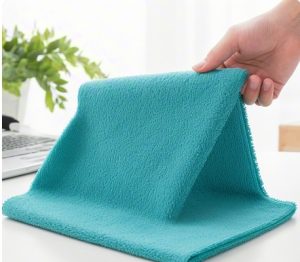
- Microfiber — the fine fiber structure provides superior dust and particle trapping compared to standard non-woven materials. Used selectively in the range for precision cleaning applications.
- Wood pulp — natural fiber option, high absorbency, economical. Typically used in lighter-duty applications or as part of a blend.
Size and Format
The WIPESTAR wiping cloths come in four standard size categories: 4-inch, 6-inch, 9-inch, and 12-inch squares, plus custom formats for specific applications. Larger cloths cover more surface area per stroke — better for wide equipment housings and conveyor surfaces. Smaller cloths are better for detail work, tight recesses, and precision assembly zones.
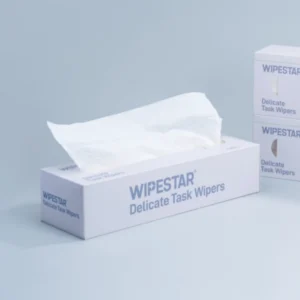
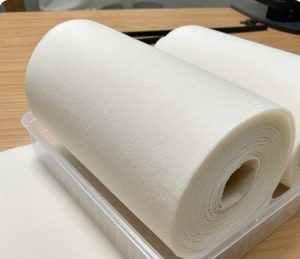
Format options include flat sheets (stacked or interleaved), quarter-folded (the most common format — four faces per cloth, used one at a time), and continuous rolls for automated or high-volume dispensing systems.
Edge Treatment
This is where the difference between general-purpose and cleanroom-grade cloths becomes visible. Cut edges are the standard for non-woven wiping cloths — the material is die-cut or sheared to size. They’re adequate for most industrial and manufacturing applications.
For controlled environments, edge treatment matters more. Heat-sealed, laser-sealed, and ultrasonic-sealed edges are fused rather than cut, which prevents the edge fibers from shedding during use. Laser-sealed edges are the standard for ISO Class 5-7 cleanrooms. Ultrasonic-sealed wide and narrow border options offer a middle ground for Class 7-8 environments.
The Six WIPESTAR Wiping Cloth Product Families
Universal Wiping Cloths
The largest product family in the range, designed for general-purpose industrial cleaning across a wide variety of manufacturing and maintenance environments. If you’re outfitting a facility where one wipe needs to handle multiple tasks — water, oil, light solvents, general dust — these are the starting point.
The Universal range uses wood pulp/polypropylene blends (X5, X6, and X7 series) across a range of sizes:
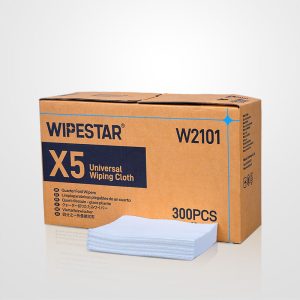
- W2101 Universal Wiping Cloth (X5) — 25cm x 35cm. The most popular size in the range. Made from 50% rayon and 50% polyester for a softer texture than the wood pulp options, with strong absorbency for water and oils. Works well with IPA and acetone. Ideal for transportation, general industrial manufacturing, and maintenance tasks where surface gentleness is a factor.
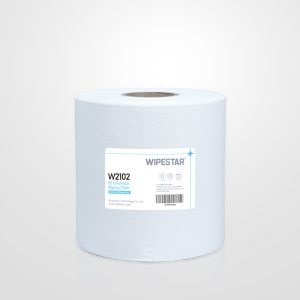
- W2102 Universal Wiping Cloth (X5) — 23cm x 34cm. Slightly smaller than the W2101, same rayon/polyester composition. Good option where a more compact format suits the task or workstation layout.
- W2201 Universal Wiping Cloth (X6) — 31cm x 42cm. The largest universal format. Wood pulp/polypropylene blend with excellent coverage for wide surfaces like equipment housings and production line cartops.
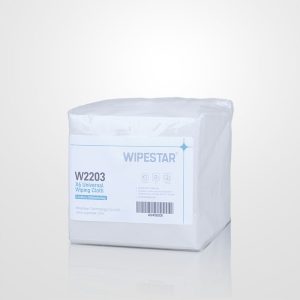
- W2203 Universal Wiping Cloth (X6) — 30.5cm x 30cm. Square format in the X6 material, a good all-round size for general production line use.
- W2301 Universal Wiping Cloth (X7) — 22cm x 42cm. Narrower and longer format — useful for wiping cylindrical surfaces, rails, and channels.
- W2302 Universal Wiping Cloth (X7) — 31cm x 34cm. The square format in the X7 grade, handling heavier soil loads than lighter X5/X6 variants.
The X5, X6, and X7 designations refer to material weight and construction grade — X7 is the heaviest and most durable, X5 is lighter and more economical, X6 falls in between. The higher the grade, the better the wet strength and abrasion resistance.
Surface Preparation Wipes
Surface preparation wipes are engineered for more demanding cleaning tasks — where you need more friction, more durability, or more surface gentleness than the universal range provides. This family splits into three distinct products:
The W3501 Heavy Duty Surface Preparation Wipes are the most robust option in the range. Built from a cellulose/polyester blend, they feature a specially treated high-friction mesh surface that increases mechanical cleaning action — making them more effective at removing baked-on grease, heavy oil deposits, and industrial residues than standard non-woven cloths. At 30cm x 35cm, they’re a practical size for equipment housings, press tools, and heavy machine surfaces. The mesh texture doesn’t just look different — it genuinely performs better on stubborn soils that would take multiple passes with a standard wipe.
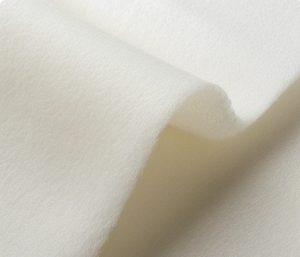
The W3401 Ultrasoft Surface Preparation Wipes go in the opposite direction — designed for surfaces where surface damage is unacceptable. Made from 50% rayon and 50% polyester at 65 GSM, these cloths are gentle enough for polished surfaces, optical components, and painted finishes. They’re used extensively in rail transit interior cleaning, automotive manufacturing, precision mold production, and glass and ceramics processing. The rayon/polyester microfiber non-woven construction provides strong liquid absorption without the aggressive texture that would risk scratching sensitive surfaces.
The W3301 Mesh Adhesive Removal Wipes use a mesh-textured surface specifically designed for adhesive removal tasks — label adhesive, tape residue, sealant cleanup. The open mesh structure lifts adhesive without solvents in many cases, and handles solvent-assisted adhesive removal more effectively than smooth-surface wipes.
Cleanroom Wipers
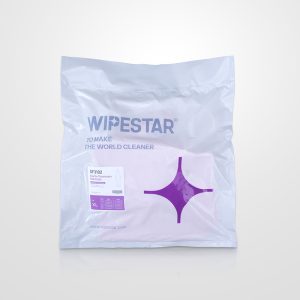
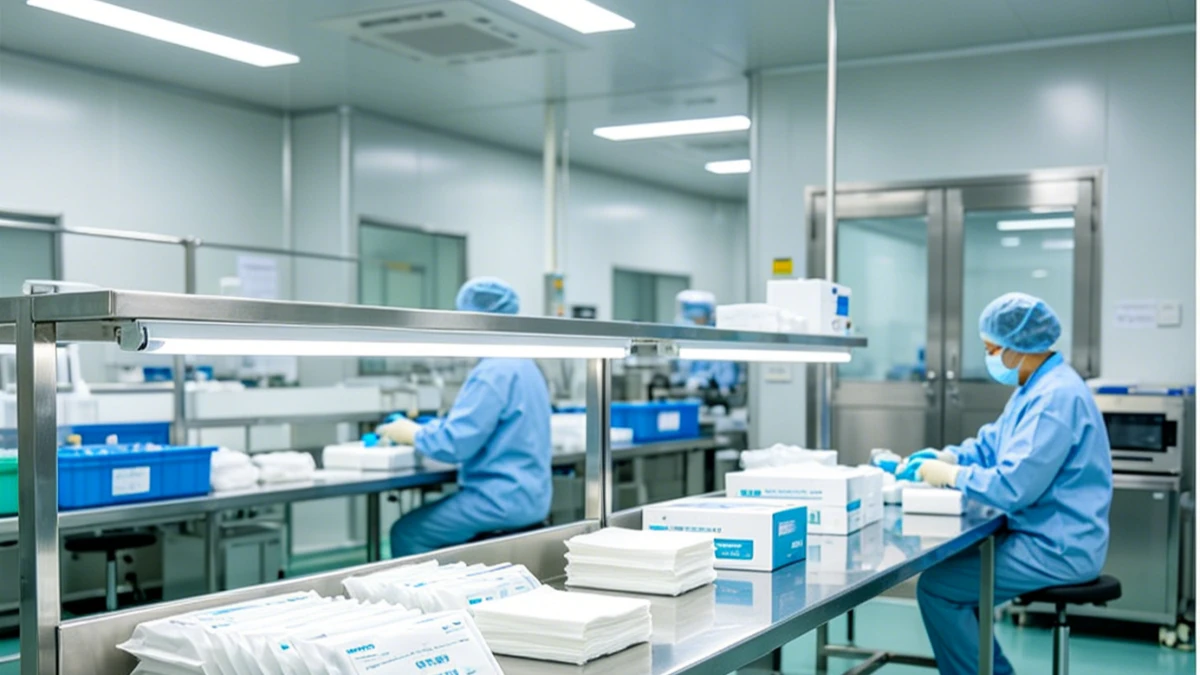
For facilities running ISO-classified cleanrooms, WIPESTAR offers a line of cleanroom-grade wiping cloths manufactured, packaged, and tested to controlled-environment specifications. The cleanroom wiper range uses 100% polyester construction with laser-sealed or ultrasonic-sealed edges for environments where particle counts are specified and monitored.
These are not the same as the universal or surface preparation cloths. Cleanroom wipers are classified by ISO cleanroom standard — ISO Class 5, 6, 7, or 8 — and selected based on particle count data sheets, not just material description. They’re used in semiconductor, pharmaceutical, medical device, and precision electronics manufacturing.
The cleanroom range is complemented by the WP3302 ESD Polyester Cleanroom Wipers, which add anti-static properties to the cleanroom specification — essential for electronics assembly, hard drive manufacturing, and any environment where static discharge is a contamination or damage risk.
Multi-Purpose Wipes
Multi-purpose wipes occupy the practical middle ground — better specification than a general-purpose industrial wipe, more economical than a cleanroom wiper. They’re designed for facilities that need controlled-lint performance without the full cleanroom classification overhead. Think controlled manufacturing environments, quality inspection areas, and incoming material inspection zones.
Oil Absorbent Cloths
For facilities that deal with heavy oil and hydrocarbon contamination — machining shops, metalworking operations, automotive assembly — oil absorbent cloths are purpose-built for hydrocarbon pickup. The material is engineered to attract and hold oil rather than just absorbing it superficially, which means less waste and more effective spill cleanup. They also wring out better than standard cloths, making them more reusable in high-oil environments.
SMT Stencil Wiping Rolls
These are a specialized product for surface mount technology (SMT) stencil cleaning in electronics manufacturing. SMT stencil wiping rolls are continuous rolls designed for use with automated stencil cleaning systems or manual roll dispensers. The material and format are specifically engineered for removing solder paste and adhesive residues from stencil apertures — the fine openings through which paste is deposited onto circuit boards. Residue buildup in stencil apertures causes paste volume variation, which directly affects solder joint quality. The right stencil wipe matters.
Matching a Wiping Cloth to Your Industry
The right cloth depends heavily on what you’re cleaning and why. Here’s a practical breakdown of which products work best in different industry contexts.
Industrial Manufacturing and Maintenance
General-purpose manufacturing facilities — machining, assembly, fabrication — get the most value from the Universal Wiping Cloth range (X5, X6, X7) and the W3501 Heavy Duty Surface Preparation Wipes. The wood pulp/polypropylene blends handle water, coolants, and light oils effectively. When heavy grease or baked-on residue is the problem, the W3501’s mesh surface earns its keep.
Transportation and Rail Transit
Rail transit and automotive interior cleaning requires surface gentleness and strong solvent compatibility. The W3401 Ultrasoft wipes are designed for exactly this — the rayon/polyester microfiber construction cleans effectively without damaging painted or polished interior surfaces. The 25cm x 30cm size is practical for tight transit interior geometry.
Electronics and Precision Manufacturing
Electronics assembly and precision manufacturing split between the cleanroom-grade polyester wipers (for ESD-sensitive assembly) and the wiping cloths range for general production area cleaning. ESD requirements eliminate most non-conductive materials — the WP3302 ESD wipers or 100% polyester cleanroom cloths are the correct choice inside ESD-protected zones.
Medical Device and Pharmaceutical
Regulated manufacturing environments require documented cleaning controls. The cleanroom wiper range with batch-level documentation — certificates of conformance, particle count data, NVR reports — is designed specifically for inclusion in ISO 13485 and GMP quality management systems. Single-use is the standard practice inside classified zones.
Food Processing
Food industry applications prioritize lint-free performance, sanitizer compatibility, and color-coding for cross-contamination control. The Universal Wiping Cloth range handles general facility cleaning. For RTE (ready-to-eat) zones, non-woven cleanroom-grade cloths provide an extra margin of fiber control.
Color-Coding: A Simple Control That Shows Up in Every Audit
One practical point that gets overlooked until an audit flags it: color-coding wiping cloths by zone is one of the most cost-effective contamination controls available. WIPESTAR offers white, blue, green, and yellow options across the range — assign specific colors to specific zones and the system is self-policing. An operator carrying a blue cloth into a clean zone is visually obvious. Without color-coding, there’s no easy way to catch that mistake before it becomes a contamination event.
Common Mistakes When Specifying Wiping Cloths
Choosing based on price alone
A cheaper wipe that requires more sheets per task, shreds prematurely, or causes surface scratches ends up more expensive in real usage cost. Factor in sheets-per-task and usable working life, not just unit price.
Using cut-edge cloths in cleanroom environments
Cut edges shed particles under mechanical stress. In an ISO Class 5-7 cleanroom, that’s a particle count failure waiting to happen. Laser-sealed or ultrasonic-sealed edges are the standard for a reason.
Ignoring GSM in favor of material description
Two cloths made from the same material can perform very differently at different GSM weights. A heavier cloth absorbs more, handles tougher soils, and lasts longer per sheet. Match GSM to task intensity.
How to Order WIPESTAR Wiping Cloths
The full wiping cloths range is available through the WIPESTAR product catalog, with filter options for category, material, size, edge type, and color. For volume pricing, custom specifications, or OEM/OEM packaging, get in touch directly. Lead times and shipping are available for bulk orders globally.
If you’re evaluating a change in wipe specification or need help matching a product to an application, the WIPESTAR technical team can provide compatibility data, sample units, and documentation packages for quality system inclusion.