English
 Chinese



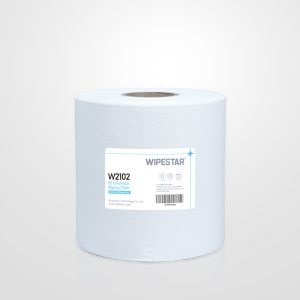
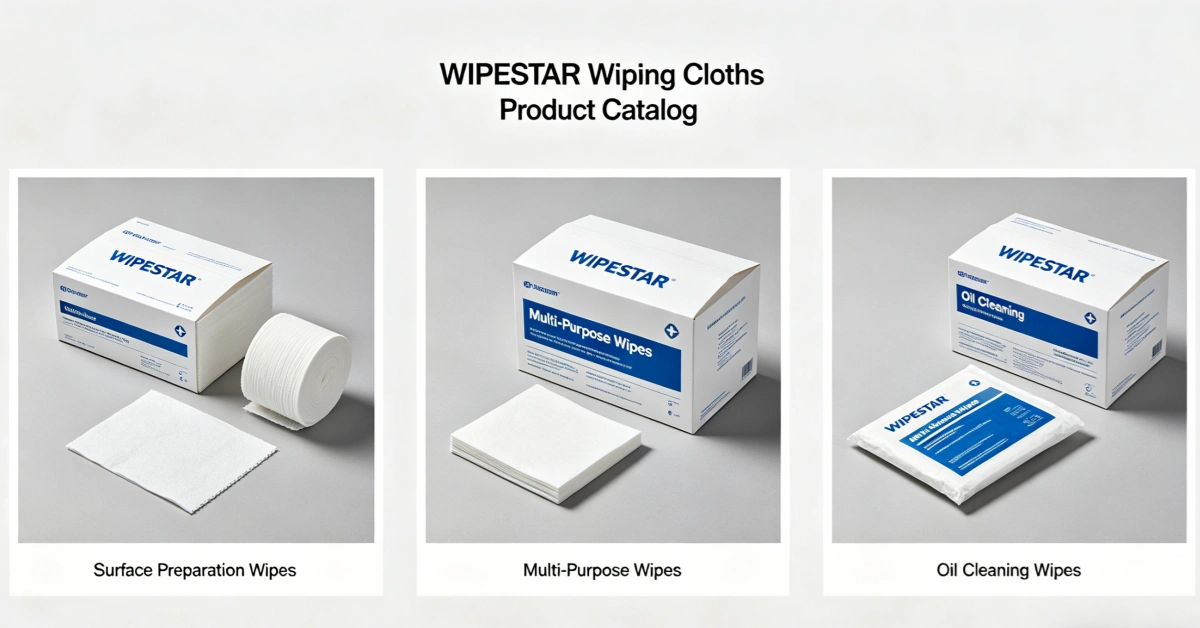
If you’ve already looked at the standard universal wiping cloths and are now trying to figure out what else is in the WIPESTAR range — you’re in the right place. The product family extends well beyond the X5, X6, and X7 universal series. Surface preparation cloths designed for specific tasks, multi-purpose wipes that bridge the gap between industrial and cleanroom specs, and a dedicated oil cleaning line built on meltblown polypropylene technology — each category exists because a genuine cleaning need exists to drive it.
This catalog walks through the products on the second pages of the wiping cloths range, gives the specs that matter, and explains which tasks each product actually solves better than the alternatives. Think of it as the product reference that explains the why, not just the what.
Surface Preparation Wipes: When General-Purpose Isn’t Enough
Universal wiping cloths handle the majority of cleaning tasks well. But there are cleaning situations where the surface, the soil, or the environment creates demands that a standard non-woven cloth struggles to meet. That’s where surface preparation wipes come in — engineered for specific challenges that require more than just absorbency and wet strength.
Microfiber Surface Preparation Wipes: W3102 and W3104
The W3102 Microfiber Surface Preparation Wipes and W3104 are the highest-specification surface preparation products in the WIPESTAR range. Made from a polyester/nylon microfiber knit construction at 280 GSM, they sit well above the 65 GSM rayon/polyester wipes in the Ultrasoft line in terms of durability and mechanical cleaning action.
What makes microfiber different at this weight is the combination of properties it delivers simultaneously. The split microfiber structure creates fine capillaries between fibers that physically trap dust and particles — not just push them around. The 280 GSM weight gives exceptional tensile and wear resistance, meaning these cloths last through heavy repeated use without degrading. And despite their durability, they’re gentle enough for polished surfaces and fine finishes because the microfiber structure doesn’t have the coarse texture of conventional high-abrasion materials.
The W3102 comes in blue and the W3104 in white — the color difference matters for color-coding systems in multi-zone facilities. Blue is typically assigned to heavy-duty or equipment zones, white to general-purpose or RTE zones in food processing contexts. Both are packaged in pouches of 10 sheets, 20 pouches per case — a practical format for workshop dispensing.
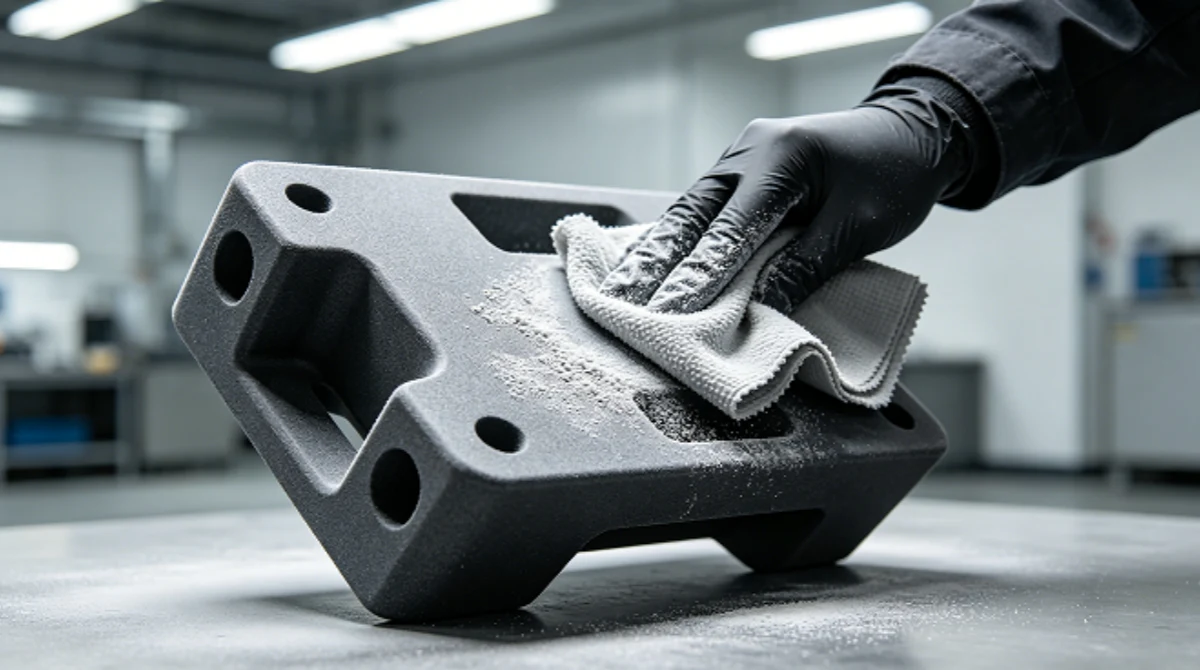
The applications that benefit most from these cloths are the ones that typically cause problems with lighter wipes: baked-on grease on rail transit equipment, heavy oil deposits on bearing and gear transmission housings, printer’s ink buildup on screen printing equipment, and the kind of mold release residue that accumulates on precision mold surfaces between cleaning cycles. In each of these cases, the microfiber structure provides mechanical agitation that lifts and traps the soil in a way that a smooth-surface wipe simply cannot match.
Mesh Adhesive Removal Wipes: W3301
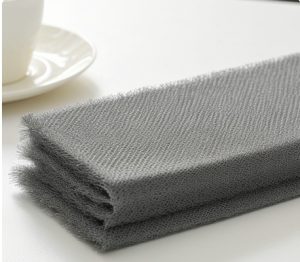
The W3301 Mesh Adhesive Removal Wipes solve a problem that every manufacturing facility encounters but rarely plans for: adhesive residue. Label adhesive, tape residue, sealant squeeze-out, gasket adhesive — these soils don’t respond well to standard wipes or even to most surface preparation cloths because the adhesive bonds to the surface at a microscopic level. A smooth-surface wipe contacts the adhesive but doesn’t have the geometry to get underneath it.
The W3301 uses an open mesh structure that works by a different mechanism. The mesh openings create sharp contact points that fracture adhesive bonds and allow the wipe to peel and lift rather than just smearing. For facilities dealing with adhesive contamination regularly — electronics assembly, gasket installation, label application, sealant work — keeping the W3301 in the maintenance kit is a practical choice that reduces cleaning time measurably. It’s also useful for pre-bonding surface preparation, where adhesive needs to be applied to a clean, residue-free surface.
Multi-Purpose Wipes: The Middle Ground That’s Easier to Overlook
Between the general-purpose universal cloths and the full-specification cleanroom wipers, there’s a practical middle ground that many facilities under-specify: multi-purpose wipes. These are better than standard industrial wipes in particle control and material quality, but without the batch documentation and cleanroom classification overhead that makes cleanroom wipers more expensive per sheet.
W1102, W1301, and W1501 Multi-Purpose Wipes
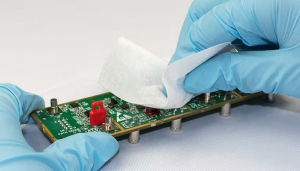
The W1102 Multi-Purpose Wipes, W1301, and W1501 form the WIPESTAR multi-purpose family. All three use a cellulose/polyester construction — the same material combination that provides good chemical resistance and faster drying than wood pulp blends in the universal range.
The practical advantage of the multi-purpose grade over a universal wipe comes down to two things: cleaner fiber release and better compatibility with a wider range of cleaning agents. Cellulose/polyester doesn’t shed as readily as wood pulp blends when wet, and it holds up better to repeated contact with acidic or alkaline cleaning formulations.
The W1102 comes in a flexible open format — no fold, no specific size restriction — making it adaptable to tasks where you need to tear or cut a custom shape or size. The W1301 is a 12-inch format, making it comparable to the large universal cloths in coverage but with the better material specification of the multi-purpose grade. The W1501 adds the foldable format to the multi-purpose specification — quarter-folded for one-at-a-time dispensing, which reduces waste and contamination risk compared to open stacking.
The applications where multi-purpose wipes earn their cost premium over universal cloths are worth naming: incoming inspection areas where product surfaces need lint-free wiping before they enter production, quality control stations where optical and precision components are handled, and any area where cleaning agent residue on the wipe itself would be a problem.
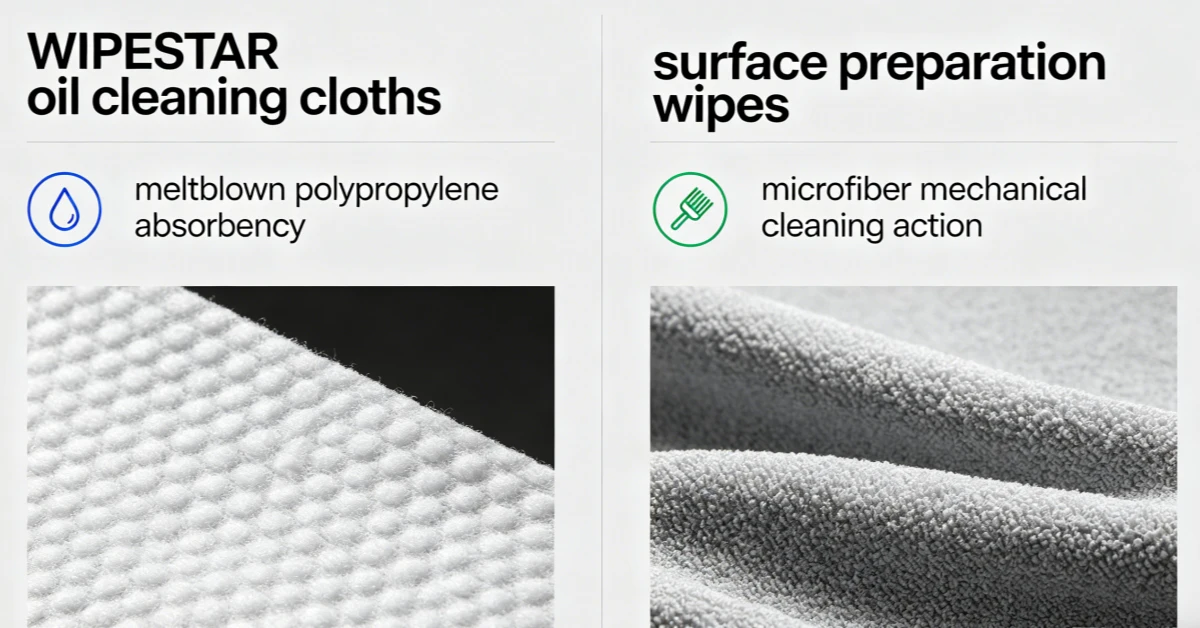
Oil Absorbent Cloths: Meltblown Polypropylene Technology
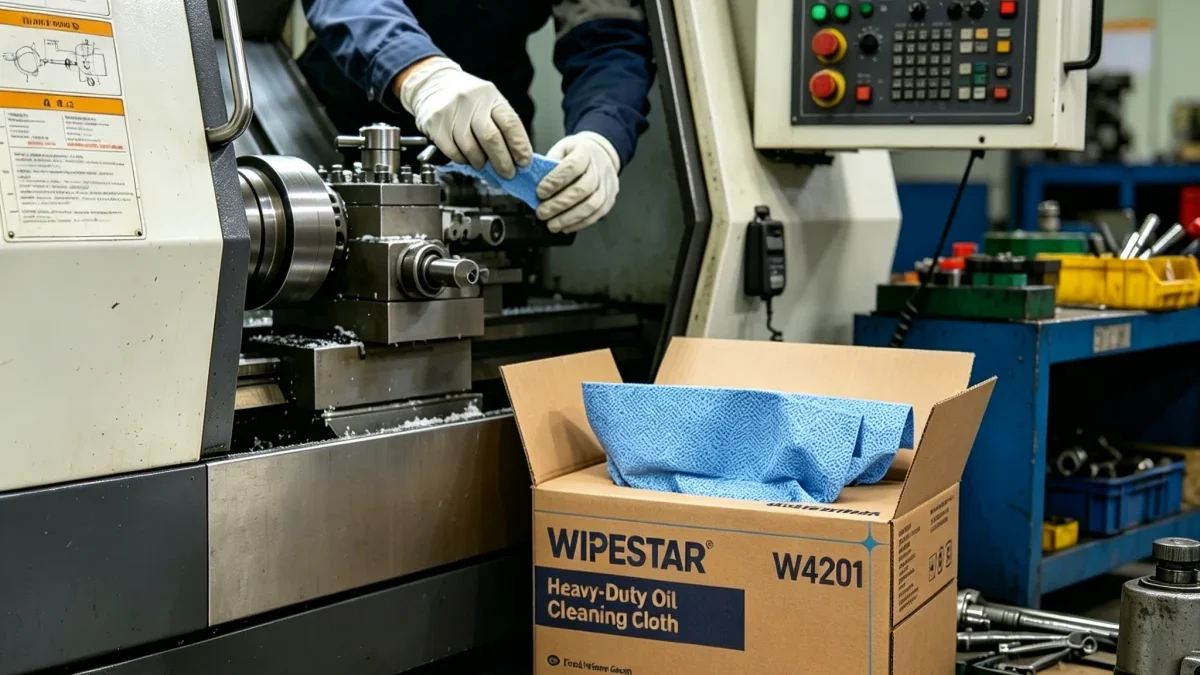
The oil cleaning cloth family represents a distinct technology within the wiping cloths range. All four products — W4201, W4202, W4204, and W4301 — are built on meltblown polypropylene, which is fundamentally different from the spunlace non-woven construction used in the universal and surface preparation lines.
What Makes Meltblown Polypropylene Different
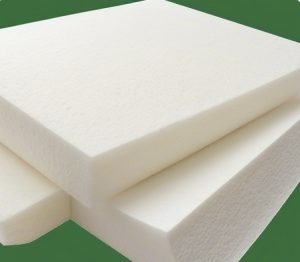
Meltblown polypropylene is produced by extruding molten polymer through fine die nozzles and using high-velocity hot air to attenuate the fibers into a fine web. The result is a material with an extremely fine fiber diameter — measured in microns — that creates a highly uniform pore structure throughout the web. That structure is what gives meltblown polypropylene its extraordinary oil absorption properties: the material doesn’t just absorb on the surface, it wicks oil throughout the thickness of the cloth through capillary action.
All four WIPESTAR oil cleaning cloths absorb multiple times their own weight in oil. WIPESTAR specifies “multiple times” conservatively — independent testing on meltblown polypropylene of this specification typically shows absorption of 8 to 15 times the cloth weight in hydrocarbon fluids. What that means in practice is that one cloth handles significantly more oil than an equivalent sheet of wood pulp or cellulose/polyester non-woven before it becomes saturated and needs replacing.
The meltblown construction also means no lint and no fiber shedding when wet with oil — the fiber-to-fiber bonding in the meltblown web is thermal rather than mechanical, so there’s no loose fiber population to release. That’s critical in manufacturing environments where a fiber shed in the wrong place can cause a product defect or a quality event.
All four products have passed ROHS testing — relevant for electronics manufacturing, automotive supply chains, and any facility with environmental compliance requirements that include restricted substances in maintenance consumables.
Heavy Duty vs Cleanroom Grade
The distinction between the W4200 series and the W4301 is cleanroom classification:
The W4204 Heavy Duty Oil Cleaning Cloths, W4201, and W4202 are general-purpose heavy-duty oil cleaning cloths. All three are made from the same meltblown polypropylene specification and carry the same absorption and reusability performance. The W4204 is the 12-inch format — the most practical size for general workshop oil cleanup, machine wipe-downs, and heavy spill response. The W4201 and W4202 are custom “Others” sizes designed for specific equipment geometries or custom dispensing setups.
The W4301 Cleanroom Oil Cleaning Cloths are the cleanroom-classified variant. The difference is in manufacturing, packaging, and testing: the W4301 is manufactured and packaged to cleanroom standards, with particle count data sheets and batch-level documentation suitable for inclusion in ISO 14644 environmental monitoring programs. For oil cleaning tasks inside classified cleanroom environments — semiconductor fab tool maintenance, pharmaceutical production equipment, optical manufacturing — the W4301 is the appropriate specification.
Why These Cloths Are Reusable
Unlike most non-woven wipes that are designed for single use, meltblown polypropylene oil cleaning cloths are washable and reusable. After absorbing oil, they can be washed with water — or in some cases with a mild detergent — and re-used multiple times before the material degrades. This reusability significantly changes the cost-per-use calculation, particularly in high-volume oil handling environments like machining shops, metalworking operations, and automotive manufacturing.
The practical limit on reusability is material degradation from repeated wash cycles: the mechanical action of washing and wringing gradually breaks down the fiber bonding in the web, which eventually reduces both absorption capacity and structural integrity. Most operators find that the practical reuse life is in the range of 10-20 wash cycles depending on the oil type and washing method — heavy petroleum oils degrade the material faster than lighter machine oils.
Where Each Product Family Belongs in Your Facility
The temptation with any product catalog is to see everything as applicable everywhere. In practice, the most cost-effective approach is to assign each product family to the specific tasks where it genuinely outperforms alternatives. Here’s a practical zone-by-zone breakdown.
Precision Manufacturing and Assembly Lines
Multi-purpose wipes (W1102, W1301, W1501) handle the majority of mid-shift cleaning: surface wiping between assembly steps, removing fingerprints and light oils from components, and cleaning equipment surfaces that don’t get heavy soil buildup. The cellulose/polyester construction is gentle enough for precision surfaces while providing better lint control than universal cloths. Keep them in roll dispensers or stack format at workstations.
Heavy Machining and Metalworking Areas
Meltblown polypropylene oil cleaning cloths (W4201, W4202, W4204) are the primary tool in machining areas where oil and coolant management is the dominant cleaning challenge. The 12-inch W4204 is the most versatile format for machine housings and large tool surfaces. Keep them staged near CNC machines, presses, and gearboxes. Wash and reuse on-site where environmental policy permits.
Precision Mold and Tooling Maintenance
The W3102 microfiber wipes are purpose-built for this zone. Their 280 GSM construction and microfiber structure handle mold release agent buildup, cutting fluid residue, and the fine metal particle deposits that accumulate on tooling between maintenance cycles. The blue color helps with color-coding — assign it to the tooling maintenance zone to distinguish it from lighter multi-purpose cloths used on the production floor.
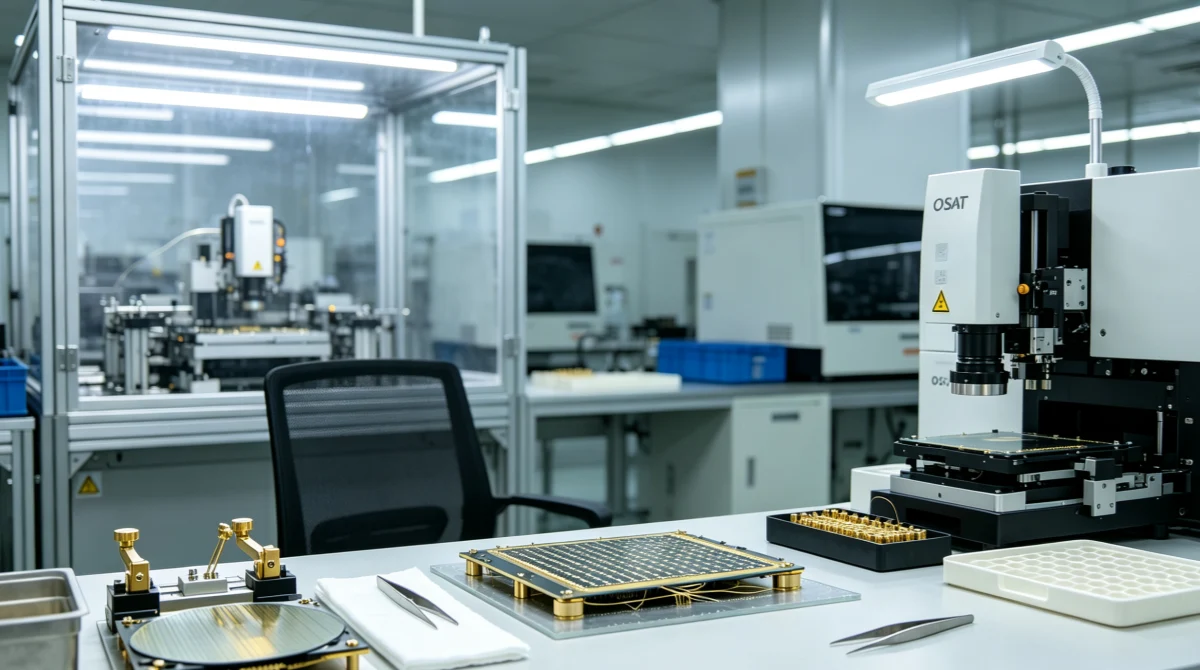
Cleanroom Environments
The W4301 cleanroom oil cleaning cloths handle oil cleaning inside ISO-classified environments. Pair them with the WIPESTAR cleanroom wiping cloths range for general surface cleaning and the WP3302 ESD polyester cleanroom wipers for ESD-sensitive areas. The cleanroom classification and batch documentation of the W4301 means it’s the only oil cleaning cloth suitable for use inside classified cleanroom zones — the W4200 series is for outside the cleanroom boundary.
Adhesive-Heavy Assembly and Bonding Operations
The W3301 Mesh Adhesive Removal Wipes belong in electronics assembly, gasket installation, and any operation involving pressure-sensitive adhesives. Keep them staged near adhesive dispensing equipment and bonding stations.
What You Should Know Before You Order
Some practical considerations that don’t always make it into product descriptions:
Packaging formats vary significantly. The W3102 and W3104 microfiber cloths are packaged in pouches — 10 sheets per bag, 20 bags per case. The W1501 multi-purpose foldable comes in quarter-folded format, which suits wall-mounted dispensers. The W4200 oil cleaning cloths have no specified packaging size on the open-format variants — clarify with WIPESTAR before ordering if you’re fitting to a specific dispenser or workstation setup.
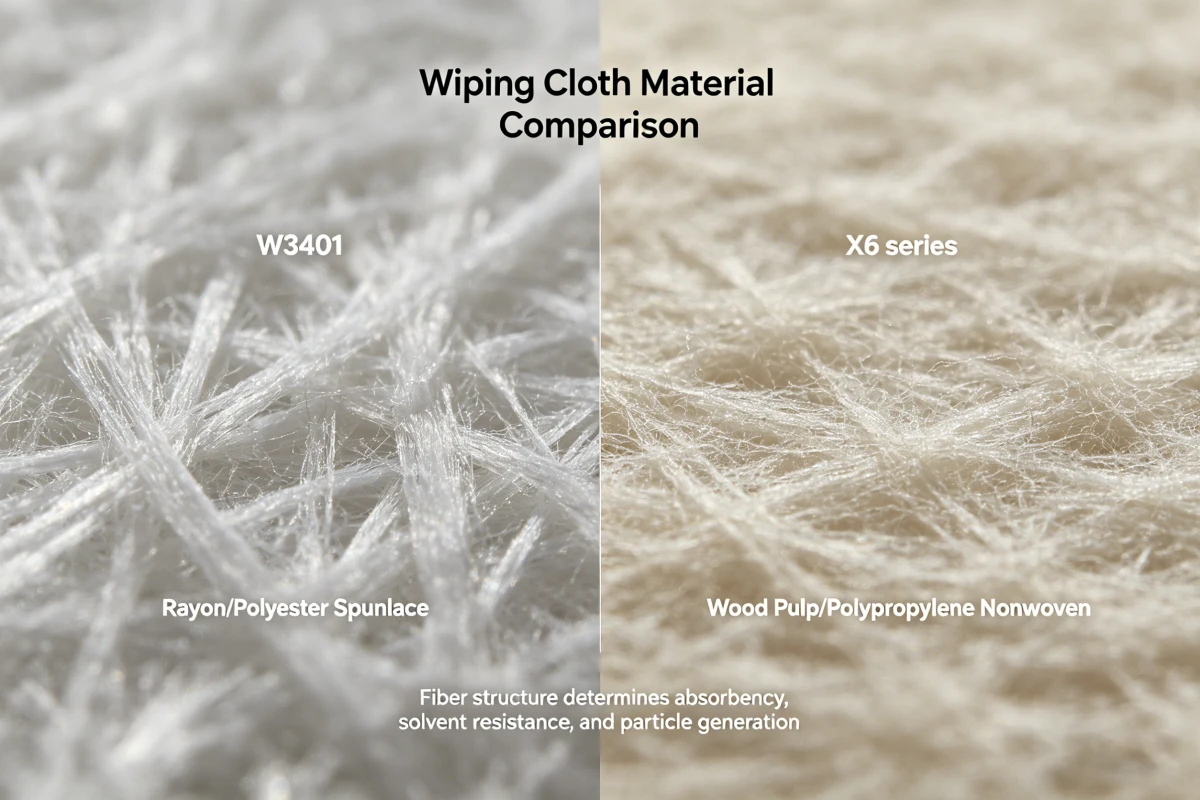
GSM is a real performance differentiator. The W3102 at 280 GSM is roughly four times heavier than the W3401 Ultrasoft at 65 GSM. That weight difference translates directly into longer usable life per sheet, higher absorption capacity, and better mechanical cleaning action. If you’re comparing surface preparation options, don’t just compare product names — compare GSM numbers.
ROHS compliance matters in supply chains you might not expect. The ROHS testing on the oil cleaning cloths matters not just for electronics manufacturers — it matters for any facility with customers or certification bodies who audit maintenance consumables against environmental compliance standards. If you’re in automotive supply, medical device manufacturing, or aerospace, your customers’ quality teams may ask for ROHS documentation on consumables used in your facility.
The full wiping cloths catalog is available on the WIPESTAR website, with filter options for category, material, size, edge type, and color. For volume orders, custom specifications, or OEM packaging, get in touch with the sales team. Sample units are available for evaluation before committing to a full specification change.