English
 Chinese



Welcome to the WIPESTAR Store, your trusted source for industrial wiping cloths.I get the same call from procurement managers about once a week. “We go through 50 boxes of wiping cloths a month. Are we using the right ones?” Half the time the answer is no. Not because they bought a bad product, but because nobody ever matched the cloth to the actual task. They ordered whatever was on the previous person’s spreadsheet and moved on.
This article is basically that conversation written down. If you’re sourcing wiping cloths for a factory, a maintenance shop, or a production line, and you’re staring at a product page full of model numbers that all look the same, this should help.
Two background reads if you want to go deeper: our Industrial Wipes Materials & Types Guide covers wipe materials and manufacturing tech in depth. If you work in a controlled environment, the Cleanroom Wiper Selection Guide is specifically about ISO-classified applications.
📌 The Short Version
- “Universal” doesn’t mean one-size-fits-all. The X5, X6, and X7 series handle about 80% of industrial tasks. The remaining 20% is where facilities bleed the most money.
- Cost per box is a trap. Normalize to cost per square meter and cost per completed task before comparing prices.
- Material-chemistry mismatch is the number one cause of wipe failure in the field. Wood pulp/PP and rayon/polyester behave very differently with solvents.
- Dispensing format affects waste. Flat stacks for QC stations, rolls for production lines, pouches for mobile teams.
- Most facilities need 2 to 3 wipe types, not one. Standardizing on a single SKU usually costs more, not less.
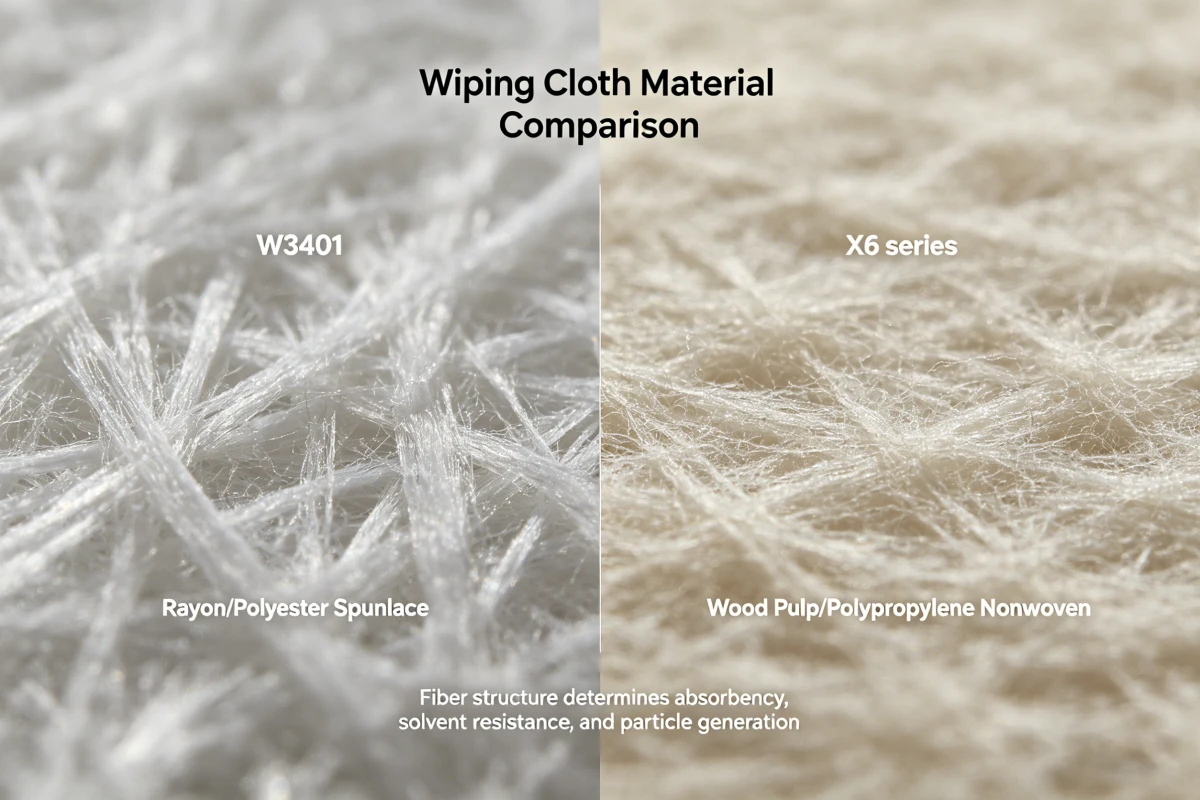
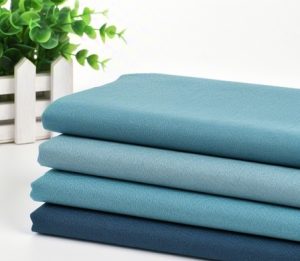
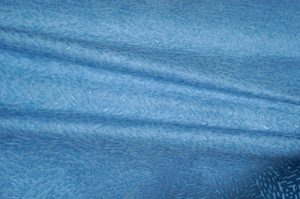
Left: rayon/polyester spunlace (W3401). Right: wood pulp/polypropylene (X6 series). The fiber structure determines absorbency, solvent resistance, and particle generation.
Why Most Facilities Use the Wrong Wiping Cloth
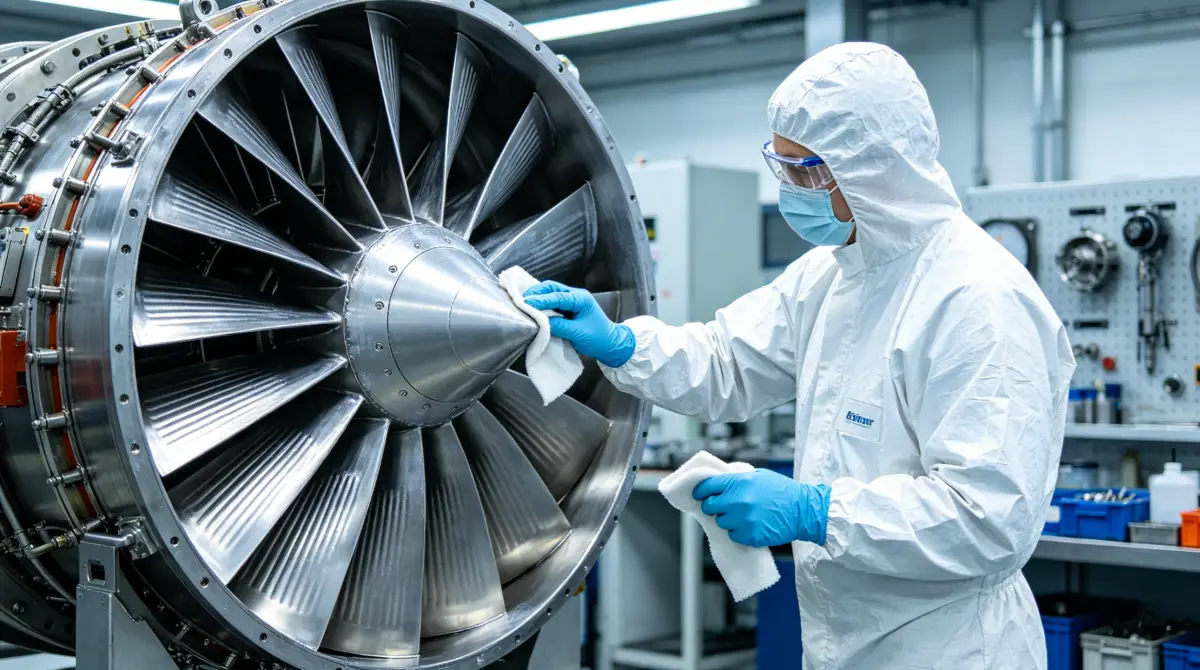
Walk into any factory floor and wiping cloths are within arm’s reach. They’re everywhere, and for good reason. The right wipe removes oil, particles, and contaminants without introducing new fibers or residues. The wrong one wastes time, damages surfaces, or triggers a quality failure that costs real money.
But choosing a wiping cloth isn’t as straightforward as it looks. The product range includes universal cloths, surface preparation wipes, multi-purpose options, and specialty products, each built for different tasks. A wipe that works brilliantly on a CNC machine surface can fail completely when used for pre-paint surface prep. A cloth that’s perfect for oil cleanup in a bearing plant is wasteful overkill for wiping down a workbench.
I’ve watched the same mistake play out dozens of times. A procurement team orders a universal cloth because the spec sheet looks fine. Workers on the floor discover it doesn’t absorb coolant fast enough, so they use three sheets instead of one. Monthly consumption doubles. The procurement manager sees the cost spike, switches to a cheaper product. That product sheds fibers. Quality control starts finding contamination. Rework costs go up. Six months later, the facility is spending more on cleaning than before the “optimization.”
The fix isn’t buying a more expensive wipe. It’s buying the right wipe for each task.
Audit Your Actual Cleaning Tasks
Before you compare materials or prices, be honest about what you’re actually cleaning. I once walked a facility that had been ordering microfiber surface preparation wipes for wiping down workbenches. That’s like buying a sports car for grocery runs. Technically it works, but you’re paying for performance you’ll never use.
Here’s how I break down cleaning tasks when walking a facility:
General Dust and Light Moisture
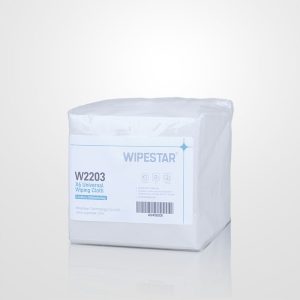
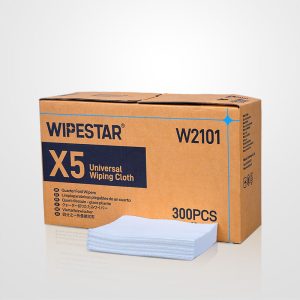
Bench surfaces, tool exteriors, equipment housings that aren’t coated in anything sticky. The W2101 (X5) handles this well. It’s a 25 × 35 cm flat-sheet cloth, quarter-folded for one-at-a-time dispensing. The rayon/polyester blend gives it a softer hand feel than wood pulp alternatives. If your team is doing basic wipe-downs between shifts, start here.
Oil, Coolant, and Solvent Cleanup
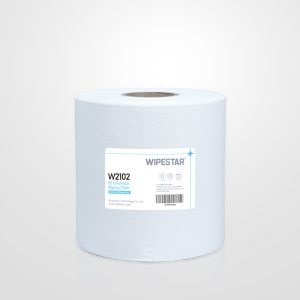
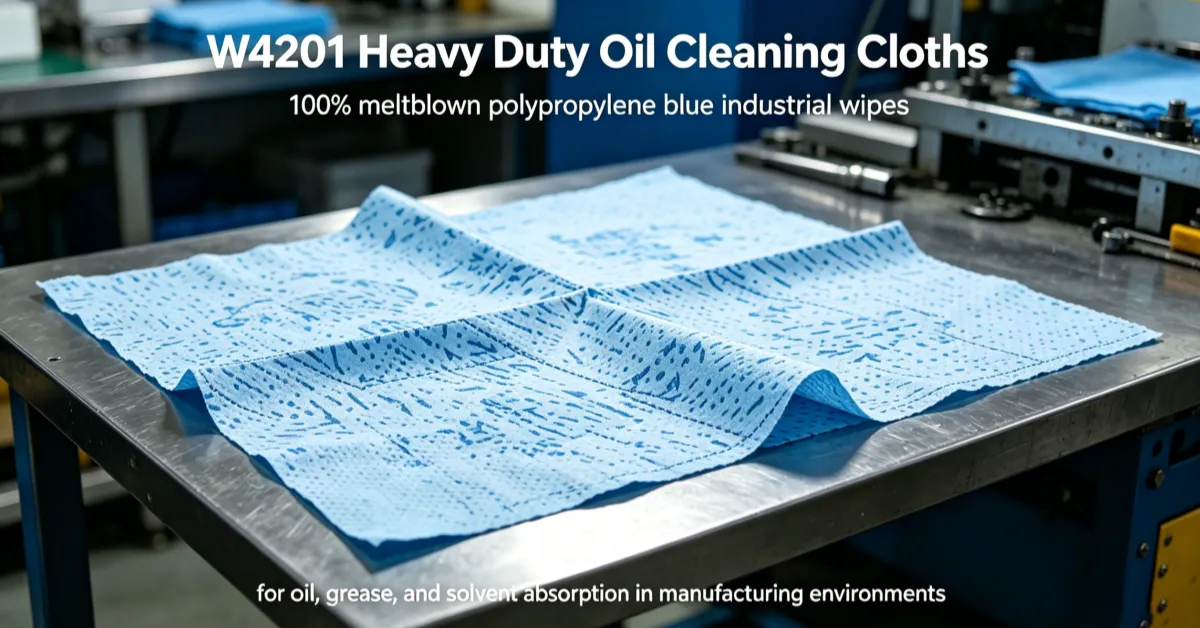
CNC machine surfaces, bearing housings, hydraulic equipment, anywhere liquid accumulates and needs to be absorbed fast. The W2202 or W2201 are the go-to here. The X6 series uses a larger format (31 × 34.5 cm) with a stone-pattern spunlace structure that grabs and holds liquid instead of pushing it around. The roll format, 900 sheets per roll per box, also means less time restocking dispensers. For heavier oil loads, the W4201 meltblown polypropylene wipes are purpose-built for that.
Surface Preparation Before Coating, Bonding, or Painting
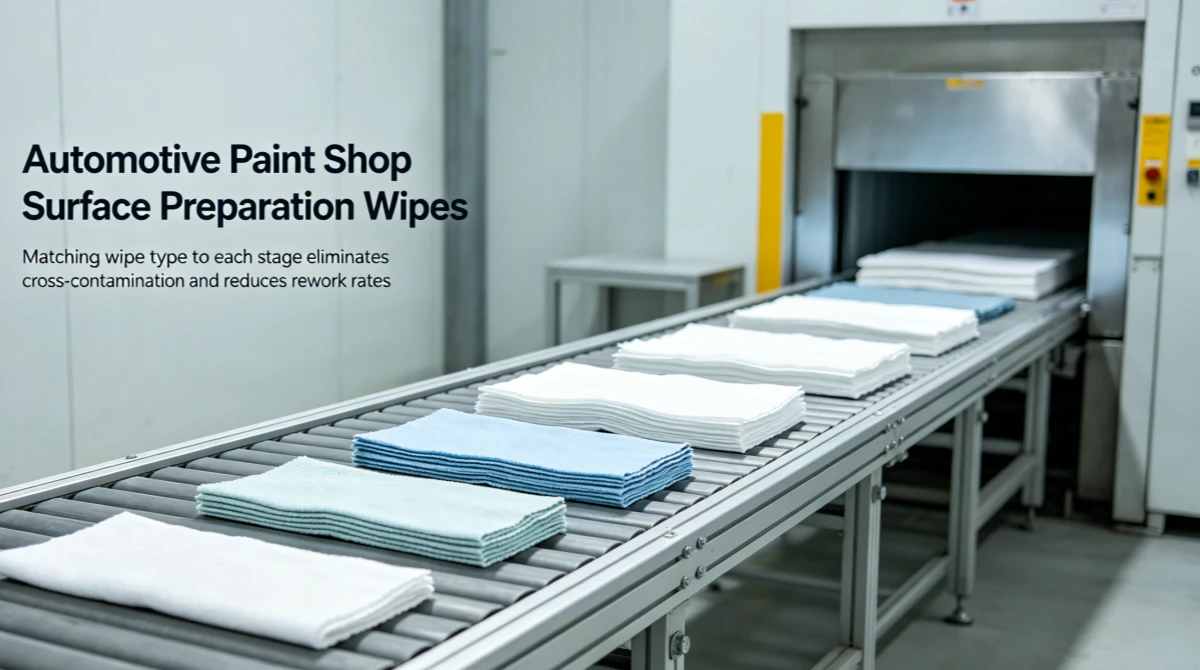
This is where generic cloths fall on their face. Residual oil, fingerprints, or particles on a surface before it goes into a paint booth or adhesive bonding station means defects. The W3501 Heavy Duty Surface Preparation Wipes use a cellulose/polyester blend with high-friction treatment that mechanically lifts contaminants. For lighter prep work, optical components, display surfaces, precision instruments, the W3401 Ultrasoft gives you the same cleaning action with a gentler touch. We covered the full surface preparation workflow in our automotive paint preparation guide.
Adhesive Residue and Stubborn Buildup
Label glue, tape residue, sealant squeeze-out. Standard wipes just smear these around. The W3301 Mesh Adhesive Removal Wipes use an open mesh geometry that gets under the adhesive and lifts it off. Niche product, but if you’ve got this problem, nothing else comes close.
Calculate Cost Per Wipe Correctly
This is where most procurement comparisons go sideways. People look at the price per box and stop there. But boxes have different sheet counts, and sheets come in different sizes. A cheaper box with fewer, smaller sheets can end up costing you more per square meter of coverage.
Here’s the framework I walk through with clients:
| Model | Sheet Size | Sheets per Unit | Format | Best Use Case |
|---|---|---|---|---|
| W2101 (X5) | 25 × 35 cm | 300/box | Flat stack, 1/4 fold | General wipe-down, light-duty |
| W2201 (X6) | 31 × 34.5 cm | 900/roll/box | Roll | Oil/coolant cleanup, medium-duty |
| W2202 (X6) | 31 × 34.5 cm | 900/roll/box | Roll | Oil/coolant cleanup, medium-duty |
| W2301 (X7) | 9-inch format | — | Flat stack | Compact surfaces, tight spaces |
| W3501 | 12-inch | — | Flat stack | Surface prep, high-friction cleaning |
| W3401 | 12-inch | — | Flat stack | Surface prep, delicate surfaces |
| W3301 | 9-inch | — | Flat stack | Adhesive removal |
When you normalize cost per square meter, the X6 roll format (W2201/W2202) usually comes out ahead for high-volume oil cleaning. The sheet count makes a real difference. For general-purpose tasks where you’re dispensing one sheet at a time, the X5 flat stack (W2101) reduces waste because workers grab exactly one sheet instead of tearing off a roll segment.
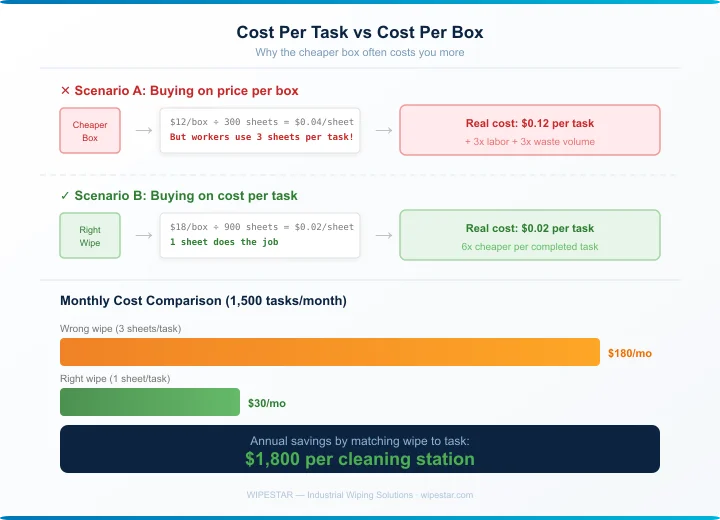
The cheaper box often costs more per task. A wipe that needs three passes isn’t cheaper, it’s three times the labor plus three times the waste.
The real question isn’t “which is cheapest?” It’s “which costs the least per completed task?”
Match the Material to Your Cleaning Chemistry
This is the part that gets ignored, and then causes problems six months down the road when someone reports their wipes are falling apart in contact with a cleaning solution.
The WIPESTAR wiping cloths use several material combinations, and they don’t all behave the same way with solvents:
Wood Pulp / Polypropylene (PP)
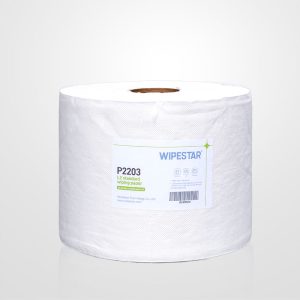
Found in the X5, X6, and X7 universal series. Decent general chemical resistance. Works fine with isopropyl alcohol, most aqueous cleaners, and light hydrocarbon solvents. The polypropylene component handles acids and alkalis well (we covered this in the materials guide). If your facility runs standard IPA-based cleaning solutions, this material is the safe default.
Rayon / Polyester
Found in the W3401 Ultrasoft and some surface preparation lines. Rayon absorbs better than wood pulp, it’s basically regenerated cellulose, and the polyester adds durability and chemical resistance. This combo handles acetone and stronger solvents better than the wood pulp blends. If your cleaning protocol uses aggressive solvents or you need faster absorption of volatile liquids, look here.
Cellulose / Polyester
Used in the multi-purpose range and the W3501. A step up from wood pulp blends in fiber cleanliness and compatibility with acidic/alkaline formulations. Good middle ground between universal-grade and surface-prep-grade. The W1501 multi-purpose wipes use this construction in a foldable format that bridges industrial and cleanroom specs.
| Material | Best Solvent Pairing | Avoid | Typical Use |
|---|---|---|---|
| Wood pulp / PP | IPA, aqueous cleaners, light hydrocarbons | Strong oxidizers | General industrial wipe-down |
| Rayon / Polyester | IPA, acetone, most organic solvents | Concentrated acids | Surface prep, precision cleaning |
| Cellulose / Polyester | IPA, alkaline cleaners, acidic formulations | Chlorinated solvents at high concentration | Multi-purpose, QC stations |
| Meltblown PP | Hydrocarbons, oil-based contaminants | — | Oil absorption, spill cleanup |
Not sure? Ask your cleaning chemical supplier what wipe materials they recommend. Most chemical manufacturers publish compatibility data. Using the wrong material doesn’t just reduce cleaning effectiveness. It can introduce contaminants that defeat the whole purpose.
Pick the Right Dispensing Format
This sounds trivial until you’ve watched a production line stop because someone couldn’t get a wipe out of the packaging with gloves on. The dispensing format affects waste rate, speed, and contamination risk, and the right format depends on where and how the wipe gets used.
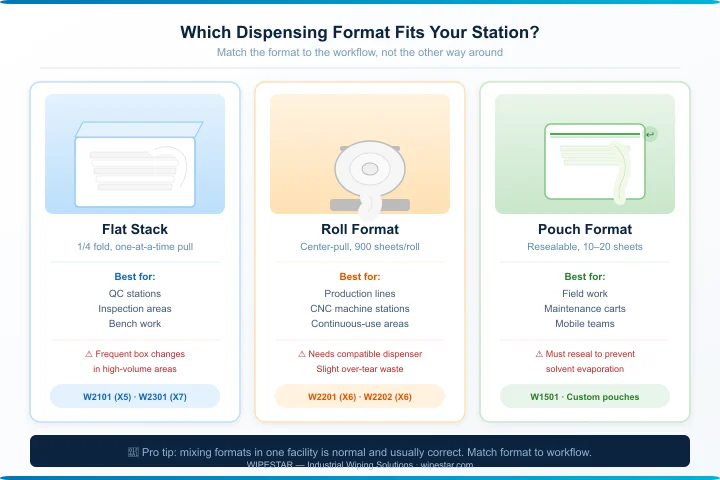
Flat stacks for QC stations, rolls for production lines, pouches for mobile teams. Mixing formats in one facility is normal and usually correct.
| Format | How It Works | Best For | Watch Out For |
|---|---|---|---|
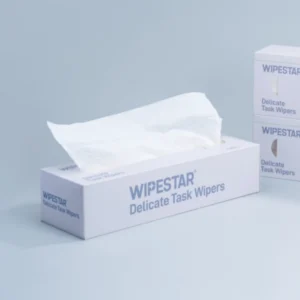
| Flat stack (1/4 fold) | Open box, pull one sheet from the top | QC stations, inspection areas, bench work | Frequent box changes in high-volume areas |
| Roll format | Center-pull or side-pull dispensing | Production lines, CNC stations, continuous use | Needs compatible dispenser; slight over-tear waste |
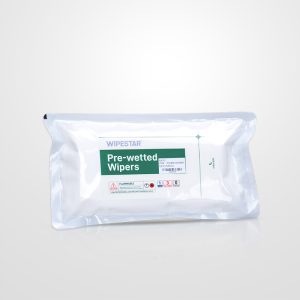
| Pouch format | Resealable pouch, 10–20 sheets | Field work, maintenance carts, mobile teams | Must reseal to prevent solvent evaporation |
What I usually recommend: flat stacks for quality control and inspection areas, rolls for production lines and machine stations, pouches for maintenance carts and mobile teams. Mixing formats in a single facility is normal, and usually the right call. The W1501 foldable format is worth a look if you want the dispensing advantages of a fold with multi-purpose grade material.
Don’t Overlook Edge Type
Cut edge versus sealed edge matters more than most people think, and it matters most in environments where particle generation is a concern.
Cold cut (cut edge) is the standard for universal wiping cloths. The blade cuts the nonwoven fabric cleanly, and the fiber structure holds together well enough for general use. You’ll get some fiber release at the edges, but for most industrial applications, oil cleanup, general wiping, surface prep in non-critical environments, it’s perfectly fine and keeps the cost down.
Sealed edge is ultrasonically or thermally sealed to prevent fiber release from the cut boundary. Necessary for cleanroom environments (ISO 5 and above), optical work, and any application where stray fibers cause defects. Costs more per sheet, but if your production yield depends on particle control, it’s non-negotiable.
For the wiping cloths range, most universal products use cold cut edges. If you need sealed edges, you’re probably looking at the cleanroom wiper range, and that’s a separate selection process covered in our cleanroom wiper guide.
5 Common Wipe Procurement Mistakes
After years of helping facilities sort out their cleaning supplies, these are the patterns that cost the most money:
1. Buying Based on Price Per Box Instead of Price Per Task
A 300-sheet box of X5 cloths at a lower unit price can end up more expensive per cleaned surface than a 900-sheet roll of X6, if your team is doing high-volume oil cleanup. Do the math on sheets consumed per shift, not boxes purchased per quarter.
2. Using One Wipe Type for Everything
Standardizing on a single SKU is tempting. Simpler procurement, fewer SKUs to track. But using a surface preparation wipe for general bench cleaning wastes money, and using a universal cloth for surface prep before painting wastes even more when you have to redo the paint job. Our product catalog breaks down which products fit which tasks.
3. Ignoring Solvent Compatibility
The wipe that works great with your IPA-based cleaner might fall apart when someone grabs it with acetone or a strong alkaline degreaser. Check the material specs. Five minutes of checking saves a lot of headaches.
4. Under-Ordering and Running Out
When a facility runs out of wiping cloths, people improvise. Paper towels, old T-shirts, whatever’s nearby. Every time that happens, you’re introducing uncontrolled materials into your cleaning process. A two-week buffer stock costs almost nothing compared to the quality incidents it prevents.
5. Ignoring Industry-Specific Requirements
Food processing facilities need wipes that meet HACCP and FDA standards. Electronics manufacturers need anti-static properties. Aerospace needs documented particle counts. A wipe that passes general industrial specs can fail industry-specific audits. If you’re in food processing, our food processing guide covers the regulatory requirements.
A Practical Ordering Framework
Setting up or auditing your wiping cloth supply? Here’s the process I walk clients through:
- Audit your tasks. Walk the floor. Count how many cleaning stations use wipes, what they’re cleaning, and what chemicals they’re using. You’ll almost certainly find you need 2 to 3 different wipe types, not one.
- Calculate monthly consumption per task. Not per facility, per task type. Oil cleanup at CNC machines might consume 600 sheets/month. Quality control bench wiping might use 150. Surface prep before painting might use 50. These numbers drive your ordering.
- Match products to tasks. Use the comparison tables above. Don’t over-spec for light tasks, don’t under-spec for critical ones.
- Standardize your dispensing format. Pick one format per task type and stick with it. Mixing roll and flat-stack at the same station confuses workers and increases waste.
- Set reorder triggers. When stock hits two weeks of consumption, reorder. Don’t wait until you’re down to the last box.
Where This Matters Most: Industry Snapshots
🔧 CNC Machine Shops
High-volume coolant and oil cleanup. The X6 roll format (W2201/W2202) dominates here. 900 sheets per roll means fewer dispenser refills per shift. Pair with a center-pull dispenser for one-hand operation.
🚗 Automotive Manufacturing
Mixed contamination: stamping oils, fingerprints, paint prep. Requires both universal cloths for general maintenance and surface preparation wipes for pre-coating stages. Our automotive paint guide covers the paint booth workflow.
✈️ Aerospace & Precision Manufacturing
Zero tolerance for particle contamination. Surface preparation wipes with sealed edges, used in controlled environments. The W3401 Ultrasoft is the standard choice for composite and polished metal surfaces.
🍔 Food Processing
HACCP and FDA compliance add a layer of complexity beyond absorbency and durability. Fiber control and chemical residue matter as much as cleaning power. Full breakdown in our food processing guide.
🖨️ Printing & Packaging
Printhead cleaning, ink residue removal, adhesive cleanup. Different tasks on the same production line may need different wipes. The thermal printer guide covers printhead maintenance specifically.
🏭 General Manufacturing
The broadest category, and where the universal X5/X6/X7 range delivers the best value. Match the format to the station: flat stacks at benches, rolls at machines, pouches on maintenance carts.
Not Sure Which Wipe Fits Your Facility?
Request a free sample and test it on your actual surfaces with your actual cleaning agents. Five minutes of testing beats five hours of spec-sheet analysis.
Frequently Asked Questions
About WIPESTAR — WIPESTAR is a professional manufacturer of cleanroom consumables and industrial wiping solutions, serving automotive, aerospace, electronics, food processing, and general manufacturing industries worldwide. With ISO 9001 certification and 20+ years of experience, WIPESTAR supplies wiping cloths and surface preparation products to enterprise clients in 50+ countries.