English
 Chinese



A West End theatre in London—900 seats, full fly tower, scenic workshop two floors below stage—lost two performances last autumn. The cause? Fine sawdust from the wood shop had drifted up through the ventilation and settled on the moving light fixtures overhead. During a haze-heavy scene change, the dust on one fixture’s gobo wheel flashed. No fire, but the safety system killed the entire rig. House lights. Show stopped. Audience refunded.
The investigation found two problems: a dust extraction upgrade the venue had been putting off, and the lighting techs cleaning fixtures with cotton rags that left fibers behind—fibers that trapped sawdust instead of removing it. A sealed-edge synthetic wipe would have picked up the dust clean. The cotton rag just smeared it and added its own lint to the mess.
£18,000 in refunds and rescheduling. Over a wipe.
Theater and film set construction is unusual from a cleaning standpoint. Wood shops, metal shops, paint studios, foam fabrication, costume departments, and electrical workshops all feed into one shared stage space. Contamination doesn’t respect departmental boundaries—sawdust lands on costumes, paint overspray reaches the lighting store, metal shavings end up in gel storage. Every department’s cleanup choices affect every other department’s output.
This guide is for technical directors, scenic shop supervisors, and film production managers who need to pick the right wiping cloths for each department—and keep cross-contamination from wrecking a production.
Why Production Facilities Need a Different Cleaning Approach
A normal woodworking shop produces sawdust. A normal paint shop produces overspray. A normal metal shop produces swarf. Each is manageable in isolation. But in a theatre or film studio, these operations happen within metres of each other, and the finished product—a set, a prop, a costume—has to look flawless under stage lighting or a 4K camera sensor. That’s a higher bar than “good enough for the client.”
Stage lighting is brutal. A 1,200-watt profile spot at 30 degrees picks up every dust mote, every fiber, every paint spatter on a flat or prop. Camera work is worse—4K and 8K sensors resolve detail the human eye misses at arm’s length.
A speck of sawdust on a black flat that’s invisible in the workshop becomes a glowing white dot under a Leko at stage left. A fiber on a costume nobody noticed in the fitting room shows up as a bright thread on the monitor.
Production facilities need a contamination-control mindset most workshops don’t. And the wiping cloths you choose are a bigger part of that equation than most technical directors realize.
Scenic Paint Cleanup: Overspray, Spatter, and the Budget Trap
Scenic painting is messy by design. You’re texturing flats with sponge techniques, spattering wood grain patterns, spraying base coats with HVLP guns, wiping wet glaze with rags. The mess is the process. The problem is keeping it contained.
HVLP overspray drifts—even with booth extraction, fine mist settles on nearby tools, floors, and adjacent flats. Spatter techniques land paint on everything within a few metres. And glaze wiping generates saturated rags that need proper handling for fire safety and to avoid re-contaminating clean surfaces.
For general paint cleanup on floors and non-critical surfaces, cellulose wipes work fine. They’re cheap, absorbent, and disposable. Save the synthetics for surfaces that actually matter.
Here’s where shops get into trouble: using that same cellulose wipe on a finished scenic surface heading to stage. Cellulose fibers left on a textured paint finish glow under stage lighting. Use a low-lint synthetic for final wipe-down before a flat or set piece leaves the shop. The cost difference per wipe is pennies. The cost of a visible fibre on a £5,000 scenic piece under opening-night lighting is considerably more.
Sawdust Control in the Scenic Wood Shop
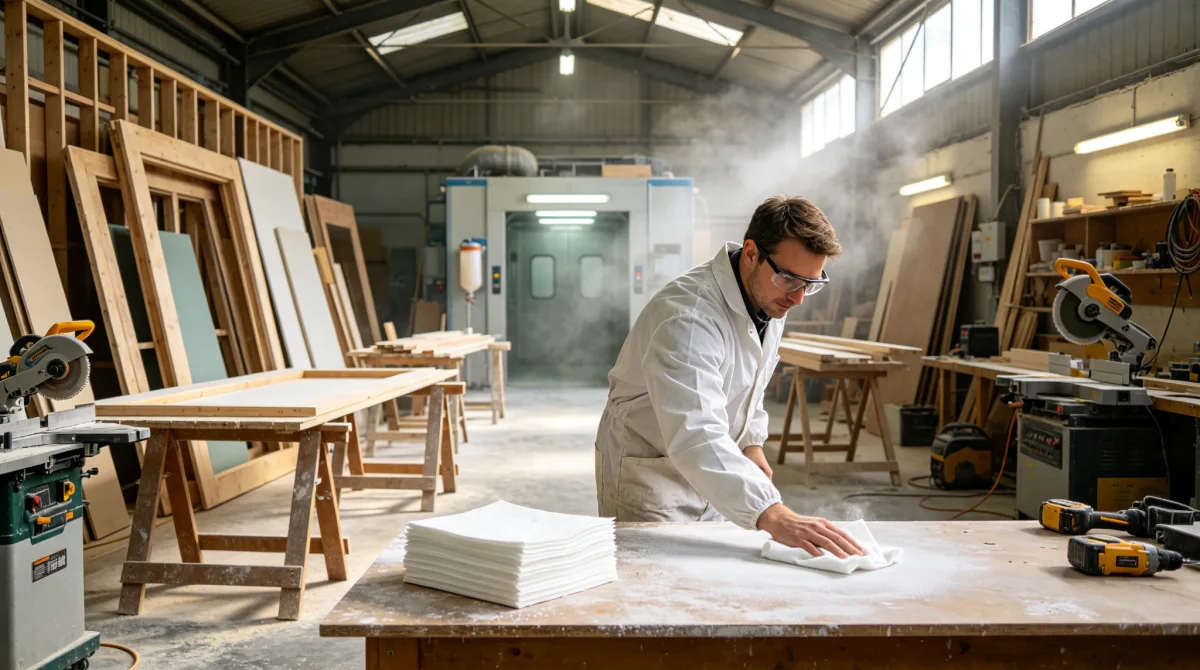
Sawdust is the universal contaminant in production facilities. The table saw produces coarse chips that stay mostly local, but sanding operations—orbital, belt, hand—generate fine particulate that hangs in the air for hours and rides HVAC currents through the building.
I’ve tracked sawdust from a ground-floor wood shop to costumes stored two floors up. Not much. But enough to ruin a black velvet cape under stage lighting.
Dust extraction helps, but most scenic shops—especially in older theatres with retrofitted HVAC—don’t capture 100% of fine particulate. So you’re always dealing with residual dust on surfaces, and your wipe choice determines whether you’re removing it or pushing it around.
For workbench and tool cleanup, a slightly dampened synthetic wipe captures particles instead of scattering them. Dry wiping just rolls fine dust across the surface—it’s physics. A barely-damp wipe (water only, no chemicals on wood-contact surfaces) picks up particles and holds them in the wipe matrix. Follow with a dry wipe if the surface needs to be bone-dry.
For finished wood set pieces—flats, platforms, trim, furniture—heading to stage, a tack wipe or low-lint synthetic removes residual dust without leaving fibers behind. Dark-stained surfaces show every mote and fibre under lighting. Some shops run a dedicated “finish cleaning” station: compressed air to blow dust from crevices, then a tack wipe pass. Ten minutes extra in the workflow, hours saved troubleshooting dust spots during tech rehearsal.
Metalworking for Set Pieces: Grinding Dust and Weld Spatter
Steel and aluminium set pieces—stair units, railings, turntable mechanisms, automated scenery—get fabricated in the metal shop and then moved to the scenic shop for finishing. That handoff is where contamination problems start.
Grinding and cutting produce metal dust and swarf that’s abrasive, oily (from cutting fluids), and sharp. If that residue transfers to the paint surface during scenic finishing, you get adhesion failures, visible particles under the paint film, and in bad cases, rust spots bleeding through the finish weeks into a run.
The scenic painter did their job. The metal shop left contamination on the surface. But the audience sees a rusty spot on the set and blames the paint.
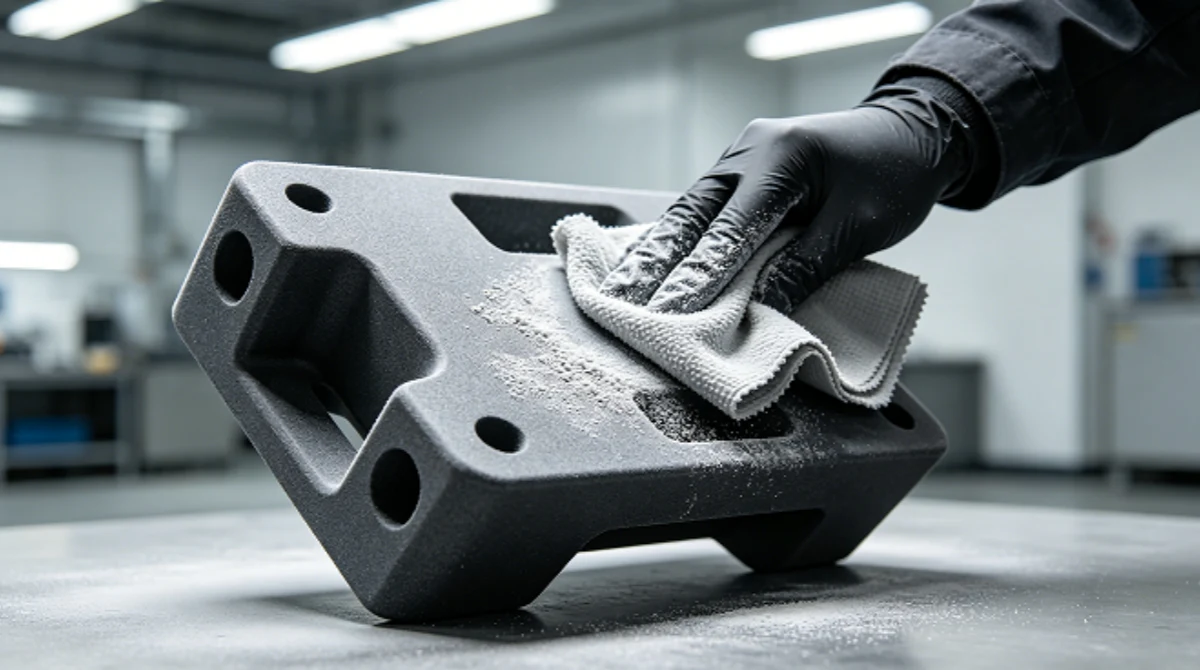
Before any metal set piece goes to the paint shop, wipe it down with a high-absorbency synthetic wipe that captures metal particles and cutting fluid residue. Compressed air alone just moves the contamination to a different surface. The wipe physically removes it. For aluminium pieces, also wipe to remove the oxide dust on cut edges—that oxide layer kills paint adhesion and causes flaking later.
Weld spatter on visible surfaces needs mechanical removal first (grinding, wire brushing), then a wipe to pick up residual particles. A lint-free synthetic dampened with isopropyl alcohol—compatible with most paint systems—removes both the metal particles and any oil film from welding.
Foam and Fiberglass Fabrication: Static, Irritation, and Migration
Expanded polystyrene (EPS), polyurethane foam, fibreglass layup—this is where scenic fabrication gets uncomfortable. Foam carving produces static-charged particles that cling to everything. Fibreglass generates glass microfibers that irritate skin and lungs. Both create contamination that’s hard to remove from adjacent surfaces.
Foam particles from hot-wire cutting are statically charged and lightweight—they float, cling, and resist conventional cleaning. Antistatic synthetic wipes help here. The antistatic property neutralizes the charge on foam particles, releasing them from the surface so the wipe can actually pick them up. A standard wipe just pushes charged particles around.
If your shop does regular foam work, antistatic wipes for tool and surface cleanup are worth the small premium.
Fibreglass fabrication generates glass microfibers that embed in soft surfaces and irritate skin on contact. Use a synthetic wipe for tool and mould cleanup—don’t use cellulose, because glass fibres embed in the cellulose matrix and get redistributed on the next pass. Synthetic wipes capture glass fibres on the surface rather than absorbing them. Dispose of used wipes as fibreglass waste, not general waste.
A common mistake: scenic shops running fibreglass layup in the same space as the paint shop, separated by a plastic curtain. The curtain doesn’t stop fibre migration. If you can’t physically separate these operations, at minimum use separate wipe supplies and clean paint-area surfaces with fresh synthetic wipes before starting any paint work. Glass fibres in scenic paint are a surface defect that shows up under lighting and ruins the finish.
Costume Department Lint Control Under Stage Lighting
Costume departments are the most contamination-sensitive area in a production facility, and they’re almost always located too close to the workshops. Sawdust, metal particles, paint mist, foam dust—it all migrates into costume storage and work areas. Under stage lighting, every foreign fibre on a costume is visible. On camera, it’s magnified.
Lint rollers work—sort of. They pick up large fibres and surface dust. But they leave adhesive residue that attracts more particles over time, and they don’t remove fine particulate embedded in the fabric weave.
For high-value costumes—period pieces, custom builds, anything with delicate fabrics—a low-lint synthetic wipe is gentler and more effective than aggressive lint rolling. Dampen slightly with distilled water for static-charged synthetic fabrics. The moisture releases the static hold and the wipe captures the particles.
The bigger problem is prevention. If your costume department sits downwind of the wood shop on the HVAC system, no amount of wipe-down keeps costumes clean. A regional theatre in Manchester moved their costume storage to a different HVAC zone after tracing persistent contamination to sawdust from the scene dock. £3,000 in ductwork modification. Thousands saved in costume cleaning and rework over the next season.
For sewing machines and sergers, wipe down the machine surfaces—especially feed dogs and bobbin area—with a lint-free synthetic at the start of each session. Thread dust and fabric lint accumulate in the mechanisms and transfer to the next garment. Thirty seconds of prevention avoids the “where did that blue thread come from?” conversation during a fitting.
Lighting and Electrical Equipment Cleaning
Stage lighting fixtures run hot. Tungsten fixtures hit 300°C at the lamp housing. Even LED fixtures generate significant heat at the power supply and driver board. Dust on housings, heat sinks, and optical components is both a fire risk and a performance problem.
Dust on a gobo or colour scatters light and cuts output. Dust on a heat sink reduces cooling and shortens lamp or LED life.
For fixture exteriors during a production run, use a dry, low-lint synthetic wipe. Don’t use chemical cleaners on housings—many are powder-coated or anodised aluminium, and solvents damage the finish. A dry wipe removes dust without chemical risk.
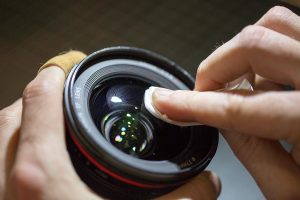
For optical components—lenses, reflectors, gobos—use a dedicated microfibre or lens-grade synthetic that won’t scratch coated optics. Never use paper towels on optical surfaces. The wood cellulose fibres are microscopically abrasive and scratch anti-reflective coatings over repeated cleanings.
Distribution boards, dimmer racks, and cable connectors accumulate dust and conductive debris—metal filings from the adjacent shop, carbon dust from cable abrasion. This is a safety issue. Conductive debris on electrical connections causes tracking, arcing, and in the worst case, fire. Use a lint-free synthetic wipe for electrical panel cleaning. Ensure the wipe is dry and the power is off. I shouldn’t need to say that last part, but I’ve walked into venues where someone was wiping down a live dimmer rack.
DMX and data cable connectors—5-pin XLR, RJ45, etherCON—pick up dust and corrosion in storage and during load-in. A quick wipe with a dry synthetic cloth on the connector pins before plugging in prevents intermittent data faults that eat hours to troubleshoot during tech. Five seconds of prevention versus two hours debugging “why is fixture 47 doing random things?” during your already-cramped tech rehearsal.
Comparison Table: Wipe Specs by Department
| Department / Application | Recommended Wipe | Key Requirement | Avoid |
|---|---|---|---|
| Scenic paint — general cleanup | Cellulose absorbent wipe | High absorbency, disposable, cheap | Reusing paint-saturated rags |
| Scenic paint — finished surface | Sealed-edge low-lint synthetic | Zero fibre on textured paint under lighting | Cellulose, cotton rags |
| Wood shop — workbench and tools | Slightly dampened synthetic | Captures fine dust, doesn’t scatter | Dry wiping (scatters particles) |
| Wood shop — finished pieces | Tack wipe or low-lint synthetic | Removes dust without fibre on dark finishes | Cotton rags, paper towels |
| Metal shop — pre-paint prep | High-absorbency synthetic | Removes metal particles and cutting fluid | Compressed air alone (moves contamination) |
| Foam fabrication | Antistatic synthetic | Neutralises static charge on foam particles | Standard wipes (push charged particles) |
| Fibreglass fabrication | Synthetic, disposable | Captures glass microfibres on surface | Cellulose (embeds glass fibres) |
| Costume department | Low-lint synthetic, slightly damp | Gentle on fabrics, removes fine particulate | Adhesive lint rollers on delicate fabrics |
| Lighting fixtures — housing | Dry low-lint synthetic | No chemical damage to powder coat/anodise | Solvent wipes, paper towels |
| Lighting — optical components | Microfibre or lens-grade synthetic | Non-scratch on coated optics | Paper towels, cotton, cellulose |
| Electrical connectors (DMX, power) | Dry synthetic, lint-free | Removes dust and corrosion from pins | Anything wet on live circuits |
Most production facilities run a two- or three-tier wipe strategy: premium sealed-edge synthetics for finished surfaces and optical work, standard synthetics for tool and bench cleanup, and cellulose wipes for general floor and spill work. The tier system keeps costs down without compromising the areas where contamination actually matters.
5 Cleaning Mistakes That Derail Production Schedules
After twenty years in production facilities, these are the mistakes I see in almost every shop—and every one is avoidable.
Using the same wipe everywhere. The rag that cleaned the table saw is now wiping down the finished flat. The cloth that picked up metal swarf is now cleaning a costume. In a normal workshop, that’s sloppy. In a production facility where everything ends up on the same stage, it’s a cross-contamination cascade. Separate wipe supplies per department, clearly labelled, built into the workflow. Not optional.
Skipping the pre-paint wipe on metal set pieces. Metal shop delivers a steel stair unit to the paint shop. The scenic painter sprays directly over grinding dust and cutting fluid residue. Two weeks into the run, paint flakes off the handrail. Adhesion failure. The painter gets blamed, but the real culprit was skipping surface prep. One wipe-down with a high-absorbency synthetic before the piece leaves the metal shop prevents this entirely.
Storing costumes downwind of the workshops. HVAC systems don’t respect departmental boundaries. If the air handler pulls return air from the workshop corridor and supplies it to costume storage, you’re depositing sawdust and metal particles on costumes continuously. Check your airflow. If you can’t change the ductwork, increase the filter rating on the costume room supply and wipe down storage surfaces daily with lint-free synthetics.
Paper towels on optical surfaces. Every venue does this. A lampie grabs a blue shop towel and wipes a fixture lens. The wood cellulose fibres in that towel are microscopically abrasive—they scratch anti-reflective coatings over repeated cleanings. After 50 shows, the lens is hazy and you’re replacing a £200 optical assembly. Use a proper microfibre or lens-grade synthetic. Pennies more per wipe, hundreds saved in optics replacement.
Not cleaning DMX connectors before load-in. Data connectors sit in storage bins collecting dust and developing surface corrosion between productions. During load-in, they get plugged in with all that debris on the pins. Intermittent DMX faults follow. The lighting team burns two hours of tech rehearsal troubleshooting “random fixture behaviour” that was a dirty connector all along. Wipe every connector pin with a dry synthetic cloth before plugging in. Make it part of the load-in checklist.
Who You’ll Work With at WIPESTAR
We supply cleaning consumables to theater and film set construction workshops where sawdust, paint, and fabrication debris are daily challenges. Our team understands the cross-department contamination issues unique to production facilities.

Lee — Key Account Sales Manager
Lee manages key accounts across industrial and manufacturing sectors, helping production facilities build multi-department consumable programmes with reliable supply schedules.

Carolina — Product Specialist
Carolina matches the right wipe material and specification to each application—whether it’s low-lint synthetics for scenic surfaces, antistatic wipes for foam work, or high-absorbency wipes for metal shop prep.

Daisy — Sales Support
Daisy coordinates orders and logistics, ensuring production-calendar-aligned delivery so your scenic shop, paint studio, and electrics department all have the right wipes when you need them.
Get Started with Theater and Film Set Wiping Cloths
Whether you’re equipping a new scenic shop, upgrading consumables for a film studio, or building a department-by-department contamination control programme for your theatre, we can help. We’ll match the right wipe to each department’s needs—scenic paint, wood shop, metal shop, foam fabrication, costume, and electrics.
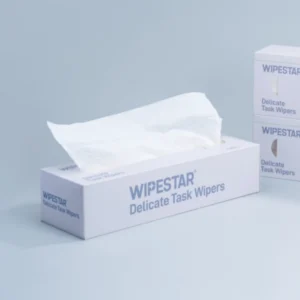
- Browse All Wiping Cloths — Full range with specs, certifications, and material data sheets.
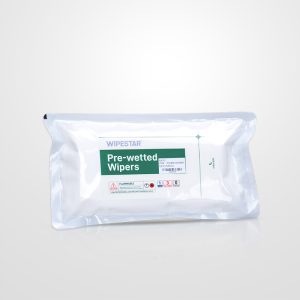
- Pre-Wetted Wipes — Factory-sealed wipes with verified solvent purity for critical surface work.
- Request Technical Consultation — Need help matching a wipe to your department’s specific needs? Our team can recommend the right product and provide compatibility data.
Browse Full Wiping Cloths Range → Request a Custom Quote
Frequently Asked Questions