English
 Chinese



Iceland, late 2024. A 30 MW binary cycle plant near Reykholt was quietly losing about 1.2% of gross output every quarter. No alarms, no trips, no drama — just a slow sag on the performance dashboard that the ops team shrugged off as seasonal for almost a year.
It wasn’t seasonal. It was amorphous silica building up on the turbine nozzle guide vanes and the brazed plate heat exchangers in the secondary loop. By the time someone ran borescope inspections and figured it out, the worst exchanger had lost roughly 8% of its effective flow area.
The cleanup ran €340,000 — chemical descaling, lost generation during the outage, replacement gaskets that the cleaning solvents had attacked.
The root cause? A maintenance contractor had swapped in a generic industrial rag for wiping down heat exchanger plates during a routine service the year before. That rag shed cellulose fibers onto the plate surfaces. Those fibers became nucleation sites for silica precipitation. Every thermal cycle after that deposited more SiO₂ on those anchor points. Eight months later, the exchanger was half-choked.
Over a cleaning rag.
Geothermal power is a different animal from conventional generation. The working fluid — dry steam, wet steam, or brine in a binary cycle — comes out of the ground carrying dissolved minerals, non-condensable gases, and sometimes naturally occurring radioactive material. Everything that fluid touches fouls, corrodes, or scales. Your maintenance consumables either help you fight that battle or make it worse.
This guide is for plant managers, maintenance engineers, and procurement teams who spec consumables for geothermal operations. Not generic power plant cleaning — the kind of work where the fluid chemistry changes by well, the temperatures hit 300°C, and a wrong consumable choice shows up as a €340,000 repair bill nine months later.
Why Geothermal Maintenance Isn’t Like Coal, Gas, or Nuclear
Conventional power plants run on purified working fluids. A coal boiler uses treated deionized water. A combined-cycle gas turbine burns filtered combustion gases. Even nuclear plants keep tight control over primary loop chemistry. The fluid is your friend — clean, predictable, well-understood.
Geothermal fluid is not your friend.
It comes out of the ground carrying everything it picked on the way up — dissolved silica (SiO₂), calcium carbonate (CaCO₃), hydrogen sulfide (H₂S), CO₂, chlorides, boron, arsenic, mercury, lithium, and occasionally NORM in the form of radium-226 and radium-228. The exact cocktail depends on the field, the well, and sometimes the season.
A well in the Salton Sea geothermal field in Imperial Valley, California has radically different chemistry from a well in the Wairakei field in Taupō, New Zealand. A wipe that holds up fine at a dry steam plant like The Geysers in Sonoma County will fall apart in minutes at a high-enthalpy brine plant in the Philippines where chloride concentration hits 25,000 ppm.
That chemistry directly impacts your maintenance approach. A generic wiping cloth rated for general industrial use won’t survive contact with the sulfuric acid condensate that forms when H₂S oxidizes in the presence of moisture. Material compatibility isn’t a spec sheet checkbox — it’s the whole game.
Silica: The Slow Assassin of Geothermal Equipment
Amorphous silica scaling is the single most persistent maintenance headache in geothermal power. It doesn’t explode, doesn’t trip alarms. It just relentlessly builds up on every surface the fluid touches — production piping, heat exchangers, turbine blades, separator internals, reinjection well casings.
Silica precipitates when the fluid cools below its saturation temperature or when pressure drops and dissolved gases flash out of solution. Saturation concentration tracks temperature — roughly 600–700 ppm at 250°C, dropping to about 120–150 ppm at 25°C. Any cooling or pressure drop anywhere in the system causes SiO₂ to come out of solution and plate out on the nearest surface.
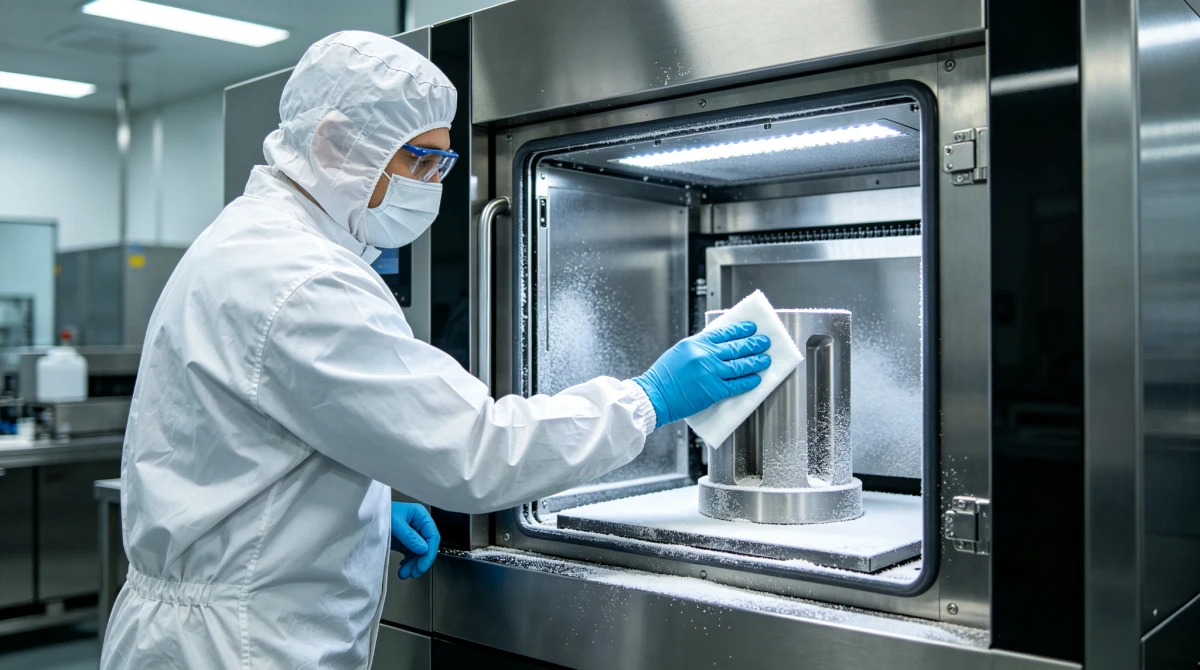
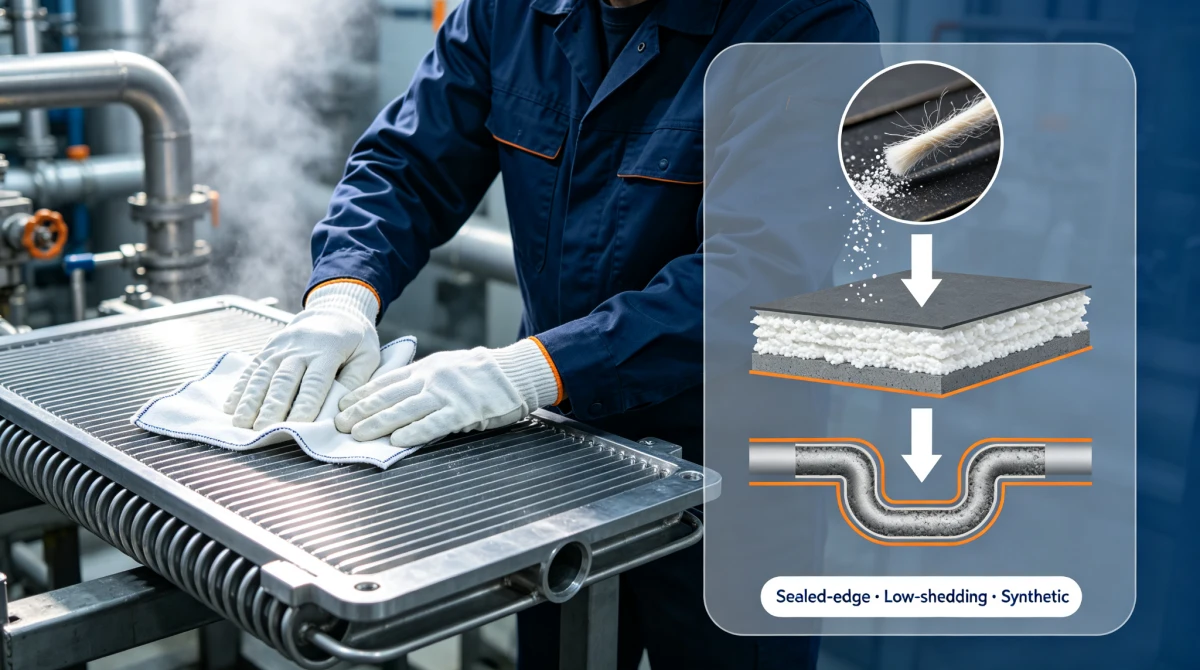
Here’s why this matters for wipes: every maintenance intervention on silica-affected equipment either removes scale or adds nucleation sites for new scale. When you wipe down a heat exchanger plate with a rag that sheds fibers, you’re planting seeds for future silica deposits.
Those fibers — cotton, cellulose, even cheap polyester with poorly sealed edges — give amorphous silica a rough surface to grab onto. Subsequent thermal cycles build on that anchor. Within months, you’ve got a scale patch that didn’t need to exist.
Hydrogen Sulfide: The Gas That Eats Everything
H₂S shows up in most geothermal reservoirs worldwide. Concentrations vary wildly — a few ppm in some New Zealand fields, over 1,000 ppm in parts of the East African Rift (Kenya’s Olkaria field, for instance) and the Salton Sea. It’s toxic (OSHA PEL: 10 ppm, IDLH: 100 ppm), it’s corrosive, and it creates very specific material compatibility problems for your maintenance consumables.
The wipe fiber itself — polyester, polypropylene, nylon — generally handles H₂S fine at ambient temperatures. Polymers don’t care. But H₂S attacks metals selectively. Copper, brass, copper alloys, and some stainless steel grades (particularly 304 and 316 at elevated temperatures) are susceptible to sulfide stress corrosion cracking (SSCC) and hydrogen-induced cracking (HIC) in H₂S environments. Per NACE MR0175/ISO 15156, the limits are well-established.
Two reasons this matters for wipes:
First, if your wipes contain any metal components — eyelets, grommets, packaging clips — those components must be H₂S-compatible. A brass grommet on a wipe dispenser corrodes, generates copper sulfide dust, and that dust ends up on equipment surfaces.
Second, and more commonly overlooked: chloride content in the wipe material. Chlorides + H₂S + susceptible alloy = accelerated stress corrosion cracking. Same chemistry that kills offshore oil and gas equipment, same rules. Specify wipes with chloride content below 50 ppm for sour service wipe-down. Request halide analysis per lot.
Binary Cycle Brine Handling: Where Chemical Resistance Gets Real
Binary cycle plants — Ormat-style units and similar Organic Rankine Cycle (ORC) systems — dominate new-build geothermal. They’re efficient, they exploit lower-enthalpy resources (150–200°C), and they keep geothermal fluid in a closed loop separated from the working fluid (isobutane, isopentane, or a similar organic compound).
But the brine side of that loop is brutal. Depending on the resource, brine can carry 15,000–30,000 ppm chlorides. The Salton Sea field hits 200,000 ppm TDS with chlorides around 150,000 ppm — that’s 15% salinity. Add significant silica, scaling metals (iron, manganese, barium), and H₂S, and you’ve got an environment that chews through standard consumables in minutes.
Equipment on the brine side — plate heat exchangers, brine pumps, piping, reinjection systems — faces constant corrosion and scaling. Wipes used here need chemical resistance to high-chloride solutions, acid cleaning agents (HCl and H₂SiF₆ are common for descaling), and the alkaline antiscalants injected upstream. Standard cellulose wipes dissolve or disintegrate in these conditions.
Polyester and polypropylene wipes hold up. But check the NVR (Non-Volatile Residue) — wipe processing chemicals can leave residues that interfere with brine chemistry or contaminate heat exchanger surfaces. For brine-side work, specify low-NVR wipes and verify compatibility with your specific cleaning agents.
Wellhead and Christmas Tree Cleaning
Geothermal wellheads sit at the intersection of high temperature, high pressure, and corrosive chemistry. A production wellhead at a typical high-enthalpy field handles fluid at 180–320°C and 5–40 bar, loaded with H₂S, CO₂, silica, and chlorides. The christmas tree — master valves, wing valves, choke assemblies, pressure gauges, and associated piping — needs periodic cleaning and inspection.
Wipe requirements at the wellhead demand high-temperature resistance. Metal surfaces stay hot — even after isolation, residual heat keeps surface temperatures above 80°C for hours. You also need chemical resistance to mineral acids used for scale removal, and compatibility with the thread compounds and seal greases on valve assemblies.
A wipe that degrades at 120°C and leaves residue on a valve seat is a leak waiting to happen.
High-temperature wipes rated to 200°C+ exist — typically polyester or Nomex-based — and should be standard wellhead consumables. A valve leak at a geothermal wellhead means H₂S release to atmosphere. That triggers an emergency response, a potential regulatory citation (EPA 40 CFR Part 60, Subpart OOOO in the US, or equivalent local regulations), and a very expensive day.
Turbine and Generator Maintenance
Geothermal turbines — single-flash, double-flash, or ORC — each bring their own maintenance challenges. Flash plant turbines handle wet steam carrying entrained brine droplets and silica particles. That fluid erodes and deposits on blade surfaces, nozzle guide vanes, and labyrinth seals. ORC turbines handle the organic working fluid (isobutane, isopentane), which is cleaner but has its own compatibility requirements — some organic solvents attack certain polymer types.
For flash plant turbine maintenance, your wipes need to handle:
Silica scale removal — turbine internals accumulate amorphous silica that needs periodic mechanical and chemical removal. Wipes used during this process must withstand acid cleaning solutions (typically 5–10% HCl or proprietary silica dissolution agents like fluorosilicic acid) without falling apart. A wipe that disintegrates during acid cleaning leaves fibers mixed with dissolved scale — a mess that contaminates downstream equipment during restart.
Blade inspection prep — borescope and visual inspection of turbine blades needs a clean, lint-free surface. Wipe down the inspection port, borescope lens housing, and accessible blade surfaces before inspection. Use microfiber or sealed-edge polyester wipes that don’t shed fibers onto blade surfaces. Those fibers get pulled into the steam path on restart and become erosion initiation points.
Bearing and seal area — the turbine bearing housing and shaft seals are precision surfaces. Use lint-free, non-abrasive wipes with low NVR. Any fiber or particle contamination in the bearing area accelerates wear. Same standard as any rotating machinery, but the proximity to geothermal fluid adds the chemical resistance dimension.
Cooling Tower and Condenser Maintenance
Most geothermal plants use cooling towers — wet mechanical draft towers for flash plants, air-cooled condensers (ACCs) for some ORC installations. Both accumulate deposits that need periodic cleaning.
Wet cooling towers at geothermal plants have a unique problem: cooling water often carries traces of geothermal fluid from condenser leaks. That means silica, calcite, and sometimes H₂S dissolved in the cooling water. Tower fill, distribution nozzles, and the cold water basin accumulate scale and biological growth.
Cleaning requires wipes compatible with biocide treatments (sodium hypochlorite, isothiazoline-based biocides) and acid descalers. Non-woven polypropylene wipes work well here — they resist hypochlorite better than polyester, which can degrade under prolonged hypochlorite exposure.
ACC units at ORC plants don’t have the water chemistry problem, but they collect dust, insects, and — at some sites — volcanic ash (looking at you, New Zealand and Iceland plants downwind of active volcanoes). The fin surfaces are delicate aluminum, so abrasive wipes are out. Use soft, non-woven wipes with water or mild detergent. The goal is removing the fouling layer without bending fins or leaving residue that insulates the surface and kills heat transfer.
Comparison Table: Wipe Requirements by Geothermal Plant Area
| Plant Area | Key Contaminants | Recommended Wipe | Critical Specs |
|---|---|---|---|
| Wellhead / Christmas Tree | Silica scale, H₂S, brine, seal grease | High-temp polyester or Nomex, sealed edge | Rated to 200°C+, chloride <50 ppm, acid resistant |
| Separator internals | Wet steam, brine droplets, silica, calcite | Heavy-duty polyester knit, sealed edge | High absorbency, chemical resistant, low-shed |
| Heat exchangers (brine side) | High-chloride brine, silica, antiscalant | Polypropylene or polyester, low NVR | Chloride resistant, no cellulose, extractable ions <5 ppm |
| Turbine internals | Silica deposits, steam erosion, acid cleaning residue | Microfiber or sealed-edge polyester | Lint-free, acid compatible, low particle generation |
| Bearing / seal areas | Oil, grease, fine particulate | Lint-free microfiber, low NVR | Non-abrasive, extractable ions <3 ppm |
| Cooling tower / ACC | Scale, biofilm, biocide, dust, volcanic ash | Non-woven polypropylene | Hypochlorite resistant, soft for ACC fins |
| Electrical / I&C panels | Dust, H₂S corrosion products, moisture | ESD-safe polyester, pre-wetted IPA | Antistatic <10⁹ Ω/sq, IPA compatible |
NORM in Geothermal: Not Just an Oil and Gas Problem
Most people associate NORM with offshore oil and gas. But several geothermal fields produce radium-bearing scale. The Wairakei field in New Zealand, parts of the Larderello field in Italy, and some wells in the Philippines and Indonesia have documented radium-226 and radium-228 concentrations in production scale that exceed regulatory clearance levels.
If your plant has NORM — and you’ll know from your radiation protection surveys — the wipe disposal rules are the same as offshore: used wipes from NORM cleanup are radioactive waste. Segregate, bag, label, dispose through approved channels. Your radiation protection advisor (RPA) sets the procedures. Follow them.
And the same cross-contamination risk applies: never use a NORM-contaminated wipe on a non-NORM surface. Separate storage, separate handling, separate disposal. This isn’t optional — it’s regulatory.
Who You’ll Work With at WIPESTAR
We supply wiping cloths and pre-wetted wipes to geothermal power plants where silica scaling, H₂S corrosion, and brine chemistry create cleaning challenges that generic industrial consumables can’t handle. Our team understands the demanding environment of geothermal energy production.

Vicky — Foreign Trade Sales Supervisor
Vicky manages our foreign trade sales team and works directly with geothermal operators and EPC contractors worldwide. She coordinates between your maintenance team and our production to ensure wipe specifications — chloride limits, temperature ratings, chemical compatibility — are met consistently, lot after lot.

Carolina — Product Specialist
Carolina focuses on product quality and performance for demanding industrial environments. For geothermal applications, she provides technical guidance on wipe selection — matching material, construction, and chemical resistance to the specific fluid chemistry and operating conditions at each plant area.

Ethan — Sales Director
Ethan has over 20 years of experience in the industrial wiping cloth and cleanroom consumables industry. He leads our global sales team and handles multi-site supply agreements for power generation operators, including geothermal plants that need consistent consumable quality across multiple well pads and plant areas.
Get Started with Geothermal Plant Wiping Cloths
Whether you’re qualifying wipes for a new binary cycle plant, upgrading consumables to fight silica scaling, or investigating a contamination-linked equipment failure, we can help. Full documentation including halide analysis certificates, material data sheets, and chemical compatibility data from our ISO 9001:2015 certified factory.
- Browse All Wiping Cloths — Full range of polyester, polypropylene, and high-temperature wiping cloths with specs, certifications, and material data sheets.
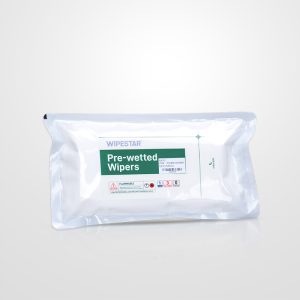
- Pre-Wetted Wipes — Factory-sealed with known solvent purity and saturation level. Eliminates operator variability at the wet bench or during critical cleaning.
- Spill Control Products — Absorbent materials for brine spills, chemical leaks, and geothermal fluid containment.
- Request Technical Consultation — Send us your brine chemistry and operating conditions. We’ll recommend the right product and ship free samples within 48 hours.
Browse Wiping Cloths → Request Samples & Quote
Frequently Asked Questions