English
 Chinese



Last month a metal fabrication shop in Ohio called us in a panic. Their 4kW fiber laser cutter was burning through focus lenses every two weeks instead of the usual two months. They’d switched lens suppliers twice, checked the beam path alignment, even replaced the protective window. Nothing helped. When our technician asked what they were cleaning the lenses with, the answer came back fast: “Same cloth we use for the machine exterior.”
That was the problem. They were wiping a $300 zinc selenide focus lens with the same cellulose wipe they used to mop coolant off the bed. The wipe was shedding fibers onto the lens coating, those fibers were getting burned into the surface by the beam, and every cleaning cycle was accelerating the damage they were trying to prevent.
This happens more than the laser industry likes to admit. A survey of fabrication shops in the Yangtze River Delta found that nearly 40% of premature lens failures trace back to improper cleaning — not defective lenses, not beam misalignment, but the wrong wipe used the wrong way. The fix costs a few cents per cleaning. The problem costs hundreds of dollars per lens.
Why Laser Lenses Fail (It’s Usually Not the Lens)
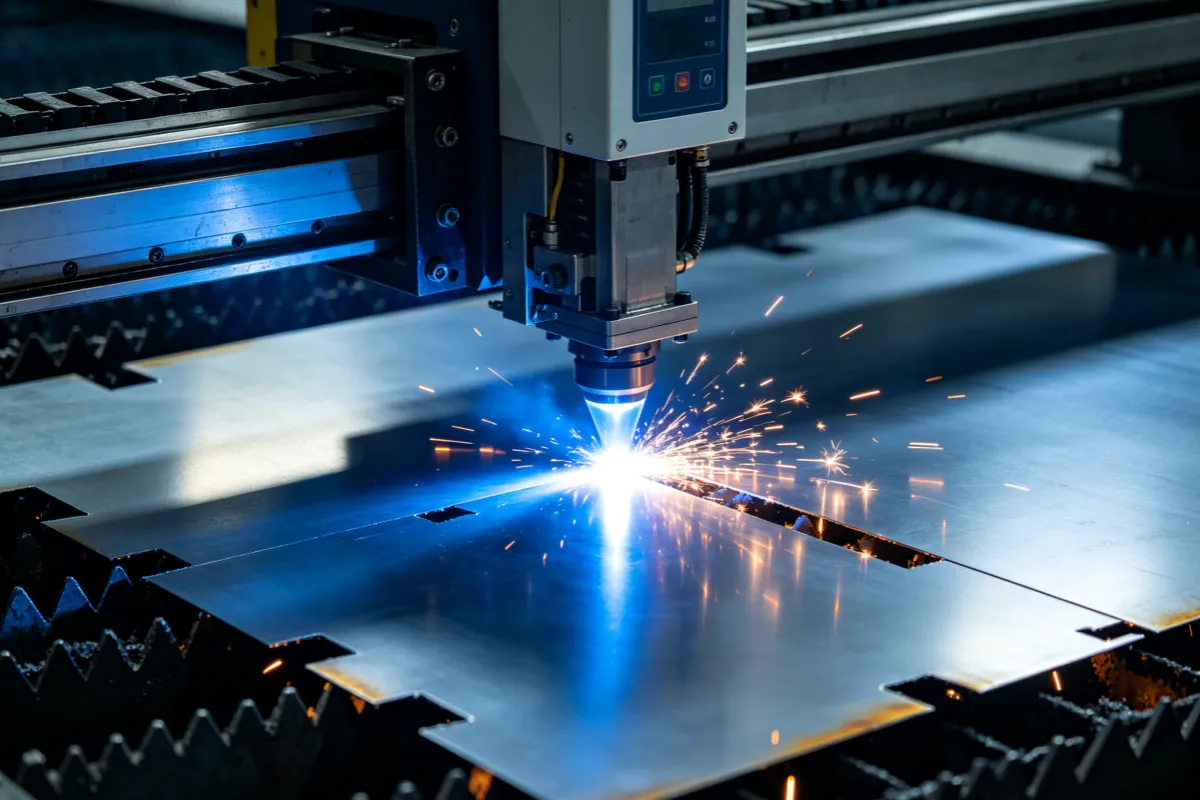
A focus lens in a laser cutter works by concentrating the beam down to a spot roughly 0.1–0.3 mm in diameter. That concentrated energy is what cuts through steel, aluminum, or acrylic. But the lens itself sits in a brutal environment — spatter from the cut zone, vaporized material residue, coolant mist, and ambient dust all converge on the optical surface.
When contamination accumulates on the lens, two things happen:
- Absorption increases — the beam energy that should pass through the lens gets absorbed by the contamination layer instead. This heats the lens locally, creating thermal stress in the coating. Over time, the coating crazes or delaminates.
- Focus shifts — even a thin contamination film changes the refractive index at the lens surface, throwing off the focal point. The cut quality degrades, and operators compensate by increasing power — which accelerates lens damage further.
The result is a failure cycle: contamination → absorption → heat damage → power increase → faster contamination. I’ve seen shops replace $400 lenses monthly when a proper cleaning routine would have kept each lens running for six months or more.
This isn’t unique to laser equipment. The principle of contamination-driven failure applies across precision manufacturing — our guide on antistatic wipes for precision equipment maintenance covers similar dynamics in other high-tolerance environments.
The Three Contamination Types That Kill Laser Optics
Not all lens contamination is the same, and each type requires a different cleaning approach:
1. Spatter and Recondensed Material
When a laser cuts metal, tiny molten droplets fly outward. Some land on the protective window or focus lens. These spatter particles bond to the glass surface at high temperature and can’t be removed by dry wiping alone — they need solvent softening first.
Common in: steel and stainless steel cutting, especially with nitrogen assist gas at high pressure.
2. Oil and Coolant Mist
Many laser cutters use oil-based lubricants on the material feed system, and coolant runs through the cutting head. Fine mist settles on optical surfaces and forms a thin film that absorbs laser energy unevenly. This is the most common contamination type in fiber laser installations.
Common in: any laser cutting system without sealed optics or proper air filtration.
3. Ambient Dust and Fingerprints
The least harmful in small amounts, but cumulative. Dust particles scatter the beam and create localized hot spots. Fingerprints transfer skin oils that carbonize under beam exposure. Both are easily removed with the right wipe — but only if you use a wipe that doesn’t leave new particles behind.
For a deeper breakdown of how particle contamination affects precision equipment across industries, see our dust-free swab and particle control guide.
Why Most Workshop Wipes Destroy Laser Lenses
Walk into most fabrication shops and ask what they use to clean lenses. You’ll hear one of these answers:
“We use lens tissue”
Standard lab lens tissue is designed for camera lenses and eyeglasses. It works fine for those applications. But laser optics operate at power densities 1,000–10,000× higher than a camera lens. A fiber residue that’s invisible on a camera lens becomes a burn point on a CO2 focus lens. Most lens tissue isn’t rated for high-power laser optics.
“We use cotton swabs”
Cotton is one of the worst materials for laser optics. Cotton fibers are hollow — they absorb solvent, then release it unevenly during cleaning. They also shed prolifically. A single cotton swab can deposit hundreds of fibers on a lens surface. Under laser irradiation, those fibers carbonize and bond permanently to the coating.
“We use whatever cloth is nearby”
This is the most common answer and the most expensive one. Shop rags, paper towels, and general-purpose cleaning cloths all share the same problems: uncontrolled fiber shedding, unknown chemical residues, and inconsistent material quality. Using them on a laser lens is like sanding a mirror with 80-grit sandpaper.
The lesson from industrial wipe material science applies directly here: the fiber structure, material purity, and manufacturing process of a wipe determine whether it cleans or contaminates. For laser optics, the margin for error is zero.
What Wipe Material Actually Works for Laser Optics
Laser lens cleaning requires a wipe that meets four criteria simultaneously. Miss any one of them and you’re back to replacing lenses early:
| Requirement | Why It Matters | Materials That Work |
|---|---|---|
| Ultra-low fiber shedding | Fibers on the lens surface get burned into the coating by the beam | Polyester, microfiber, sealed-edge nonwoven |
| Chemical purity | Residues from manufacturing or packaging leave films that absorb laser energy | Cleanroom-grade wipes with documented extractable data |
| Solvent compatibility | The wipe must not degrade when dampened with IPA or acetone | Polyester, polypropylene blends |
| Softness without scratch risk | Lens coatings (AR, HR, DLC) scratch easily under pressure | Soft-spun polyester, microfiber |
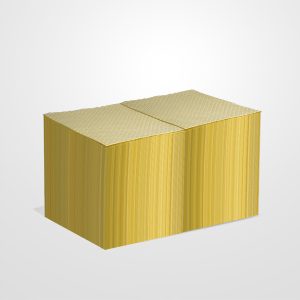
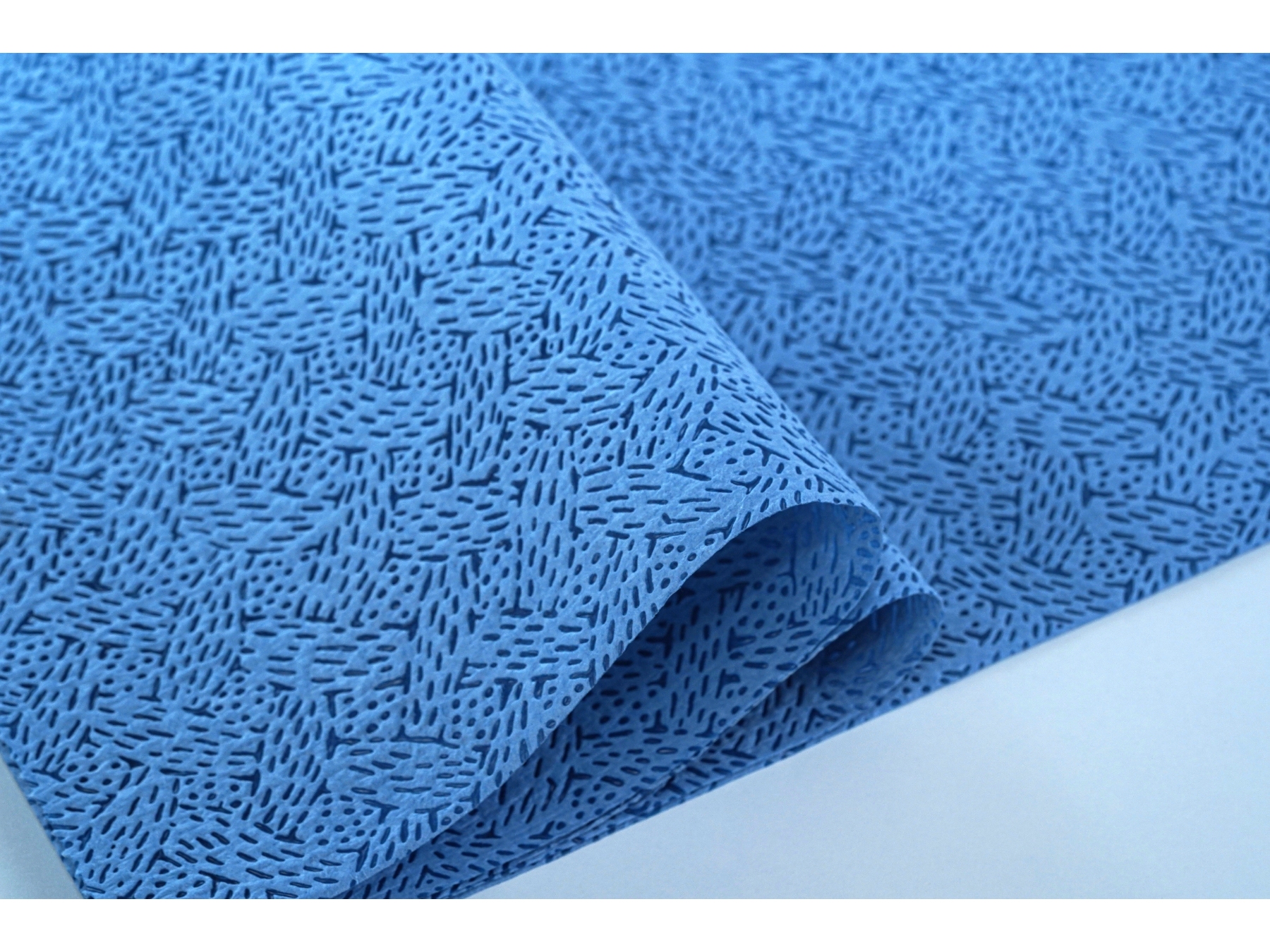
For CO2 laser lenses (ZnSe substrates), polyester wipes are the standard choice. The W6120 SMT Stencil Cleaning Cloth is a 4-inch polyester wipe with cut edges that work well for lens cleaning — the controlled fiber structure prevents the shedding problems that plague cotton and cellulose alternatives.
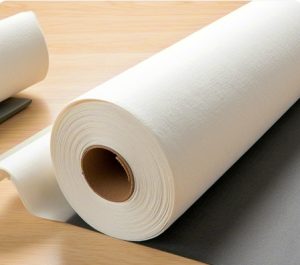
For fiber laser protective windows (fused silica), the same polyester wipe works, but microfiber is often preferred because its finer fiber structure picks up smaller particles. The W5101 Microfiber Cleanroom Wiper Rolls provide cleanroom-grade microfiber in a roll format, which is convenient for shops that clean multiple lenses or windows per shift.
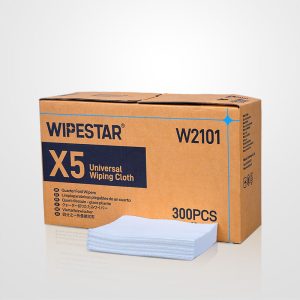
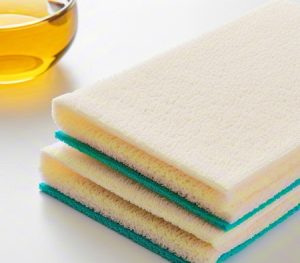
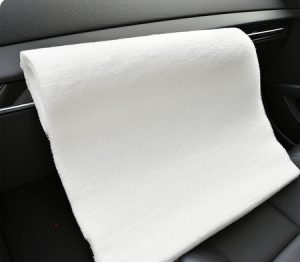
For general workstation and cutting head exterior cleaning, a heavier wipe like the W2202 Universal Wiping Cloth (X6) handles oil and coolant cleanup without the precision requirements of lens work. Don’t use it on the optics — use it to keep the environment around the optics clean.
If you want a full comparison of wipe materials and their properties, the Wiping Cloth Selection Guide breaks down the options by material, absorption, and compatibility.
CO2 vs. Fiber Lasers: Different Cleaning Needs
The two main laser types in industrial cutting have different optics and different cleaning requirements:
CO2 Laser (10.6 µm wavelength)
- Key optics: ZnSe focus lens, germanium or zinc selenide mirrors, GaAs beam combiner
- Substrate sensitivity: ZnSe is relatively soft (Mohs hardness ~3) and scratches easily. Germanium is harder but more brittle.
- Preferred wipe: Soft polyester, dampened with IPA. Never dry-wipe a ZnSe lens — static charge can pull particles into the coating.
- Cleaning solvent: 99%+ IPA or analytical-grade acetone. Lower-grade IPA contains water and trace organics that leave residue.
Fiber Laser (1.06 µm wavelength)
- Key optics: Fused silica focus lens, BK7 protective window, fiber delivery optics
- Substrate sensitivity: Fused silica is harder than ZnSe (Mohs ~7) but the anti-reflection coatings are still vulnerable to scratching.
- Preferred wipe: Polyester or microfiber, dampened with IPA. The shorter wavelength means even sub-micron contamination can cause damage.
- Cleaning solvent: 99%+ IPA. Avoid acetone on coated fused silica — some AR coatings are acetone-sensitive.
The key difference: fiber lasers operate at shorter wavelengths, which means smaller contamination particles cause problems. A 5 µm dust particle that’s harmless on a CO2 lens can create a hot spot on a fiber laser lens. This makes cleanroom-grade wiping materials more important for fiber laser optics than for CO2.
How to Clean a Laser Focus Lens (Step-by-Step)
This procedure works for both CO2 and fiber laser lenses. The key is sequence — each step builds on the previous one.
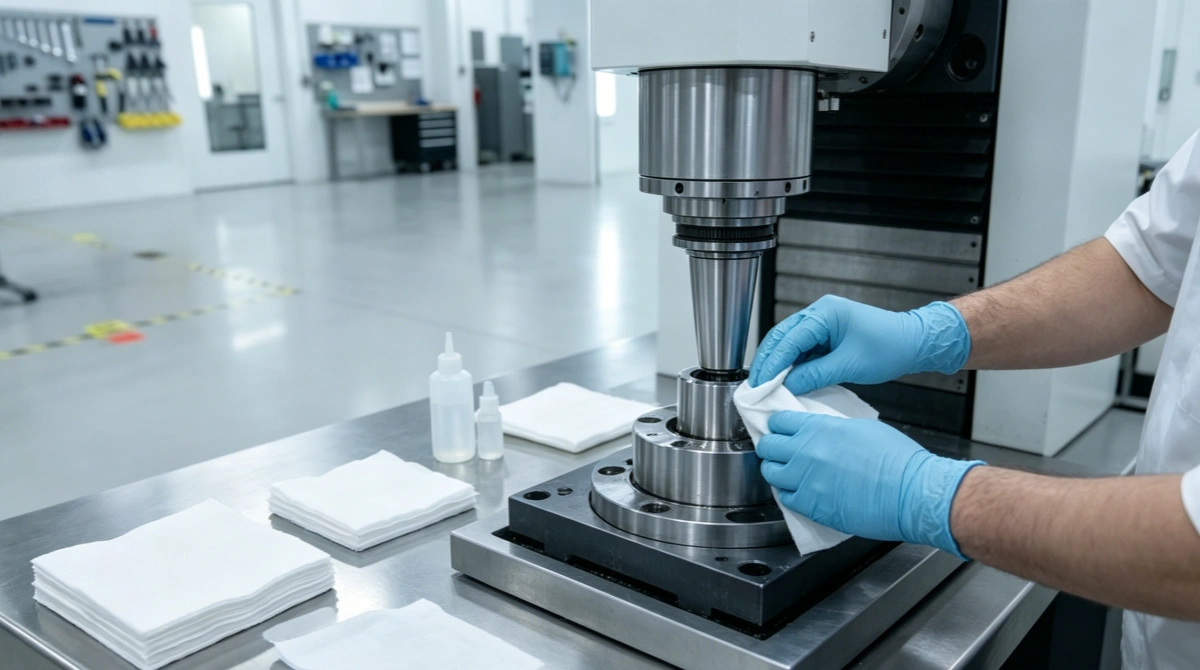
What You Need
- Polyester or microfiber wipe (lint-free, cleanroom grade)
- 99%+ isopropyl alcohol (IPA) in a dropper bottle or squeeze bottle
- Nitrile gloves (fingerprints are a contamination source)
- Compressed air or nitrogen gun (filtered, oil-free)
- Lens inspection light or penlight
Step 1: Remove the Lens Safely
Power down the laser. Wait for the cutting head to cool to room temperature — thermal shock from applying solvent to a hot lens can crack ZnSe. Remove the lens using proper suction tools or lens pliers. Never touch the optical surface with bare fingers.
Step 2: Blow Off Loose Particles
Hold the lens at an angle and use filtered compressed air or nitrogen to blow off loose dust and spatter. Work from the center outward. This step prevents loose particles from being dragged across the surface during wet cleaning.
Step 3: Wet the Wipe, Not the Lens
Apply 2–3 drops of IPA to a fresh section of the wipe. Don’t drip solvent directly onto the lens — excess liquid can seep under the lens mount and leave residue in hard-to-clean areas. The wipe should be damp, not dripping.
Step 4: Clean in One Direction
Starting from the center of the lens, wipe in a single smooth stroke toward the edge. Do not scrub in circles — circular wiping redistributes contamination and creates swirl marks in the coating. Use light pressure. If one pass doesn’t remove the contamination, re-fold the wipe to a clean section and repeat.
Step 5: Inspect Under Light
Hold the lens under a point light source at an angle. Look for remaining residue, scratches, or fiber deposits. A clean lens should show uniform light transmission with no visible spots or streaks.
Step 6: Reinstall and Test
Reinstall the lens, run a test cut on scrap material, and verify cut quality. If the cut edge shows new burrs or the kerf width has changed, the lens may be damaged and need replacement.
This wet-then-dry technique is the same principle used in automotive surface preparation — remove loose contamination first, then dissolve and lift the bonded layer with a controlled solvent wipe.
How Often Should You Clean? A Practical Schedule
Over-cleaning damages lenses as surely as under-cleaning. Every wipe cycle introduces some risk of micro-scratching. The goal is to find the minimum frequency that keeps the lens clean enough for quality cutting.
| Application | Clean Protective Window | Clean Focus Lens |
|---|---|---|
| Mild steel cutting (daily use) | Every 8 operating hours | Weekly or when cut quality drops |
| Stainless steel with nitrogen | Every 4–6 hours | Every 3–5 days |
| Aluminum cutting | Every 4 hours (spatter-prone) | Every 2–3 days |
| Non-metal (acrylic, wood) | Every 12–16 hours | Every 1–2 weeks |
| Tube cutting (enclosed head) | Every 16–24 hours | Every 2 weeks |
These are starting points. If your cut quality is stable, you can extend the interval. If you see the power creeping up to maintain the same cut speed, the lens needs cleaning — or replacement.
The same principle applies to the precision cleaning required in 5G component manufacturing — the cleaning frequency follows the contamination rate, not a fixed calendar.
The Real Math: Lens Life vs. Cleaning Cost
Here’s the economics that makes proper wipes worth it:
| Scenario | Lens Life | Lenses/Year | Annual Lens Cost | Wipe Cost/Year | Total Annual Cost |
|---|---|---|---|---|---|
| No regular cleaning | 4–6 weeks | 10–12 | $3,000–$3,600 | $0 | $3,000–$3,600 |
| Cleaning with cheap wipes | 2–3 months | 5–6 | $1,500–$1,800 | $50–$80 | $1,550–$1,880 |
| Cleaning with proper polyester wipes | 6–8 months | 1.5–2 | $450–$600 | $100–$150 | $550–$750 |
Based on a typical ZnSe focus lens at $300 and a fused silica protective window at $80. Wipe costs based on professional-grade polyester wipes at ~$0.08–$0.12 per sheet.
The difference between “no cleaning” and “proper cleaning” is roughly $2,400–$2,850 per year per machine. That doesn’t include the hidden costs of lens failure — unplanned downtime while waiting for a replacement, scrapped material from bad cuts, and the labor cost of emergency lens swaps at 2 AM when a deadline is looming.
Frequently Asked Questions
Looking for the right wipes to protect your laser optics? Browse the complete WIPESTAR wiping cloth range or contact us for recommendations tailored to your laser type and cutting application.