English
 Chinese



A fabricator in Ontario had a bonding problem that took four months to solve. Aluminum brackets were being bonded with structural adhesive and failing at low load in the field. The bond surface had been cleaned, the adhesive was in date, and the cure profile was verified twice.
The residue was the reason. The brackets arrived with a protective plastic film held on by a pressure-sensitive adhesive. Operators peeled the film and wiped the surface with a general-purpose shop towel and IPA. What they could not see was the adhesive transfer layer the film left behind — a film measured in microns, clear on aluminum, and completely invisible under shop lighting. The structural adhesive bonded to that layer instead of to the metal. It looked like a clean surface right up until it failed.
Adhesive residue is one of the most underestimated contamination sources in assembly, because it defeats the most common test for cleanliness: looking at the part. This guide covers what different adhesive residues actually are, which wipes remove them without moving them around, and how to verify a surface is genuinely clean before bonding, coating or sealing.
Four Adhesive Residues and Why They Behave Differently
“Adhesive residue” is not one material, and treating it as one produces the two classic failures: a solvent that dissolves nothing, or a solvent that dissolves the residue and then spreads it across the whole panel.
| Residue Type | Where It Comes From | Behavior | Removal Logic |
|---|---|---|---|
| Pressure-sensitive transfer layer | Protective film, masking film, transit tape | Clear, thin, tacky; invisible on metal | Mechanical lift first, then solvent — solvent alone smears it thinner |
| Rubber-based adhesive | Older labels, gaffer tape, duct tape | Soft, gummy, transfers onto the wipe and back onto the surface | Solvent softens, mesh wipe lifts; change the wipe face often |
| Acrylic adhesive | Most modern films and labels | Harder, less tacky, resists mild solvent | Stronger solvent plus mechanical action; patience over pressure |
| Silicone release layer | Release liners, some tapes, mold release | Extremely low surface energy; contaminates bonding permanently | Requires a solvent selected for silicone; verify with a water-break test |
The silicone case is the one that ends programs. Silicone is a release agent by design, so any trace left on a bond surface prevents adhesion — and it can be transferred from a wipe, a glove or a liner that touched the surface earlier. If the process involves release liners anywhere upstream, silicone removal belongs in the procedure explicitly.
Why a Normal Wipe Spreads Instead of Removes
A general-purpose wiper is built to absorb liquids, not to shear a tacky film off a hard surface. Three things go wrong when one is used on adhesive residue:
- The fiber mat loads and stops cutting. Adhesive sticks to the wiper surface and fills the voids, after which the wipe slides over the residue instead of engaging it.
- The residue transfers back. Once the face is loaded, continued wiping deposits adhesive onto clean areas — which is how a small patch of residue becomes a large, thin, hard-to-find film.
- Solvent evaporates before the work is done. A flooded wipe with a fast solvent flashes off, leaving the adhesive re-deposited in a thinner layer that is harder to remove on the second attempt.
The fix is a wipe with mechanical bite that does not shed, used wet enough to soften the adhesive but not so wet that it floods the surface.
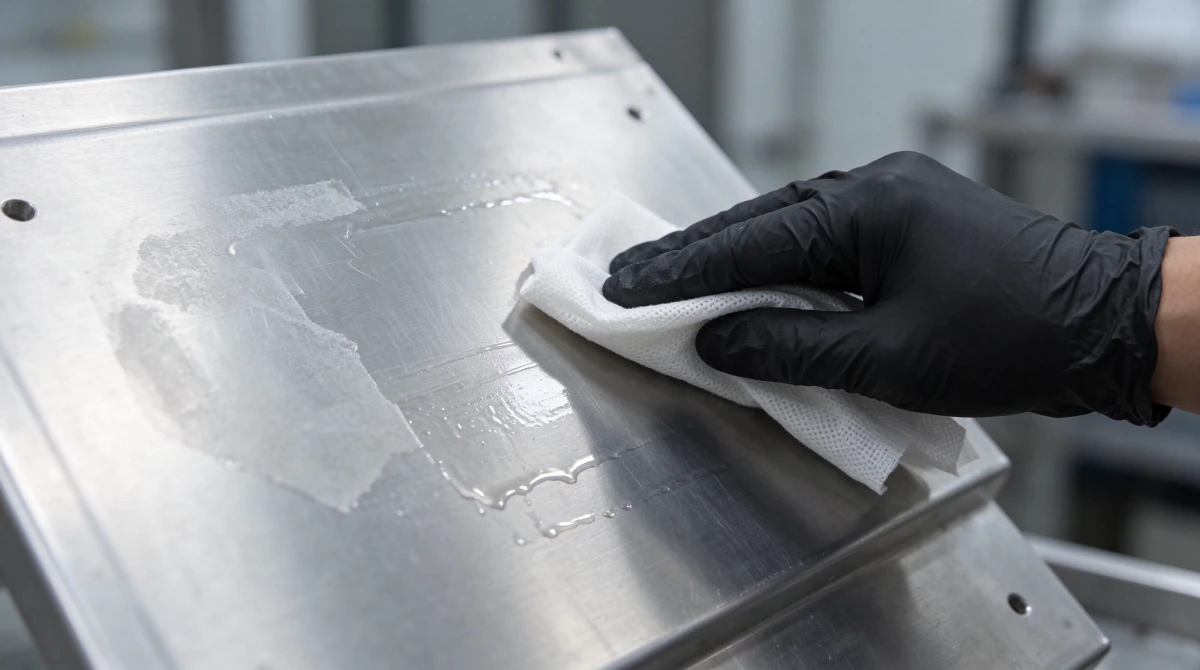
The Mesh Wiper: Mechanical Action Without Scratching
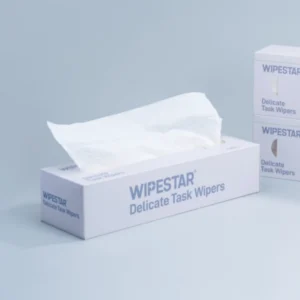
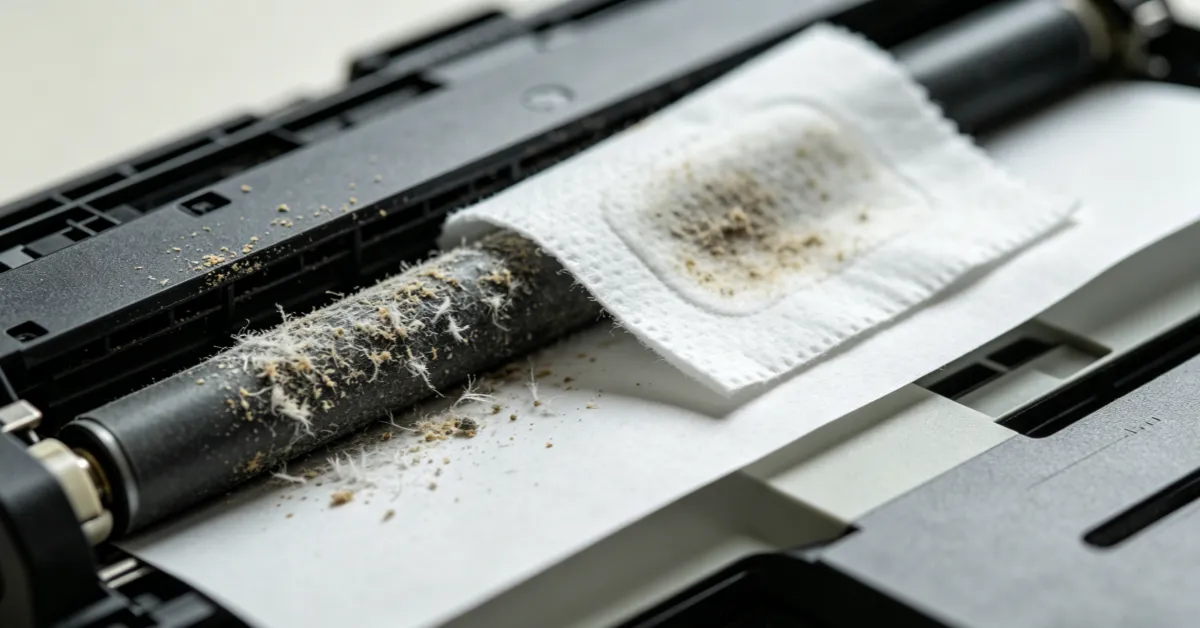
A mesh-structured wiper gives the surface something to shear against. The W3301 mesh adhesive removal wipe is built for exactly this job: a wood-pulp/polypropylene mesh in a 9-inch format that gives bite on tacky residue while the pulp component holds what it lifts.
Used correctly, it removes a transfer layer in a few passes without gouging the substrate. Used incorrectly — dry, with heavy pressure — it abrades the surface and leaves fiber behind. Three rules make the difference:
- Damp, not wet. Wipe with a solvent-dampened mesh so the adhesive softens before the mesh engages it. A dry mesh on dry adhesive just burnishes the residue into the surface.
- Short strokes with fresh faces. Adhesive loads a face fast. Rotate or refold every few strokes, and discard the wipe rather than trying to clean it and continue.
- Follow with a smooth wipe. The mesh does the removal; a smooth wiper does the cleanup. Finish with a soft format such as the W3401 ultrasoft prep wipe to take up solvent and any loosened material without adding new texture.
For large panels where the residue covers an area rather than a spot, start with a high-friction general prep wipe such as the W3501 to break the bulk of the film, then finish with the mesh and the smooth wipe. Three formats, three different jobs — the mistake is expecting one to do all three.
Solvent Choice by Adhesive Type
The solvent has to match the adhesive, and the wipe has to survive the solvent. A short working guide:
| Adhesive | Starting Solvent | Caution |
|---|---|---|
| Pressure-sensitive film transfer | IPA, then mechanical lift | IPA alone thins the layer rather than removing it; use the mesh |
| Rubber-based | Heavier aromatic or dedicated adhesive remover | Check substrate compatibility first — some plastics craze |
| Acrylic | Stronger solvent with dwell time | Let it dwell; pressure does not substitute for time |
| Silicone release | Silicone-specific solvent | Verify with water-break after removal; recontamination is easy |
Two compatibility notes that cost real money when ignored. First, solvent that is fine on aluminum can attack polycarbonate, acrylic and some composites within seconds — test on a scrap coupon from the same material lot. Second, the wipe has to tolerate the solvent: a wood-pulp blend holds up in IPA but can soften in aggressive aromatic solvents, and a softened wipe sheds into the very surface you are cleaning.
Verifying the Surface Before Bonding or Coating
Visual inspection is not verification. Three checks, in increasing order of rigor, tell you whether the residue is actually gone:
- Oblique light. A lamp held nearly parallel to the surface shows films that direct light hides. Fast, free, and catches most transfer layers.
- Water-break test. Flood the surface with deionized water. Uniform sheeting for about thirty seconds means the surface energy is right; beading or patchy withdrawal means something is still on the metal. This is the standard check before coating and it works equally well before bonding.
- Dyne pen or contact angle where the bond is structural or safety-critical. A dyne pen gives a pass/fail surface energy reading that correlates with adhesive performance far better than a visual check.
Whatever method you use, run it on the first part of every lot and record the result. Adhesive transfer varies between film suppliers and between lots from the same supplier, so a check done once at qualification does not cover the shipment that arrives six months later.
Setting Up a De-Filming Station
- Three formats at the bench: a high-friction wipe for bulk, a mesh wipe for the residue layer, and a smooth wipe for the finish pass.
- Solvent in a closed dispenser, matched to the adhesive on that part family, with the label visible.
- A waste bin at the station — adhesive-loaded wipes do not go back on the bench, and they do not go into the general trash if the solvent is regulated.
- An inspection lamp at a low angle, positioned so the operator can check without moving the part.
- A water spray bottle for the break test, if the downstream step is bonding or coating.
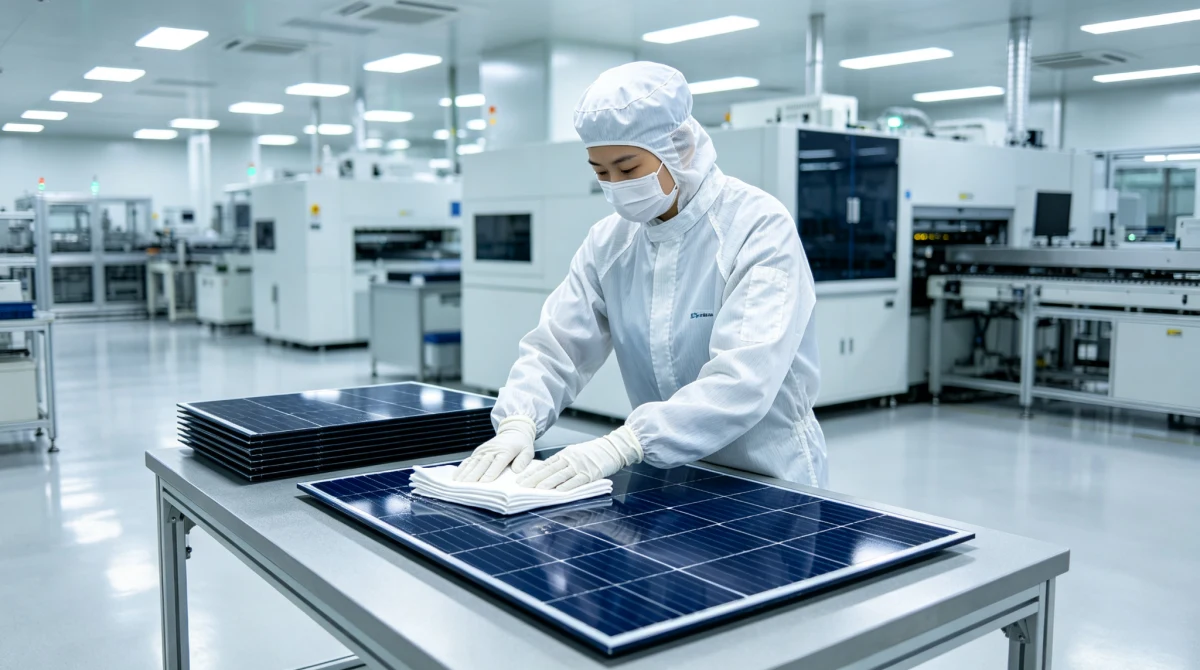
The station matters because adhesive removal is a sequence, not a single action. When the three formats and the verification tool are all within arm’s reach, the sequence gets followed. When the mesh wipe lives in a different cabinet, operators use whatever is closest — which is how the Ontario fabricator ended up bonding to a transfer layer for four months.
Who You’ll Work With at WIPESTAR
We make wipers for surface preparation and residue removal, and the questions we get are usually specific: which format for this adhesive, on this substrate, with this solvent.

Carolina — Product Specialist
Carolina checks how substrate and adhesive combinations respond to different wipe structures — mesh bite, solvent tolerance and whether a format sheds before it is approved for a bonding surface.

Daisy — Sales Support
Daisy keeps the three-format station list straight on reorders — bulk, mesh and finish wipes ship as separate line items so none of them gets substituted with a general shop towel.

Ethan — Sales Director
Ethan has over 20 years in industrial wiping cloth — he works with assembly operations on supply agreements that keep a qualified de-filming SKU stable through price reviews.
Get Started with Adhesive Removal Wipes
Tell us which adhesive your parts arrive with, what the substrate is and what the next process step is, and we will recommend a format and a solvent direction that fit.
- W3301 Mesh Adhesive Removal — bite for tacky transfer layers.
- W3401 Ultrasoft Prep Wipe — the clean finish pass.
- Request a Technical Consultation — send the adhesive and substrate; we will match the format.
Browse Wiping Cloths → Request a Custom Quote
Frequently Asked Questions