English
 Chinese



A fire inspector walked into a small job shop in Ohio and stopped at a 20-gallon drum beside the parts washer. Lid off. Half full of solvent-dark rags. The shop had been doing it that way for eleven years without a problem, which is exactly why the write-up caught everyone off guard.
The citation was not about the rags. It was about the container and the schedule. The rags were fine — the shop had already moved to disposable wipes. What it had not changed was the habit of tossing them into an open drum and letting them sit until someone remembered.
Oily rag disposal is one of those topics that everyone assumes they understand until an inspector asks a direct question. This guide covers what actually happens inside a pile of used wipes, what the container has to be, which US regulations apply, and how to set up a station that survives an unannounced walkthrough.
What Happens Inside a Pile of Used Wipes
Spontaneous combustion of oily rags is a chemistry problem, not a carelessness problem, and understanding the mechanism explains why the container and the pile size matter so much.
Drying oils — linseed, tung, boiled linseed — and many solvent-based parts cleaners contain unsaturated compounds that oxidize when exposed to air. Oxidation is exothermic: it releases heat. In a single flat rag, that heat escapes into the room and nothing happens. In a pile, the outer rags insulate the inner ones, so heat accumulates faster than it dissipates.
As the internal temperature climbs, the oxidation rate climbs with it. That is a feedback loop. Given enough fuel, enough insulation and enough time, the pile can reach ignition temperature without any external spark. The classic timeline is a shop that closes at 6 p.m. and a fire that starts at 2 a.m.
Three variables control the risk, and all three are manageable:
- Pile size. One rag cannot self-heat. A drum of them can. Keeping the accumulation small is a control, not just housekeeping.
- Air access. The reaction needs oxygen, but a closed container also traps heat — which is why the answer is a listed container with a self-closing lid that vents as designed, not a sealed paint bucket and not an open drum.
- Time. The longer the material sits, the more heat accumulates. Removal frequency is the single most effective control.
What the Container Has to Be
The container is the control, and most citations come from getting one of these four attributes wrong:
| Attribute | Requirement | What Goes Wrong Without It |
|---|---|---|
| Listing | A container listed for oily waste, with the label intact and legible | A generic drum or bucket has no design basis for self-heating material; inspectors treat it as an unapproved container |
| Lid | Self-closing, foot-operated or fusible-link lid that closes on its own | An open or propped lid is the most common finding — it removes the oxygen limitation and exposes the pile |
| Location | On a hard, level surface away from ignition sources, walkways and exits | Containers under benches or beside heaters put the hazard where a fire can spread unnoticed |
| Labeling | Contents and hazard identified, with the accumulation start date if your procedure requires one | Unlabeled containers cannot be assessed by a responder, and they fail hazmat communication requirements |
A note on the sealed-bucket shortcut. Some shops seal used rags into a plastic bucket with a hammer-down lid, reasoning that no oxygen means no oxidation. That works until the lid is opened, and it also traps heat with no designed relief. A listed self-closing container is the defensible answer; improvisation is the thing inspectors write up.
OSHA, NFPA 30 and RCRA — What Each Requires
Three frameworks apply, and they are often confused because they answer different questions.
OSHA 29 CFR 1910.106. This is the paragraph most citations reference. It requires that materials contaminated with flammable or combustible liquids be kept in covered metal containers and removed from the workplace at least daily, or at the end of each shift. The second half of that sentence is the one shops miss: it is not enough to put the rags in a can, the can has to leave.
NFPA 30. This is where container design and storage practice come from. It distinguishes between the container used at the point of generation and the container used for accumulation, and it sets expectations for both. A shop that empties bay cans into a single larger drum by the dock has created an accumulation point — and that point needs to be managed, not ignored.
RCRA. Disposal. Solvent-contaminated wipes may be regulated hazardous waste depending on the solvent, the concentration and your state’s rules. Several states have their own wiper provisions that differ from the federal position. This is the area where you should confirm the local answer rather than assume.
| Question | Framework | Practical Answer |
|---|---|---|
| What kind of can? | NFPA 30 / listing | Listed oily waste container with a self-closing lid |
| How often emptied? | OSHA 1910.106 | At least daily or end of shift, whichever comes first |
| Where can it sit? | NFPA 30 / local fire code | Away from ignition sources, exits and combustibles; accumulation area defined |
| Where do the rags go? | RCRA / state rules | Permitted hauler with the waste profile on file; state-specific for solvent wipes |
Building a Disposal Station That Passes
The version that works in practice is boring and takes about an hour to set up per bay:
- Put a listed can where the wipes are generated. Beside the parts washer, beside the bench, beside the paint area. If the can is 40 feet away, the rags go in the nearest trash bin instead.
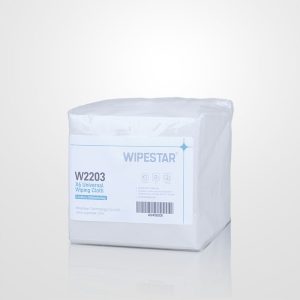
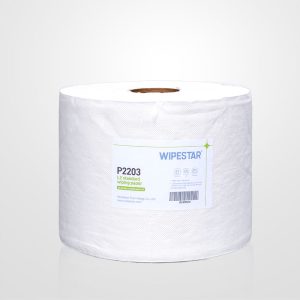
- Put the wipes next to the can, not in the stockroom. A dispenser at the station is what keeps the used wipe from migrating to a lunchroom bin. General-purpose cloths like the W2203 or a dispenser box such as the X8 Brag Box work for most bay tasks; heavier oil work wants the W4204.
- Write the emptying time into the shift close checklist. Not “as needed” — a time. End of shift, every shift, initialed.
- Define the accumulation point. One labeled location, listed container, emptied by the hauler on a set schedule. Bay cans empty into it; it does not become a second open drum.
Two smaller habits that close common gaps. Never mix solvent wipes with general trash in the same container — the mixture changes the waste classification and complicates disposal. And keep the can away from the rag bin: a can sitting beside a pile of clean rags invites the clean rags to be used as lid weights, which defeats the self-closing mechanism.
Disposal Routes and the Manifest Question
Once the material leaves the building, the paperwork begins. Three routes cover most US shops:
- Solvent wipes as hazardous waste. Appropriate when the solvent is listed or exhibits a characteristic. Requires a manifest, a permitted transporter and a permitted facility. Records are retained per your state’s schedule.
- Used oil management. Oil-saturated wipes may qualify under used oil provisions if they are recycled or burned for energy recovery. Your hauler will tell you what they can accept and under what profile.
- Non-hazardous industrial waste. Applicable only when the solvent is absent or below the applicable threshold and your state allows it. This is the route that requires the most documentation to justify, because it is the one most often claimed incorrectly.
The practical test: if you cannot state the waste code or the exemption you are relying on, you do not have a disposal route — you have a habit. Get the determination in writing from the hauler, keep it with the SDS file, and review it whenever a process chemical changes.
If a Can Starts Smoking
It happens. A can that is warm to the touch, smells strongly of solvent, or shows wisps of smoke is in the middle of a self-heating event.
Do not open it to look inside — opening admits oxygen and can accelerate the reaction. Move the can away from combustibles if it can be done without risk, evacuate and call the fire department. A can that is already hot enough to smoke is beyond what a shop should handle with a portable extinguisher and a hope.
The post-incident response matters as much as the incident. A smoking can is evidence that the emptying schedule is not being followed, and the corrective action belongs in the procedure, not in a reminder email.
Who You’ll Work With at WIPESTAR
We supply the wipes that go into these containers, and we would rather help you get the disposal station right than sell you a case that ends up in an open drum.

Lee — Key Account Sales Manager
Lee has served Foxconn, Samsung and Apple since 2018 and runs multi-site programs — for shop groups he standardizes the wipe and station list so every bay follows the same disposal routine.

Ethan — Sales Director
Ethan has over 20 years in industrial wiping cloth — he works with maintenance and EHS teams on consumable programs that account for what happens after the wipe is used, not just before.

Zac — Customer Service
Zac handles sample boxes and reorder timing — a shop can test two wipe grades at the actual disposal station before changing the whole consumables line.
Get Started with a Safer Disposal Setup
Tell us which solvents and oils your shop uses and how many wipe-generation points you have, and we will help you size the wipe program and the station layout together.
- W2203 Universal Cloth — general bay wiping at the station.
- W4204 Heavy Duty Oil Cloth — oil-side work that loads the can faster.
- Request a Technical Consultation — send your process chemicals; we will size the program.
Browse Wiping Cloths → Request a Custom Quote
Frequently Asked Questions