English
 Chinese



The chargeback letter arrived on a Tuesday: a retail customer’s verification scanner was rejecting carton barcodes at the dock, and every rejected pallet traced back to one contract packaging plant’s Line 4. The inkjet date coder on that line had been drifting for weeks — codes printing lighter, edges going soft, the occasional drop-out in the middle of a lot number. The operators knew the drill for a fuzzy head: grab a shop towel, fold it, wipe the nozzle plate, maybe poke at it with a cotton bud from the first-aid cabinet.
That routine was the problem. Under magnification, the failed heads were packed with fibers — towel lint and cotton strands wicking solvent, drying into the nozzle plate, and deflecting droplets exactly like a partially clogged jet. The plant wasn’t fighting dirty ink. It was fighting its own cleaning tools.
The rebuild took one week: a cup of compact foam swabs mounted at every coder, a small closed solvent bottle, a three-minute start-of-shift routine, and a rule that shop towels stop touching printheads. Scan grades on the test print went from failing to consistent A/B grades, and the chargeback conversation closed with a before/after scan report instead of an argument.
Industrial inkjet coders punish lint more brutally than almost any other equipment on a packaging floor — a nozzle orifice is smaller than the fibers your towel sheds. This guide covers the swabs, solvents and routine that keep heads printing like they’re new.
Why Printheads Punish Lint
A thermal inkjet or continuous inkjet nozzle fires droplets through an orifice measured in tens of microns. A single cotton fiber — 20 to 30 microns across, and cotton buds shed constantly — is not a nuisance at that scale. It’s a plug. Once a fiber wicks solvent into the orifice and dries there, every subsequent droplet fires through a distorted channel: light code, soft edges, drop-outs.
The economics amplify the annoyance. Retail and logistics scan verification is graded on print quality — the ISO/IEC 15416 methodology produces the A-through-F grades that retailers enforce at receiving. A code that scans fine at the end of the packaging line can still grade below the customer’s threshold if edge sharpness has decayed, and grade failures become chargebacks long before they become visible complaints. Barcode quality is a consumables problem wearing a barcode costume.
The tool rule follows directly: nothing touches a nozzle plate that can shed. That eliminates shop towels, cotton buds, and the green scrub pads that live in maintenance cribs. It leaves engineered swabs with bonded, lint-controlled heads — which is exactly what they’re made for.
Swab Picks by Coder Zone
A coder has three distinct cleaning zones, and one swab size does not serve all of them:
| Coder Zone | Geometry | Swab | Why |
|---|---|---|---|
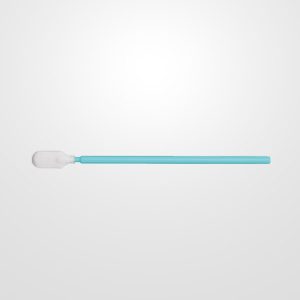
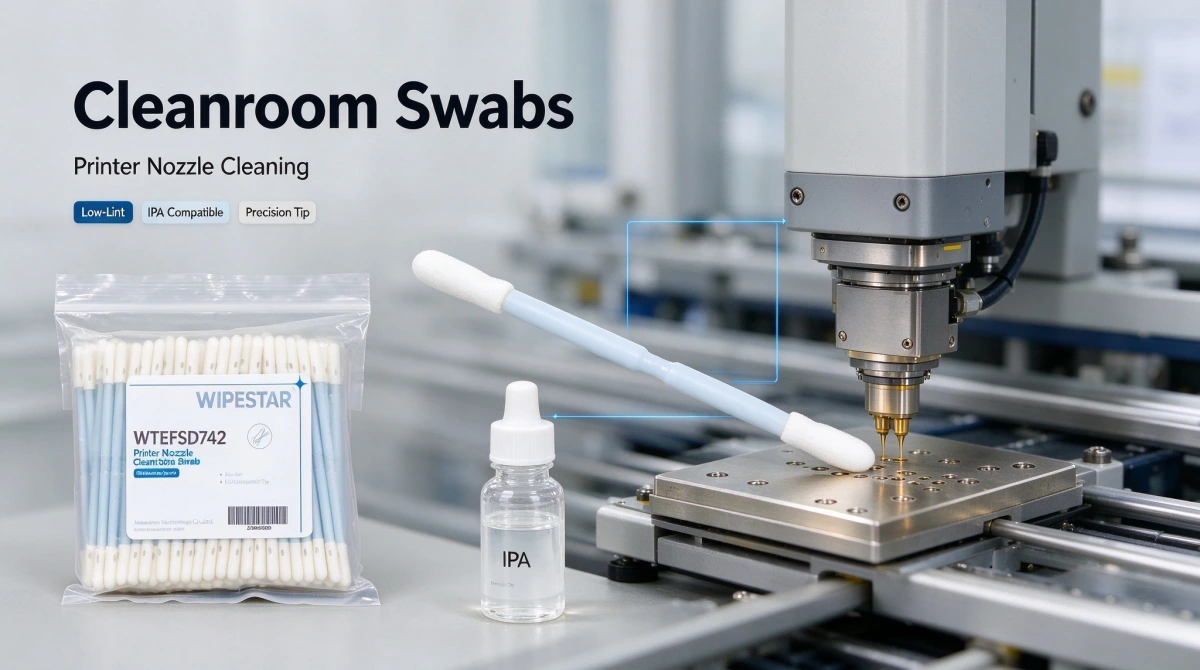
| Nozzle plate / orifice face | Small, precise, fragile | WFS758 or WFS757 (60–80mm) | Compact head, short stiff handle — fingertip control so you never lever against the plate |
| Capping station, printhead surround | Curved, medium area | WFS761 / WFS706 (80–100mm) | The middle band absorbs ink film without gouging seals |
| Housing, guards, wider printed area prep | Open surfaces | WFS707 (120–140mm) | Fast coverage where precision stops mattering |
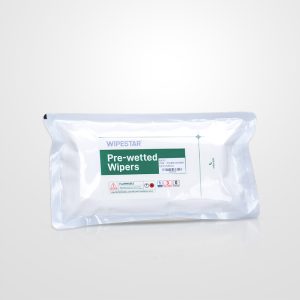
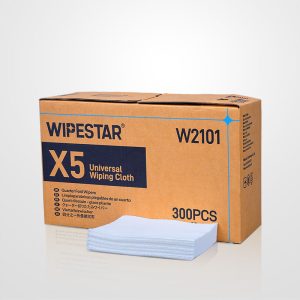
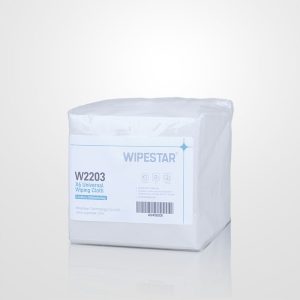
| Surrounding machine surfaces at changeover | Large flats | Pre-wetted wipes | Wipes, not swabs, once the surface is bigger than a hand — swabs are for features, wipes are for areas |
The split matters because crews under time pressure reach for one tool for everything. A foam wipe dragged across a nozzle plate does the same damage as a towel — just more slowly. Zone the task, bin the tools at the station, and the wrong pick stops happening at 6 a.m. on a Monday.
Solvent Discipline: Wet, Don’t Soak
Ink chemistry decides the solvent — use the coder manufacturer’s approved solvent or the IPA strength the printhead spec calls for, not whatever is nearest. The discipline matters more than the bottle:
- Small, closed container at the station. An open solvent cup evaporates, changes concentration, and collects airborne fibers within the hour — the same problem the towel caused, delivered by air.
- Wet the swab, then express it. The head should be damp, not dripping. Solvent flooding the plate runs ink into the channels and leaves residue in the wrong places.
- One swab, one direction, done. Wipe along the print direction, never scrub back and forth across the orifices. Flip to a fresh face if needed; discard the swab when the faces are used. A swab that went across ink goes nowhere near a nozzle plate again.
- Cap the bottle between uses. Every open-cap minute changes what tomorrow’s operator thinks “wet” means.
The Three-Minute Start-of-Shift Routine
The Line 4 rebuild replaced improvisation with a routine short enough to actually happen:
- Test print — fire the standard test pattern before the first carton, not after the first complaint.
- Inspect with the loupe — look at the nozzle plate, not the print. Fibers visible at 30x mean clean again now, not at break.
- Wipe once, correctly — damp foam swab, one pass along print direction, fresh face for the surround, discard.
- Re-test and log — a test print in the shift record takes ten seconds and turns barcode grade drift from a mystery into a trend.
Mid-shift, the same routine compresses to steps one and three whenever the print starts looking soft. Total added time per shift is under three minutes — less than one rejected pallet of cartons costs in relabeling labor.
Who You’ll Work With at WIPESTAR
We supply packaging lines where print quality is a customer-enforceable grade, not a preference — so the recommendation starts with your coder types and ends with a station kit that survives night shift.

Lee — Key Account Sales Manager
Lee has served Foxconn, Samsung and Apple since 2018 and runs multi-site consumable programs — he knows what a station kit needs to look like when it has to be identical on every line, everywhere.

Carolina — Product Specialist
Carolina matches tip material to solvent — she verifies which foam and polyester heads hold up in your ink chemistry before the station kit gets quoted.

Zac — Customer Service
Zac keeps coder stations stocked on a standing schedule — the swab cup at the printhead never goes empty, which is the whole point of a kit.
Get Started with Coder Station Kits
Send us your coder models and ink types, and we’ll assemble a per-station kit — swabs by zone, solvent compatibility confirmed, sizes matched to the features your crews actually touch.
- WFS758 Compact Foam Swabs — nozzle-plate safe, fingertip control.
- WFS761 Mid-Size Swabs — capping stations and printhead surrounds.
- Request a Technical Consultation — send coder models; we’ll build the station kit.
Browse Cleanroom Swabs → Request a Custom Quote
Frequently Asked Questions