English
 Chinese



A media fill is supposed to be a test of the process, not the person holding the wipe. But at a contract fill-finish site in central India last spring, that line got blurry enough to kill three consecutive media fills.
The first two fills passed with one colony each — statistically irrelevant at the 3-unit level, but together enough to trigger a root-cause investigation. The third fill failed outright with eleven colonies clustered around the filling needle. QA reviewed gowning logs, HVAC data, disinfectant rotation, needle set changeovers. Nothing stuck. Then someone pulled the intervention records and found the day shift and the night shift weren’t wiping needle adjustments the same way. The day shift soaked a wipe in a line-side IPA bottle until it dripped and wiped the needle assembly in two directions. The night shift dampened a wipe, folded it once, and ran it in one direction. The bottle had been opened the previous Monday. By Friday it was thirty-two percent IPA from evaporation — nobody had measured it. The “same intervention SOP” was producing two wildly different surface treatments, and the media fill was registering the gap.
The fix wasn’t a new needle set. It was two boxes of sterile pre-wetted wipers per line, delivered gamma-irradiated and factory-saturated with USP-grade IPA and ultrapure DI water. The bottle disappeared. The wiping technique stayed the same on paper, but now there was only one wetting level possible — what the factory put in the bag. The next three media fills came back clean, and the investigation closed with “variability in manual wipe wetting” as the root cause. Three pages of corrective action. Zero line downtime from the fix itself.
Sterile pre-wetted wipers aren’t a convenience. They’re a variable elimination tool for aseptic processing — and the variable they eliminate is the human one that your media fill, your contamination control strategy, and your validation protocol never named explicitly.
What Manual Wetting Introduces Into a Grade A Suite
Wetting a sterile wipe at the filling line seems like a harmless detail. Inside an aseptic core, it stacks four uncontrolled variables on top of each other, and every media fill you run after that is absorbing the variance:
- The bottle. An open IPA container in a classified room collects ambient contamination every minute it stays open, and its concentration drifts downward as alcohol evaporates — especially at line temperatures above 22°C. A 30% IPA solution isn’t a disinfectant; it’s a surface that stays wet longer and supports survivor organisms.
- The pour. Saturation becomes operator-dependent. Soaked wipes drip solvent into crevices you can’t see; barely-wet wipes shed fibers and don’t deliver enough IPA to reach contact time. Both wipe the needle. Neither is what the SOP describes.
- The solvent grade. “Cleanroom IPA” from a general supply house is not USP-grade. Nobody’s testing each bottle for ionic extractables and non-volatile residue. Whatever’s in that bottle lands on the stainless steel your product touches.
- The intervention itself. Opening a solvent bottle near a filling needle is an intervention the SOP never lists. Every time the bottle is handled, your media fill is supposed to absorb that risk — and you don’t know how much it’s absorbing.
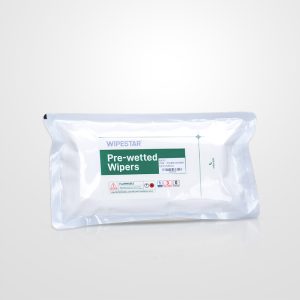
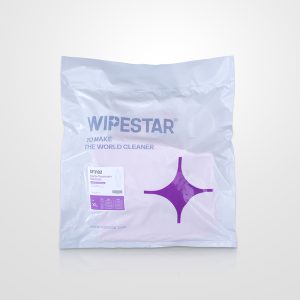
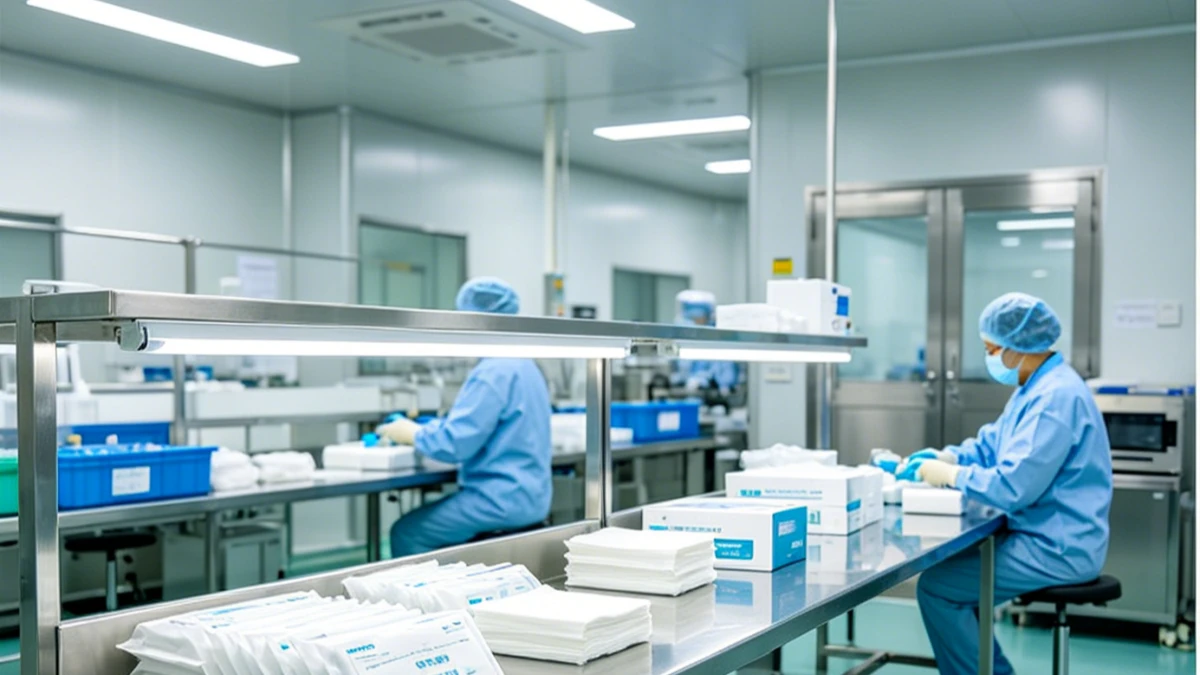
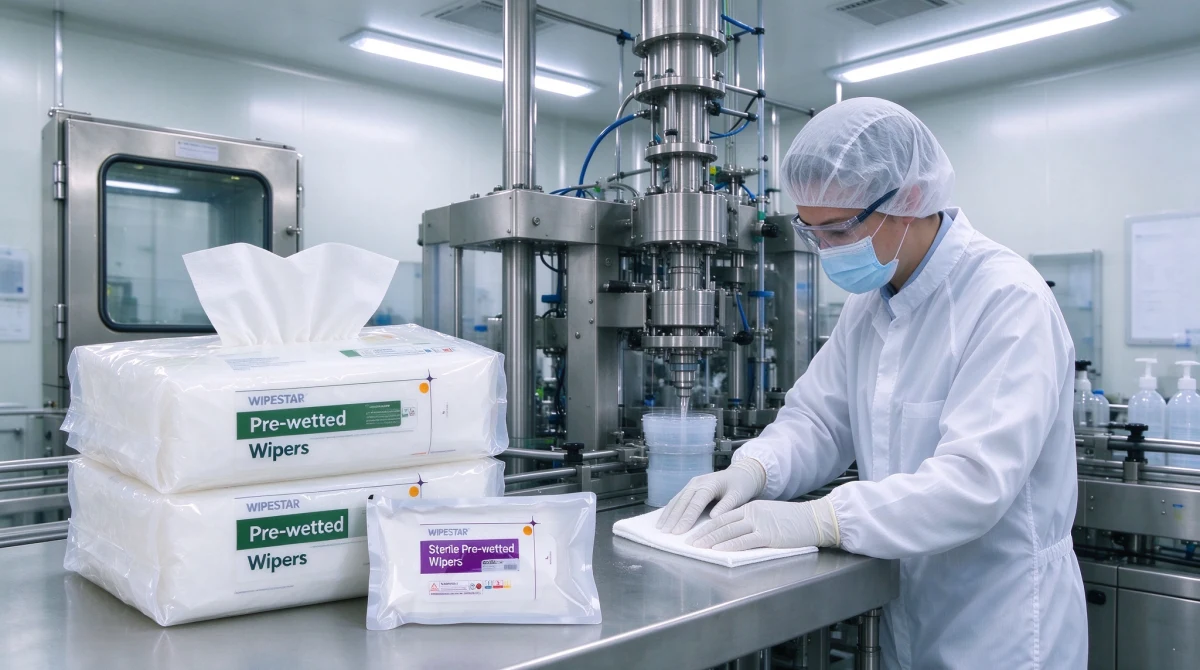
A sterile pre-wetted wiper like the SG2202 deletes all four in one product. Every 200gsm microfiber sheet is pre-saturated with a precisely blended USP-grade IPA and ultrapure DI water solution, factory-sealed, gamma-irradiated per lot, and delivered in double-bagged packaging for direct transfer into Grade A/B environments. There’s no bottle to open, no pour to standardize, no concentration drift. The wipe arrives at the filling line at exactly the solvent load your validation says it needs.
What “Sterile” Has to Prove on Paper Before You Approve It
“Sterile” is a claim. A certificate is the proof. Before a wipe touches anything near a filling needle, your documentation packet has to answer four questions. A single-page sterility certificate answers only one of them.
How was it sterilized? Gamma irradiation, validated per lot to a sterility assurance level (SAL) of 10⁻⁶, per ISO 11137 and AAMI guidance. Steam (autoclave) sterilization changes the wipe’s moisture content and can alter its extractable profile — so single-use sterile cleanroom wipes are virtually all gamma, not steam.
How clean was it before sterilization? Sterilization kills microbes; it doesn’t remove particles, ions, or extractables. The pre-sterilization cleanliness data you want: APC (accumulated particulate contamination), LPC (liquid-borne particle count), NVR (non-volatile residue), FTIR material verification, and ionic extractables. Whatever is in the wipe before sterilization ends up on the stainless steel your product path touches.
Can you trace it? Lot traceability plus a certificate of irradiation is the minimum. If a sterility investigation ever happens, you’ll need the exact lot data in minutes, not a reconstruction from purchase orders. For our sterile range, every product carries lot numbers on both the bag and the shipper box.
Is it endotoxin-safe? Sterility certificates cover microbial kill, not pyrogens. Parenteral filling operations where wipes contact product-adjacent tooling should add low-endotoxin (LAL) testing to the spec. Standard cleanliness data doesn’t answer this question — ask explicitly for lot-level endotoxin data.
Matching the Wipe Format to the Intervention Type
Not every aseptic intervention wants the same wipe. The wipe that’s perfect for a stainless drip tray is the wrong choice for an optical sensor on the filler. Here’s how the main formats map to filling-line work:
| Format | Material / Weight | Packaging | Assign It To |
|---|---|---|---|
| SG2202 Pre-Wetted | 200gsm microfiber, USP IPA + DIW | 9″×9″; 50 sheets/inner, 2 bags/outer | Critical intervention wipe-downs: filling needle assembly, stopper bowl, optical sensors, guide rails |
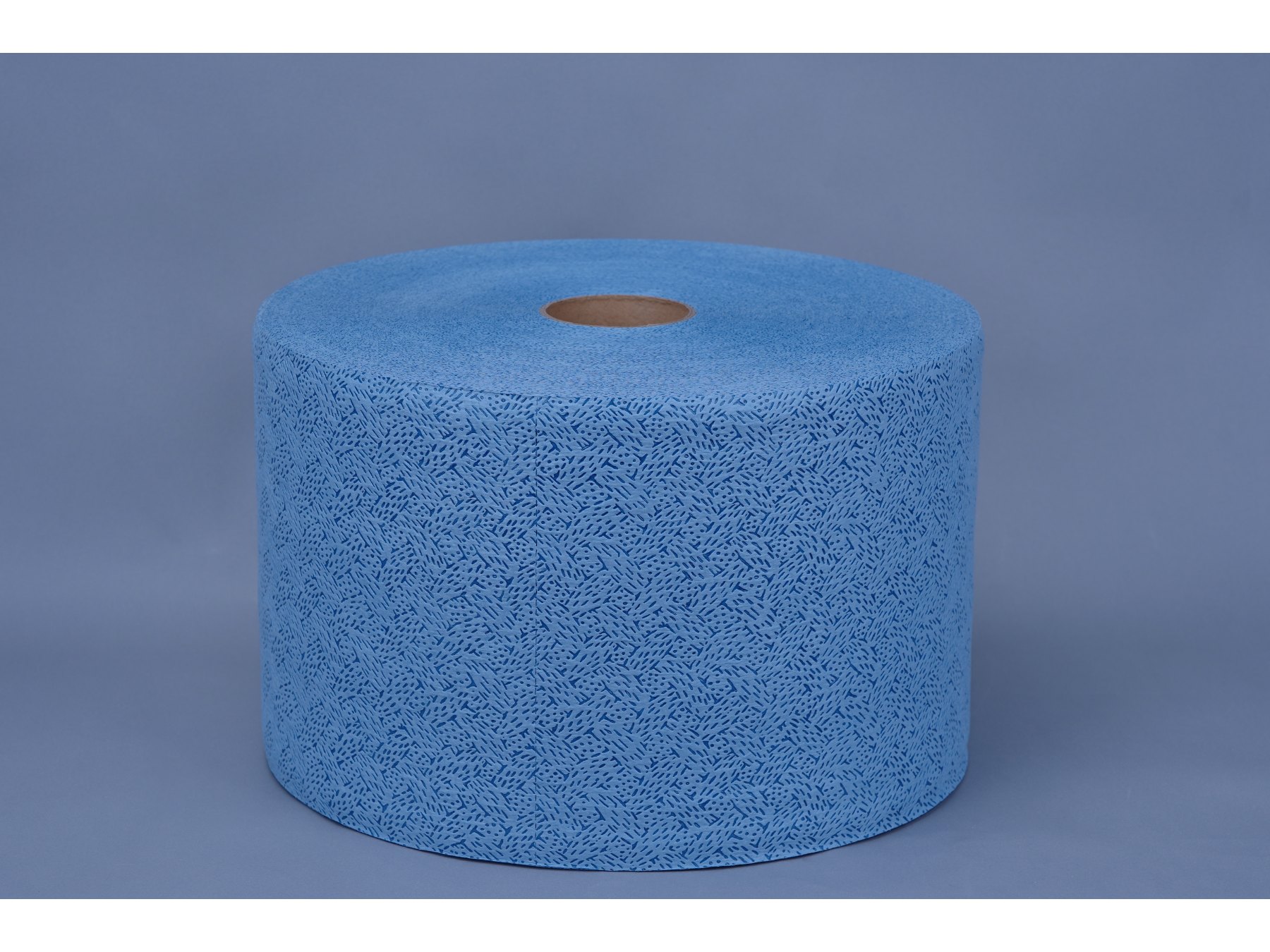
| SG2301 Pre-Wetted | 68gsm cellulose/polyester (CP), USP IPA + DIW | 9″×9″; 50 sheets/inner, 2 bags/outer | High-volume general wiping of machine exteriors and transfer parts at a lower cost per sheet |
| SWP2402 Polyester | 140gsm 100% polyester double knit, heat-sealed edge | 12″×12″; 20 sheets/pack, 5 packs/outer | Dry wiping where fiber control is critical; large surface coverage per sheet |
| SW5415 Nonwoven | 68gsm CP or melt-blown PP, knife-cut edge | 9″×9″; 50 sheets/pack, 3 packs/outer | Spill pickup, routine equipment wipe-down, cost-controlled general use |
The packaging column isn’t logistics — it’s a functional spec. Inner and outer bags exist so the outer layer can be removed at the airlock boundary and the inner carried into the suite. If your current wipes arrive in a single bulk bag, you already know the transfer story doesn’t end well.
Wiping Technique That Survives Validation Review
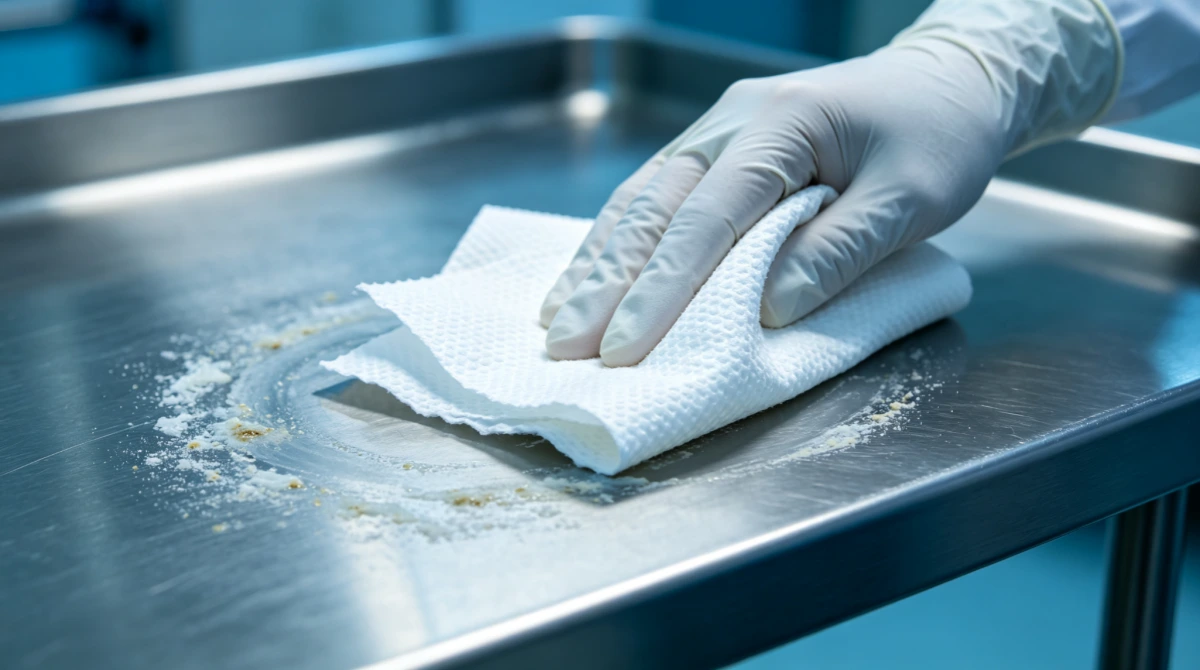
The best sterile wipe underperforms in the hands of a bad technique. The rules that survive validation reviews are simple, specific, and written in sheet-level detail — not in slogans:
- One direction, overlapping strokes. Wipe from the cleanest area toward the dirtiest, with each stroke overlapping the last by about 25%. No back-and-forth scrubbing — that just redistributes what you lifted.
- Fold, don’t bunch. Fold the wipe into quarters so you get eight clean wiping faces. A bunched wipe uses one face until it’s saturated and drags contamination across everything after.
- One surface, one wipe. The wipe that cleaned a drip tray never touches a filling guide. Budget sheets per intervention rather than per shift — it’s the cheapest habit in aseptic processing.
- Respect contact time. The surface must stay visibly wet for the validated contact time. Pre-wetted wipes make this predictable because saturation is consistent; hand-wetted ones rarely are.
Getting Sterile Wipes Into the Suite Without Breaking Them
Sterility is only as good as the transfer. The consumable arrives sterile in a double-bagged package; the question is what happens between the airlock and the point of use.
Standard practice: remove the outer bag at the transfer boundary, disinfect the inner per your sanitization SOP, pass it through the pass-through or air shower, and open it only at the point of use. Single use after that — a used wipe doesn’t go back in the bag “for later,” and an inner bag that’s been open across a shift boundary gets discarded.
Pre-wetted formats earn a specific advantage here. Because there’s no solvent handling inside the suite, the number of items crossing the boundary drops. The wipe carries its controlled dose of USP-grade IPA and DI water into the room — fewer objects, fewer movements, fewer interventions that have to be justified later. That’s the whole philosophy behind a contamination control strategy: remove variables instead of monitoring them.
The full sterile range — including sterile pre-wetted wipers, dry sterile wipers, sterile mops, swabs, and environmental sampling kits — lives in the sterile products catalog. If you’re qualifying consumables for a new line or rebuilding a media-fill plan, we’ll assemble the documentation set by SKU.
Who You’ll Work With at WIPESTAR
We supply sterile consumables to fill-finish sites where a single intervention wipe can decide a media fill. These are the people who normally handle the post-show follow-up, so you can ask the hard questions at the booth or on the call.

Juan — Purification Industry Specialist
Juan designs cleanroom consumable programs for aseptic facilities — he writes the wipe-format-by-intervention mapping that goes into the SOP, and he runs the media-fill-related consumable qualification reviews before first order.

Carolina — Product Specialist
Carolina runs wipe compatibility testing with your actual disinfectant rotation — IPA concentration stability, microfiber binder response to oxidizers, and how pre-wetted saturation holds across the labeled shelf life.

Lee — Key Account Sales Manager
Lee has served Foxconn, Samsung and Apple since 2018 — he manages multi-site consumable supply programs where documentation consistency, lot traceability and lead-time discipline matter as much as unit price.
Get Started with Sterile Pre-Wetted Wipers
Whether you’re replacing hand-wetting practice, qualifying consumables for a new filling line, or assembling documentation for an upcoming media fill, we can supply samples, lot-level data, and certificates of irradiation for evaluation.
- SG2202 Sterile Pre-Wetted Wipers — 200gsm microfiber, USP IPA + DIW, for critical intervention wipe-downs.
- SG2301 CP Pre-Wetted Wipers — lower-cost high-volume general wiping at the same sterility level.
- Request a Technical Consultation — Send us your intervention SOPs; we’ll map formats and packaging to each step.
Browse Sterile Products → Request a Custom Quote
Frequently Asked Questions