English
 Chinese



Disinfectant rotation programs everywhere start with the chemicals. Quats, peroxide, PAA, IPA — microbiology picks the spectrum, validation signs the kill claims, and everyone moves on. Almost nobody goes back and asks what those chemicals do to the mop.
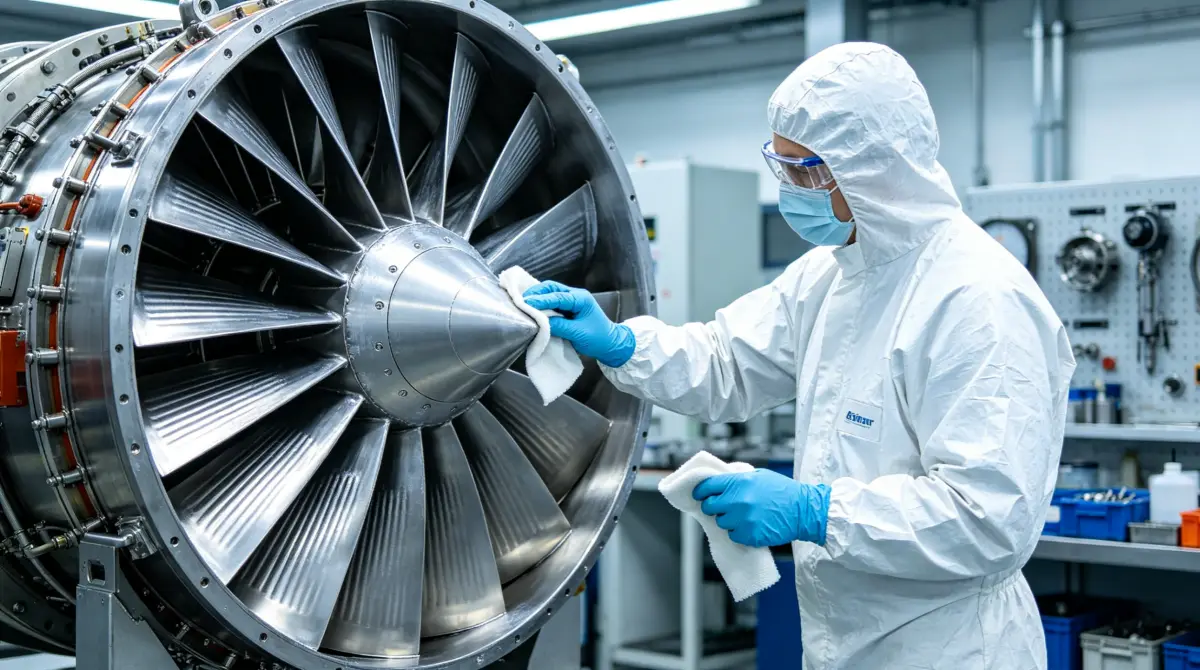
I sat through a CAPA at a biologics plant that chased exactly this. They’d added a peracetic acid sporicide to their routine rotation, validated the disinfectant efficacy on coupon surfaces, and put the PAA into service. Within six weeks, the daily floor swabs started drifting upward — not to action levels, but consistently above baseline, with a faint gray film on the white-glove pass nobody could source. They tried adjusting contact times, swapping brands, repositioning air returns. The root cause turned out to be six rows of identical microfiber mop heads that had been on the same cart since the quat-only era. PAA is an oxidizer, and oxidizers break down the polyester binder that holds the split microfiber together. The mop was still absorbing solution, but it was also shedding its own film onto every pass — and nobody in the rotation qualification SOP had listed the mop head as a variable. When they switched to sealed-edge polyester mop covers and re-ran the qualification, the floor swabs dropped back to baseline in two weeks.
That’s the clean secret of floor and wall cleaning: the mop isn’t just a tool that carries solution. It’s a consumable that has to survive every chemistry in your rotation. This guide is about sterile cleanroom mops and the systems around them — not “which mop to buy” but “how to spec a mop system that stays qualified after you change the disinfectant.”
Why Your Disinfectant Rotation Is a Mop Qualification Trigger
Disinfectant rotation is standard practice under EU GMP Annex 1 and USP <1072> — the sporicide and the daily cleaner have to swap to prevent resistance. But every chemistry has a different attack on cleanroom fabrics. Quats are gentle, peroxide and PAA are oxidizers, and sodium hypochlorite with rinse is corrosive over repeated contact. A mop head qualified for one chemistry isn’t automatically qualified for the next one in your rotation. The binder, the fiber, the construction — all of them interact.
That interaction wasn’t in the rotation SOP at the biologics plant. We fixed it with one line at the top of every disinfectant qualification: “Compatibility verified with approved mop systems. SKUs listed.” If the mop isn’t there, the qualification didn’t happen — it was assumed. The same applies the other way: if the mop supplier changes fabric or binder without telling you, the qualification gets revisited, regardless of what the certificate says.
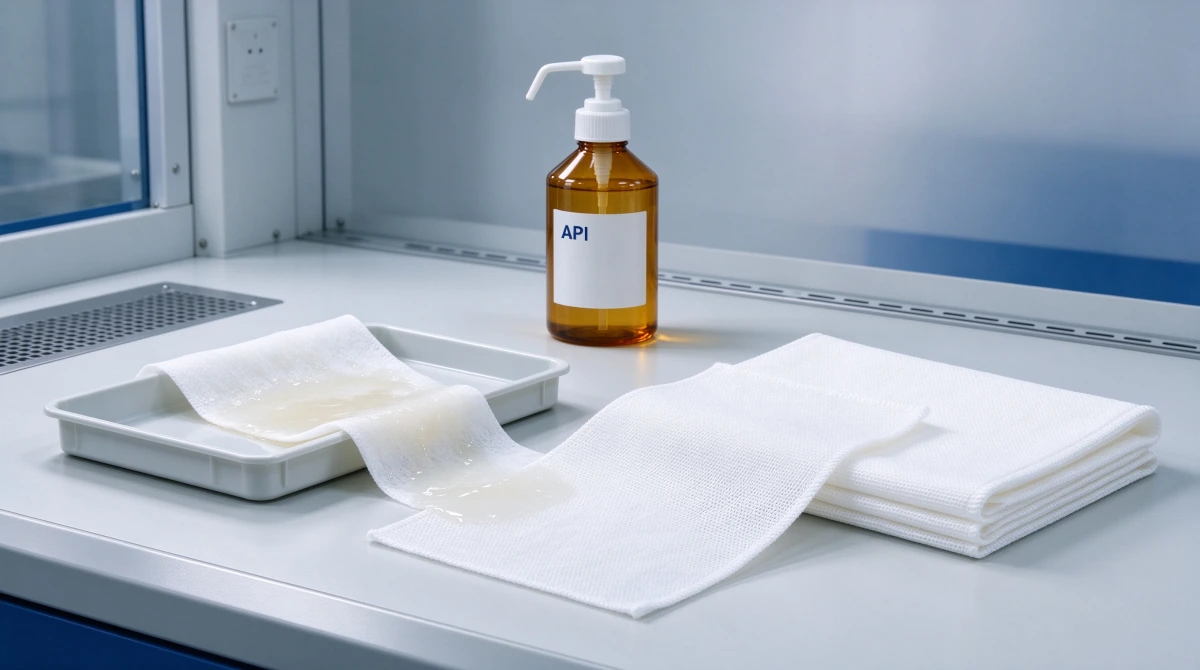
For the rotation science side — what quats, IPA, peroxide and PAA each do to wipers and mop covers — see our companion guide on disinfectant rotation and wipe compatibility. The mop head lives in the same materials ecosystem; it deserves the same review.
Mop Systems: Flat, String, Microfiber, Sterile — and Why Binder Matters
Cleanroom mopping isn’t janitorial mopping with nicer equipment. The tool has to shed nothing itself, hold and release solution on demand, and survive the chemistry you run. The main systems:
| System | Where It Fits | Key Properties | Compatible Chemistries |
|---|---|---|---|
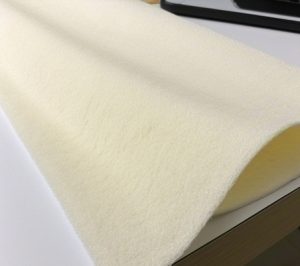
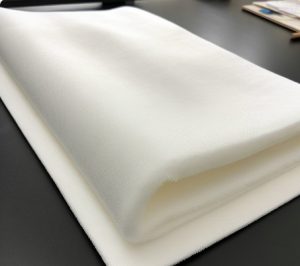
| SW5603 Microfiber (launderable) | Controlled-area floors and walls, daily cleaning | Split-fiber capture, silver-ion treated, four zone colors | Quats, IPA, alcohols. Verify PAA/peroxide compatibility per supplier data — microfiber binder is the weak point under oxidizers |
| Sterile flat mop covers | Grade A/B-adjacent floors, post-disinfection passes, isolator surrounds | Gamma-irradiated, single-use or single-session, sealed-edge polyester | Full rotation including PAA and peroxide — polyester holds up to oxidizers where microfiber may not |
| String / wet mop | Large general controlled areas, heavy spill pickup | High liquid capacity, faster coverage | Zone-separated — never cross from uncontrolled to controlled |
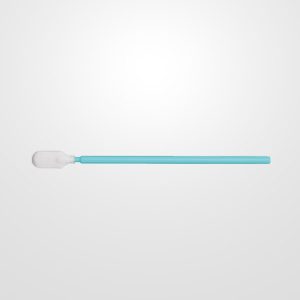
| Spot & detail wiping | Coving, wall bands, equipment footprints, edges | Precision, single-use, no cross-zone risk | SW5415 sterile nonwoven — pair with chemistry specific to the zone |
The binder is the quiet star of this table. Microfiber mop covers rely on a polymeric binder to hold the split fiber structure together. That binder — not the fiber itself — is what oxidizers attack first. A mop rated only against IPA might hold its surface cleanly and quietly shed micro-fibers once PAA enters the rotation. Polyester sealed-edge covers are different: the fiber is thermally bound, so oxidizers find less to attack. That’s why the biologics plant switched mop covers, not mop handles.
Zoning and Color Coding: Four Colors, One Logical Model
Every controlled facility has zones with different tolerances, and the mop fleet has to respect the boundaries. The simplest working model:
- Dedicate by zone. Grade B and cleaner floors get their own equipment; corridors and change rooms get theirs; uncontrolled areas never share with either. The mop that visits a warehouse doesn’t return to the suite — that’s not cross-contamination risk, it’s a definite contamination event waiting to happen.
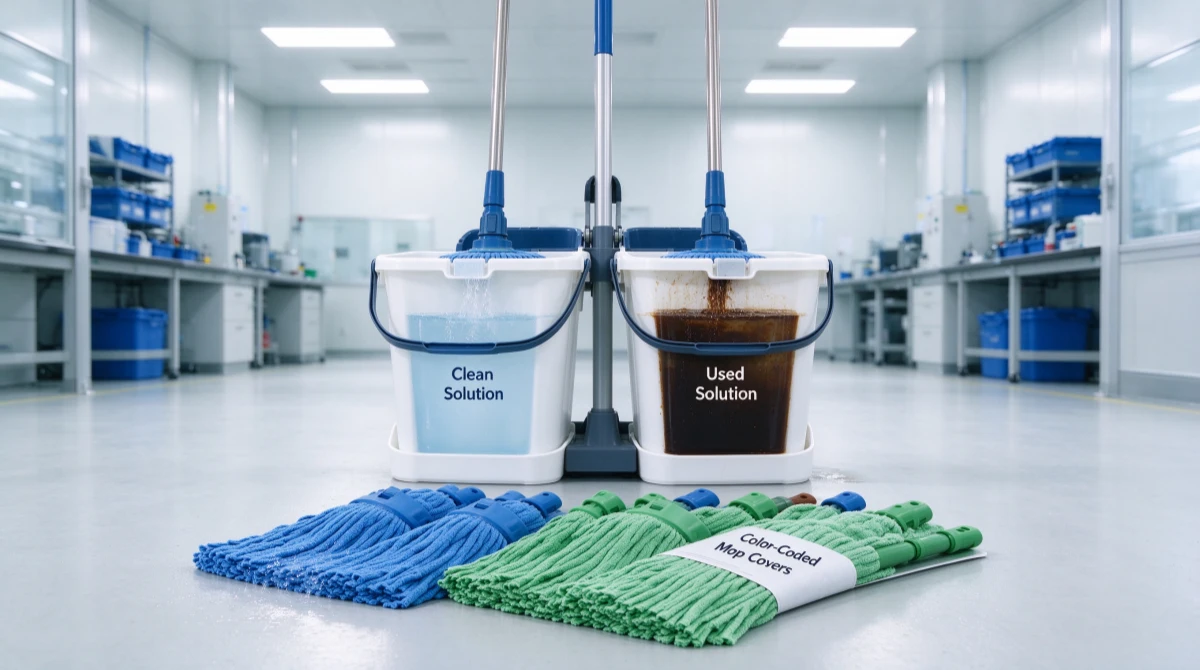
- Color-code everything. Handles, frames, buckets, and cloth colors all map to zones. When the SW5603 comes in yellow, blue, green, and red, that’s not aesthetics — it’s a zone assignment waiting to be written into the SOP. The biologics plant used this to prevent the old microfiber (yellow, Grade C/daily) from finding its way back onto the Grade B floor after the PAA was introduced.
- Move clean to dirty. Always start in the highest-grade room and work outward. The same principle as wipe-down direction: contamination flows one way, and it’s away from the product.
- Sterile transfer for sterile tools. Sterile mop covers enter through the standard transfer route — outer bag removed at the boundary, disinfection per SOP, inner opened at the point of use. A sterile mop cover is only sterile if its packaging was sterile too.
The Two-Bucket Discipline: How Single Solutions Turn Floors Into Reservoirs
Every floor-cleaning failure I’ve investigated included a single-bucket system somewhere. One bucket, one solution, one mop, repeated use until the bucket looks too dirty to keep going. That system doesn’t clean — it redistributes. After twenty square meters, the solution is part cleaning chemistry and part what the mop just picked up from the floor. You’re mopping with contaminated disinfectant.
The two-bucket discipline is the cheapest upgrade in cleanroom floor care, and it’s non-negotiable once you write it down:
- Bucket 1: Fresh, labeled solution — same chemistry as your rotation, mixed per SOP.
- Bucket 2: Wringer for what the mop picks up. Wring completely before re-dipping into Bucket 1.
- Solution change frequency. Written in square meters per bucket, not “when it looks dirty.” Solution that looks fine has been biologically and particulate-loaded for a while before it looks wrong.
- Figure-eight strokes, frequent mop-face changes. Flooding the floor is not cleaning it. Excess solution finds seams, coving and equipment feet, and dries into exactly the residues contact plates love to find. Overlap strokes, flip the mop face regularly, and change covers per zone or per shift.
Validation: Three Measurements That Prove the Floor Is Actually Clean
Cleaning that isn’t measured is a costume. Three measurement tools make it a process:
Surface monitoring. Contact plates or swabs at fixed floor and wall locations, on a trend. This is where floor cleaning meets your environmental monitoring program — if the locations you mop daily are the locations that drift, the mop system is the variable to examine first. IEST-RP-CC018 covers exactly this surface-monitoring logic.
Visual and residue checks. The white-glove pass and the residue wipe. Films left by over-concentrated disinfectant or dirty solution show up on a clean wipe long before they show up as an EM excursion. The biologics plant’s PAA-induced microfiber film was found first this way — a faint gray on the sterile nonwoven wipe, then EM confirmed it.
Consumable qualification. Lint and particle release for the mop fabric, compatibility with your full disinfectant rotation (quats, peroxides, PAA, alcohols), and gamma validation plus lot traceability for sterile formats. If the mop changes supplier or fabric, the qualification gets revisited — silently changed mop fabric is how “validated cleaning” quietly stops being validated. ISO 14644-3’s recovery test is the broader room validation anchor, but floor cleaning has to be a documented part of the room’s steady-state before recovery is even measured.
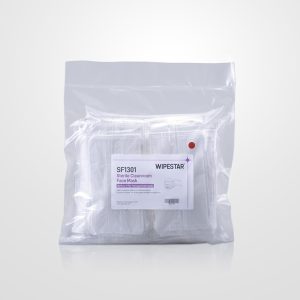
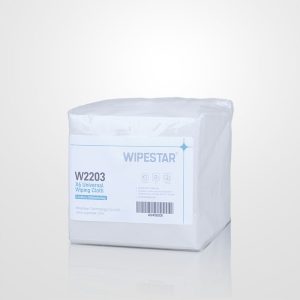
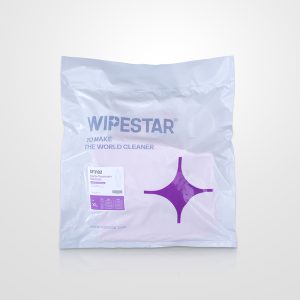
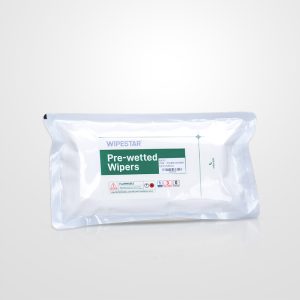
WIPESTAR supplies the floor-cleaning stack for controlled environments — sterile mop covers, color-coded microfiber systems, sterile nonwoven wipers for detail work, and the pre-wetted sterile formats that finish critical passes. Browse the sterile products catalog, or talk to us about a zone-by-zone floor cleaning set with documentation to match.
Who You’ll Work With at WIPESTAR
We make disinfectant-compatible mop covers — which means we’re used to the conversation nobody else has: “will this fabric survive our rotation of quats, peroxide and PAA?”

Juan — Purification Industry Specialist
Juan has delivered cleanroom floor-cleaning programs for pharma and biotech clients — he knows the mop head is part of the disinfectant qualification, not a separate purchase order line item.

Carolina — Product Specialist
Carolina runs the compatibility soak test with your actual rotation chemistries — PAA, peroxide, quats, IPA — and tells you which mop heads survive, which ones degrade quietly, and how long the binders hold.

Ethan — Sales Director
Ethan has over 20 years in the industrial wiping cloth and cleanroom consumables industry — he leads the team that maps mop systems to zone structures and rotation chemistries across multi-site frameworks.
Get Started with Floor and Wall Cleaning
Whether you’re fixing a floor EM trend, standardizing color-coded mop systems, or adding sterile mop covers to a Grade B surround, send us your zone map and disinfectant rotation list and we’ll spec the compatible system.
- Sterile Cleanroom Mops — gamma-irradiated sealed-edge polyester covers for Grade A/B surrounds.
- SW5603 Antibacterial Microfiber — silver-ion, four zone colors, daily controlled-area cleaning.
- Request a Technical Consultation — Send the zone map and rotation list; we’ll run the compatibility soak test.
Browse Sterile Products → Request a Custom Quote
Frequently Asked Questions