English
 Chinese



Every environmental monitoring program has a moment where the data stops matching the room. One site I consult for ran that moment for three weeks straight — and the swab box was the reason the investigation dragged on long enough for the real problem to hide underneath it.
A Grade A filling line in south Spain was hitting alert levels on viable surface swabs near one specific HEPA diffuser on the ceiling. The trend drifted but never tripped action — so nobody looked until it did. When it finally hit action, QA swabbed again with what they thought was a sterile swab, got another positive, and declared the ceiling seal the root cause. They changed the seal, re-swabbed, got the same result. It took four weeks and a fresh QA consultant to look at the swab cabinet: the outer label on one box said “sterile,” but the inner bags bore the lot number of a non-sterile lot that had lingered for nine months. The positive wasn’t from the ceiling diffuser. It was from the swab. The seal change was a wasted six weeks of downtime — and the real ceiling problem (a diffuser frame that leaked on high-airflow shifts) stayed buried because the consumable was contaminating the data before the surface ever had a chance.
That investigation taught two lessons most EM programs learn too late. First: a sampling result is only as trustworthy as the consumable that collected it. Second: swab selection itself is a decision point most QA programs skip — they grab “sterile swabs” without thinking about tip material, stem size, ESD rating and TOC background, then wonder why the recovery study won’t validate. This guide ties both lessons together with the actual cleanroom swabs WIPESTAR builds: what to sample, which swab to reach for, and how to make sure the consumable never lies to you again.
What Environmental Monitoring Actually Measures
EM answers two questions about your cleanroom, and it has two eyes to see them with:
- Non-viable particulate monitoring counts airborne particles by size in real time. It’s the number your ISO 14644-1 classification is built on, and it catches physical events fast — a door left open, a torn gown, a failing filter seal.
- Viable monitoring catches microorganisms: active air sampling onto growth media, settle plates for fallout, and surface monitoring with contact plates or swabs. This is the data set EU GMP Annex 1 §117–121 and EN 17141 read most closely, and the one that connects directly to product sterility risk.
Both operate on alert and action levels — your own in-house limits below the regulatory maximum. An alert level says “trend is drifting, look at it.” An action level says “investigate and act.” The mistake is treating every result as pass/fail against the action limit. A room that lives permanently just below action level is not a room in control. It’s a room that hasn’t been given a reason to improve — yet.
Why the Swab Is Part of the Measurement Chain
Here’s the part that nearly killed the south Spain investigation: a sampling result is only as trustworthy as the consumable that collected it. A non-sterile swab can carry the very organism you’re trying to detect — creating a false positive that drives needless downtime. A swab with trace contamination from a damaged seal or poor storage does the same thing. The consumable isn’t a neutral tool. It’s the first link in the measurement chain.
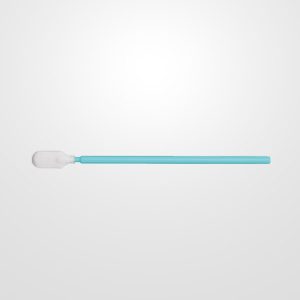
That’s why WIPESTAR builds swabs by application: foam tips for general surface sampling, polyester tips for detail work, ESD-rated variants for electronics and semiconductor environments, and specialized low-carbon swabs for TOC cleaning validation. Every model is lot-coded and traceable. The sterile subset is gamma-irradiated and paired with sampling kits for Grade A/B use. Full documentation — bioburden data, sterility testing, particle release and recovery validation — accompanies every shipment.
Cleanroom Swab Buyer’s Guide: Tip Material & Size
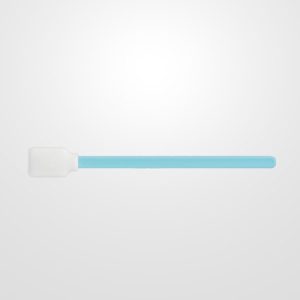
The cleanroom swab product page shows eight distinct SKUs on the first page alone, spanning two tip materials and four size ranges. Most QA programs buy one foam swab and one polyester swab per room, call it done, and skip the ESD and TOC variants entirely. That’s where specificity pays off. Here’s how each WIPESTAR model actually fits:
| Model | Tip Material | Size Range | Best For |
|---|---|---|---|
| WFS707 (Hot Search) | Polyurethane Foam | 120–140mm | General viable surface swabbing — good contact area, moderate rigidity, the default for most Grade B/C zones |
| WFS712C (Hot Search) | Polyurethane Foam | 140–160mm | Long reach for deep crevices and behind equipment — the longest in the foam line-up, ideal for filling needles and guide rail undersides |
| WFS758 (Hot Search) | Polyurethane Foam | 60–80mm | Compact detail work — small-diameter ports, valve seats and tight corners where a full-length swab can’t maneuver |
| WFS761 | Polyurethane Foam | 80–100mm | Balanced middle size — the go-between for WFS758 detail work and WFS707 general surfaces |
| WPS741 | Polyester | 80–100mm | Low-lint detail cleaning — polyester tips shed far less fiber than foam, so this is the choice for optical and sensor surfaces where particle release would skew particulate EM data |
| WEPS740 (ESD) | Polyester | 160–180mm | ESD-rated for semiconductor and electronics environments — dissapative stem material prevents static discharge while you’re swabbing a wafer carrier or connector |
| WFS706 | Polyurethane Foam | 80–100mm | Mid-range foam for routine maintenance and general cleanroom surface detail — paired with foam-tip WFS707 for mixed zone work |
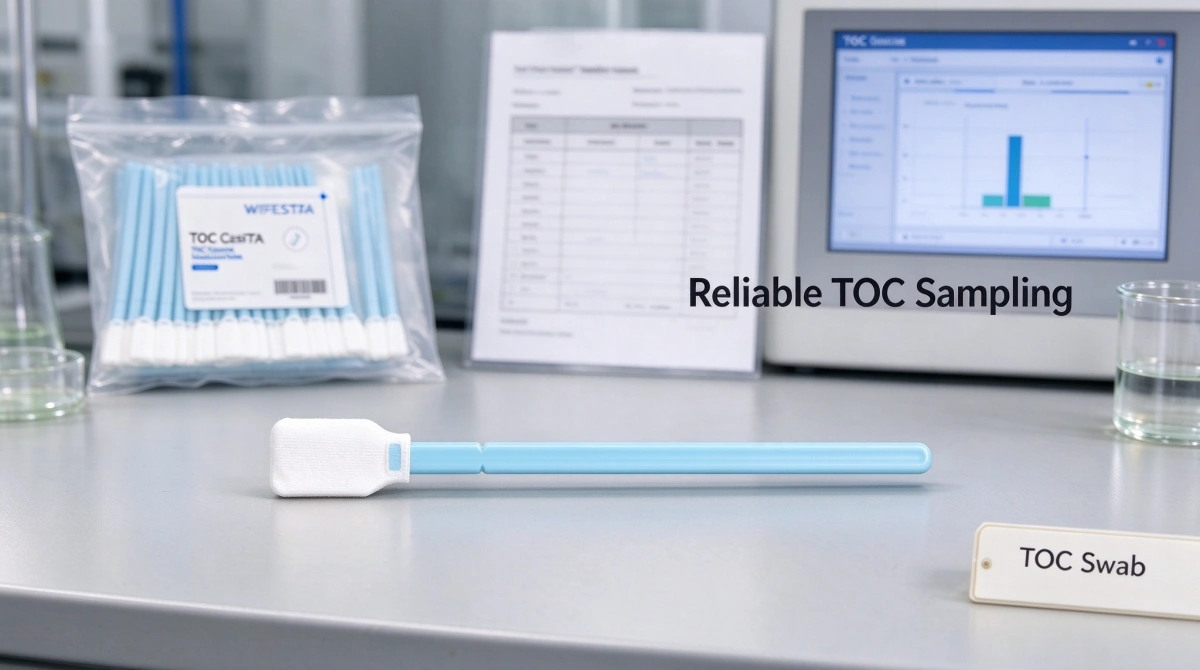
| WTCPS712A (TOC) | Low-background substrate | Validation-specific | TOC cleaning validation recovery testing — the substrate delivers minimal background carbon, so the number you get reflects the equipment surface, not the swab itself |
What the table isn’t showing but matters: polyurethane foam tips are inherently softer, leave less residue, and work well on delicate surfaces. Polyester tips are stiffer, shed less fiber, and hold up better on textured or harder surfaces. The ESD-rated WEPS740 adds the crucial static-dissipative stem — a non-trivial distinction in semiconductor fab environments where a charged swab can damage an IC even if the swab itself is perfectly clean.
Mapping Swabs to Monitoring Tasks
Most EM programs don’t need eight swab SKUs across every location — but every program needs specific swabs at specific locations. Here’s a realistic assignment using actual WIPESTAR products for a single Grade A/B filling line plus its support zones:
| Task | Monitoring Method | Swab / Consumable | Why This One |
|---|---|---|---|
| Filling needle zone (Grade A) | Viable surface swab, post-intervention | WFS712C (foam, 140–160mm) | Long reach, foam tip for gentle surface contact, size fits the guide rail underside and needle crevices that shorter swabs miss |
| Stopper bowl area | Viable surface swab | WFS758 (compact foam, 60–80mm) | Compact size for small-diameter bowl ports and valve seats where the full-length WFS707 can’t maneuver |
| Optical sensor / inspection camera | Low-lint surface swab | WPS741 (polyester, 80–100mm) | Polyester tip sheds almost zero fiber — critical when particle counts on the sensor surface would skew your non-viable particulate monitoring data |
| Wafer carrier / connector (ESD zone) | ESD-safe dry swab | WEPS740 (ESD polyester, 160–180mm) | Dissipative stem material prevents static discharge during sampling; semiconductor and electronics zones specifically |
| Support zone general surfaces | Routine viable swab | WFS707 (120–140mm foam, Hot Search) | The default workhorse — good contact area, moderate rigidity, the model most facilities standardize on for day-to-day Grade B/C sampling |
| Cleaning validation (TOC recovery) | TOC surface swabbing | WTCPS712A | Low-background substrate ensures the carbon reading reflects residue on the equipment, not extractables from the swab itself — validated recovery data comes with every lot |
Every row in that table answers two questions the south Spain site never asked: which swab and why this one. The consumable isn’t generic. It’s specific to the surface, the risk, and the type of data you need. When the site had grabbed “sterile swabs” from a box without checking lot numbers or material, they’d already broken the chain.
Sampling Technique That Produces Defensible Results
Most EM deviations I’ve seen weren’t instrument failures. They were technique failures that made the data unusable or misleading:
- Don’t sample with the hand that touches everything. Gloved hands change between clean and dirty tasks. The swab that gets touched before it touches the surface has already invalidated itself.
- Standardize the swab pattern. A defined area (typically 25cm² or 100cm²), consistent pressure, overlapping strokes in two directions. “Swabbed the table” is not a method.
- Label at the point of sampling. Location, time, operator, and lot number of the swab used. Chain of custody is created at the bench, not reconstructed at the lab.
- Respect exposure and transport. Settle plates get closed on time; active air samples get incubated per your procedure; nothing sits in a warm corridor waiting for a courier.
- Sample before and after interventions. Routine sampling tells you the baseline; sampling before and after interventions tells you what your process actually does to the room.
The swab’s tip material itself changes the technique. Polyester like the WPS741 is stiffer — good for textured surfaces where foam skips, but it has to be used with lighter pressure to avoid scratching. Foam like the WFS707 is softer — great for delicate optical surfaces, but it absorbs more liquid and can become saturated faster in wet-bench zones. The ESD-rated WEPS740 has a dissipative stem, so you don’t have to worry about a charged swab damaging a wafer carrier mid-sampling. Knowing which swab you’re holding is knowing how to use it correctly.
Who You’ll Work With at WIPESTAR
We design cleanroom swabs for specific monitoring and cleaning tasks — so we can help you map the right model to each location on your floor plan, not just sell you one foam swab per room.

Juan — Purification Industry Specialist
Juan designs environmental monitoring programs for aseptic facilities — he writes the location-by-location swab assignment that goes into the SOP, and he tests recovery data against your method’s detection limit before first order.

Carolina — Product Specialist
Carolina runs swab particle-release, bioburden and background-carbon verification — she verifies the foam or polyester tip you’re buying contributes less contamination than your monitoring method can detect.

Zac — Customer Service
Zac handles swab kit logistics — quarterly scheduled shipments, lot-numbered packaging, and same-day quotes for programs that need stock on a tight turnaround.
Get Started with Cleanroom Swabs
Whether you’re building an EM program for a new suite, qualifying a second source of swabs, or standardizing TOC recovery testing across validation campaigns, we can supply samples, lot documentation and swab-to-task mapping for evaluation.
- WFS707 Foam Swabs — the default workhorse for general viable surface sampling.
- WPS741 Polyester Swabs — low-lint detail work on optical and sensor surfaces.
- WTCPS712A TOC Swabs — low-background carbon for cleaning validation recovery testing.
- Request a Technical Consultation — Send us your monitoring plan; we’ll map swab SKUs to each location.
Browse Cleanroom Swabs → Request a Custom Quote
Frequently Asked Questions