English
 Chinese



What’s the most expensive consumable mistake in aviation MRO? It’s not buying the wrong torque wrench or over-ordering safety wire. It’s the wipes.
$15,000. That’s what a single fiber cost one MRO facility in Singapore.
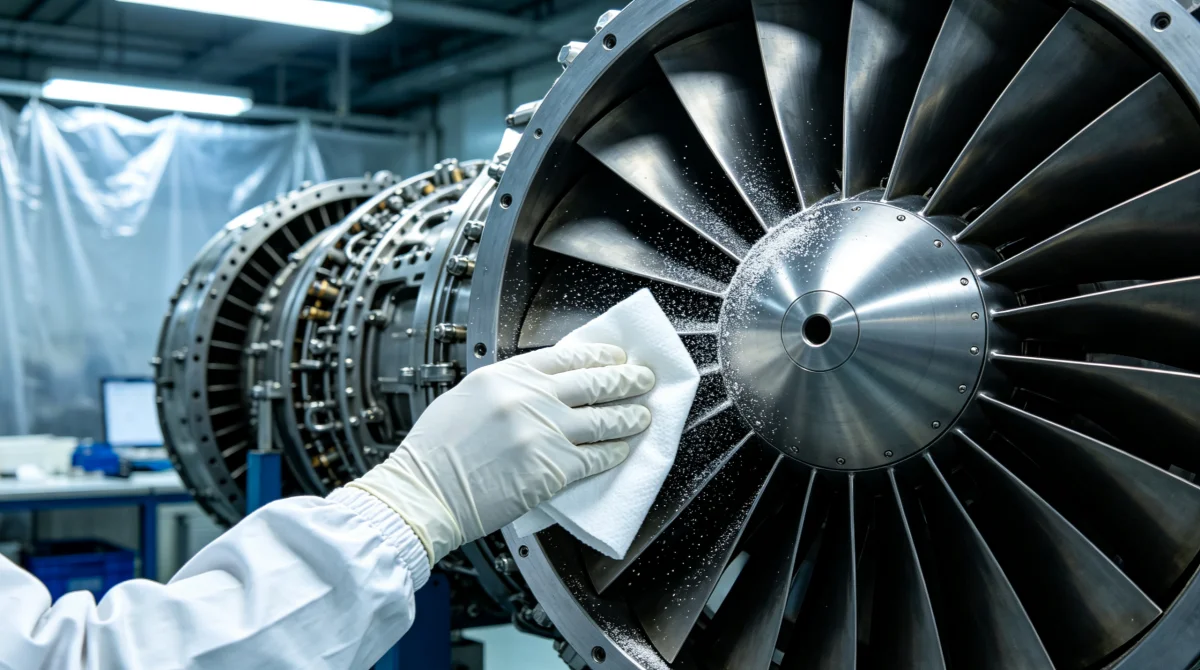
A CFM56-5B was going back together after a hot section inspection at a Part 145 facility near Changi. Quality control was doing their final walkthrough before the engine went to the test cell. The inspector—a woman who’d been doing turbine work for twelve years—spotted something on the trailing edge of a first-stage high-pressure turbine blade.
A fiber. Less than 3mm long. Under any other circumstance, nobody would have blinked. But HPT blades operate at 1,100°C with thermal barrier coating, and any organic material trapped under the TBC creates a stress concentration point that propagates under thermal cycling. The blade’s CMM had zero tolerance for visible contamination post-coating.
The blade was rejected. Replacement lead time from the OEM was eleven days—the engine sat. The MRO facility absorbed the cost: two extra days of shop time, a delayed engine return, and a customer who was not happy. And it all traced back to the wipe they’d used to clean the blade after coating inspection.
Here’s the thing: aviation MRO operates under quality assumptions that would seem paranoid in any other industry. Every component that goes back into an aircraft has been inspected, documented, and certified to standards that presume human lives depend on the outcome—because they do. There’s no “good enough” in this business.
Your cleaning consumables sit inside that quality chain whether you’ve thought about it or not. A wipe that sheds fibers onto a turbine blade, leaves chemical residue on an avionics connector, or deposits abrasive particles on a composite surface is a safety risk. Full stop. No inspection process can fully catch it after the fact.
What follows is a guide for MRO quality managers, engine shop supervisors, and aviation maintenance professionals. We’ll get into wipe selection by work area, particle cleanliness requirements, NADCAP and AS9100 documentation, and the expensive mistakes that keep showing up at MRO facilities around the world.
The Stakes Are Different in Aviation
In most industries, a consumable defect means rework. Scrap. A customer complaint, maybe a credit note. In aviation, the same defect can cause a catastrophic failure in flight.
A single fiber on a turbine blade creates a crack initiation point that propagates under thermal cycling. Chemical residue on an electrical connector causes an intermittent fault that only manifests at 35,000 feet, where the temperature is -55°C and the pressure is a third of sea level. Abrasive particles on a composite surface delaminate a structural repair under flight loads that the repair was specifically designed to handle.
The regulatory framework reflects this. AS9100—the quality management standard for aerospace—requires full traceability of every material used in maintenance and repair. Not “most materials” or “critical materials.” Every material.
NADCAP layers on top of that with process-specific requirements for NDT, welding, heat treatment, and surface treatment, each with its own consumable specifications. The FAA, EASA, and other civil aviation authorities require that every material used in maintenance is documented in the maintenance record.
So when someone asks “Can I just use regular industrial wipes in my engine shop?” the answer is technically yes, you can physically do it. I’ve seen shops do it. But you’re operating outside your quality system, you have no traceability, and if anything goes wrong—any fiber, any residue, any contamination event—you have no documentation to demonstrate what you used and why. In aviation, that’s not a paperwork problem. It’s a compliance violation that can pull your certificate.
Matching Wipes to MRO Work Areas
MRO facilities aren’t monolithic. An engine shop has completely different contamination risks than an avionics bench or a composite repair bay. Lumping them together under one consumable specification is a mistake—one that I see regularly, and one that auditors notice.
Engine Shop — The Highest Stakes
Engine overhaul is the most wipe-intensive operation in MRO. Turbine blades, combustion chambers, nozzle guide vanes, bearing housings—each component goes through multiple cleaning steps during disassembly, inspection, and reassembly.
The wipe requirements vary by component. A turbine blade in the hot section has zero tolerance for organic residue. A bearing housing needs oil absorption and solvent compatibility. A fuel nozzle needs lint-free performance at tight tolerances. One wipe type doesn’t cover all of these. The engine overhaul section below breaks down the specifics.
Avionics Shop — Fiber, Residue, and Static
Avionics work is a different animal entirely. You’re dealing with LRUs, circuit cards, cannon plugs, wiring harnesses, and display units—components where a fiber bridging two pins on a fine-pitch connector causes a short circuit, chemical residue on a cannon plug pin causes corrosion and intermittent contact, and a static discharge from an insulative wipe destroys a semiconductor junction permanently.
The wipe requirements here are lint-free, chemical-free, and ESD-safe. And honestly, if your avionics shop is pulling wipes from the same bin as the engine shop, that’s a problem waiting to happen. I’ve walked into shops where the same bag of rags was used from the engine bay to the instrument panel. That’s not cutting corners—that’s gambling.
Airframe and Structural Repair — Surface Prep
Airframe work centers on fastener installation, sealant application, paint touch-up, and structural inspection. The wipe requirements focus on surface preparation: removing sealant residue, cleaning around fastener holes, getting surfaces ready for paint or sealant.
Silicone-free wipes are mandatory for any surface that will be painted or sealed—silicone contamination causes fisheye defects in paint and adhesion failure in sealant. This isn’t a “nice to have” specification. It’s an airworthiness requirement.
Composite Repair — Zero Tolerance for Silicone
Composite structures—carbon fiber, fiberglass, Kevlar—are increasingly common in modern aircraft, and they’re extremely sensitive to contamination. Even trace amounts of silicone on a composite repair surface cause adhesion failure in repair patches and secondary bonds.
The wipe specification for composite surface prep is identical to aircraft painting: silicone-free, lint-free, and verified by supplier declaration. No shortcuts, no “close enough.”
Particle Cleanliness: What Turbine Blades Actually Require
Different engine components have different wipe specifications, and lumping them together is a recipe for either over-specifying (wasting money) or under-specifying (creating risk). Here’s the breakdown:
Turbine blades in the hot section operate above 1,000°C. Any organic residue—oil, finger grease, fiber fragments—creates a stress concentration point that can initiate a crack under thermal cycling. The wipe requirement is severe: sub-500 particles per cm², zero organic residue, lint-free under 10x magnification. Some OEMs tighten this further—Rolls-Royce and GE both have internal specs that go beyond the general CMM guidance. The component maintenance manual specifies the requirement, and you follow it. No improvising.
Combustor liners and nozzle guide vanes accumulate heavy carbon deposits during service. After chemical stripping—typically alkaline bath at 80–90°C—a wipe-down removes residual stripping compound and carbon fines. The wipes need chemical resistance to alkaline strippers, high absorbency for carbon sludge, and enough durability to handle scrubbing without falling apart mid-wipe. A wipe that disintegrates inside a combustor liner is worse than no wipe at all.
Bearing housings and gearboxes are oil-wetted surfaces that need degreasing before inspection. You need wipes with real oil absorption capacity, lint-free performance, and compatibility with degreasing solvents—typically kerosene or hydrocarbon-based.
Fuel nozzles and hydraulics are precision components with tight tolerances, requiring lint-free wipes with no fiber release and chemical compatibility with jet fuel and hydraulic fluid (MIL-PRF-23699, MIL-PRF-83282).
| MRO Work Area | Key Contamination Risk | Wipe Requirement | Critical Standard |
|---|---|---|---|
| Turbine blades (hot section) | Fiber, organic residue | Sub-500 particles/cm², zero residue | CMM specification, AS9100 |
| Combustor / nozzle guide vanes | Carbon fines, stripping compound | Chemical resistant, high absorbency | NADCAP surface treatment |
| Bearings / gearboxes | Oil, metallic particles | Oil absorption, lint-free, solvent compatible | CMM, AS9100 |
| Avionics / connectors | Fiber, residue, static | ESD-safe, <100 fibers/m², <50 ppm residue | IEST-RP-CC004, AS9100 |
| Composite surfaces | Silicone, fiber | Silicone-free declared, virgin material | OEM paint spec, AS9100 |
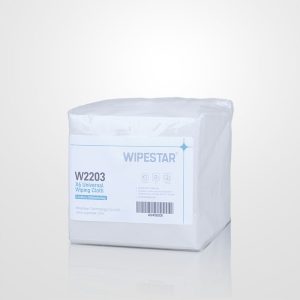
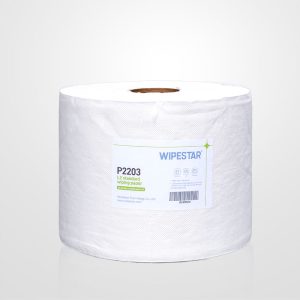
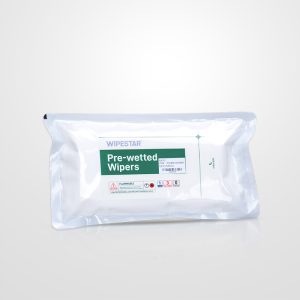
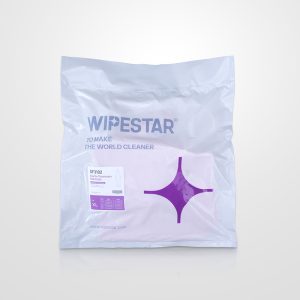
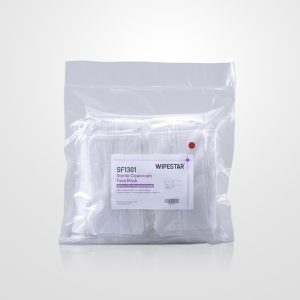
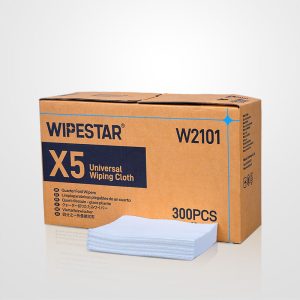
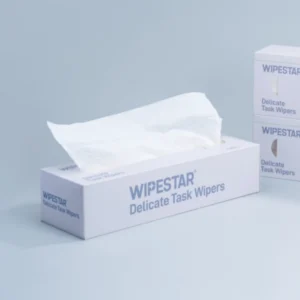
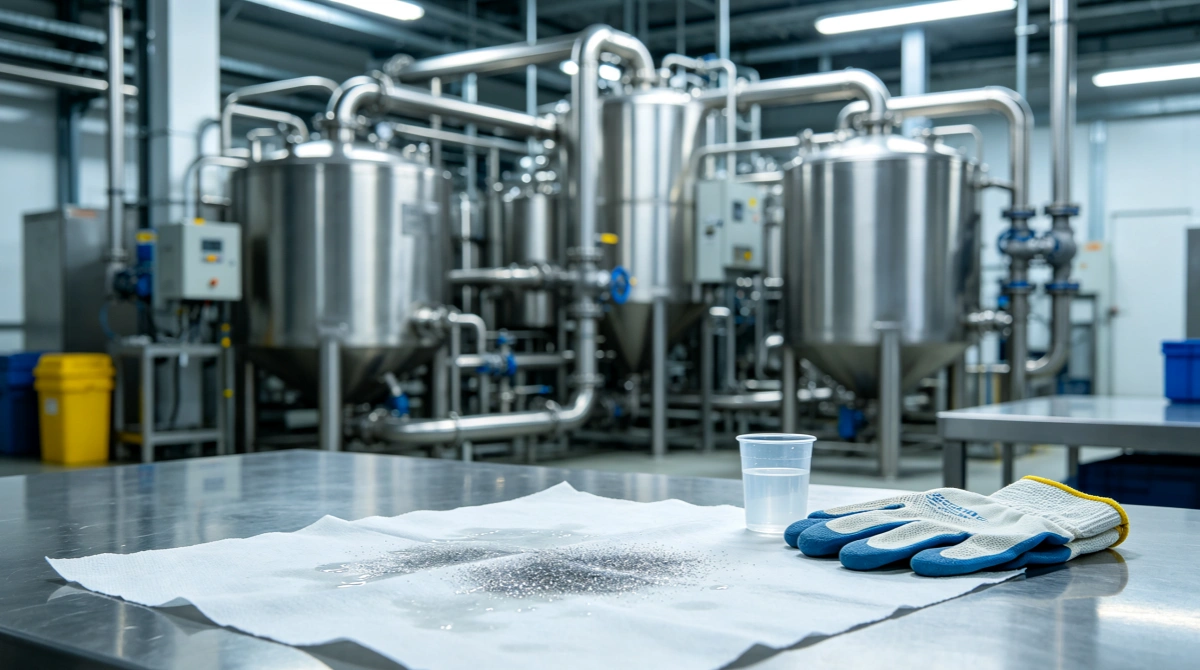
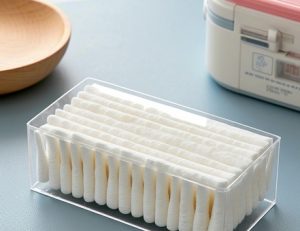
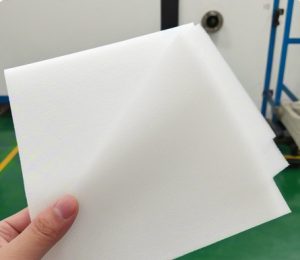
Our wiping cloths range includes products with particle cleanliness levels suitable for aerospace applications. Our technical team can recommend specific products based on the CMM requirements of the component you’re maintaining.
Protecting Avionics from Your Own Wipes
Avionics components are vulnerable to three contamination types, and each one causes a different kind of failure. Fiber bridging two pins on a fine-pitch circuit board causes a short circuit. Chemical residue on a connector pin causes corrosion that produces intermittent contact—arguably the worst kind of fault, because it comes and goes and is nearly impossible to reproduce during troubleshooting. Static discharge from an insulative wipe destroys a semiconductor junction instantly and permanently.
Avionics wipes need to be genuinely lint-free—below 100 fibers per m², tested per IEST-RP-CC004. Not “reduced lint” or “low lint.” Actually lint-free. Extractable residue below 50 ppm total: no surfactants, no softening agents, no processing chemicals left over from manufacturing.
Surface resistivity in the dissipative range: 10⁶–10⁹ ohms/square, which prevents charge buildup while allowing controlled discharge. And chemical compatibility with your cleaning solvents—IPA, HFE (hydrofluoroether), n-propyl bromide—whatever your shop uses, the wipe must not degrade or release extractives when wetted with those agents.
Silicone and Composites: Why There’s Zero Margin
Composite repair surfaces are the most silicone-sensitive environment in aviation. A repair patch that fails to bond because of silicone contamination on the parent surface is an airworthiness issue—the repair doesn’t meet its design strength per SRM, and the aircraft can’t return to service until the repair is stripped, the surface is re-prepped, and a new patch is cured. That’s not a rework. That’s a grounded aircraft and a very uncomfortable conversation with the customer.
For composite surface preparation, you need three things:
A silicone-free declaration from the supplier covering the wipe material, processing aids, and packaging—no silicone at any stage of the supply chain. Virgin-material wipes with no recycled content, because recycled materials carry unknown contaminants from their previous industrial life. And individual packaging or sealed dispensing to prevent airborne silicone contamination from nearby paint or sealant operations.
NADCAP, AS9100, and the Documentation Stack
Aviation MRO documentation requirements are among the most demanding of any industry. FAA Part 145, EASA Part 145, AS9100, and NADCAP all pile on top of each other. This is what you need on file for every consumable in your facility:
CMM compliance. If the component maintenance manual specifies a particular wipe material, grade, or specification, you must use that exact product. Substitutions require engineering approval, documented in the maintenance record.
AS9100 traceability. Every consumable used in maintenance must be traceable to its lot number, supplier, and specification. Link wipe lot numbers to the maintenance work order.
NADCAP special process documentation for NADCAP-accredited processes—NDT, welding, heat treatment, surface treatment—where the consumable must be listed in the process specification and approved by the NADCAP auditor.
Silicone-free declarations for any surface that will be painted, sealed, or bonded. File the declaration with the maintenance record.
Particle cleanliness data per lot for critical applications, requested from your supplier per IEST-RP-CC004 or equivalent.
The Most Expensive Consumable Mistakes in MRO
These are the mistakes that cost MRO facilities the most money, time, and audit findings. I’ve seen each of them multiple times, and they’re all avoidable.
1. Using general industrial rags on turbine components. This is the single most expensive mistake I see. Industrial rags have no particle cleanliness verification and carry unknown contaminants from whatever they wiped last—cutting fluid, paint thinner, who knows what. A single fiber on a turbine blade costs more to remediate than an entire year’s supply of aerospace-grade wipes. The math is not complicated.
2. Recycled rags on composite surfaces. Recycled rags carry silicone, oil, and solvent residue from their previous industrial life. On composite repair surfaces, this causes bond failure. Use virgin-material, silicone-free wipes exclusively. No exceptions.
3. No CMM reference for consumable selection. The component maintenance manual specifies the cleaning consumable—sometimes down to the brand and part number. If you’re not referencing the CMM, you’re guessing. And in aviation, guessing has consequences that show up in maintenance records, audit findings, and—worst case—in service.
4. ESD-unsafe wipes on avionics. Insulative wipes near semiconductor components cause charged device model (CDM) damage. Verify dissipative surface resistivity before using any wipe on avionics. If you can’t verify it, don’t use it.
5. Missing supplier declarations in maintenance records. AS9100 requires full traceability—every consumable, every lot. If your maintenance record doesn’t include the wipe supplier, lot number, and specification reference, the record is incomplete. Auditors check this. Regulators check this. And when an engine comes back with a contamination-related finding, the first thing they pull is the consumable traceability for that work order. Period.
Who You’ll Work With at WIPESTAR
We work with aviation MRO facilities that operate under the strictest quality standards in manufacturing. Our team understands the NADCAP and AS9100 documentation landscape, the CMM requirements that keep auditors satisfied, and the wipe specifications that actually protect your aircraft and your certificate.

Zhen — Account Manager
Zhen has rich experience in cleanroom consumables and contamination control solutions, proficient in WIPESTAR’s full product line across industries including microelectronics, optics, and aerospace.

Daisy — Sales Support
Daisy provides efficient assistance for order follow-up, customer communication, and daily business operations at WIPESTAR.

Zac — Customer Service
Zac focuses on professional and efficient customer service, dedicated to responding to inquiries quickly, handling orders smoothly, and providing reliable after-sales support.

Yunyun — ESD Project Manager
Yunyun is a dedicated ESD prevention professional with rich experience in static control technology research, application, and solution implementation for cleanroom environments.
Get Started with Aviation MRO Wiping Cloths
Whether you’re qualifying wipes for engine overhaul, avionics repair, or composite surface preparation, we can help. Our aerospace-grade wipes come with full documentation—particle cleanliness data, silicone-free declarations, ESD test reports, and AS9100 traceability support—lot by lot.
- Low-Particle Wiping Cloths — Sub-500 particles/cm², lint-free under 10x magnification. Full particle cleanliness data per lot. Built for turbine blade and hot-section component cleaning.
- ESD-Safe Avionics Wipes — Dissipative surface resistivity (10⁶–10⁹ ohms/square), extractable residue below 50 ppm. Protects semiconductor components from CDM damage.
- Silicone-Free Composite Wipes — Virgin material, supplier silicone-free declaration included. For painted, sealed, and bonded surfaces where adhesion failure is not an option.
Browse Wiping Cloths Range → Request a Custom Quote
Frequently Asked Questions