English
 Chinese



A Class I railroad’s wheel shop outside Chicago had a problem they couldn’t figure out. After every wheel reprofile, the finished surface showed microscopic embedded particles. Those particles caused accelerated rail wear during the first 500 miles of service—every single time. The shop supervisor had been running wheel truing machines for sixteen years. He’d seen every kind of surface finish defect. This one kept coming back.
The shop tried everything: optimized cutting parameters, replaced tool bits twice, adjusted coolant filtration to 5-micron, even swapped out the entire wheel truing carriage. Nothing worked.
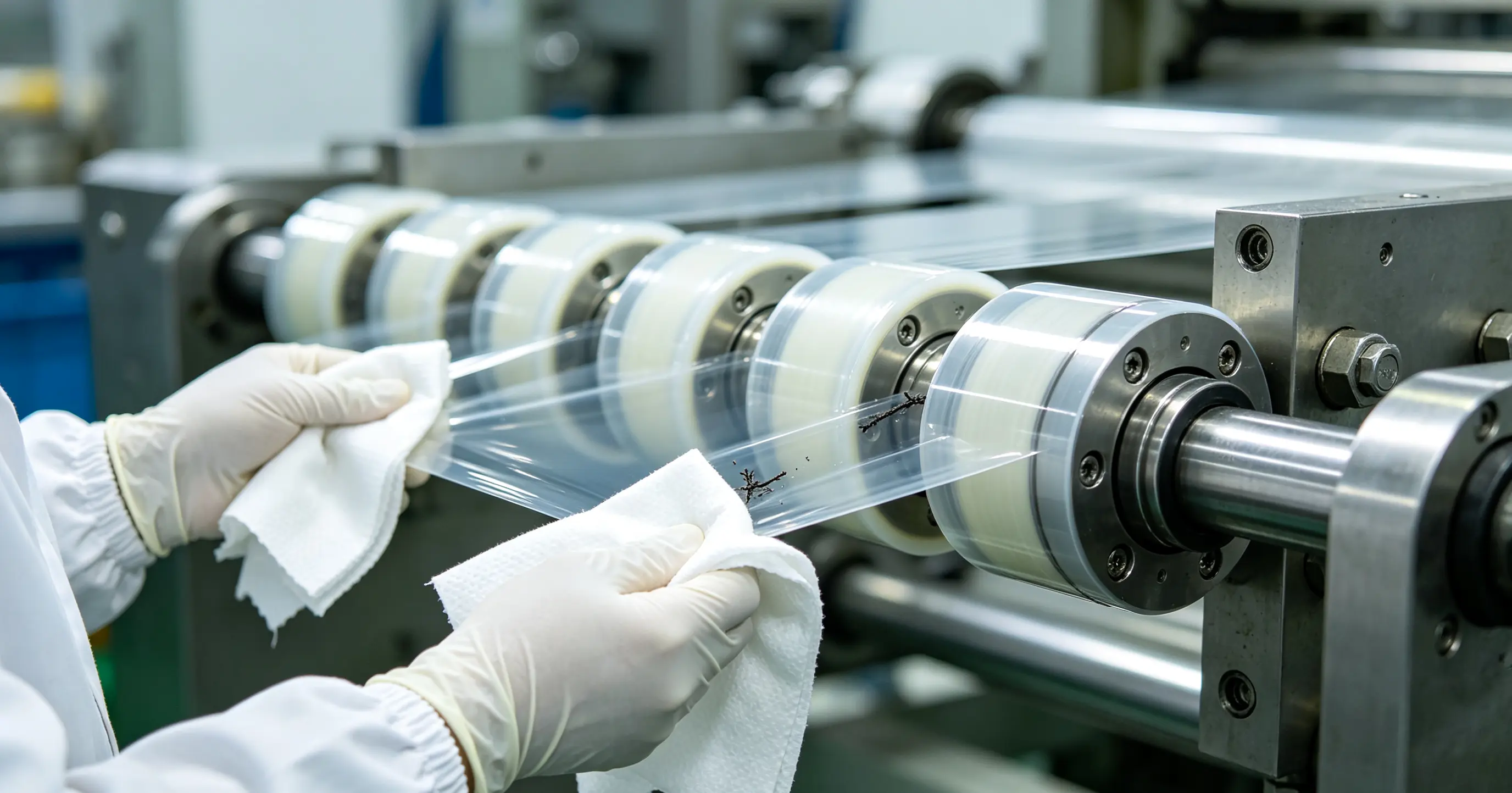
The answer was sitting in a bin next to the machine. The wipes used for the final surface pass were standard cotton shop rags—same rags that had been used earlier that shift on brake assemblies and traction motor housings. Loaded with iron oxide and copper particles from that earlier work. And those particles were embedding in the fresh wheel surface during the final wipe-down.
The fix cost about $200 a month in dedicated sealed-edge synthetic wipes stored in a separate cabinet. Problem gone. First time. The shop supervisor told me later he’d spent three months and roughly $8,000 in rework labor chasing a problem that a $200 consumable change would have prevented on day one.
That story captures the core challenge of consumables in railroad maintenance. The environment is dirty—dirtier than almost any other maintenance operation. Brake dust, diesel soot, wheel wear particles, track ballast dust—it’s everywhere, on every surface, all the time.
Your cleaning consumables have to remove that contamination without reintroducing it from the wipe itself. And in a railroad shop, where the same rags tend to get used for everything from brake work to lunchroom tables, that’s a bigger challenge than most people think.
This guide is for railroad maintenance managers, wheel shop supervisors, and quality engineers. We’ll cover wipe selection by shop area, brake dust management, diesel engine cleaning, passenger rail hygiene, and the cross-contamination mistakes that cost railroad shops money every month.
The Railroad Environment: Harder on Consumables Than You’d Think
Railroad equipment lives a rough life. Locomotives run through rain, snow, desert heat, and everything in between. They generate enormous amounts of brake dust and wheel wear particles with every stop. Diesel engines produce soot that coats every surface in the engine room.
Maintenance intervals are driven by mileage and operating hours, not calendar time—so a locomotive might come into the shop caked in six months of accumulated grime from every weather condition between Chicago and LA.
Three factors drive wipe requirements in railroad maintenance:
Heavy soil loading. Railroad consumables face some of the heaviest soil loads of any industry. A single locomotive engine room cleaning can burn through hundreds of wipes saturated with diesel soot, oil, and coolant. If your wipe can’t handle that kind of loading, you’re going through twice as many.
Metallic particle contamination is everywhere. Brake dust—iron oxide, copper, barium sulfate. Wheel wear particles—steel. Traction motor brush dust—carbon and copper. These particles coat every surface in the underframe area. They’re abrasive, they’re conductive, and they damage surfaces and short electrical components if you don’t get them off.
Safety-critical surfaces have real finish requirements. Brake components, wheel surfaces, safety-critical fasteners—these have surface finish standards that a dirty cotton rag will ruin. The wipe you use on a reprofiled wheel surface matters. A lot.
Shop Areas and Their Wipe Requirements
Not every part of a railroad maintenance shop has the same contamination risk. The wipe that works fine in the engine room will cause problems in the wheel shop. Here’s the breakdown:
Wheel Shop — Top Priority
The wheel shop is where consumable discipline matters most. Wheel reprofiling, bearing inspection, axle journal finishing—every one of these operations needs clean surfaces with controlled particle contamination.
The wipe used on a reprofiled wheel surface has to be free of metallic particles from brake assembly work, lint-free to prevent fiber embedding, and absorbent enough to remove cutting fluid residue. Keep dedicated wheel-shop wipes in a separate cabinet from general maintenance consumables. Don’t let anyone grab a general-purpose rag for wheel work.
Engine Room and Mechanical — Heavy Degreasing
Locomotive engine rooms are a mess. Diesel soot, lube oil, coolant, fuel—it’s on every surface, every component, every inch of the engine compartment. The primary job here is degreasing and soot removal before inspection.
You need high absorbency for oil and diesel fuel, durability for scrubbing heavy soot deposits, and chemical resistance to whatever degreaser your shop uses. Standard industrial wiping cloths work fine for this—the soil loading is so heavy that the wipe’s own cleanliness matters less than in the wheel shop. Focus on absorbency and durability.
Passenger Interior — Hygiene and Compliance
Passenger rail interiors are a different world from the mechanical areas. Seats, tables, windows, handrails, restrooms—these need food-contact-safe, hygienic wipes for surface cleaning. The requirements are similar to what you’d see in public transit or airline cabin cleaning: effective soil removal, no chemical residue on surfaces people touch, and compatibility with whatever disinfectants you’re using for hygiene compliance.
Paint and Surface Finish — Silicone-Free Zone
Painting locomotives and railcars requires the same silicone-free, lint-free surface prep as any other transportation paint operation. Silicone causes fisheye. Fiber causes surface defects. Use virgin-material, silicone-free, sealed-edge wipes for all surface preparation before paint. No recycled rags. No shortcuts.
Brake Dust: The Contamination That Defines Railroad Maintenance
Every brake application generates a cloud of iron oxide, copper, barium sulfate, and graphite particles. Those particles settle on every surface in the underframe area—and they don’t go away on their own.
They’re abrasive—iron oxide and steel particles scratch polished surfaces and embed in soft metals. They damage bearing seals, axle journals, and wheel tread surfaces if you don’t get them off completely.
They’re conductive—copper and carbon particles cause short circuits on electrical components. Traction motor brush dust accumulates on commutator surfaces and causes arcing.
And they’re toxic—barium sulfate and copper compounds in brake dust are hazardous by inhalation and skin contact.
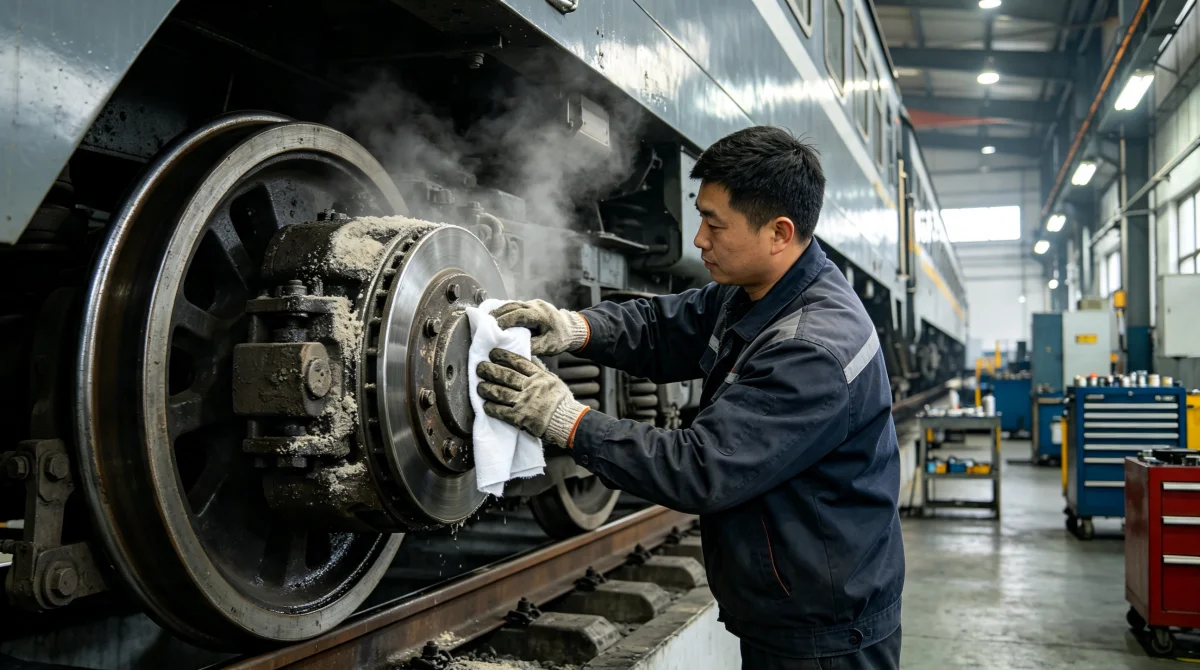
For brake dust removal, you need wipes with high absorbency and particle capture capability. Microfiber wipes work particularly well here—their split fiber construction traps fine metallic particles in the fiber structure instead of just pushing them around. For safety-critical surfaces like wheel treads and bearing seats, use dedicated clean wipes that haven’t been anywhere near brake assemblies. That’s the whole point of zone-specific programs.
| Shop Area | Primary Contamination | Recommended Wipe Type | Storage Rule |
|---|---|---|---|
| Wheel shop | Cutting fluid, metallic particles | Dedicated sealed-edge synthetic, lint-free | Separate cabinet, away from general rags |
| Engine room | Diesel soot, lube oil, coolant | High-absorbency industrial wipe, microfiber | Enclosed cabinet or warm break room |
| Brake assembly | Iron oxide, copper, barium sulfate | Heavy-duty absorbent, disposable after use | Hazardous waste disposal after use |
| Passenger interior | General soil, biological contamination | Food-contact compliant, disinfectant compatible | Clean enclosed storage |
| Paint booth | Dust, silicone, fiber | Virgin material, silicone-free, sealed-edge | Sealed packaging until use |
Diesel Engine Cleaning: High Volume, Heavy Soil
Locomotive diesel engines are big. We’re talking 12- or 16-cylinder, 3,000–4,500 HP machines that generate proportionally large amounts of soot, oil, and coolant residue. Engine room cleaning consumes more wipes than any other single activity in railroad maintenance. If you’re burning through wipes faster than expected, this is probably where they’re going.
For engine room work, you need four things in a wipe:
Oil absorption capacity—lube oil, diesel fuel, and hydraulic fluid coat every surface. Wipes with oleophilic treatment absorb 8–12x their weight in petroleum products.
Soot capture—diesel soot is submicron and hydrophobic. Standard cellulose wipes don’t capture it effectively; they just push it around. Microfiber or textured synthetic wipes with high surface area do a much better job.
Durability—engine room cleaning is aggressive. The wipe has to stand up to scrubbing on rough cast iron and aluminum without falling apart.
Solvent compatibility—engine degreasing often involves kerosene, diesel fuel, or commercial degreasers. The wipe can’t degrade when saturated with those chemicals.
Passenger Rail Interior Cleaning
Passenger rail operators face public health regulations that require regular surface cleaning and disinfection. The wipe requirements here are straightforward but non-negotiable:
Food-contact compliance for tray tables, food service areas, and any surface where food is placed—FDA 21 CFR or EU 1935/2004, depending on your jurisdiction.
Disinfectant compatibility with your full sanitizer rotation—quaternary ammonium compounds, hydrogen peroxide, alcohol-based sanitizers. Whatever you use, the wipe has to work with all of it.
No chemical residue on surfaces passengers touch—handrails, armrests, door handles, seat-back pockets. Use wipes with clean SDS sheets: no fragrances, no dyes, no unnecessary additives that could cause skin irritation.
Lint-free performance for windows, infotainment screens, and digital displays.
Quality System Documentation
Railroad maintenance is governed by FRA (Federal Railroad Administration) in the US, ERA (European Union Agency for Railways) in Europe, and equivalent national regulators elsewhere. These regulators don’t certify cleaning consumables specifically—but your quality system, which the regulator audits, has to demonstrate consumable control.
What you need on file:
A product specification sheet with material composition, chemical resistance data, and physical properties. A current, GHS-compliant SDS—required by OSHA for workplace chemical exposure. A silicone-free declaration for paint and surface finish applications. Chemical compatibility data for whatever degreasers, coolants, and cleaning chemicals your shop uses. And supplier qualification documentation showing your approved supplier list with qualification evidence.
Cross-Contamination Mistakes That Cost You Money
These are the consumable mistakes I see in railroad shops that create real operational problems. All of them are preventable.
One rag for everything. This is the big one. The same cotton rag gets used on brake assemblies, then wheel surfaces, then engine components, then interior surfaces. Metallic particles from brake work transfer to wheel surfaces. Soot from engine work transfers to interior surfaces. It’s a cross-contamination conveyor belt, and the fix is zone-specific wipe requirements documented in shop SOPs.
Recycled cotton rags on safety-critical surfaces. Recycled rags are an unknown quantity—they carry metallic particles, oil, and contaminants from whatever they were used for last. On wheel treads and bearing surfaces, those particles cause accelerated wear and potential failure. Use dedicated, clean, sealed-edge wipes for safety-critical applications. The cost difference is minimal. The risk reduction is not.
No wipe segregation between wheel shop and general maintenance. If general maintenance rags are stored in the same cabinet as wheel shop wipes, the wheel shop wipes are contaminated before they’re even used. Separate storage. Separate inventory. Documented in the SOP.
Storing wipes on the shop floor. Railroad shop floors are covered in brake dust, oil, and metal shavings. Wipes stored on the floor absorb that contamination and transfer it to the next surface they touch. Store consumables in enclosed cabinets or dedicated storage areas. Off the floor. Always.
Who You’ll Work With at WIPESTAR
We work with railroad maintenance facilities that deal with heavy contamination — brake dust, diesel residue, and metal particles. Our team understands the unique cleaning challenges of rail vehicle maintenance.

Vicky — Foreign Trade Sales Supervisor
Vicky plays a key role in the foreign trade sales team, responsible for client communication, sales coordination, and maintaining cooperative relationships with global clients.

Carolina — Product Specialist
Carolina has many years of experience in the cleanroom consumables industry, focusing on product quality and performance. She communicates closely with production teams to continuously optimize products.

Juan — Purification Industry Specialist
Juan has rich experience in the purification industry, with professional command of clean products and purification process equipment, committed to providing optimized clean solutions.

Guan — Cleanroom Consumables Sales Specialist
Guan has 4.5 years in the semiconductor industry and over 5 years in cleanroom consumables sales, with deep understanding of semiconductor production cleanroom requirements.
Get Started with Railroad Maintenance Wiping Cloths
Whether you’re qualifying wipes for wheel shop operations, upgrading engine room consumables, or implementing zone-specific wipe programs for your maintenance facility, we can help. Our industrial-grade wipes come with full documentation—SDS, chemical compatibility data, silicone-free declarations, and supplier qualification support.
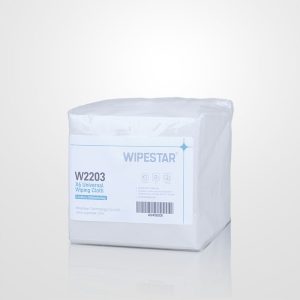
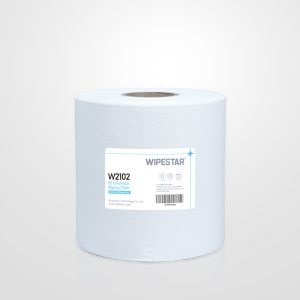
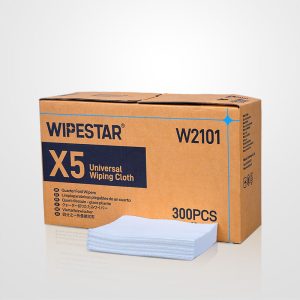
- Heavy-Duty Absorbent Wipes — High oil and diesel absorption capacity (8–12x weight). Durable enough for scrubbing engine room soot without falling apart. Built for the heaviest soil loads in locomotive maintenance.
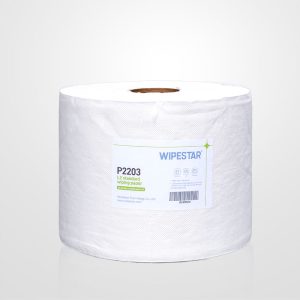
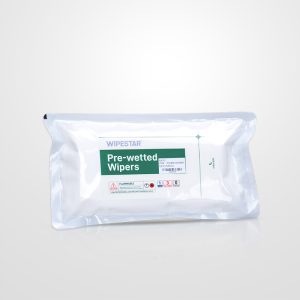
- Sealed-Edge Wheel Shop Wipes — Lint-free, metallic-particle-free synthetic wipes for reprofiled wheel surfaces and bearing inspection. Dedicated products that eliminate cross-contamination from brake assembly work.
- Silicone-Free Paint Prep Wipes — Virgin material with supplier silicone-free declaration. For locomotive and railcar surface preparation where fisheye and adhesion failure aren’t an option.
Browse Wiping Cloths Range → Request a Custom Quote
Frequently Asked Questions