English
 Chinese



North Sea. An FPSO vessel getting ready for a planned shutdown. The platform electrician—sharp guy, pays attention—raised a flag during his pre-shutdown walkthrough. The maintenance crew had been wiping down junction boxes in the process area with standard industrial rags. No ESD test data on file. No antistatic verification. Nothing tying the rags to hazardous area compliance of any kind.
The process area was classified Zone 1 under ATEX Directive 2014/34/EU—an explosive gas atmosphere likely to show up during normal operations. A rag that builds static charge while you’re using it is an ignition source in that environment. Not a theoretical risk. A real, physical, spark-generating ignition source.
The shutdown got pushed two days while the operator scrambled to source compliant consumables, document the change, and re-verify the work packs. Lost production: around $400,000. Over cleaning rags.
That story stuck with me because it’s not unusual. I hear versions of it from operators across the North Sea, the Gulf of Mexico, and Southeast Asia. The consumable that costs the least per unit—the cleaning rag—ends up causing the most expensive problems when it’s wrong.
This guide is for offshore maintenance engineers, platform operations managers, and HSE teams responsible for consumable selection in hazardous areas. We’ll cover zone classification requirements, H₂S and chloride compatibility, NORM contamination handling, NORSOK documentation, and the logistics constraints that make offshore consumable management completely different from anything onshore.
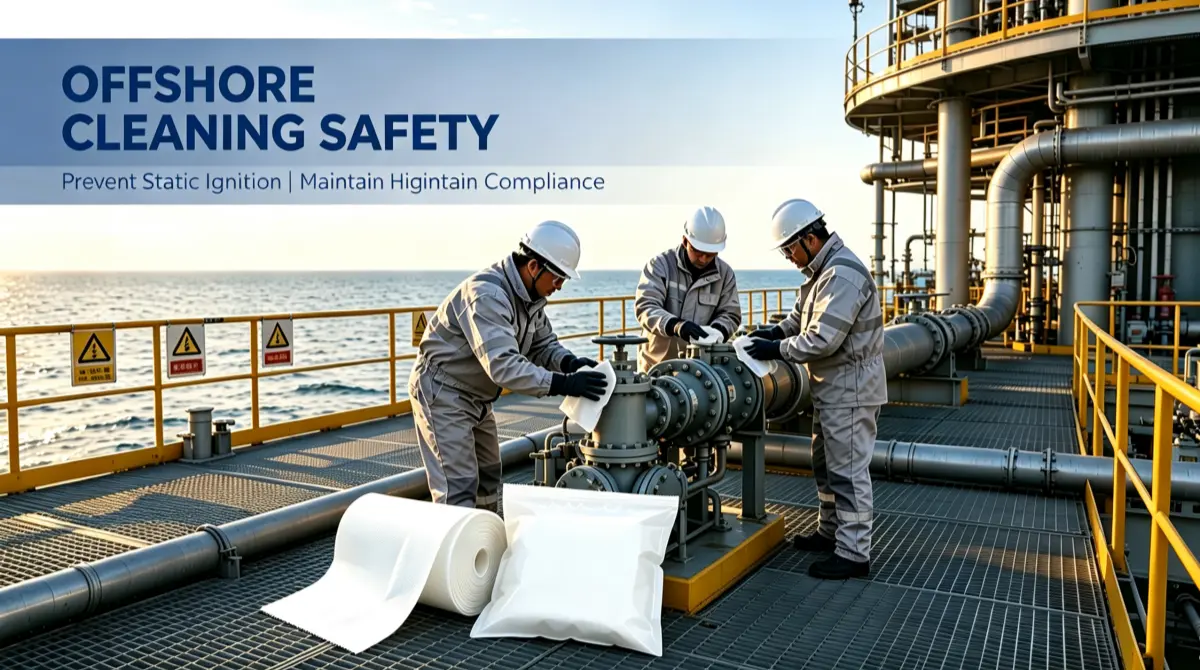
Why Is Offshore the Toughest Environment for Consumables?
Onshore, you drive to a supply house and grab what you need. Offshore, every item arrives by helicopter or supply boat, stored in limited space, tracked through the operator’s safety management system. Logistics costs are enormous—a helicopter flight to a North Sea platform runs £3,000–£8,000 depending on distance and aircraft type.
Storage space is measured in square meters, not square feet. There’s no supply closet to raid when you run short.
Every consumable on the platform goes through the operator’s material approval process. Your cleaning wipes aren’t just a procurement item—they’re a compliance item. They need documentation before they go on the helicopter, they need to be tracked while they’re on the platform, and they need documented disposal when they’re used.
This is the environment where “just grab a rag from the bin” gets people hurt.
The hazardous area classification system—ATEX Directive 2014/34/EU in Europe, IECEx internationally, NEC Articles 500–506 in the US—defines zones where explosive gas atmospheres may be present. In these zones, every piece of equipment, every consumable, every tool must be verified as safe.
A standard industrial rag that builds triboelectric static charge during wiping is an ignition source. That’s not a regulatory abstraction. It’s physics. And in a Zone 1 environment, physics can kill people.
Zone 0, Zone 1, Zone 2, Safe Area — What Each Demands From Your Wipes
The zone classification system directly determines what kind of wipe you can use. Get it wrong, and you’re either creating an ignition risk or blocking work unnecessarily. Here’s the breakdown:
Zone 0 — Continuous Explosive Atmosphere
Zone 0 areas are inside closed process vessels, piping, and containers where explosive gas atmospheres hang around continuously or for long periods. Manual cleaning in Zone 0 is rare—it typically requires specialized procedures, gas-freeing certificates, and confined space entry permits.
When consumables are needed, they must be verified for continuous explosive atmosphere exposure. This is specialist contractor territory. Consult your platform’s safety management system and don’t improvise.
Zone 1 — Explosive Atmosphere Likely in Normal Operation
This is where most platforms have the most exposure, and where the greatest care is needed. Zone 1 covers process areas where hydrocarbons are actively handled—separators, compressors, pumps, heat exchangers, associated piping and valve manifolds. Any consumable used in Zone 1 must meet four requirements:
- Non-sparking — no materials that create ignition energy under friction or impact
- Non-static-generating — antistatic or dissipative surface resistivity, verified below 10⁹ ohms/square per IEC 61340
- Operator-approved — documented approval from the platform’s hazardous area compliance team before use
- Cellulose-free — cotton and cellulose generate triboelectric charge during use, particularly in low-humidity environments like air-conditioned process modules
Zone 2 — Explosive Atmosphere Under Abnormal Conditions
Zone 2 covers areas next to process zones where explosive atmospheres are possible only under abnormal conditions—a leak, a process upset, a valve failure. Requirements are technically less stringent than Zone 1, but most operators I work with apply Zone 1 standards across Zone 2 as well.
That’s a conservative and sensible approach. The incremental cost of using compliant wipes everywhere is negligible compared to the risk of someone grabbing the wrong wipe from the wrong bin.
Safe Area — No Explosive Atmosphere Expected
Accommodation blocks, control rooms, offices, some utility areas. Standard industrial consumables work here, subject to the operator’s general material approval process. Galley and mess areas need food-contact compliance (FDA 21 CFR or EU Regulation 1935/2004).
One thing to watch: even in safe areas, some operators require all consumables to be from their approved materials list. Check before assuming.
| Zone / Area | Atmosphere Risk | Wipe Requirement | Typical Locations |
|---|---|---|---|
| Zone 0 | Explosive atmosphere present continuously | Specialized approved consumables only; consult RPA | Inside closed vessels, piping |
| Zone 1 | Explosive atmosphere likely in normal operation | Antistatic/dissipative (<10⁹ Ω/sq), no cellulose, operator-approved | Separators, compressors, pumps, heat exchangers |
| Zone 2 | Explosive atmosphere possible under abnormal conditions | Antistatic properties, operator approval (most apply Zone 1 standards) | Adjacent to process zones |
| Safe Area | No explosive atmosphere expected | Standard industrial consumables, operator material approval | Accommodation, control room, offices |
| Helideck | Fuel spill risk (Jet A-1) | Antistatic, high absorbency, Jet A-1 resistant | Helicopter landing area |
| NORM areas | Radioactive contamination | RPA-approved; dispose as radioactive waste after use | Production piping, separators with NORM scale |
H₂S and Chloride: The Hidden Corrosion Risk in Your Consumables
A lot of offshore reservoirs produce hydrogen sulfide—H₂S. It’s toxic (permissible exposure limit is 10 ppm per OSHA, IDLH at 100 ppm), it’s corrosive, and it goes after copper, brass, and some stainless steel alloys. If your platform handles sour service production, your wipe selection has an extra dimension that most people miss.
The wipe material itself—polyester or polypropylene—is fine. H₂S doesn’t touch these materials at ambient temperatures. The problem is everything else. If the wipe has metal eyelets, grommets, or packaging components, verify they’re H₂S-compatible. Copper and brass corrode fast in H₂S atmospheres and produce corrosion products that contaminate equipment surfaces.
But here’s the real gotcha: chloride content in the wipe material. Chlorides accelerate sulfide stress corrosion cracking (SSCC) in susceptible alloys—the kind of alloys used in sour service piping, valves, and pressure vessels per NACE MR0175/ISO 15156.
For wipe-down on sour service equipment, specify wipes with chloride content below 50 ppm. That’s not a number I pulled out of thin air. It’s the threshold materials engineers use for sour service consumables. Request halide analysis from your supplier for every lot. A wipe that passes on one production batch may come in different on the next.
Process Area, Utilities, Living Quarters, Helideck — Area-by-Area
Different areas of an offshore platform have fundamentally different wipe requirements. Here’s what each needs:
Process Area
Process area wipes must be hazardous-area-compliant—antistatic or dissipative surface resistivity verified per IEC 61340. They need chemical resistance to hydrocarbons, glycol, methanol, and the corrosion inhibitors used in production systems.
They need to be lint-free for equipment inspection surfaces where technicians are looking for cracks, leaks, and corrosion under insulation. And they need high absorbency for oil and condensate spills. Platforms don’t have floor drains in the process area. Every spill gets absorbed and cleaned by hand, which means your wipes need to handle volume.
Utilities — Power Generation, Water, HVAC
Utility areas are typically classified as safe areas with standard industrial wipe requirements. Generator rooms, water treatment modules, HVAC systems, chemical injection skids—general-purpose absorbent wipes with chemical resistance to coolant, fuel, and water treatment chemicals. Nothing exotic, but still subject to the operator’s material approval process.
Living Quarters and Galley
Accommodation and galley areas need food-contact-safe wipes for kitchen surfaces (FDA 21 CFR 174–186 or EU 1935/2004) and hygienic wipes for bathroom and cabin cleaning. Same requirements as any hotel or food service operation. SDS on file, material approval on file.
Helideck
The helideck is a high-risk area that’s easy to overlook. Aviation fuel (Jet A-1) is highly flammable, and static discharge near fuel vapor is an explosion risk. Wipe requirements: antistatic (surface resistivity below 10⁹ ohms/square), high absorbency for fuel spills, and chemical resistance to Jet A-1 and de-icing fluids.
Some operators specify absorbent booms and pads as well as wipes for helideck spill response. Coordinate your consumable program accordingly.
NORM: When Your Cleaning Waste Becomes Radioactive
Some offshore reservoirs produce Naturally Occurring Radioactive Material—NORM. It deposits as scale in production piping, separators, heat exchangers, and pumps. The radioactivity levels are typically low (NORM scale ranges from a few hundred Bq/kg to several hundred kBq/kg), but the regulatory implications are significant.
NORM-contaminated equipment requires specialized decontamination, and every consumable used in NORM cleanup—including your wipes—must be disposed as radioactive waste.
If your platform handles NORM—and many North Sea, Gulf of Mexico, and Southeast Asian platforms do—here’s what you need to know:
Consult your radiation protection advisor (RPA) before ordering anything. The RPA specifies approved consumable materials, handling procedures, and disposal requirements. Don’t assume. Don’t improvise. The RPA’s word is final on NORM consumables.
Treat every used wipe from NORM cleanup as radioactive waste. Seal it in labeled bags, store it in designated radioactive waste containers, and dispose through approved radioactive waste channels. The cost of NORM waste disposal is significant—which is exactly why you want to minimize wipe usage during NORM cleanup without compromising decontamination quality.
Never cross-use NORM wipes on other surfaces. A wipe that’s been used on NORM-contaminated scale carries radioactive material. Using it on a clean surface spreads contamination to a previously clean area, making your NORM problem bigger instead of solving it.
Segregate NORM consumables from general maintenance consumables completely—separate storage, separate handling, separate disposal.
Document everything. Record wipe usage in your NORM exposure records per your regulatory requirements (OSHA 29 CFR 1910.1096 in the US, the Ionising Radiations Regulations 2017 in the UK, relevant national regulations elsewhere). Your RPA will tell you what records to keep.
What Documentation Does NORSOK and Your Operator Require?
Offshore operators in Norway follow NORSOK standards—NORSOK M-001 for materials selection, NORSOK S-001 for technical safety, NORSOK M-630 for material data sheets. UK operators follow their own material approval processes, which are typically equally stringent. Gulf of Mexico operators follow API and operator-specific standards.
The specifics vary, but the documentation requirements converge on the same core set:
A material data sheet (MDS) with full material composition, physical properties, and chemical resistance data per NORSOK M-630 or equivalent. This is the foundation document for offshore material approval.
Hazardous area compliance. Surface resistivity test report per IEC 61340 or equivalent, confirming antistatic or dissipative properties for classified area use. The test must be specific to the wipe product—not a generic material test for the base polymer.
NACE/HIC testing. For sour service applications (H₂S environments), hydrogen-induced cracking (HIC) and sulfide stress corrosion cracking (SSCC) test data for any metal components in the wipe or packaging. Per NACE MR0175/ISO 15156.
A current, GHS-compliant SDS covering the wipe material and all processing chemicals. Check the revision date—outdated SDS are a common audit finding.
Operator material approval. Most operators require consumables to be listed in their approved materials database before they can be shipped offshore. This process takes 4–8 weeks depending on the operator. Some have streamlined processes for low-risk consumables; others require full material data packages reviewed by their materials engineering team.
Five Compliance Gaps That Cost Operators Time and Money
I’ve worked with enough offshore operators to see the same problems repeat. These five compliance gaps cause the most delays, the most safety incidents, and the most wasted logistics capacity:
Standard industrial rags in Zone 1. This is the most dangerous gap and the most common one. Rags that build static charge during use are ignition sources in explosive atmospheres. It sounds obvious, but it happens constantly—usually because someone onshore packed “cleaning supplies” without checking the area classification. Verify antistatic properties. Document the verification. Put the documentation in the work pack.
Shipping without material approval. Offshore operators require material approval before consumables can go on the platform. I’ve seen materials sit in an offshore supply base warehouse for weeks because nobody submitted the approval paperwork. The helicopter space was wasted. The work pack was delayed. Start the approval process 4–8 weeks before you need the materials offshore. Don’t ship first and hope.
Cellulose wipes generating static. Cotton and cellulose wipes build triboelectric charge during use—especially in the low-humidity, air-conditioned environments typical of process modules. In Zone 1, that static charge is an ignition risk. Use synthetic wipes with verified dissipative properties. This applies even for quick wipe-down tasks that “only take a second.” A one-second wipe generates the same static charge as a one-minute wipe.
Excess inventory on the platform. Storage space offshore is expensive and limited. Don’t ship six months of supply when the next boat is in three weeks. Coordinate with your logistics team for just-in-time delivery aligned with supply boat schedules. Excess inventory takes up space that could be used for critical spares, and consumables stored in humid offshore conditions can degrade over time.
No NORM segregation. Using NORM-contaminated wipes on clean surfaces spreads radioactive material. Segregate NORM cleanup consumables from general maintenance consumables—separate storage, separate handling, separate disposal, documented in your radiation protection procedures. I’ve seen platforms where NORM wipes and general wipes sat in the same bin. That’s a contamination event waiting to happen.
Who You’ll Work With at WIPESTAR
We supply cleaning consumables to offshore oil and gas platforms where safety is non-negotiable. Our team understands NORSOK compliance, hazardous area requirements, and the unique challenges of marine industrial environments.

Zac — Customer Service
Zac focuses on professional and efficient customer service, dedicated to responding to inquiries quickly, handling orders smoothly, and providing reliable after-sales support.

Yunyun — ESD Project Manager
Yunyun is a dedicated ESD prevention professional with rich experience in static control technology research, application, and solution implementation for cleanroom environments.

Ethan — Sales Director
Ethan has over 20 years of experience in the industrial wiping cloth and cleanroom consumables industry. He leads the global sales team and provides high-quality cleanroom solutions for worldwide customers.

Lee — Key Account Sales Manager
Lee has 7 years of sales experience in the cleanroom consumables industry, having served international companies such as Foxconn, Samsung, and Apple. He focuses on solving problems for customers.
Get Started with Offshore Platform Wiping Cloths
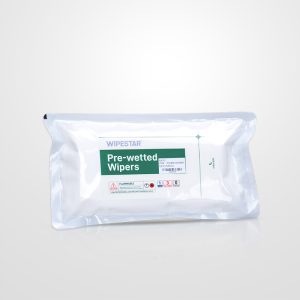
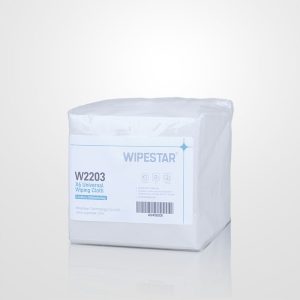
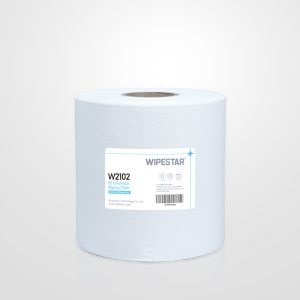
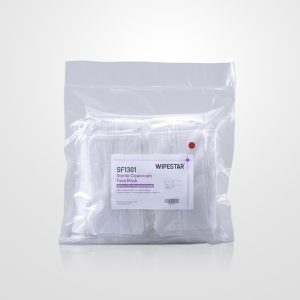
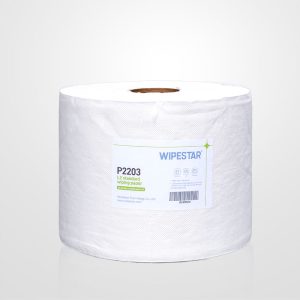
Whether you’re qualifying consumables for a new platform, submitting material approval for an offshore operator, or upgrading your hazardous area consumable program, we can help. Our industrial-grade wipes come with full documentation—antistatic test reports, NORSOK material data sheets, and SDS.
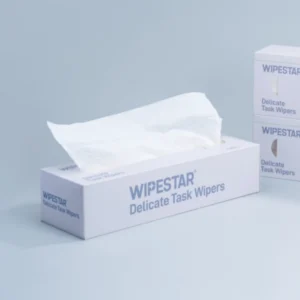
- Antistatic Zone 1/Zone 2 Wipes — Surface resistivity verified below 10⁹ Ω/sq per IEC 61340. Cellulose-free synthetic construction. For process area maintenance where a standard rag is an ignition source.
- Sour Service Low-Chloride Wipes — Chloride content below 50 ppm, halide analysis per lot. For H₂S-containing production equipment where chlorides accelerate SSCC in susceptible alloys.
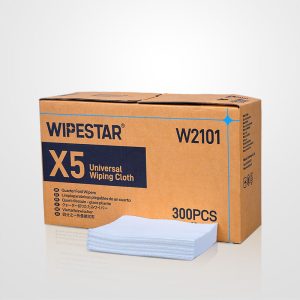
- High-Absorbency Spill Control Wipes — For oil, condensate, and fuel spills in process areas and helidecks. No floor drains offshore—every spill is absorbed manually.
Browse Wiping Cloths Range → Request a Custom Quote
Frequently Asked Questions