English
 Chinese



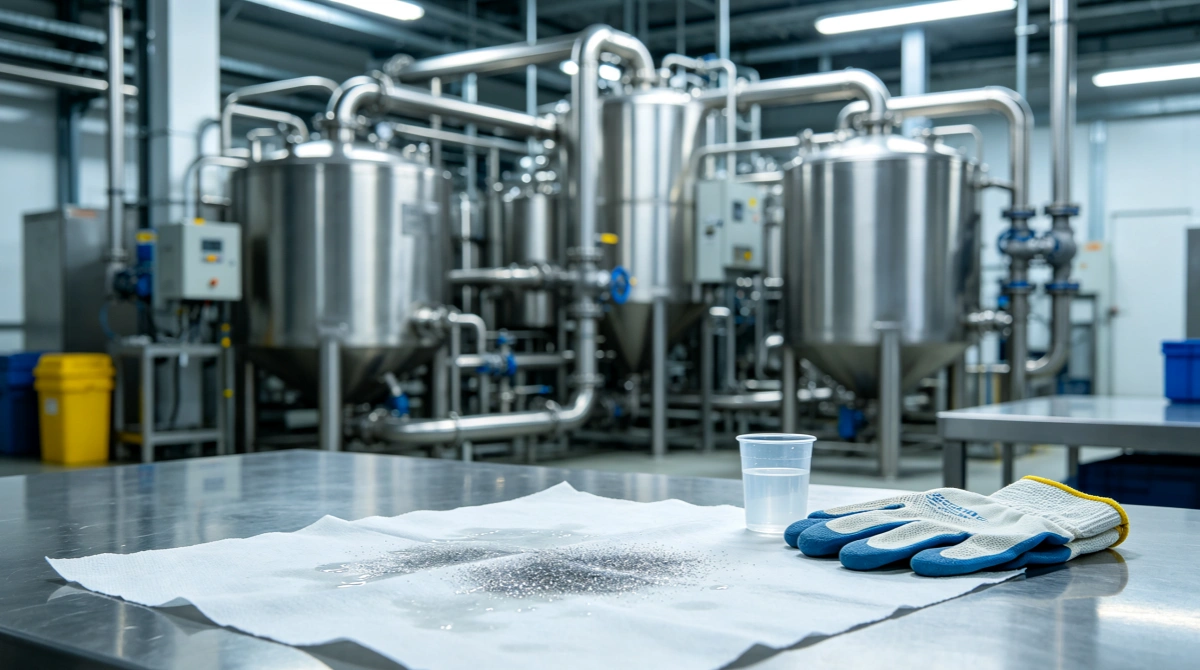
A European lithium battery recycling operator faced subtle yet costly equipment degradation shortly after launching its new hydrometallurgical recovery line. Only six weeks into commissioning, the site’s maintenance team noticed consistent micro-scale surface hazing across all stainless steel leaching tanks after every standard cleaning routine. The facility relied on conventional industrial wipes to clean tank exteriors, pipe flanges and sampling points, which performed adequately for general spill cleanup and housekeeping. However, these standard wipes contained residual chloride carryover from their manufacturing process. In environments handling spent lithium hexafluorophosphate (LiPF₆) electrolyte materials, trace chloride contaminants interact with ambient moisture, forming aggressive hydrofluoric acid deposits that corrode passivated stainless steel surfaces. The site ultimately completed three months of targeted remediation and full tank repassivation before fully migrating to application-specific cleaning consumables.
Global lithium battery recycling capacity continues its rapid expansion across Europe, North America and major Asian markets, as the first large wave of end-of-life electric vehicle batteries enters circular processing streams. Unlike conventional chemical manufacturing, mineral processing and upstream battery production, battery recycling presents uniquely demanding operational conditions. End-of-life cell materials carry residual electrochemical stress and accumulated thermal degradation, creating more complex reaction pathways, unpredictable contamination behavior, and significantly elevated chemical hazard profiles compared with virgin production environments.
This technical overview is designed for recycling plant managers, process engineers and EHS teams operating commercial battery recovery facilities. It outlines the critical differences in wipe and consumable selection for high-risk recycling environments, breaks down the most impactful chemical threats to equipment and personnel, and provides a practical specification framework to stabilize process performance, reduce unplanned downtime, and protect both workforce safety and overall operational yield.
Why Battery Recycling Isn’t Like Battery Manufacturing
In battery manufacturing, you’re working with pristine materials in controlled environments. The electrolyte is fresh, the electrodes are intact, and the cell has never been charged. In recycling, you’re working with cells that have spent years cycling between 20% and 80% state of charge, endured temperature extremes, and may have been physically damaged in collection and transport. The materials inside are chemically different from what went in.
Used electrolyte contains decomposition products—lithium fluoride, lithium carbonate, phosphorus oxyfluoride—that didn’t exist when the cell was manufactured. The black mass (the mixture of cathode and anode active materials after cell shredding) contains a cocktail of nickel, cobalt, manganese, lithium, and graphite, all in fine particulate form with enormous surface area. Spent separator material may have been thermally degraded, releasing fluorinated compounds.
What this means for your cleaning consumables: the wipe material must survive exposure to chemicals that are far more aggressive than what you’d encounter in a gigafactory. And the wipe must not introduce contaminants—chlorides, sulfates, heavy metals—that could interfere with your hydrometallurgical recovery process. A wipe that’s perfectly fine for wiping down a battery assembly line could be a safety hazard and a process contaminant in a recycling facility.
If you’re also involved in battery manufacturing, our guide on cleanroom wipes for EV battery cell manufacturing covers the cleaner end of the battery supply chain. Here, we deal with the dirty end.
The Chemical Hazards in a Battery Recycling Facility
Before you can specify a wipe, you need to understand what it will encounter. Battery recycling facilities deal with a chemical profile that’s more diverse and more dangerous than most industrial environments.
Hydrofluoric Acid (HF) and Fluorinated Compounds
This is the big one. LiPF₆, the standard lithium-ion electrolyte salt, decomposes in the presence of moisture to produce HF. In a recycling facility, where cells are shredded, crushed, or thermally processed, HF exposure is not a theoretical risk—it’s a daily reality. HF penetrates skin, attacks bone, and can be lethal at low exposure levels. Your wipes must not contain materials that react with HF, and they must not shed fibers that could carry HF residue to unprotected skin.
Transition Metal Particulates
Black mass contains nickel, cobalt, manganese, and lithium in oxide and metallic forms. These particles are fine—often below 10μm—and they’re everywhere in a recycling facility. They settle on every surface, they’re easily resuspended, and they’re a respiratory hazard. Your wipes need to capture and retain these particles, not just push them around.
Organic Solvents and Electrolyte Residues
Used electrolyte contains ethylene carbonate, dimethyl carbonate, diethyl carbonate, and their decomposition products. These solvents are flammable and irritating. Your wipes need to absorb them effectively and not degrade when exposed to them.
Graphite Dust
Anode material is primarily graphite, and it’s present in enormous quantities in recycling facilities. Graphite dust is conductive, abrasive, and a slip hazard. It also interferes with electronic equipment and can cause short circuits if it accumulates on electrical panels or control systems.
Wipe Selection by Process Area: Disassembly, Leaching, Recovery
Each stage of the recycling process has different contamination risks and different wipe requirements.
Cell Disassembly and Shredding
This is the dirtiest area. Cells are mechanically broken down, electrolyte is released, and fine particulates fill the air. Wipes used here face heavy contamination loads—graphite, metal particles, electrolyte residue, and potentially HF. The primary wipe function is equipment maintenance and spill cleanup. Requirements: high absorbency, chemical resistance to organic solvents and dilute HF, and durability under heavy soiling. Single-use wipes are strongly recommended—reusable cloths in this environment are a cross-contamination risk.
Hydrometallurgical Processing
Leaching tanks, filtration systems, and solvent extraction units operate with concentrated acids (sulfuric acid, hydrochloric acid) and bases (sodium hydroxide). The wipe must survive contact with these chemicals at process concentrations—typically 2–6M for acids, 2–4M for bases. Fiber shedding is a critical concern: a fiber that falls into a leaching tank can carry impurities into your nickel-cobalt recovery stream and reduce product purity.
Precipitation and Recovery
The final stages—precipitation, filtration, and drying of nickel sulfate, cobalt sulfate, or lithium carbonate—operate under tighter cleanliness standards. Metal cross-contamination from wipes can ruin an entire batch of battery-grade material. Use low-lint, chemically clean wipes in this area. The wipe should have verified low heavy metal content—request ICP-MS data for chromium, iron, copper, and zinc from your supplier.
Hydrofluoric Acid Exposure: Why Standard Wipes Are Dangerous
This deserves its own section because the consequences of getting it wrong are severe.
Standard industrial rags—cotton, cellulose, recycled fiber—contain trace chlorides from bleaching and processing. When these chlorides contact HF or HF precursors (like LiPF₆ decomposition products), they can form chlorinated compounds that are even more hazardous than HF itself. Additionally, cotton and cellulose fibers absorb HF and can transfer it to skin during handling, even through nitrile gloves if the contact time is long enough.
The safe approach for HF-exposed surfaces:
- Use synthetic wipes (polyester or polypropylene) that don’t contain chloride-based processing aids
- Request chloride content data from your supplier—below 50 ppm is the target
- Use single-use wipes and dispose of them as hazardous waste after HF contact
- Never reuse a wipe that has contacted HF or electrolyte residue
- Store wipes in sealed packaging away from HF-generating processes until point of use
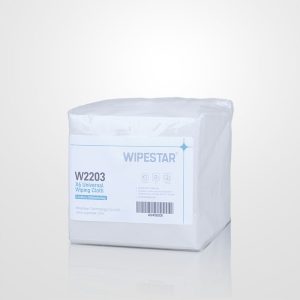
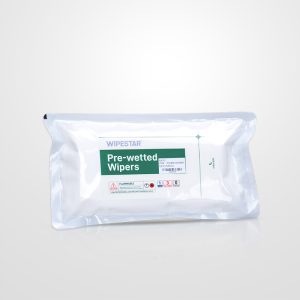
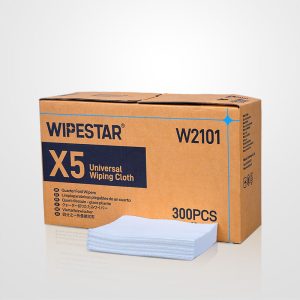
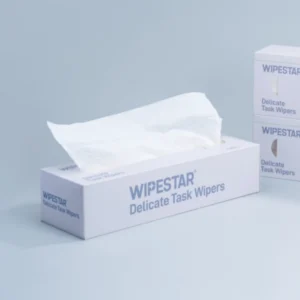
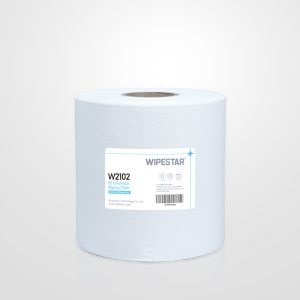
We provide chloride content and heavy metal analysis for every product in our wiping cloths range. For battery recycling applications, our technical team can recommend specific products with verified low-halide specifications.
Metal Cross-Contamination: Protecting Your Recovery Yields
Battery-grade nickel sulfate and cobass sulfate must meet purity specifications of 99.9% or higher. Iron, copper, zinc, and chromium are the most problematic impurities—they degrade cathode electrochemical performance and can cause cell failure in the next generation of batteries.
Your wipes can introduce these metals. Cotton fibers contain trace iron from agricultural processing. Recycled fiber rags are loaded with metals from their previous industrial life. Even some synthetic wipes contain metal catalysts from the polymerization process.
For wipe-down in the precipitation and recovery area, specify wipes with verified low metal content. Request ICP-MS (inductively coupled plasma mass spectrometry) data from your supplier for Fe, Cu, Zn, Cr, and Al. Target levels: below 10 ppm for each element. This data isn’t standard on most industrial wipe COAs—but in battery recycling, it’s the difference between battery-grade product and off-spec material.
PPE Compatibility: Wipes That Work With Your Safety Gear
Battery recycling workers wear heavy PPE—chemical-resistant suits, face shields, respirators, and multiple layers of gloves. Your wipes need to work within this reality.
- Glove compatibility — Operators wearing butyl rubber or Silver Shield gloves over nitrile inner gloves have reduced dexterity. Wipes that are too stiff or too slippery are difficult to handle. Test wipe flexibility and grip with your actual PPE combination.
- Dispensing — Wipes need to be accessible without removing gloves. Pop-up dispensing boxes or individually packaged wipes work better than bulk rolls in PPE-heavy environments.
- Visibility — In a facility where HF exposure is a risk, operators need to see what they’re wiping. White or light-colored wipes show contamination load; dark wipes hide it. Use light-colored wipes so operators can see when the wipe is saturated and needs to be replaced.
Documentation and Compliance for Battery Recycling Consumables
Battery recycling facilities operate under a patchwork of environmental and occupational safety regulations—EPA RCRA (in the US), EU Battery Regulation, China’s GB standards for hazardous waste, and local environmental permits. Your consumable documentation needs to support all of them.
- Safety Data Sheet (SDS) — Current, compliant with GHS/CLP regulations, covering the wipe material itself. If your supplier can’t produce an SDS, that’s a red flag.
- Chemical Resistance Data — Verified resistance to your specific process chemicals at your use concentrations. HF, sulfuric acid, sodium hydroxide, and organic solvents at minimum.
- Heavy Metal Analysis (ICP-MS) — Quantified levels of Fe, Cu, Zn, Cr, Al, and other metals relevant to your recovery process. This protects your product purity.
- Halide Content (Chloride, Fluoride) — Verified low halide content to prevent dangerous reactions with HF-generating processes. Below 50 ppm chloride is the target.
- Disposal Guidance — Your supplier should provide guidance on whether the wipe can be disposed as general waste or must be treated as hazardous waste after contact with process chemicals.
The Problems We Keep Seeing in Recycling Facilities
- Using manufacturing-grade wipes in a recycling environment — The spec sheet looks similar, but the chemical exposure is completely different. A wipe validated for clean battery assembly has never been tested for HF resistance or heavy metal content.
- Reusing wipes across process areas — A wipe that cleaned a shredder gets used on a leaching tank flange. Now the leaching tank has graphite contamination in its nickel recovery stream. Single-use, area-specific wipes eliminate this risk.
- No halide data on file — Your facility processes HF-generating materials, and your wipes have never been tested for chloride content. This is a safety gap that no EHS audit should pass.
- Storing wipes in the processing area — HF vapor and solvent fumes penetrate wipe packaging. Store consumables in a sealed, ventilated storage area separate from processing zones.
- Buying on price alone — The cheapest industrial rags are cheap because they’re made from recycled fiber with no quality control. In a battery recycling facility, “cheap” wipes can cost you a batch of battery-grade nickel sulfate, an HF exposure incident, or both.
Who You’ll Work With at WIPESTAR
Our team has worked with chemical processing, metal recovery, and battery manufacturing facilities across three continents. We understand the chemistry, the safety requirements, and the documentation that battery recycling operations demand.

Ethan — Sales Director
Ethan has over 20 years in the industrial consumables space, including direct experience with chemical processing and metal recovery operations. He leads our approach to battery recycling accounts—facilities that need custom specifications, low-halide certifications, and heavy metal analysis.

Juan — Purification Industry Specialist
Juan specializes in purification industry applications, including hydrometallurgical processing and chemical recovery operations. His understanding of aggressive chemical environments helps battery recycling facilities select wipes that survive HF exposure and concentrated acid contact.

Carolina — Product Specialist
Carolina evaluates wipe performance under the chemical conditions battery recycling facilities actually operate in—HF exposure, concentrated acids, and fine metal particulates. Her work with raw material suppliers ensures verified halide and heavy metal data for every lot.
Get Started with Battery Recycling Facility Wiping Cloths
Whether you’re commissioning a new recycling facility, qualifying a consumable supplier for your hydrometallurgical line, or upgrading your wipe specifications after a process incident, we can help. Full documentation packages including SDS, chemical resistance data, ICP-MS heavy metal analysis, and halide content verification.
Browse our wiping cloths range or contact our technical team to discuss your facility’s specific chemistry.
Frequently Asked Questions About Wiping Cloths for Lithium Battery Recycling
Request a Quote for Battery Recycling Facility Wiping Cloths
We supply industrial wiping cloths with full chemical resistance documentation, ICP-MS heavy metal analysis, and halide content verification from our ISO 9001:2015 certified factory. Custom sizing and private labeling available. Fast global shipping.