English
 Chinese



A craft brewery in Portland was three months into canning their first year-round IPA when they started getting customer complaints about off-flavors. Not the usual “too hoppy” or “not hoppy enough” kind—these were chemical-tasting notes that didn’t belong in a West Coast IPA. Their head brewer traced it back to the wipes being used on the canning line seamer. The wipes contained a spin finish residue from the manufacturing process that was transferring to the can lids during wipe-down. Every can that went through the seamer after a fresh wipe got a micro-dose of industrial lubricant. The brewery pulled 8,000 cases.
Brewery and beverage production has a wipe problem that most facilities don’t know they have. The cleaning consumables used on bottling lines, canning equipment, filler heads, and fermentation tank exteriors are often selected based on price and absorbency—two criteria that have nothing to do with food safety. If your wiping cloth can’t produce a clean Certificate of Analysis showing FDA food contact compliance and extractable residue data, it doesn’t belong on your production line.
This guide is written for brewery operations managers, QA leads, and procurement teams in beverage manufacturing. We’ll cover what actually matters when selecting wiping cloths for food and beverage production, where the contamination risks hide, and how to build a wipe specification that holds up under HACCP audit and third-party food safety certification.
Why Beverage Production Wipe Selection Is Different
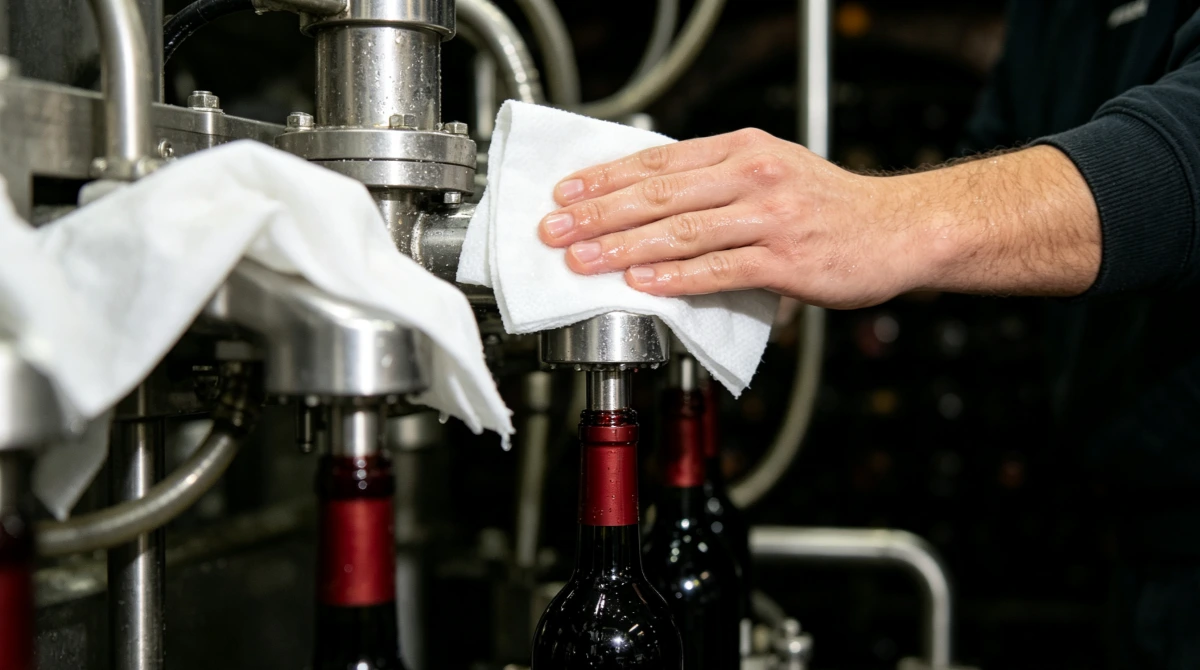
Walk into any brewery packaging hall and you’ll find rolls of blue shop towels, generic industrial rags, or whatever the maintenance team grabbed from the supply closet. These products are chosen for one reason: they’re cheap and they absorb liquid. Nobody asks whether the fiber composition is FDA food contact compliant. Nobody requests a Certificate of Analysis. Nobody thinks about what’s migrating from the wipe onto the filler head that touches every bottle cap.
The beverage industry sits at the intersection of three cleaning challenges that most other industries deal with separately:
- Wet environments — Spills, condensation, CIP rinse water, and product drips are constant. Your wipes need to handle large volumes of liquid without falling apart.
- Chemical exposure — CIP (clean-in-place) chemicals like caustic soda, phosphoric acid, and peracetic acid are present on every surface. Your wipes must survive contact with these chemicals without releasing fibers or absorbing toxic residues.
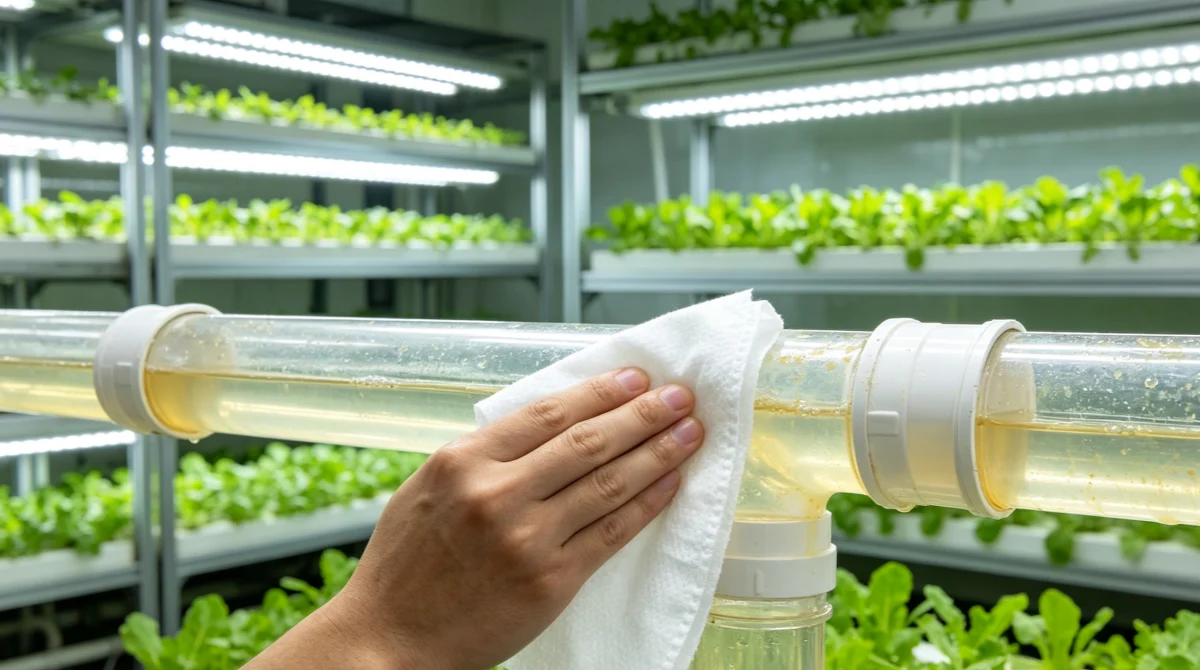
- Food contact surfaces — Filler heads, capping stations, can seamers, and conveyor belts that contact the product container are food contact surfaces under FDA regulations. Any consumable used on these surfaces must be food-contact safe.
A wipe that excels at one of these but fails at another is a contamination risk. The generic “heavy-duty” industrial rag might be absorbent, but it’s loaded with processing chemicals that have never been tested for food safety. The food-safe wipe might have a clean COA, but it disintegrates the first time it touches a caustic rinse. You need all three, and that narrows the field considerably.
We’ve published broader guides on industrial wiping cloths and food grade wiping cloths for FDA compliant manufacturing. Here, we focus specifically on the brewery and beverage production environment—its unique chemistry, its specific contamination vectors, and the wipe specifications that actually work.
HACCP, FDA 21 CFR, and EU Food Contact: The Regulatory Framework
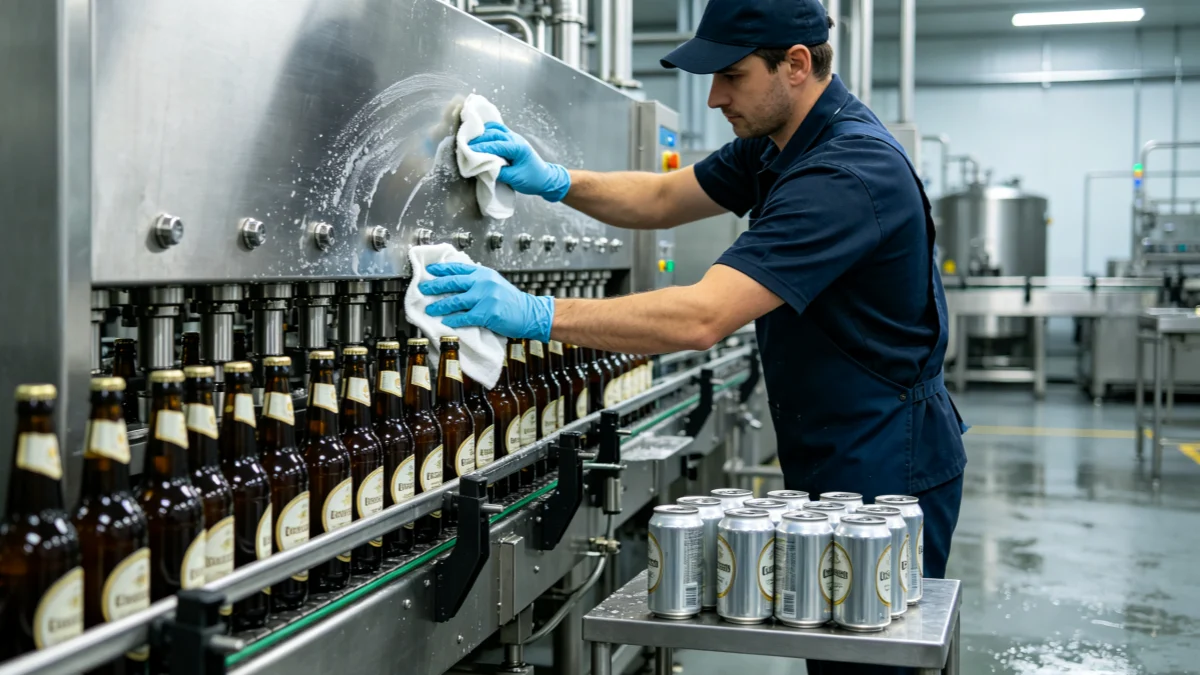
Your HACCP plan identifies critical control points in your production process. Most breweries and beverage plants have CCPs at the pasteurizer, the filler, and the capper/seamer. But your HACCP plan also needs to address prerequisite programs—and cleaning consumables fall squarely in that category.
FDA 21 CFR 174–178: Food Contact Substance Regulations
In the United States, any material that contacts food or the food-contact surface must comply with FDA regulations. For wiping cloths used on food-contact equipment, the relevant regulation is 21 CFR 176.170 (Components of paper and paperboard in contact with aqueous and fatty foods) or 21 CFR 177.1630 (Polyethylene phthalate), depending on the wipe material. Your supplier should be able to tell you exactly which regulation their product complies with and provide supporting documentation.
The practical test: if your wipe touches a filler head, a conveyor belt that carries open containers, a can seamer die, or any surface that subsequently contacts the product, that wipe is a food contact substance. Non-compliant wipes on these surfaces are an FDA finding waiting to happen.
EU Regulation (EC) No 1935/2004 and (EU) No 10/2011
For breweries and beverage manufacturers selling into the European market, the EU framework applies. Regulation 1935/2004 sets the general requirements for food contact materials, and Regulation 10/2011 specifically covers plastic materials. Your wipe supplier needs to provide a declaration of compliance per these regulations, including migration testing data if the wipe contacts food directly.
HACCP Prerequisite Programs
Your HACCP plan’s prerequisite program for cleaning should specify which consumables are used on which surfaces, what their food-contact compliance status is, and how incoming lots are verified. Third-party auditors (BRC, SQF, FSSC 22000) will check this. If your prerequisite program mentions “cleaning rags” without specifying food-contact compliance, that’s a non-conformance.
Where Beverage Contamination Actually Comes From
When we audit wipe usage in brewery and beverage facilities, the contamination risks fall into three categories—and they’re not the ones most operators expect.
Chemical Migration from the Wipe
This is the risk that causes the most damage and gets the least attention. Industrial wiping cloths are manufactured with processing aids—spin finishes, lubricants, softening agents, and sometimes bleaching chemicals. These compounds don’t stay in the wipe. When the wipe contacts a wet surface (and every surface in a brewery is wet), those chemicals migrate. If the surface is a food-contact surface, those chemicals end up in the product.
The brewery in Portland that I mentioned at the start? Their wipe’s spin finish residue was migrating onto can lids at levels low enough to pass a standard food safety test—but high enough to produce detectable off-flavors in a hop-forward IPA. The analytical chemistry caught it. The food safety test didn’t.
Fiber and Particulate Contamination
Fiber shedding from cut-edge wipes is the second most common issue. In a brewery, loose fibers on a filler head can end up in the bottle. In a carbonated beverage line, fibers can nucleate CO₂ release and cause foaming issues during filling. In a juice or smoothie line, fibers are visible in the product and generate consumer complaints.
The fix is straightforward: sealed-edge wipes on all food-contact surfaces. But most brewery supply closets are stocked with cut-edge rags because nobody specified otherwise.
Microbial Cross-Contamination
A wipe that’s been sitting in a bucket of sanitizer solution for eight hours is not sanitary. It’s a microbial soup. We’ve seen operators use the same wipe to clean a filler head, wipe down a conveyor belt, and mop up a spill on the floor—all with the same cloth, all in the same shift. Every surface that wipe touches gets whatever it picked up from every previous surface.
Single-use wipes eliminate this risk. Reusable cloths can work, but only with a documented laundry protocol, rotation schedule, and microbial monitoring program. For most small-to-mid-size breweries, single-use is simpler and safer.
Wipe Selection by Production Area: Brew House, Cellar, Packaging
Different areas of a brewery or beverage plant have different wipe requirements. Here’s how to think about it zone by zone.
The Brew House
Mash tuns, lauter tuns, kettles, and whirlpools are typically cleaned via CIP (clean-in-place) systems. Manual wipe-down happens on exterior surfaces, valve connections, gasket faces, and sample ports. The environment is hot, wet, and loaded with caustic and acid residues from CIP cycles.
Wipe specifications for the brew house:
- Chemical resistance to caustic soda (NaOH at 2–4% concentration) and phosphoric acid
- High absorbency for wort spills and CIP rinse water
- Durability—won’t fall apart when wet or exposed to hot surfaces
- Food-contact compliance for any surface that contacts wort or beer
The Cellar: Fermentation and Conditioning
Fermentation tanks, bright tanks, and their associated piping are CIP-cleaned. Manual wipe-down focuses on tank exteriors, manway gaskets, sample valves, and racking arms. The chemical environment is milder here—primarily acidic (beer and CIP acid rinses) rather than alkaline.
Wipe focus for the cellar: absorbency, food-contact compliance for gasket and valve wipe-down, and compatibility with peracetic acid (the most common no-rinse sanitizer in brewing). Peracetic acid degrades some wipe materials—test before you commit.
Packaging: Bottling, Canning, and Kegging
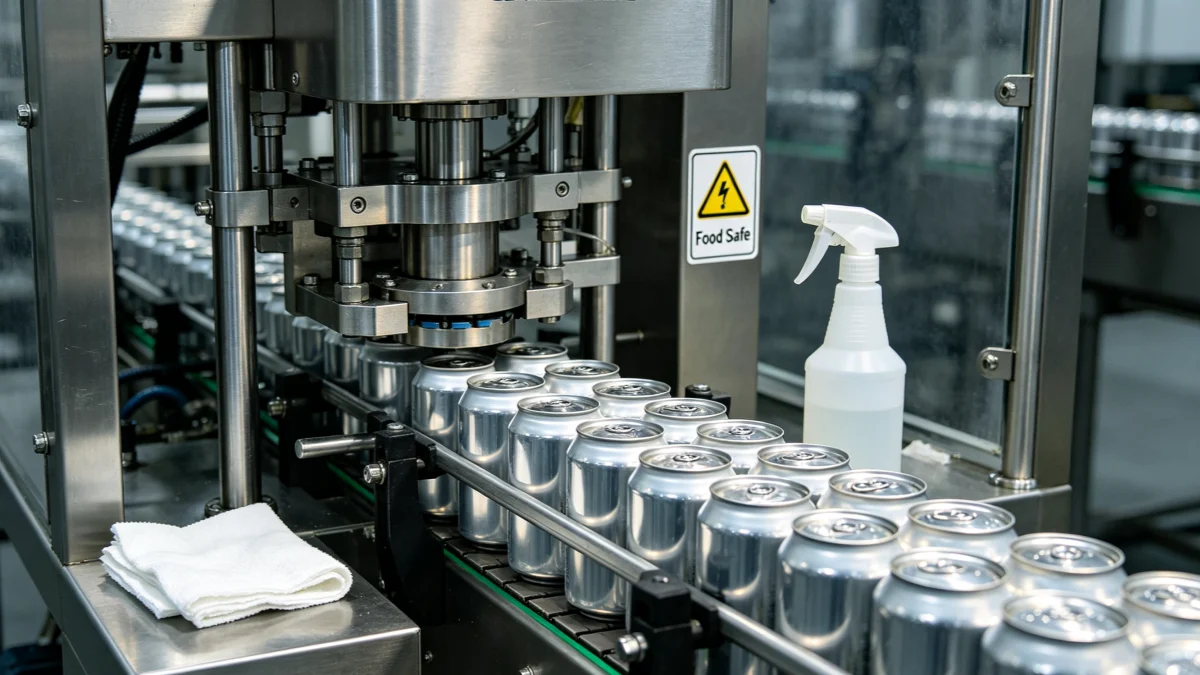
This is the highest-risk zone for wipe-related contamination. Filler heads, capping stations, can seamers, and label applicators all have food-contact surfaces that get wiped during changeovers, shift starts, and spill cleanups. The wipe directly contacts the surface that contacts your product container.
Packaging line wipe specifications:
- Full FDA food contact compliance (21 CFR 176.170 or applicable regulation)
- Sealed-edge construction to prevent fiber contamination in bottles and cans
- Low extractable residue—verified by your supplier’s COA
- Lint-free performance under wet conditions
- Compatibility with the specific sanitizer used on your packaging line (typically peracetic acid or quaternary ammonium compounds)
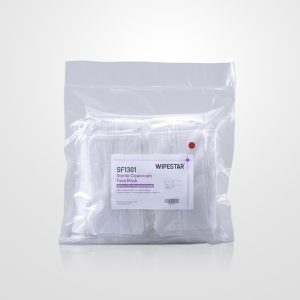
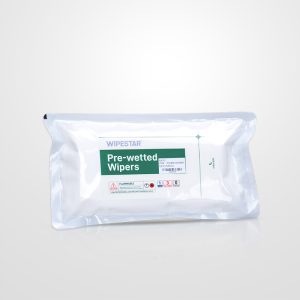
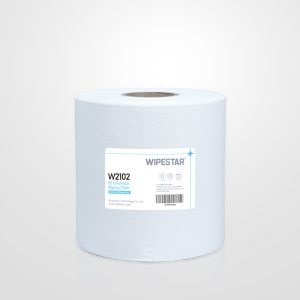
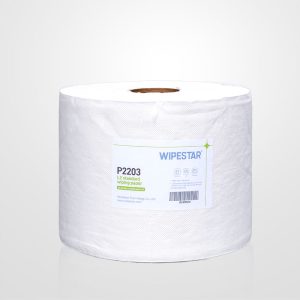
Our wiping cloths range includes products tested for all three requirements—food-contact safety, chemical resistance, and low-lint performance. We can match the right product to each zone in your facility.
Chemical Resistance: CIP Chemicals, Sanitizers, and Your Wipes
Brewery and beverage cleaning chemistry is aggressive. Your wipes will encounter some or all of these chemicals during a normal production day:
| Chemical | Typical Concentration | Effect on Wipes |
|---|---|---|
| Caustic soda (NaOH) | 2–4% w/v | Degrades cellulose fibers; safe for polyester and polypropylene |
| Phosphoric acid | 1–3% w/v | Generally safe for most wipe materials at use concentration |
| Peracetic acid (PAA) | 150–300 ppm | Degrades some non-woven binders; test wipe integrity after exposure |
| Quaternary ammonium compounds | 200–400 ppm | Safe for most materials; may leave residue on wipe surface |
| Sodium hypochlorite (bleach) | 100–200 ppm | Degrades cotton and rayon; safe for polyester and polypropylene |
| Isopropyl alcohol (IPA) | 70% v/v | Safe for most materials; rapid evaporation limits absorbency benefit |
The key takeaway: not all wipe materials survive all brewery chemicals. A cellulose/polyester blend that works perfectly in a packaging hall might disintegrate in the brew house where caustic exposure is routine. Map your wipe material to your actual chemical exposure, not to a generic “chemical resistant” claim on the product label.
Request chemical resistance test data from your wipe supplier for your specific CIP chemicals at your use concentrations. We provide this data for every product in our wiping cloths catalog—ask our team for the compatibility matrix for your facility’s cleaning chemistry.
Absorbency vs. Food Safety: Why You Can’t Pick Just One
Here’s the tension in brewery wipe selection: the most absorbent wipes are often the least food-safe, and the most food-safe wipes are often the least absorbent.
Cotton rags and cellulose-based wipes absorb liquid like nobody’s business. They’re what every brewer reaches for when a hose connector blows off or a tank overflows. But cotton is a natural fiber with variable bioburden, inconsistent fiber length (meaning more lint), and processing chemicals (bleaching agents, softeners) that have never been tested for food contact compliance. Cellulose wipes are better, but they still carry higher extractable loads than synthetic options.
Polyester and polypropylene wipes have clean extractable profiles and consistent food-contact compliance—but they don’t absorb water-based liquids nearly as well as cellulose. A polyester wipe on a beer spill just pushes the liquid around.
The solution for most breweries: use different wipes for different tasks. Food-contact-safe polyester or polyester/cellulose blend wipes for equipment surfaces, filler heads, and can seamers. Absorbent cellulose or wood-pulp-based wipes for floor spills, tank exteriors, and general maintenance. Document the distinction in your SOPs and color-code if necessary to prevent cross-use.
Documentation Package for HACCP-Compliant Wipe Procurement
Your HACCP plan and third-party food safety certification (BRC, SQF, FSSC 22000) expect documented evidence that your cleaning consumables meet food safety requirements. Here’s what your wipe supplier should provide:
- FDA Food Contact Compliance Letter — A letter from the supplier stating which FDA regulation the wipe complies with, supported by testing data. For EU markets, a Declaration of Compliance per Regulation 1935/2004.
- Certificate of Analysis (COA) — Per-lot data including particle/fiber counts, extractable residue levels, and dimensional verification. The COA should quantify extractables in mg/m² or ppm, not just say “pass.”
- Chemical Compatibility Data — Verified compatibility with your specific CIP chemicals and sanitizers at your use concentrations. Generic “chemical resistant” claims don’t satisfy auditors.
- Raw Material Traceability — Base fiber composition, all processing aids, and manufacturing lot number. You need this to complete your HACCP prerequisite program documentation.
- Allergen and GMO Declaration — For wipe materials derived from natural sources (cotton, wood pulp), a declaration that the product is free from allergens and GMO-derived materials relevant to your product claims.
Missing documentation is the most common non-conformance we see in brewery and beverage facility audits. The wipe works fine. The paperwork doesn’t exist. Don’t let a $2 roll of wipes become a finding on your BRC audit report.
The Problems We See in Brewery and Beverage Facilities
After working with breweries, juice manufacturers, soft drink plants, and bottled water facilities, certain wipe-related issues come up again and again:
- Using automotive or industrial shop towels on food-contact surfaces — Blue shop towels are the single most common wipe we find on brewery packaging lines. They’re absorbent, cheap, and readily available. They’re also loaded with binders, resins, and processing chemicals that have never been tested for food contact. Every time one touches a filler head, it’s a food safety risk.
- One wipe for everything — The same cloth that cleaned the floor gets used on the canning line seamer. No zone separation, no SOP distinction, no color coding. Cross-contamination in action.
- Reusable cloths without a laundry program — Cotton rags get washed in a utility sink with whatever detergent is available, wrung out by hand, and tossed back in the supply bin. No wash temperature specification, no microbial monitoring, no retirement criteria. The cloth is dirtier after “cleaning” than before.
- No incoming inspection — Wipe lots are accepted based on the packing slip. No COA review, no extractable verification, no bioburden check. If the supplier changes their fiber source or adds a new processing aid, nobody knows until a customer complains or an auditor finds the gap.
- Storing wipes next to chemicals — We’ve found wipe rolls stored on the same shelf as caustic soda drums and sanitizer concentrate bottles. Chemical vapors can penetrate the wipe packaging and contaminate the product before you even open the roll.
Who You’ll Work With at WIPESTAR
We work with beverage producers globally—from boutique wineries to multinational spirits companies. Our team understands that wine and spirits are not just another beverage category; they are products where the cleaning consumable matters as much as the cleaning chemical.

Ethan — Sales Director
Ethan has over 20 years in the consumables industry and has worked with beverage manufacturers across Asia, Europe, and North America. He leads our approach to food and beverage accounts—facilities that need food-contact compliance, HACCP documentation, and zone-specific consumable programs.

Vicky — Foreign Trade Sales Supervisor
Vicky manages our international food and beverage accounts. She has helped breweries and beverage plants navigate wipe procurement for HACCP, BRC, and SQF audits, ensuring every order ships with the food-contact compliance documentation your certification body expects.

Daisy — Sales Support
Daisy provides sales support for food and beverage accounts, coordinating sample shipments, documentation packages, and order logistics to keep your consumable supply chain running smoothly.
Get Started with HACCP-Compliant Wiping Cloths
Whether you’re qualifying wipes for a new canning line, upgrading your consumable documentation for a BRC or SQF audit, or replacing shop towels with food-contact-safe alternatives, we’re ready to help. Full documentation packages included with every order—FDA compliance letters, COAs, chemical compatibility data, and allergen declarations.
Browse our wiping cloths range to see specifications, or contact our technical team to discuss your specific brewery or beverage production requirements.
Frequently Asked Questions About Wiping Cloths for Brewery and Beverage Production
Request a Quote for Brewery and Beverage Production Wiping Cloths
We supply food-contact-compliant industrial wiping cloths from our ISO 9001:2015 certified factory with full HACCP documentation, custom sizing, private labeling, and fast global shipping. Every lot ships with the documentation your food safety certification requires.