English
 Chinese



What’s the most common reason compounding facilities get cited during inspections? It’s not expired chemicals or missing hoods. It’s the wipes.
A 503B outsourcing facility in Florida found this out in mid-2024. State board of pharmacy inspector walked in unannounced—standard procedure. Asked to see the spec sheet on the wipes used to clean the laminar flow workbench, the vial exteriors, the IV bag ports.
The facility pulled out their sterile wipes—individually packaged, labeled “cleanroom grade.” Looked good on the surface. But the inspector dug deeper. No particle count data per IEST-RP-CC004. No USP <797> compatibility verification. No lot-level Certificate of Sterilization showing the validated gamma dose.
They had to revalidate their cleaning procedures and demonstrate corrective action within 30 days. Two weeks of production gone. A new CSP launch pushed back. All over a wipe that looked right but wasn’t documented right.
Here’s the thing: “cleanroom grade” is not a compliance standard. It’s a marketing term. And in pharmaceutical compounding, where the product goes directly into a patient—often intravenously—that distinction can mean the difference between passing an inspection and getting cited.
This guide is for pharmacy directors, compounding supervisors, and quality teams. We’ll cover what USP 797 and 800 actually require of your cleaning consumables, how to match wipes to ISO class zones, what your sterilization documentation needs to show, and the inspection gaps that keep showing up in facility after facility.
Compounding Isn’t Manufacturing—But the Standards Are Just as Strict
Pharmaceutical compounding occupies a strange space in healthcare. It’s manufacturing, but it happens in a pharmacy. The products are medications that go directly into patients—many of them intravenously. A contaminated IV admixture can cause sepsis or bacteremia within hours. Your cleaning consumables are, quite literally, the last barrier between the compounding environment and the patient’s bloodstream.
Here’s the challenge: unlike pharmaceutical manufacturing, which operates under cGMP in dedicated cleanroom facilities, compounding pharmacies often work in repurposed spaces with portable laminar flow hoods and biological safety cabinets.
The cleaning requirements are equally stringent—arguably more so, given the patient proximity—but the infrastructure to support them is less formalized. That gap between requirement and infrastructure is exactly where inspectors find problems.
USP 797 and Your Wipes: What the Standard Actually Says
USP <797> (revised 2023) lays out requirements for compounding sterile preparations. When it comes to cleaning consumables, the standard is specific—not vague, not suggestive. Here’s what it requires:
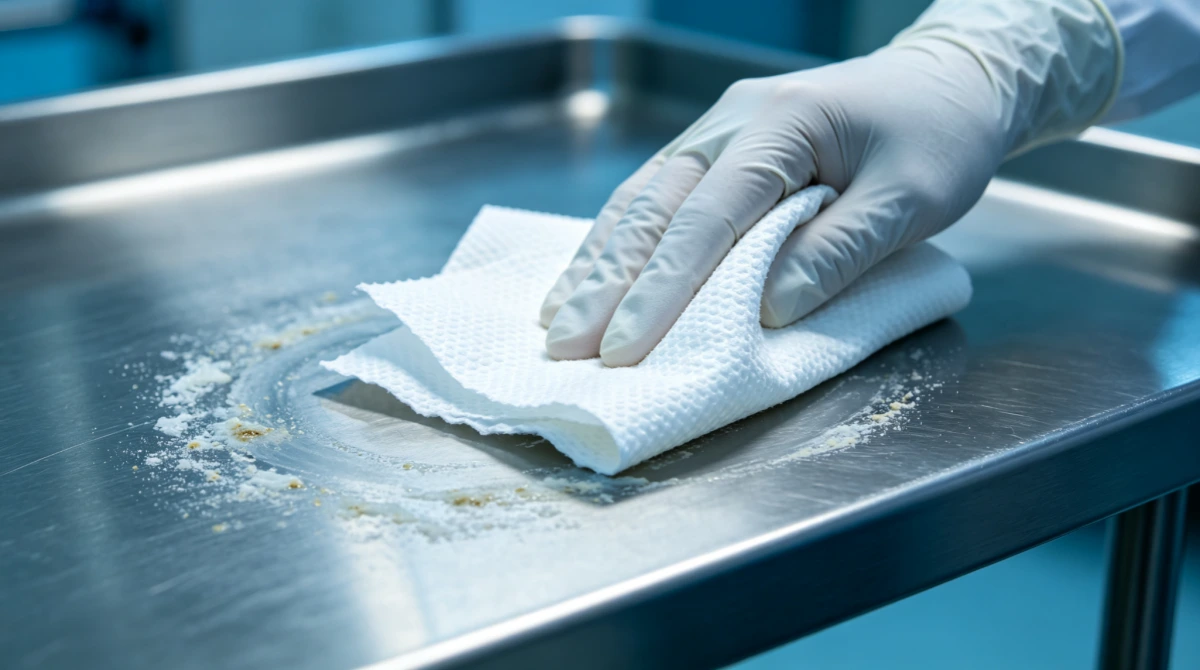
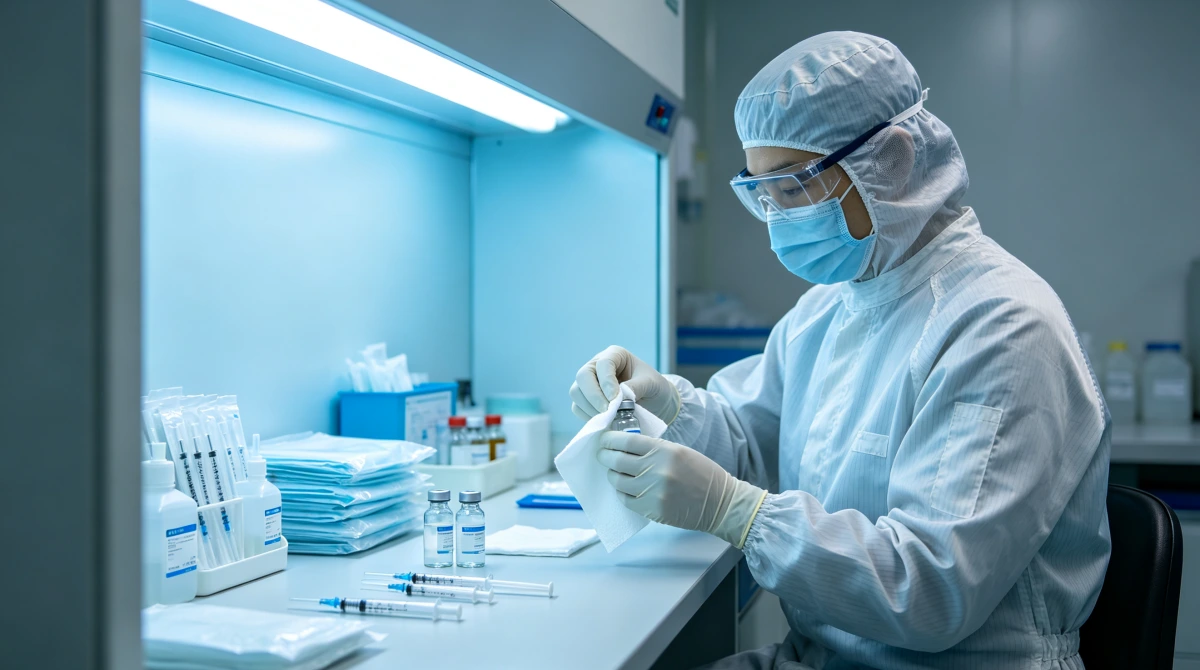
Surface cleaning. All surfaces in the compounding area—workbenches, hood interiors, floors, walls—must be cleaned with an appropriate disinfectant on a defined schedule. The wipe you use to apply that disinfectant must be compatible with your ISO class environment. You can’t just grab any cloth and dip it in IPA.
Sterile wipes for ISO Class 5. This one’s absolute. Wipes used inside the laminar airflow workbench (LAFW) or compounding aseptic isolator (CAI) must be sterile. Non-sterile wipes are not permitted in ISO Class 5 compounding areas. It doesn’t matter how clean they are or what cleanroom they were manufactured in—if they’re not sterile, they don’t go in the hood.
Particle control. The wipe must not introduce particles into the ISO Class 5 environment. Sealed-edge construction and verified particle counts are expected. USP <797> doesn’t spell out exact particle limits—it references IEST-RP-CC004 for guidance. But the expectation is clear: your wipe shouldn’t be making the space dirtier.
Documentation. The cleaning procedure must be documented, and the consumables must be specified by product name and lot number in the cleaning log. Not “surface wiped with cleanroom cloth”—the actual product name and lot number.
In practical terms: if a wipe goes inside a laminar flow hood, it needs to be sterile, sealed-edge, low-particle, and documented by lot number. Missing any one of those four things creates a compliance gap. And compliance gaps in compounding don’t stay hidden for long.
Handling Hazardous Drugs? USP 800 Changes the Wipe Equation
USP <800> applies to facilities handling hazardous drugs (HDs)—chemotherapy agents, certain antiviral drugs, hormones, and anything else NIOSH classifies as hazardous. The standard requires surface decontamination, deactivation, and cleaning of all HD contact surfaces. That changes what your wipes need to do.
Decontamination wipes. You need wipes saturated with an appropriate decontamination agent—typically sodium hypochlorite at 0.1% or a commercial HD deactivation product—for all HD contact surfaces. The wipe itself must be chemically compatible with the decontamination agent. Some materials break down on contact with hypochlorite; yours shouldn’t.
Spill management. HD spill kits need absorbent wipes or pads that contain the spill without spreading contamination. The absorbent material must work with the specific HD you’re handling. One-size-fits-all doesn’t apply here.
PPE cleaning. Gowns, gloves, and shoe covers used in HD areas may need wipe-down before removal. The wipe can’t degrade PPE materials—nitrile, polyethylene, polypropylene. Test before you commit.
Disposal. Wipes used for HD decontamination go in the hazardous pharmaceutical waste stream, not general waste. Segregate them. Document the disposal. This is a regulatory requirement, not a suggestion.
The key difference: USP <797> cares about sterility and particle control. USP <800> cares about chemical compatibility and hazardous waste handling. If your facility does both sterile compounding and HD handling, you may need two different wipe specifications—one for the compounding area and one for the HD decontamination zone. Don’t assume one product covers both.
Wipe Selection by ISO Class Zone
ISO Class 5 — Inside the LAFW or CAI
This is where compounding actually happens. The interior of the laminar flow hood or isolator. Your wipes here must be sterile (gamma-validated, SAL 10⁻⁶), sealed-edge, low-particle, and compatible with the disinfectants you use for surface decontamination—typically sterile 70% IPA and a sterile sporicidal agent.
Every wipe in this space touches surfaces that touch the CSP. This is the highest-consequence wipe in your facility, and it should be treated that way.
ISO Class 7/8 — Buffer Room and Anteroom
The buffer room (ISO Class 7) and anteroom (ISO Class 8) surround your compounding area. Wipes here need to be low-lint and compatible with your cleaning disinfectants. They’re suitable for surfaces where packaged medications are staged.
Sterile wipes are recommended but not always mandated—check your state board of pharmacy requirements, because they vary. Some states are stricter than the federal guidance.
Non-Classified — General Pharmacy Areas
Receiving, storage, dispensing—standard pharmacy operations. Regular industrial wipe requirements apply: absorbency, chemical compatibility, and SDS documentation on file. Nothing exotic, but don’t skip the basics.
Your Certificate of Sterilization: What It Must Include
Wipes used in ISO Class 5 compounding areas must be sterile. The standard sterilization method is gamma irradiation, achieving a Sterility Assurance Level (SAL) of 10⁻⁶. Your supplier provides a Certificate of Sterilization (COS) with each lot. Here’s what that document needs to show:
The sterilization method (gamma irradiation), the validated dose—typically 25–40 kGy—the lot number linking the COS to the specific wipe lot, the irradiation date and facility, and a reference to the sterilization validation protocol. All of it. Not some of it.
And here’s something facilities miss regularly: a COS that says “sterilized by gamma” without stating the dose is not sufficient. Your state board inspector will ask for the dose number. If you can’t produce it, that’s a finding. A real one. On paper.
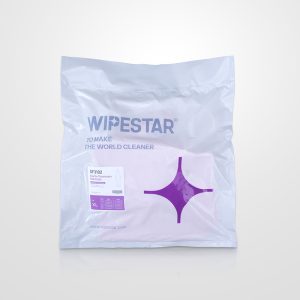
Our sterile products range includes gamma-validated wipes with full COS documentation for each lot. Our technical team can recommend products that meet USP <797> requirements for ISO Class 5 compounding environments.
The Inspection-Ready Documentation File
State board inspections happen without notice. Your consumable documentation file needs to be ready all the time—not assembled in a panic when the inspector arrives. Here’s what belongs in that file:
Certificate of Sterilization (COS) — Per lot, showing gamma dose, SAL, lot number, and validation reference. For every sterile wipe used in ISO Class 5. Keep these organized chronologically. An inspector doesn’t want to watch you dig through a filing cabinet.
Certificate of Analysis (COA) — Per lot, showing particle counts, extractable residue, and cytotoxicity data. USP <797> expects evidence that the wipe doesn’t introduce harmful substances into the compounding environment. This is separate from the COS—sterility and cleanliness are different things.
USP <797> Compatibility Statement — From the supplier, confirming the product is suitable for use in compounding sterile preparations. Not a general cleanroom spec sheet—a compounding-specific statement.
SDS — Current, GHS-compliant. Standard requirement, but make sure it’s for the exact product you’re using.
Cleaning log integration — Your cleaning SOP should reference the specific wipe product by name and lot number. The cleaning log should record the lot number used for each cleaning event. This traceability chain is what connects your consumable documentation to your actual practice. Inspectors follow that chain.
Sterile vs. Non-Sterile Wipes by Zone
| Zone | ISO Class | Sterile Required? | Key Wipe Specs | Documentation Required |
|---|---|---|---|---|
| LAFW / CAI Interior | ISO 5 | Yes (mandatory) | Gamma-validated, sealed-edge, low-particle, SAL 10⁻⁶ | COS, COA, USP 797 compatibility statement |
| Buffer Room | ISO 7 | Recommended | Low-lint, disinfectant-compatible | COA, SDS |
| Anteroom | ISO 8 | Check state requirements | Low-lint, disinfectant-compatible | SDS |
| HD Decontamination | Varies | No (but chemical compatibility critical) | HD-compatible, absorbent, decontamination agent-compatible | SDS, chemical compatibility data, HD waste disposal records |
| General Pharmacy | Non-classified | No | Absorbent, chemical-compatible | SDS |
5 Compliance Gaps That Get Facilities Cited
1. Non-sterile wipes in ISO Class 5. This one seems obvious, but it’s the most common violation. USP <797> requires sterile wipes inside the LAFW or CAI. “Cleanroom grade” non-sterile wipes don’t cut it. The standard says sterile. It means sterile. Period.
2. No COS on file. The facility uses sterile wipes—great—but can’t produce the Certificate of Sterilization showing the validated gamma dose when the inspector asks. Keep COS documents for every lot, organized chronologically, and accessible within minutes. Not hours. Minutes.
3. Using semiconductor cleanroom wipes without compounding-specific data. A wipe designed for semiconductor fabrication might be excellent at particle control. But if it’s never been tested for USP <797> compatibility, cytotoxicity (USP <87>), or pharmaceutical extractables, it’s not validated for your application. The semiconductor industry and the pharmaceutical industry have different priorities. Don’t assume a cleanroom wipe is a cleanroom wipe.
4. Same wipe inventory for inside and outside the hood. Using the same wipes for ISO Class 5 and general areas creates sterility assurance gaps. You need separate sterile wipes for inside the hood and non-sterile wipes for outside, with clear labeling and separate storage. Mixing them—even accidentally—undermines your entire sterility program.
5. No lot traceability in cleaning logs. The cleaning log says “surface wiped” but doesn’t record which product or which lot. Inspectors expect lot-level traceability linking the cleaning event to the consumable documentation. If the log doesn’t show it, the documentation doesn’t exist as far as the inspection is concerned.
Who You’ll Work With at WIPESTAR
We work with pharmaceutical compounding facilities that operate under some of the strictest cleanliness standards in healthcare. Our team understands the USP <797> and <800> compliance landscape, the documentation requirements that keep inspectors satisfied, and the wipe specifications that actually protect your patients.

Zhen — Account Manager
Zhen has rich experience in cleanroom consumables and contamination control solutions, proficient in WIPESTAR’s full product line across industries including microelectronics, optics, and aerospace.

Daisy — Sales Support
Daisy provides efficient assistance for order follow-up, customer communication, and daily business operations at WIPESTAR.

Zac — Customer Service
Zac focuses on professional and efficient customer service, dedicated to responding to inquiries quickly, handling orders smoothly, and providing reliable after-sales support.

Yunyun — ESD Project Manager
Yunyun is a dedicated ESD prevention professional with rich experience in static control technology research, application, and solution implementation for cleanroom environments.
Get Started with Pharmaceutical Compounding Wiping Cloths
Whether you’re qualifying wipes for a new compounding facility, upgrading consumables for USP <797> compliance, or preparing for a state board inspection, we can help. Our sterile wipes come with full documentation—COS, COA, and USP <797> compatibility statements—lot by lot.
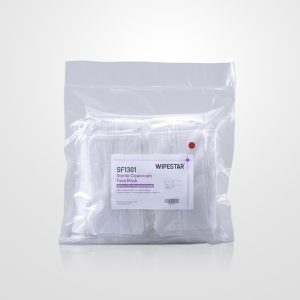
- Sterile Cleanroom Wipes — Gamma-validated (25–40 kGy), sealed-edge, low-particle. Full COS and COA per lot. Built for ISO Class 5 laminar flow hoods and aseptic isolators.
- Low-Lint Wiping Cloths — For ISO Class 7/8 buffer rooms and anterooms. Compatible with standard disinfectants including IPA and sporicidal agents. SDS on file for every lot.
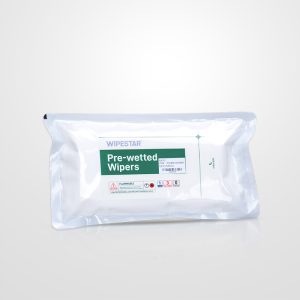
- HD Decontamination Wipes — Chemically compatible with sodium hypochlorite and commercial HD deactivation products. Absorbent enough for spill containment. Suitable for USP <800> compliance programs.
Browse Sterile Products Range → Request a Custom Quote
Frequently Asked Questions