English
 Chinese



Last November, a mid-size extraction facility in Oklahoma failed a state compliance audit. Not for THC levels, not for pesticide residues—for surface contamination. The health department swab found Aspergillus on a stainless steel extraction table that the team had cleaned 30 minutes earlier.
The source? The cleaning cloths had been sitting in an open bucket of sanitizer for three days. The sanitizer had lost efficacy. The cloths were actively growing mold. Every surface they’d “cleaned” in those three days had been inoculated with spores.
The operator lost roughly $340,000 in production during the shutdown. Then they spent another $80,000 on remediation—new cleaning protocols, new equipment, new consumables, third-party validation testing. All because nobody thought to check the cleaning cloths.
That facility isn’t unusual. Cannabis processing is one of the fastest-growing regulated industries in the United States, and the cleaning practices at many operations are stuck in the artisanal stage. Extraction rooms running hydrocarbon solvents with industrial-grade equipment, but cleaning those surfaces with whatever cloth someone grabbed from the supply closet. Edibles kitchens producing food-contact products with no documented cleaning procedure. Packaging areas where the same wipe goes from the filling machine to the labeling station to the sealing bar.
If you manage a cannabis processing facility, run compliance for a multi-state operator, or oversee quality at an extraction lab, this guide covers what you need to know about the consumables that touch every surface in your operation.
GMP for Cannabis: What the Regulations Actually Say
Cannabis processing doesn’t fall under federal FDA GMP (21 CFR Part 117) because cannabis remains a Schedule I substance at the federal level. Instead, each state with a legal cannabis program has developed its own GMP framework—some modeled on FDA food safety rules, others drawing from pharmaceutical GMP, and a few that are essentially original creations. The result is a patchwork that’s genuinely confusing for operators.
What they all have in common, though, is this: cleaning and sanitation must be documented, the cleaning agents must be appropriate for the surface and the contaminant, and the cleaning procedures must be followed consistently. That’s universal across Colorado (1 CCR 212-2), California (CCR Title 4, Division 19), Michigan (MCL 333.27958), Illinois (4100.3200), and every other state program I’ve reviewed.
Here’s what trips up operators: the regulations don’t specify which wipe to use. They specify outcomes. Your surfaces must be free of visible residue. Your cleaning procedures must be validated. Your cleaning consumables must be documented by product name and lot number in your sanitation logs.
The state inspector isn’t going to tell you which wipe to buy—they’re going to check whether the wipe you bought is appropriate, whether you’re using it correctly, and whether you can prove it.
And “prove it” is the part that separates compliant facilities from facilities that get citations. A wipe sitting in a bucket of quaternary ammonium sanitizer with no expiration date, no concentration verification, and no documented change-out schedule is a compliance failure waiting to happen. The wipe itself might be fine. The practice is what fails.
If your facility falls under a state program that references cGMP (current Good Manufacturing Practice) directly—which includes most adult-use states now—the cleaning consumable requirements get even more specific. You need an approved supplier list. You need incoming inspection of consumables. You need documented cleaning validation studies. And you need all of it available when the inspector walks in unannounced.
Extraction Room Wipes: Solvent Resistance Isn’t Optional
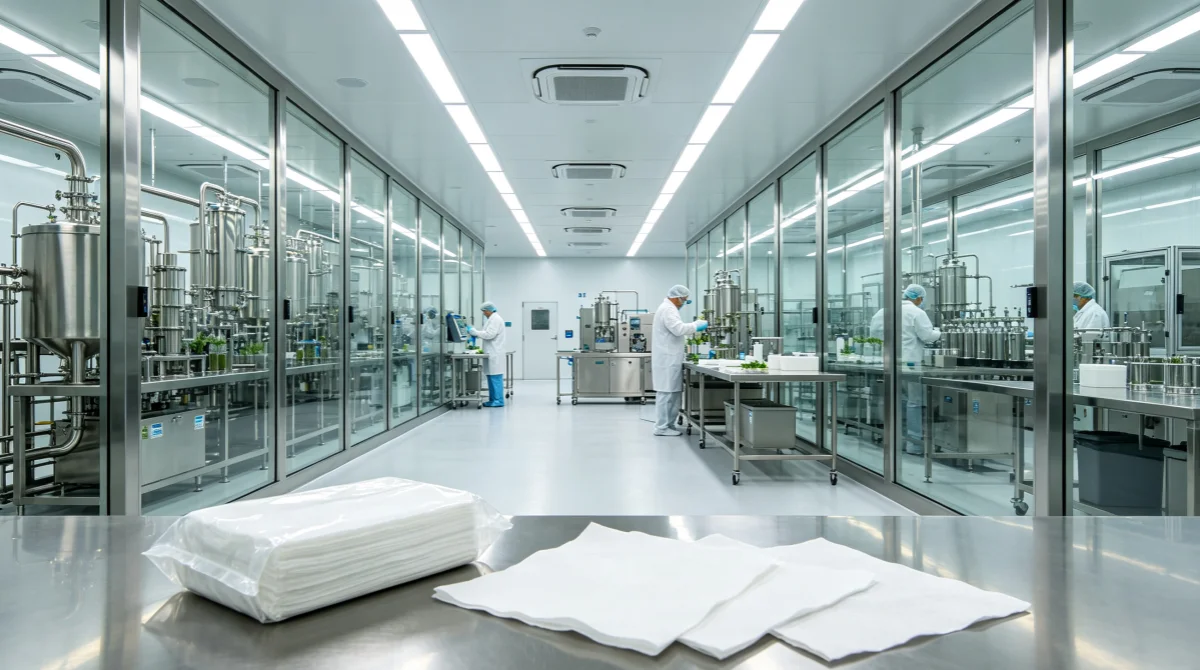
Cannabis extraction uses some of the most aggressive solvents in any food-adjacent industry. Butane (BHO extraction) is a hydrocarbon that dissolves many common wipe materials. Supercritical CO₂ extraction operates at pressures above 1,071 psi and temperatures around 31°C—the CO₂ itself is relatively gentle, but the co-solvents (ethanol, sometimes acetone) used in post-processing aren’t.
Ethanol extraction is the most common method for large-scale operations, and ethanol is a decent solvent for a wide range of organic compounds—including the binders and sizing agents used in some wipe materials.
What happens when the wrong wipe meets these solvents? Several things, none of them good. The wipe can dissolve partially, leaving fibers and binder residue on extraction equipment surfaces. That residue ends up in the extract. It can absorb solvent and release it slowly, creating a fire hazard in an environment already classified as a hazardous location under NFPA 70 (National Electrical Code, Article 500). Or it can simply fall apart during use, leaving lint on gaskets, seals, and O-rings that compromise the extraction system’s containment.
For hydrocarbon extraction rooms (butane, propane), you need wipes that are chemically resistant to C4 hydrocarbons. Polyester and polypropylene wipes are generally compatible. Cellulose-based wipes are not—cellulose swells and degrades in hydrocarbon solvents. For ethanol extraction, polyester wipes work well, but check the specific wipe’s ethanol soak test data. Some polyester wipes use polyurethane binders that soften in ethanol over extended contact.
Supercritical CO₂ extraction systems have their own wipe requirements. The high-pressure environment means any loose fiber or particle on a seal surface can cause a pressure failure. Wipes for CO₂ extraction equipment should be low-linting, preferably continuous filament polyester, with sealed edges. The particle generation rate matters here—maybe not at semiconductor-cleanroom levels, but low enough that you’re not introducing visible contaminants into a system operating at 1,071+ psi.
Mold and Microbial Contamination: The Real Threat
Cannabis flower is naturally colonized by microbes. Aspergillus, Penicillium, Cladosporium, yeasts, coliform bacteria—they’re all present on raw plant material. The extraction process eliminates most of these (butane and CO₂ extraction don’t support microbial growth), but the processing environment can re-introduce them.
For edibles, tinctures, and any product that goes into a human body without a kill step, microbial contamination from the processing environment is a serious risk.
The cleaning cloth is one of the primary vectors for microbial cross-contamination in a processing facility. I’ve watched it happen: a cloth used to wipe down the extraction table, then used on the filling machine, then set down on a bench while the operator answers the phone, then picked up and used on the packaging sealer. That cloth just transferred microbes from the dirtiest surface in the room to the cleanest one.
It’s the same cross-contamination pattern that causes foodborne illness outbreaks in commercial kitchens, except here the regulatory consequences include license suspension.
Single-use wipes solve this problem cleanly. One wipe, one surface, one direction, then discard. There’s no re-contamination risk because there’s no reuse. For facilities in states with strict microbial testing requirements—Nevada, California, Michigan—single-use wipes should be the default for all product-contact surfaces.
But here’s the catch: single-use wipes need to actually be clean when they come out of the package. If the wipe itself carries a bioburden—you’d be surprised how many industrial wipes do—you’re introducing contamination instead of removing it. For cannabis processing, specify wipes with verified low bioburden. A microbial count of < 100 CFU per wipe is a reasonable starting specification. For edibles production areas, consider sterile wipes (gamma-irradiated, with a Certificate of Sterilization) for all food-contact surfaces.
Sanitizer compatibility is the other half of the mold prevention equation. Quaternary ammonium compounds (quats), hydrogen peroxide, peracetic acid, and isopropyl alcohol are the most common surface sanitizers used in cannabis facilities. Your wipes need to be compatible with whichever sanitizer your SOP specifies.
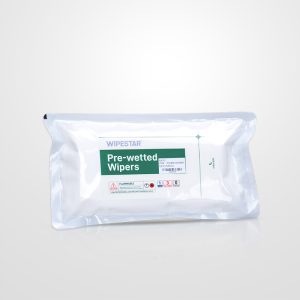
A wipe that absorbs and holds quat sanitizer without releasing it is useless—you’re wiping with a wet cloth but not actually delivering the sanitizer to the surface. Pre-saturated wipes with the correct sanitizer concentration eliminate this problem entirely.
Edibles Production: Food-Contact Surface Requirements
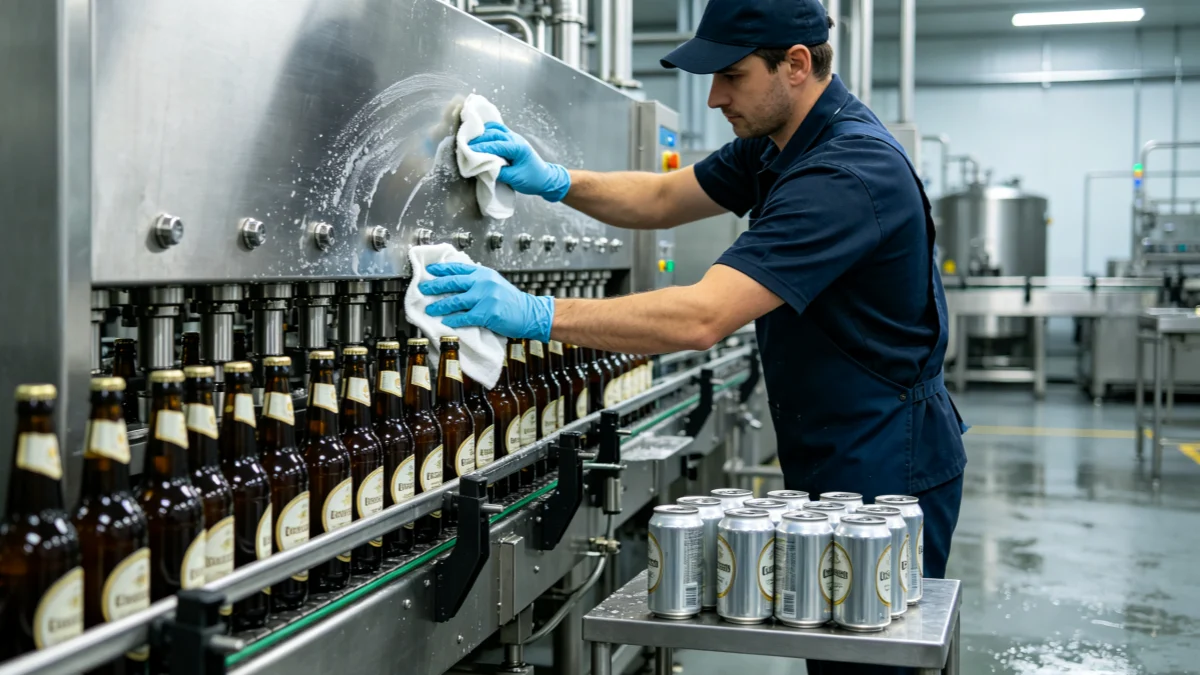
Cannabis edibles are food products. In every state that regulates them, they’re treated as food products from a safety perspective. That means the surfaces they contact—the mixing bowls, the molds, the conveyor belts, the packaging equipment—must be cleaned with food-safe consumables.
FDA 21 CFR 174–178 covers food-contact surface cleaning agents and sanitizers. While cannabis edibles don’t technically fall under FDA jurisdiction (yet—once federal legalization happens, they will), most state programs reference these standards directly or adopt them by reference.
The practical requirement: any wipe that contacts a food-contact surface in an edibles production area must be made from food-safe materials, must not leave residues that could contaminate the food product, and must be documented in your sanitation program.
Here’s a scenario I’ve seen play out more than once. An edibles facility uses general-purpose industrial wipes to clean their gummy mold trays. The wipes work fine—visually, the trays look clean. But the wipe material contains a non-food-grade binder that leaves a microscopic residue film on the silicone molds. That film is invisible. It’s also a potential allergen, a potential source of off-flavors, and a compliance failure if a state inspector tests for it.
The facility doesn’t discover the problem until a batch of gummies fails third-party testing for an unknown contaminant.
For edibles production, use wipes specifically rated for food-contact surface cleaning. Look for FDA compliance statements (21 CFR 176.170 for paper and paperboard, or relevant food-contact notifications for synthetic materials). The wipe should be free of non-food-grade dyes, fragrances, and binders. It should also be compatible with the sanitizers approved for food-contact surfaces in your state—typically quaternary ammonium compounds at 200 ppm active concentration, or peroxyacetic acid-based sanitizers.
Allergen control is another consideration that’s unique to edibles. If your facility processes edibles containing common allergens—tree nuts, dairy, soy, wheat—your cleaning program needs to include allergen changeover procedures. The wipes used during allergen changeover must be single-use to prevent allergen cross-contact. A reusable cloth that wiped a peanut butter cup mold and then wiped a dairy-free gummy mold is an allergen cross-contact event. Documented single-use wipe protocols prevent this.
State-by-State: What Health Departments Actually Inspect
I’ve spoken with compliance officers in a dozen states, and the inspection focus varies more than you’d expect. Some states drill deep into cleaning documentation. Others care more about pest control. But every single one checks surface sanitation, and the cleaning consumable documentation is part of that check.
Colorado inspectors (Marijuana Enforcement Division) focus heavily on written standard operating procedures. They want to see your cleaning SOP, the specific products listed in it, and the training records showing your staff was trained on those products. If your SOP says “wipe surfaces with sanitizer cloth” but doesn’t specify the product name, concentration, contact time, and change-out frequency, that’s a finding.
California’s Department of Cannabis Control (DCC) is stricter on the food safety side, especially for edibles. Inspectors in California will check your food-contact surface sanitization records and may swab surfaces for microbial contamination. They want to see that your sanitizers are approved for food-contact use and that your cleaning cloths are changed frequently enough to prevent microbial buildup.
Michigan’s Cannabis Regulatory Agency (CRA) has some of the most detailed cleaning requirements I’ve seen. They specify that cleaning agents must be used according to manufacturer instructions—including dilution ratios, contact times, and rinse requirements. If your wipe is pre-saturated with a sanitizer, the manufacturer’s instructions on the wipe package become your compliance requirement. Make sure those instructions align with your SOP.
Illinois, New York, and New Jersey have been increasing enforcement recently. New York’s Office of Cannabis Management (OCM) started conducting surprise inspections in 2025, and the early citations are heavily weighted toward sanitation failures—unlabeled cleaning chemical containers, undocumented cleaning schedules, and surface contamination on product-contact equipment.
The fix for all of these is the same: documented procedures, specific products, and consistent execution.
Wipe Comparison for Cannabis Processing Environments
Cannabis processing facilities need different wipes for different areas. An extraction room has completely different requirements than an edibles kitchen or a packaging line. Here’s what the main options look like.
| Property | Polyester Knit (Industrial Grade) | Cellulose/Polyester Nonwoven | Pre-Saturated Food-Safe Wipe |
|---|---|---|---|
| Solvent Resistance | Excellent — butane, ethanol, CO₂, acetone | Moderate — IPA, ethanol; poor with hydrocarbons | Good — depends on saturation solvent |
| Lint Level | Very Low | Moderate | Low |
| Microbial Bioburden | Low (specify on order) | Variable — requires incoming testing | Very Low (factory-controlled) |
| Food-Contact Safe | Available — specify FDA-compliant version | Standard versions may not be food-safe | Yes — designed for food-contact surfaces |
| ESD-Safe Available | Yes (for extraction room use) | No | No |
| Best For | Extraction equipment, solvent-contact surfaces, tool cleaning | General facility surfaces, floors, non-product-contact equipment | Edibles production, food-contact surfaces, packaging lines |
| Approximate Cost | $0.10–$0.25/wipe | $0.03–$0.08/wipe | $0.15–$0.40/wipe |
Quick note on cost: the cheapest wipe in that table runs about $0.03–$0.08. The most expensive pre-saturated food-safe wipe is $0.15–$0.40. That gap looks significant on a spreadsheet—until you compare it to the cost of a failed compliance audit, a product recall, or a facility shutdown.
One failed microbial test at an edibles facility can cost more in lost production and remediation than a decade’s supply of the right wipes. Cost-per-wipe is the wrong metric. Cost-per-compliant-batch is what matters.
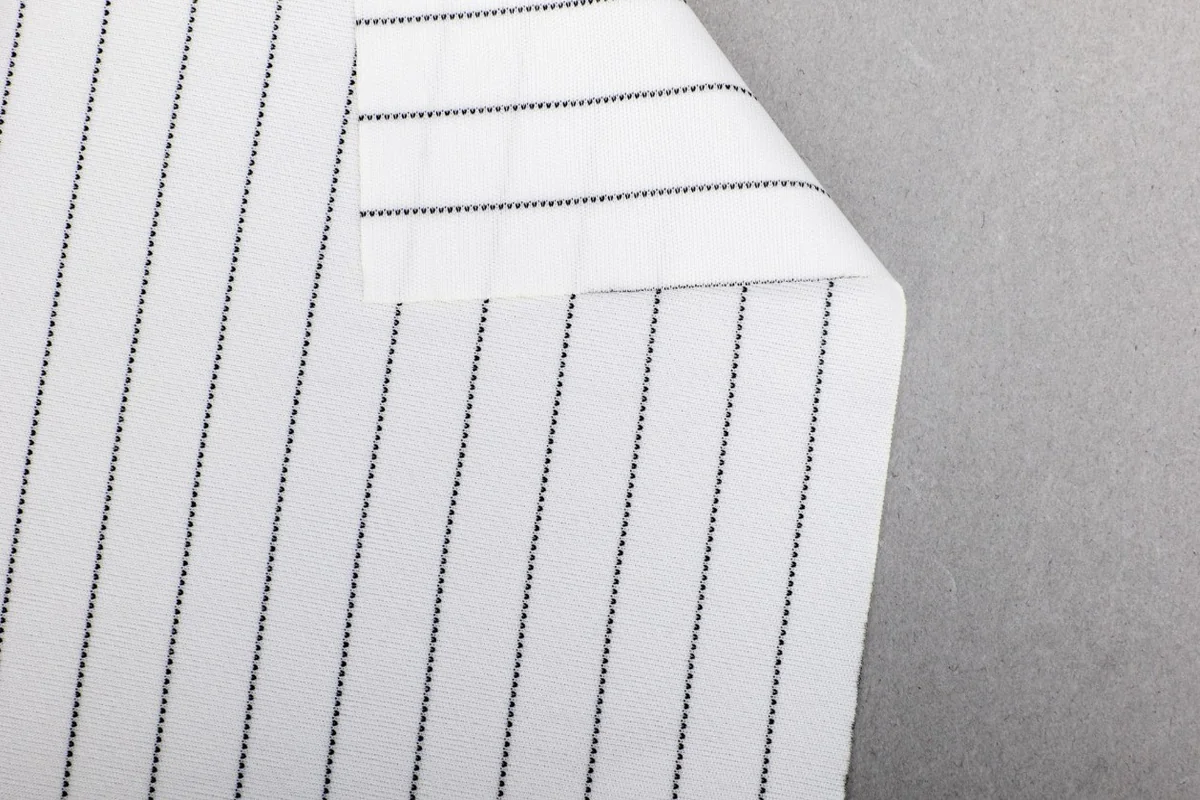
Most cannabis processing facilities run a two-wipe strategy: industrial polyester wipes for extraction and processing equipment, and food-safe wipes (either pre-saturated or FDA-rated dry wipes with approved sanitizer) for edibles production and packaging areas. Some larger operations add a third category—general-purpose nonwoven wipes for floors, walls, and non-product-contact surfaces in corridors and change rooms.
The key is separation. Different wipes for different zones, stored separately, used only in their designated area. A wipe that’s been in the extraction room should never appear in the edibles kitchen. Color-coding the packaging helps—some facilities use different colored wipe dispensers for different zones, the same way food service operations use color-coded cleaning cloths.
Five Cleaning Mistakes That Trigger Compliance Failures
After working with dozens of cannabis processing facilities across multiple states, these are the cleaning failures that come up again and again in compliance audits:
1. Reusing wipes across zones. A wipe that cleaned an extraction vessel gets used on a filling machine. Or a wipe from the flower processing room ends up on an edibles packaging surface. Cross-contamination between zones is one of the most common citations. The fix is simple: single-use wipes, one per surface, discarded immediately after use. No exceptions.
2. Open wipe storage. Wipes stored in open containers, unsealed bags, or sitting on a shelf without packaging protection. Open wipes accumulate dust, microbes, and environmental contaminants. They also dry out if pre-wetted, losing their effectiveness. Keep wipes in sealed dispensers or closed containers, and never return unused wipes to the original package.
3. Unlabeled sanitizer containers. Your sanitizer spray bottle needs a label showing the product name, concentration, expiration date, and the name of the person who prepared it. This is a basic GMP requirement that’s cited in almost every state. If your sanitizer is in a generic spray bottle with no label, that’s a finding—even if the sanitizer inside is perfectly fine.
4. No documented change-out schedule. If you’re using reusable cloths or keeping wipes in a sanitizer bucket, you need a documented change-out schedule—typically every 4 hours for quat-based sanitizers, every 2 hours for peroxyacetic acid solutions. Without documentation, the inspector assumes the worst: that the cloths have been sitting there since the last shift change, which they probably have.
5. Wiping instead of sanitizing. Spraying sanitizer on a surface and immediately wiping it off doesn’t sanitize anything. Most sanitizers require a contact time—typically 30 seconds to 10 minutes depending on the product and the target organism. If your SOP says “spray and wipe,” and the sanitizer label says “apply, allow 60 seconds contact time, then rinse or air dry,” you’re not following the manufacturer’s instructions. That’s a compliance failure in every state I’ve reviewed.
Who You’ll Work With at WIPESTAR
We work with cannabis processing facilities that need GMP-compliant cleaning solutions. Our team understands the regulatory landscape, solvent resistance requirements, and contamination control challenges unique to cannabis operations.

Ethan — Sales Director
Ethan has over 20 years of experience in the industrial wiping cloth and cleanroom consumables industry. He leads the global sales team and provides high-quality cleanroom solutions for worldwide customers.

Lee — Key Account Sales Manager
Lee has 7 years of sales experience in the cleanroom consumables industry, having served international companies such as Foxconn, Samsung, and Apple. He focuses on solving problems for customers.

Vicky — Foreign Trade Sales Supervisor
Vicky plays a key role in the foreign trade sales team, responsible for client communication, sales coordination, and maintaining cooperative relationships with global clients.

Carolina — Product Specialist
Carolina has many years of experience in the cleanroom consumables industry, focusing on product quality and performance. She communicates closely with production teams to continuously optimize products.
Get Started with Cannabis Processing Cleaning Wipes
Whether you’re setting up a new extraction facility, upgrading your edibles production consumables, or preparing for a state compliance audit, we can help. Full documentation including COA, food-contact compliance statements, and solvent compatibility data.
- Cleanroom Wiper Selection Guide — Our full technical guide covering wipe materials, contamination specs, and industry matching. Start here if you’re evaluating options.
- Browse All Wiping Cloths — Full product range with specs, certifications, and material data sheets for food-safe and solvent-resistant wipes.
- Request Technical Consultation — Need help matching a wipe to your specific extraction chemistry or edibles production setup? Our team can provide compatibility data and compliance documentation.
Browse Full Wiping Cloths Range → Request a Custom Quote
Frequently Asked Questions