English
 Chinese



A Napa Valley winemaker noticed a problem during barrel-down season. Their 2024 Cabernet Sauvignon lot that had been aging beautifully for 18 months suddenly developed a faint rubbery note that wasn’t there during the last tasting. The enology team traced it to the wipes being used on the bottling line filler heads between lot changeovers. The wipes were standard cellulose/polyester blends—fine for general cleaning, but they’d absorbed trace amounts of cleaning chemical residue from the previous shift’s sanitization cycle. When the crew wiped the filler heads before the Cabernet lot, those chemical residues transferred into the product contact surface. A $200,000 lot, compromised by a $0.03 wipe.
Winery and spirits production has a cleaning consumable problem that’s different from beer, different from soft drinks, and different from any other food manufacturing. Wine is a living product with complex chemistry—tannins, phenolics, esters, volatile acids—that interacts with everything it touches. Spirits at high proof are aggressive solvents that dissolve materials most beverages leave alone. And the barrel room, with its humidity, its tannin staining, and its resident microflora, is an environment that chews through standard cleaning products.
This guide is for winemakers, cellar masters, distillery operators, and the QA teams who support them. We’ll cover what makes wipe selection different in wine and spirits production, where the contamination risks hide, and how to build a consumable spec that protects your product without overcomplicating your operation.
Why Wine and Spirits Production Has Unique Wipe Requirements
Every beverage has its own personality when it comes to contamination. Beer is microbiologically aggressive—it’s a perfect growth medium for spoilage organisms, so sanitation is everything. Soft drinks are chemically simple—sugar water with flavoring. Wine and spirits are different. They’re chemically complex, they absorb flavors from their environment, and they’re stored for months or years, giving even trace contamination time to develop into a detectable fault.
Wine faults from cleaning consumable contamination are notoriously hard to diagnose. A rubber or chemical note might be attributed to a TCA cork taint, a Brettanomyces infection, or a volatile phenol issue long before someone thinks to test the wipes. By the time you’ve ruled out the usual suspects, the contaminated lot is already in bottle—or worse, on the shelf.
Spirits present a different challenge. High-proof alcohol (above 40% ABV) is an aggressive solvent. It dissolves adhesives, extracts plasticizers from PVC and rubber, and leaches compounds from materials that are perfectly safe at lower alcohol concentrations. A wipe that’s safe for wine production might release extractives when it contacts high-proof spirit during distillation or proofing.
We’ve published a broader guide on food grade industrial wiping cloths for FDA compliant manufacturing that covers general food-contact requirements. Here, we focus on the specific chemistry and contamination risks of wine and spirits production.
Wipe Selection by Production Area: Crush Pad, Cellar, Still House, Bottling
The Crush Pad and Press Area
During harvest, the crush pad is controlled chaos. Grape must, juice, skins, and stems cover every surface. Wipes here are used for equipment cleanup between varietals, spill management, and quick sanitation of sample thief tools and refractometers. The environment is wet, acidic (pH 3.0–3.8 for most must), and loaded with natural sugars that attract fruit flies and spoilage organisms.
Wipe requirements: high absorbency for juice and must spills, food-contact safety for sample equipment, and compatibility with citric acid and potassium metabisulfite solutions used for quick sanitation. Tannin staining is a given—accept it and use dark-colored or disposable wipes.
The Barrel Room and Aging Cellar
This is the long-term environment, and it’s the hardest on cleaning consumables. Humidity runs 65–80%, temperatures are cool but stable, and every surface is coated with a film of wine residue, tartrate crystals, and mold (Botrytis, Penicillium, and Cladosporium are common cellar residents). Wipes used here face sustained humidity exposure, tannin staining, mold contact, and occasional wine spills from barrel sampling.
We’ll cover barrel room wipe selection in more detail below—it deserves its own section.
The Still House (For Distilleries)
Distillery operations add high-proof alcohol to the challenge list. During distillation, product contact surfaces may be exposed to spirits at 60–80% ABV. Copper stills, condenser coils, and spirit safe surfaces all need wipe-down between runs. The wipe must not leach compounds into the high-proof spirit—anything that dissolves at 70% ABV will end up in your distillate.
Wipe requirements for the still house: verified extractable data at high alcohol concentrations, no adhesive or plasticizer content, and food-contact compliance per FDA 21 CFR or EU Regulation 1935/2004. Polyester wipes with heat-sealed edges are the standard—avoid anything with adhesive bonding.
The Bottling Line
Winery and distillery bottling lines are similar to other beverage bottling operations, but with one key difference: wine and spirits are more absorbent of off-flavors than beer or soft drinks. A trace chemical note that’s undetectable in a cola might be obvious in a Chardonnay. Your bottling line wipes need the tightest extractable specifications of any wipe in your facility.
The Chemical Environment: SO₂, Tannins, Ethanol, and Oak Extractives
Wine chemistry creates a unique environment for cleaning consumables. Here are the key compounds your wipes will encounter:
- Sulfur dioxide (SO₂) — Used as an antioxidant and antimicrobial at every stage of winemaking. Free SO₂ levels in wine range from 25–35 mg/L. SO₂ solutions used for sanitation are more concentrated (50–100 ppm). Your wipes must not absorb and re-release SO₂, which can alter wine chemistry during bottling.
- Tartaric acid and tartrates — Wine’s primary acid. Tartrate crystals form on every cellar surface and are abrasive. Your wipes must be durable enough to remove tartrate deposits without shedding fibers.
- Tannins and anthocyanins — These polyphenolic compounds stain everything they touch—fabric, stainless steel, concrete, skin. They also react with cleaning chemicals, sometimes producing colored compounds that look like contamination. Accept that cellar wipes will be stained and don’t confuse staining with soiling.
- Ethanol — Present in wine at 12–15% ABV and in spirits at 40–80% ABV. Ethanol is a solvent that extracts compounds from wipe materials. The higher the proof, the more aggressive the extraction. Test your wipes at the highest alcohol concentration they’ll encounter.
- Oak extractives — In barrel-aged products, oak lactones, vanillin, and eugenol are present on every barrel surface. These compounds are desirable in the wine but problematic if they transfer between lots via shared cleaning consumables.
Barrel Room Cleaning: The Toughest Environment in the Facility
The barrel room is where cleaning consumables go to die. Humidity is high, mold is everywhere, tartrate crystals are abrasive, and wine residue creates a sticky film on every surface. Most wineries use a combination of pressure washing (for floors and walls), manual wipe-down (for barrel exteriors, racking equipment, and sample tools), and spot cleaning (for leak management).
Barrel room wipe requirements:
- Durability — The wipe must withstand scrubbing tartrate deposits and mold without falling apart. Cellulose wipes shred on contact with tartrate crystals. Polyester/cellulose blends with heat-sealed edges perform better.
- Absorbency — Wine leaks are common during barrel aging, especially during temperature fluctuations. A wipe that absorbs wine and cleaning solution without dripping is essential for operator efficiency.
- Mold resistance — A wipe that sits in a damp barrel room for hours becomes a mold substrate. Single-use wipes eliminate this problem. If you use reusable cloths, they need a documented laundry protocol with hot water (above 60°C) and mold-killing detergent.
- Color — Tannin staining turns white wipes brown within minutes. This is cosmetic, not functional, but it makes it impossible to judge when a wipe is visually clean. Use colored or dark wipes in the barrel room so staining doesn’t mask actual soiling.
Bottling Line Wipe Specifications: Protecting Product Contact Surfaces
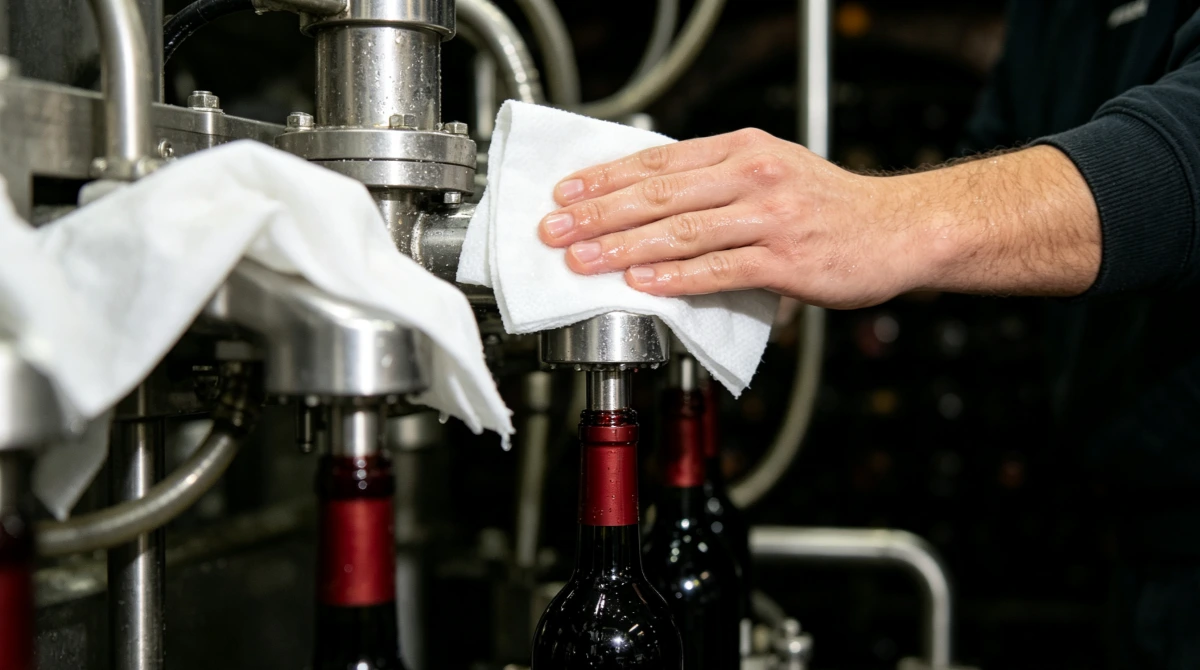
The bottling line is where your wine or spirit meets its final container. Every product-contact surface—filler heads, corker jaws, capsule applicators, label pad printers—can transfer contaminants to the product. This is the highest-consequence area for wipe selection.
Bottling line wipe specifications:
- Full food-contact compliance (FDA 21 CFR or EU 1935/2004)
- Verified low extractable residue—test at your product’s alcohol concentration, not just in water
- Sealed-edge construction to prevent fiber contamination in bottles
- No fragrance, no softening agents, no processing chemicals that could transfer to the product
- Lot traceability—record which wipe lot was used for each bottling run
The Napa winemaker from our opening story learned this the hard way. Their bottling crew was using the same wipes for general cleanup and filler head wipe-down. The general cleanup wipes had absorbed sanitizer residue from a bucket. When those same wipes touched the filler heads, the residue transferred to the product contact surface. The fix: dedicated, sealed-edge, food-contact wipes stored separately, used only on product-contact surfaces, documented in the bottling SOP.
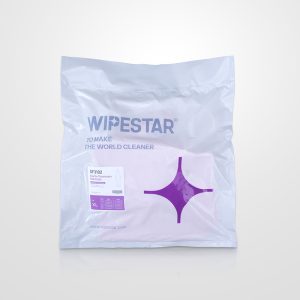
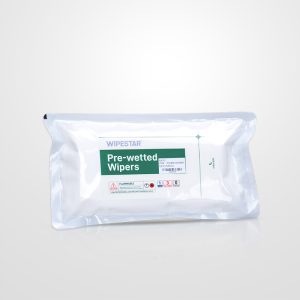
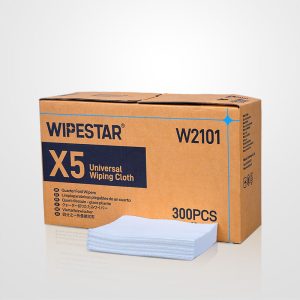
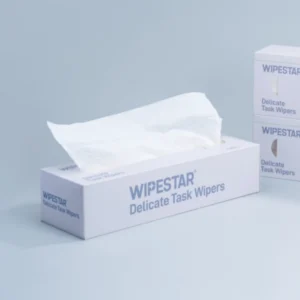
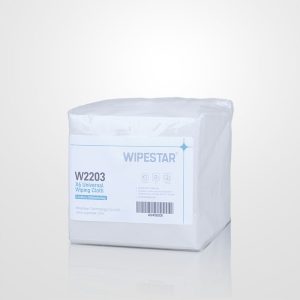
Our wiping cloths range includes products specifically suited for bottling line applications—low extractable, sealed-edge, food-contact compliant. Our team can recommend the right product for your specific wine or spirit and provide extractable test data at your product’s alcohol concentration.
Cross-Contamination Between Lots and Varietals
Wine and spirits producers handle multiple lots, varietals, and vintages in the same facility—often on the same bottling line. Cross-contamination via cleaning consumables is a real risk.
Scenario: you bottle a bold Syrah, then switch to a delicate Pinot Noir. Your crew wipes down the filler heads between lots using a cloth that was also used to mop up a Syrah spill. The tannin residue from the Syrah transfers to the filler heads and ends up in the first few cases of Pinot Noir. In a blind tasting, the difference might be subtle. In a lab analysis, the phenolic profile of your Pinot Noir now has Syrah markers.
The prevention is straightforward: dedicated wipes for product-contact surfaces, changed at every lot changeover. Document the practice in your bottling SOP. For the cost of an extra roll of wipes per changeover, you eliminate a category of lot integrity risk.
Documentation for HACCP and Food Safety Certification
Wineries and distilleries pursuing food safety certification (SQF, BRC, FSSC 22000, or even basic HACCP) need documented evidence that cleaning consumables meet food safety requirements. Here’s the documentation package:
- FDA/EU Food Contact Compliance — Declaration or compliance letter specifying the applicable regulation and supporting test data.
- Certificate of Analysis (COA) — Per-lot data for particle/fiber counts, extractable residue (quantified, not just “pass”), and dimensional verification.
- Alcohol Extractable Testing — For distilleries especially, extractable data at high alcohol concentrations (40–80% ABV), not just in aqueous solution. Compounds that don’t dissolve in water may dissolve readily in ethanol.
- Chemical Compatibility — Verified compatibility with your cleaning and sanitizing agents: SO₂ solutions, citric acid, peracetic acid, caustic (for CIP), and any specialty cleaners.
- Change Notification Agreement — Written commitment from the supplier to notify you before any change to raw materials or manufacturing process. Critical for maintaining lot-to-lot consistency.
The Problems We See in Wineries and Distilleries
- Using generic rags on bottling line filler heads — The most common issue. Shop towels, cut T-shirts, and recycled rags have no place on a product-contact surface. They’re loaded with processing chemicals, variable fiber content, and unknown bioburden.
- Same wipe for barrel room and bottling line — Barrel room wipes pick up mold spores, tartrate dust, and wine residue. Using those same wipes on the bottling line transfers all of it to your product. Separate your wipe inventory by zone.
- No extractable testing at alcohol concentration — Your COA says “low extractables.” But the test was done in water. At 50% ABV, the extractable profile may be completely different. Request alcohol-specific data from your supplier.
- Ignoring SO₂ interaction — Some wipe materials absorb SO₂ and re-release it slowly. If you use those wipes on a filler head before bottling, the first bottles through the line get an uncontrolled SO₂ boost. This alters your free SO₂ measurement and can cause premature oxidation in the bottles that follow.
- Storing wipes in the barrel room — Humidity in a barrel room runs 65–80%. Wipes stored there absorb moisture, develop mold, and degrade. Store consumables in a dry, enclosed area and bring them to the barrel room only when needed.
Who You’ll Work With at WIPESTAR
We work with beverage producers globally—from boutique wineries to multinational spirits companies. Our team understands that wine and spirits are not just another beverage category; they are products where the cleaning consumable matters as much as the cleaning chemical.

Vicky — Foreign Trade Sales Supervisor
Vicky handles our beverage industry accounts internationally. She has worked with wineries and distilleries in Europe, Australia, and North America, understanding the documentation expectations for food safety certification in the wine industry.

Lee — Key Account Sales Manager
Lee brings his key account management experience to the wine and spirits sector, working with multi-site producers who need consistent consumable specifications across crush pad, cellar, and bottling line operations.

Zac — Customer Service
Zac handles customer service for beverage production accounts, managing order fulfillment, sample requests, and documentation delivery to keep your winery or distillery supplied without interruption.
Get Started with Winery and Distillery Wiping Cloths
Whether you’re qualifying wipes for a new bottling line, upgrading your cellar consumables for food safety certification, or looking for a supplier who understands wine chemistry, we can help. Full documentation packages including food-contact compliance, alcohol extractable data, and chemical compatibility verification.
Browse our wiping cloths range or contact our technical team to discuss your specific production requirements.
Frequently Asked Questions About Wiping Cloths for Wineries and Distilleries
Request a Quote for Winery and Distillery Wiping Cloths
We supply food-contact-compliant wiping cloths with alcohol extractable testing, chemical compatibility data, and lot traceability from our ISO 9001:2015 certified factory. Custom sizing and private labeling available. Fast global shipping.