English
 Chinese



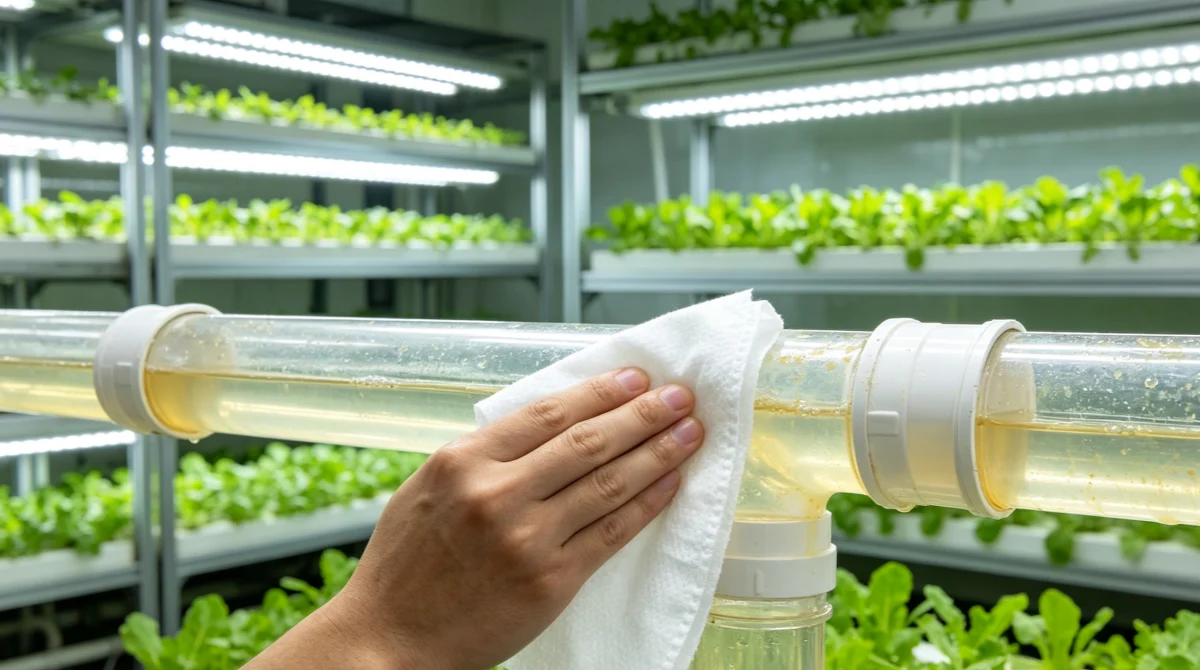
A vertical farm in Newark was producing 12,000 pounds of baby greens per month when their food safety auditor flagged something nobody had considered. The nutrient film channels—the shallow troughs where lettuce roots sit in a constant flow of mineral solution—had developed a biofilm that standard cleaning wasn’t removing. The facility was using generic industrial rags to wipe down channel surfaces between crop cycles. The rags were shedding cellulose fibers into the channels, those fibers were trapping nutrient residue, and the residue was feeding a Pseudomonas biofilm that colonized the fiber network. The facility had to shut down two growing zones for a week of intensive remediation and switch their entire consumable supply to sealed-edge, low-lint wipes.
Vertical farming and hydroponic agriculture are growing fast—pun intended. The industry is scaling from boutique operations to commercial-scale facilities producing leafy greens, herbs, strawberries, and tomatoes year-round. But the cleaning consumable requirements for these facilities are unlike traditional agriculture (which uses almost no cleaning consumables) and unlike food manufacturing (which has decades of established practice). Vertical farms sit in a gap between the two, with unique contamination vectors that most wipe suppliers have never encountered.
This guide is written for facility managers, food safety leads, and operations teams at vertical farming and hydroponic operations. We’ll cover the contamination challenges specific to indoor agriculture, how to select wipes for each area of your facility, and what your food safety certification expects from your consumable choices.
Why Vertical Farming Has Unique Cleaning Requirements
Traditional agriculture happens outdoors—sun, rain, soil, and wind handle most of the cleaning. Greenhouse agriculture adds controlled environment but still relies on natural ventilation and biological pest management. Vertical farming is different. It’s an enclosed, climate-controlled, soilless system where every input is managed and every surface is a potential contamination source.
The growing environment in a vertical farm is warm (18–24°C), humid (60–80% RH), and bathed in artificial light for 16–20 hours per day. These conditions are ideal for plant growth—and equally ideal for algae, mold, bacteria, and biofilm formation. The nutrient solution that feeds the plants is a cocktail of minerals (nitrogen, phosphorus, potassium, calcium, magnesium, and micronutrients) dissolved in water. When this solution splashes, drips, or evaporates on surfaces, it leaves mineral deposits that accumulate over time and become substrates for microbial growth.
And unlike food manufacturing, where the product is processed (cooked, pasteurized, preserved) before consumption, vertical farm products are typically sold fresh—lettuce, herbs, microgreens—without any kill step. Any contamination that makes it to the harvest is going directly to the consumer. This makes your cleaning consumable choice a food safety decision, not just a cleanliness decision.
The Contamination Vectors in Indoor Agriculture
When we work with vertical farms on cleaning consumable selection, we focus on four contamination vectors that are specific to indoor agriculture:
Biological Contamination
Algae (Chlorella, Scenedesmus), mold (Botrytis, Penicillium, Cladosporium), and bacteria (Pseudomonas, E. coli, Salmonella) all thrive in the warm, humid, nutrient-rich environment of a vertical farm. The growing system—channels, NFT troughs, DWC rafts, drip lines—provides continuous moisture and nutrients. Any surface that stays wet and uncleaned will develop biofilm within days.
Mineral Deposits
Nutrient solution evaporation leaves behind calcium carbonate, calcium phosphate, magnesium sulfate, and iron deposits. These deposits are abrasive, they clog drip emitters and misting nozzles, and they create rough surfaces that trap microbes. Standard wipes just push mineral deposits around—you need wipes with enough texture and absorbency to actually remove them.
Fiber Contamination
Cellulose fibers from cheap wipes are a bigger problem in vertical farms than in most food manufacturing environments. In a soilless system, there’s no soil to bury fibers in. A cellulose fiber that lands on a growing tray, a plant leaf, or a harvest bin is visible in the final product. For baby greens and microgreens—where the entire plant is the product—a fiber on the leaf is a consumer complaint.
Chemical Residue
Vertical farms use a range of cleaning chemicals: hydrogen peroxide, peracetic acid, quaternary ammonium compounds, citric acid (for descaling), and sometimes chlorine-based sanitizers. Your wipes must be compatible with your full cleaning chemical rotation—not just the one you use most often.
Wipe Selection by Facility Area: Grow Rooms, Nutrient Rooms, Pack Houses
Grow Rooms
The grow room is the core of your facility. Wipes here are used for growing channel surfaces between crop cycles, irrigation line exteriors, environmental sensor cleaning, and light fixture maintenance. The environment is warm, humid, and constantly exposed to nutrient solution splash.
Wipe requirements: low-lint (no fibers on growing surfaces), absorbency for nutrient solution cleanup, durability for scrubbing mineral deposits, and compatibility with hydrogen peroxide or peracetic acid (the most common grow room sanitizers). Sealed-edge construction is essential—cut-edge wipes shed fibers that become biofilm substrates in the growing channels.
Nutrient Mixing and Storage Rooms
The nutrient room is where concentrated stock solutions are mixed and stored. Spills are common—concentrated nutrient solutions are viscous and leave heavy mineral residue when they dry. Wipes here need high absorbency and chemical resistance to concentrated mineral solutions. The wipe doesn’t need to be food-contact grade in this area, but it should be durable enough to handle heavy mineral soiling.
Pack House and Harvest Area
The pack house is where product is washed, graded, packaged, and labeled. This area has the tightest food safety requirements—your product is about to go to market. Wipes used on conveyor belts, grading tables, packaging equipment, and labeling machines must be food-contact compliant and lint-free. A fiber on a baby arugula leaf is a customer complaint. A chemical residue on a packaging seal surface is a food safety incident.
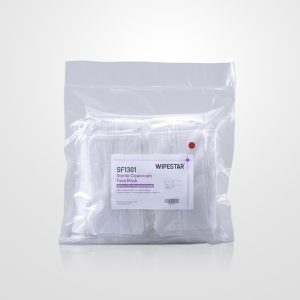
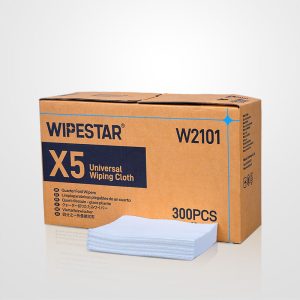
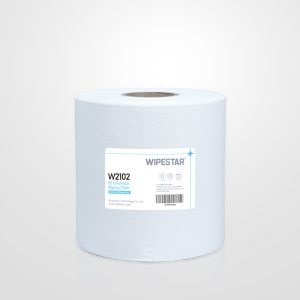
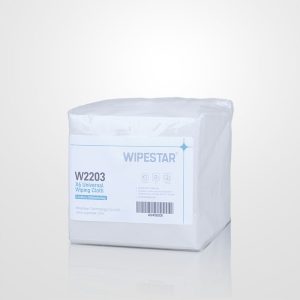
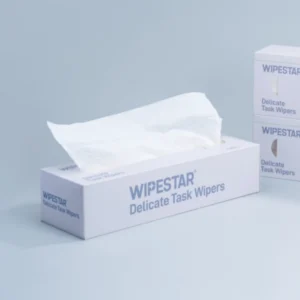
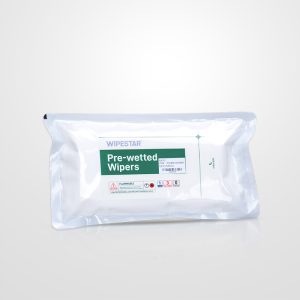
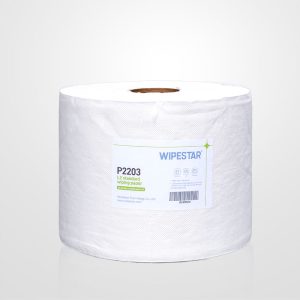
Our wiping cloths range includes products suitable for each area of your vertical farm—from heavy-duty mineral deposit removal in the nutrient room to food-contact-safe, lint-free wipes for the pack house.
Nutrient Solution Residue: The Mineral Buildup Problem
Nutrient solution residue is the most persistent contamination challenge in vertical farming. Unlike organic contamination (which can be sanitized away), mineral deposits are inorganic—they don’t break down with sanitizers. They accumulate, layer by layer, on every surface that contacts nutrient solution: growing channels, irrigation fittings, pump housings, sensor probes, and drain lines.
Effective mineral deposit removal requires:
- Acid descaling — Citric acid (5–10% solution) or phosphoric acid dissolves calcium carbonate and calcium phosphate deposits. Your wipe must be compatible with these acids at use concentration.
- Mechanical action — Mineral deposits adhere to surfaces. You need a wipe with enough texture and stiffness to provide scrubbing action without scratching plastic or stainless steel growing equipment.
- Absorbency — The dissolved mineral solution needs to be picked up, not spread around. A wipe that absorbs the acid/dissolved mineral mixture prevents redeposit on adjacent surfaces.
A common mistake: using the same wipe for mineral descaling and surface sanitizing. Descaling wipes become saturated with dissolved minerals and acid. If you then use that wipe to apply sanitizer, the minerals react with the sanitizer (calcium reacts with peracetic acid, for example) and reduce its effectiveness. Use separate wipes for descaling and sanitizing—documented in your SOPs.
Algae and Biofilm Control: Why Standard Cleaning Fails
Algae and biofilm are the persistent enemies of vertical farming. They grow on any wet surface—growing channels, reservoir walls, pump housings, sensor probes, and even the underside of growing tray lids. Standard cleaning removes the visible algae, but the biofilm (a thin, slimy layer of bacteria and extracellular polysaccharides) adheres tenaciously to surfaces and regrows within days.
Effective biofilm removal requires:
- Quaternary ammonium compounds (QACs) or peracetic acid — These sanitizers penetrate biofilm better than hydrogen peroxide alone. Your wipe must be compatible with both.
- Textured or abrasive wipes — Biofilm needs mechanical disruption to fully remove. A smooth-surfaced wipe slides over biofilm without breaking it up. Textured non-woven or microfiber wipes provide the mechanical action needed.
- Single-use disposal — Biofilm organisms survive on reusable cloths even after laundering. For biofilm remediation, use single-use wipes and dispose of them after each cleaning cycle. Don’t reintroduce the organisms you just removed.
The Newark vertical farm from our opening story learned this the hard way. Their cellulose rags were not just failing to remove biofilm—they were providing a fiber scaffold for the biofilm to colonize. Switching to sealed-edge, low-lint synthetic wipes eliminated the fiber substrate and broke the biofilm regrowth cycle.
Food Safety Compliance: GAP, FSMA, and Your Consumable Documentation
Vertical farms selling fresh produce are subject to food safety regulations—FDA FSMA (Food Safety Modernization Act) in the US, equivalent regulations in Canada, EU, and other markets. Many retailers also require third-party food safety certification (GAP audit, PrimusGFS, SQF, BRC). Your cleaning consumables are part of your food safety system.
Documentation your food safety auditor expects:
- FDA Food Contact Compliance — For any wipe used on food-contact surfaces (conveyor belts, grading tables, packaging equipment). The wipe supplier should provide a compliance letter per 21 CFR.
- Safety Data Sheet (SDS) — Current, GHS-compliant, for every wipe product in the facility. Required by FSMA and most third-party audit standards.
- Certificate of Analysis (COA) — Per-lot data for particle/fiber counts, extractable residue, and any relevant contaminant testing. Some auditors request microbiological data for wipes used in the pack house.
- Chemical Compatibility — Verified compatibility with your cleaning chemicals (QACs, peracetic acid, citric acid, hydrogen peroxide) at your use concentrations.
- Supplier Qualification — Your food safety system should include your wipe supplier on your approved supplier list, with documented qualification evidence.
LED Grow Light and Equipment Cleaning: Heat and Electrical Sensitivity
LED grow lights are the most expensive equipment in a vertical farm—and the most sensitive to cleaning. LED diodes generate heat, and dust and nutrient mist accumulate on the light fixtures over time, reducing light output and creating a fire risk. Regular cleaning is essential, but the approach matters.
LED fixture cleaning requirements:
- Dry wipe first — Remove loose dust and particulate with a dry, low-lint wipe before applying any liquid cleaner. Liquid on a powered LED fixture is an electrical hazard.
- Lint-free performance — Fiber residue on LED lenses reduces light transmission and can burn onto the lens surface under heat. Use sealed-edge, lint-free wipes.
- No liquid ingress — If using a damp wipe, wring it thoroughly. Water or cleaning solution inside an LED housing causes corrosion and electrical failure.
- Chemical compatibility with lens materials — LED lenses are typically polycarbonate or acrylic. Some cleaning chemicals (particularly solvents and strong acids) cloud or craze these materials. Test your cleaning agent on a lens sample before using it on fixtures.
The Problems We See in Vertical Farms
- Using generic industrial rags on growing surfaces — Cellulose fibers from cheap rags become biofilm substrates in growing channels. The fiber network traps nutrient residue and feeds microbial growth. Switch to sealed-edge, low-lint wipes for all growing system surfaces.
- Same wipe for descaling and sanitizing — Descaling wipes become saturated with dissolved minerals. Using those same wipes to apply sanitizer reduces sanitizer effectiveness and redeposits minerals. Use separate wipes for each function.
- No food-contact compliance in the pack house — Your product is fresh produce with no kill step. Every surface in the pack house is a food-contact surface. Wipes used on conveyor belts and packaging equipment must be food-contact compliant with documentation on file.
- Reusable cloths for biofilm remediation — Biofilm organisms survive laundering. Single-use wipes break the biofilm regrowth cycle. Reusable cloths reintroduce the organisms you just removed.
- Storing wipes in the grow room — Humidity in grow rooms runs 60–80%. Wipes stored there absorb moisture, develop mold, and degrade. Store consumables in a dry, enclosed area and bring them to the grow room only when needed.
- No incoming inspection for wipe lots — Wipe lots are accepted based on the packing slip without reviewing the COA or verifying food-contact compliance. If your supplier changes their formulation, your food safety documentation is outdated.
Who You’ll Work With at WIPESTAR
We supply consumables to food production facilities across the agriculture and food manufacturing spectrum—from traditional farms to indoor agriculture operations. Our team understands that vertical farming sits at the intersection of agriculture and food manufacturing.

Vicky — Foreign Trade Sales Supervisor
Vicky handles international accounts for food production and indoor agriculture facilities. She has worked with vertical farms navigating GAP audits, FSMA compliance, and retailer food safety requirements.

Carolina — Product Specialist
Carolina evaluates wipe performance in vertical farming conditions—chemical compatibility with nutrient solutions, fiber behavior on growing channel surfaces, and food-contact compliance for pack house applications.

Daisy — Sales Support
Daisy coordinates sales support for indoor agriculture accounts, ensuring documentation packages, sample shipments, and order logistics meet the timeline requirements of fast-growing vertical farming operations.
Get Started with Vertical Farming Cleaning Consumables
Whether you’re setting up a new vertical farm, qualifying consumables for food safety certification, or upgrading your wipe specifications after a contamination event, we can help. Full documentation packages including FDA food-contact compliance, SDS, COA, and chemical compatibility data.
Browse our wiping cloths range or contact our technical team to discuss your facility’s specific requirements.
Frequently Asked Questions About Wiping Cloths for Vertical Farming
Request a Quote for Vertical Farming Cleaning Consumables
We supply food-contact-compliant wiping cloths from our ISO 9001:2015 certified factory with full food safety documentation—FDA compliance, SDS, COA, and chemical compatibility data. Custom sizing and private labeling available. Fast global shipping.