English
 Chinese



Two years ago, a public aquarium on the US East Coast—let’s call it a mid-sized facility, about 400,000 gallons of total water volume—lost a significant portion of its coral collection over a six-month period. Not all at once. Slowly. Tissue recession starting at the tips, progressing to full colony necrosis.
The coral biologists tested everything: water chemistry, lighting spectrum, flow rates, alkalinity, calcium, magnesium, trace elements. All within range. They brought in outside consultants. Nobody could figure it out.
Then a maintenance technician mentioned, almost in passing, that they’d recently switched cleaning cloths. The old supplier had gone out of business, and procurement found a “comparable” industrial wipe at a lower price point. The new wipe contained zinc stearate as a release agent—a common manufacturing additive in many industrial cloths.
Zinc at even trace concentrations is toxic to stony corals. The cloths were being used to wipe down the acrylic viewing panels, the life support system housings, and the equipment room surfaces. Every time the cloths got wet—which, in an aquarium, is constantly—they leached zinc into the water through splash, drip, and aerosol pathways. The concentration was sub-lethal to fish. For corals, it was lethal.
The aquarium spent eight months replacing dead coral colonies. The cost exceeded $120,000 in livestock alone—not counting the staff time, the consultant fees, and the reputational damage of having empty coral exhibits during peak season.
If you manage an aquarium, a marine research lab, or an aquaculture facility, your cleaning consumables aren’t just cleaning consumables. They’re water chemistry inputs. Everything that touches a surface near your water eventually ends up in your water. This guide covers what that means for wipe selection.
The Metals Problem: Copper, Zinc, and Why “Clean” Isn’t Safe
In terrestrial cleaning—offices, kitchens, factories—a wipe is clean if it removes dirt and doesn’t leave visible residue. In marine environments, “clean” is a completely different standard. A wipe can look clean, feel clean, and still kill your animals.
The issue is dissolved metals. Copper and zinc are the two biggest offenders, but they’re not the only ones. Copper is acutely toxic to many marine invertebrates at concentrations as low as 5–10 parts per billion. Not ppm—ppb. That’s 0.005–0.010 mg/L. For corals, the threshold is even lower: some studies show tissue damage at copper concentrations below 3 ppb.
Zinc is toxic to corals at similar concentrations and also harmful to many marine fish species at chronic exposure levels above 20–30 ppb.
Now consider where copper and zinc hide in industrial products. Copper compounds are used as catalysts, colorants, and antimicrobial additives in many textile and wipe manufacturing processes. Zinc stearate is a ubiquitous release agent—it prevents fabrics from sticking to manufacturing equipment. Zinc oxide appears in rubber and latex products. Many “cleanroom grade” wipes contain trace metals from their manufacturing process that are perfectly acceptable in semiconductor or pharmaceutical applications but catastrophic in marine environments.
The wipe doesn’t need to go into the water directly. In an aquarium environment, splash zones extend far beyond the tank rim. Aerosol from wave action, drip from condensation on pipes, wet hands transferring residue to surfaces—all pathways for wipe-derived metals to reach the water column.
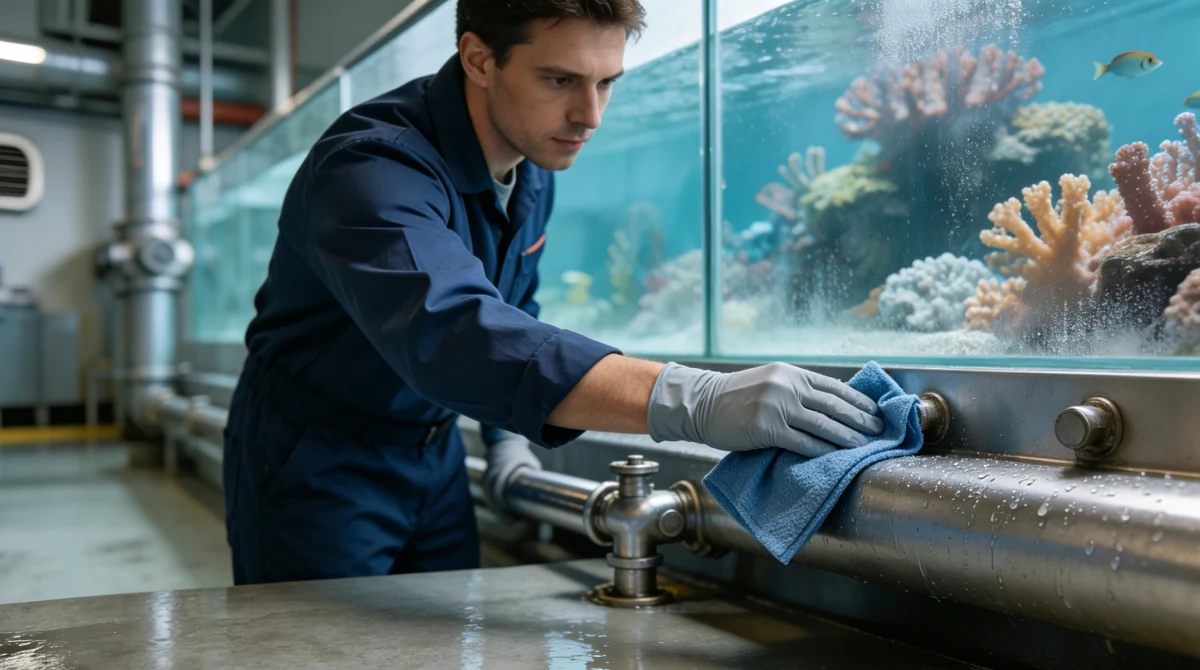
A maintenance technician wiping down a chiller housing above a reef tank, then adjusting a pump without changing gloves, has just introduced a copper or zinc dose into the system.
Phosphates: The Algae Bloom You Created with Your Cleaning Cloth
Phosphate is the limiting nutrient for algae growth in most marine systems. Keep phosphate low and your water stays clear. Let it creep up and you get nuisance algae—cyanobacteria films on the substrate, diatom coatings on the glass, hair algae on the rock work.
Public aquariums spend significant money on phosphate control: GFO (granular ferric oxide) reactors, phosphate-removing resins, frequent water changes, protein skimming. All of that investment can be undermined by a cleaning cloth that leaches phosphate into the water.
Many industrial wipes—particularly cotton and cellulose-based products—contain phosphate-based processing chemicals from their manufacturing. Phosphoric acid is used in some bleaching processes. Phosphate surfactants appear in wetting agents. Even “laundered” reusable cloths can carry phosphate residues from detergents if the rinse cycle isn’t thorough.
The amount that matters is tiny. In a reef aquarium, phosphate concentrations above 0.03 ppm (30 ppb) promote nuisance algae growth. In a public aquarium’s reef exhibit, even a few milligrams of phosphate introduced through a cleaning wipe used on the viewing panel can measurably spike the concentration in a closed recirculating system.
Multiply that by daily cleaning of multiple surfaces with phosphate-containing cloths, and you’ve created a chronic phosphate input that your life support system has to work overtime to remove.
Saltwater Destroys Everything—Including Your Wipes
Anyone who’s worked around saltwater for more than a few months knows this truth: salt finds a way to corrode everything. Stainless steel that’s “marine grade” still pits after a few years. Aluminum corrodes. Copper corrodes (and leaches toxic ions while doing it). Even the concrete in aquarium buildings degrades over decades from salt exposure.
Your wipes experience this too, but in a less visible way. Salt aerosol is pervasive in any facility housing saltwater systems. It coats every surface within a surprisingly large radius—easily 10–15 meters from open water surfaces, and farther in areas with strong wave action or spray features.
Wipes stored in equipment rooms near saltwater systems absorb salt aerosol from the air. Over time, the salt crystallizes within the wipe fibers, creating microscopic abrasive particles that can scratch acrylic viewing panels during cleaning.
I’ve seen equipment rooms at aquariums where every horizontal surface has a fine white salt crust within days of cleaning. If your wipes are stored in that environment, they’re picking up that salt. And when you wipe an acrylic panel with a salt-impregnated cloth, you’re dragging micro-abrasive crystals across the surface.
After a few months, the panel looks hazy—covered in fine scratches that scatter light and degrade the viewing experience. Replace an acrylic panel on a large exhibit and you’re looking at $15,000–$50,000 depending on size. Use the right wipe and store it properly, and the panel stays clear for years.
Acrylic vs. Glass: Why Your Tank Material Changes the Wipe
Most large public aquarium exhibits use acrylic panels rather than glass. Acrylic is lighter, stronger (it can absorb impacts that would shatter glass), and can be thermoformed into curved shapes that create immersive viewing experiences. But acrylic is also dramatically softer than glass.
On the Mohs hardness scale, glass is around 5.5–6. Acrylic is 2–3. It scratches if you look at it wrong.
This means your wipe selection for acrylic panels is a materials compatibility question, not just a cleanliness question. Abrasive particles in the wipe—dust, salt crystals, metal fragments from manufacturing—will scratch acrylic during normal wiping. Even “soft” cotton fibers can contain trapped abrasive particles from the ginning and processing stages. Cellulose wipes are similarly risky.
For acrylic panel cleaning, use soft, non-abrasive synthetic wipes—typically polyester or polyester-viscose blends with a smooth surface texture. The wipe should be free of abrasive particles (verified by abrasion testing on acrylic test coupons if your facility is serious about panel protection).
Pre-wet the wipe with the appropriate cleaning solution—typically a diluted acrylic-safe cleaner—and wipe in straight lines, not circles. Circular wiping distributes abrasion unevenly and creates visible swirl marks.
For glass panels, the requirements are less stringent—glass is hard enough to tolerate most wipe types—but you still need to avoid wipes that leave residue or streaks on the viewing surface. Glass panels in marine facilities also accumulate salt spray, which creates a stubborn film that requires a wipe with good scrubbing capability without scratching.
Microfiber is effective for glass but check that it’s free of metal contamination before using it near marine exhibits.
Life Support System Maintenance: The Hidden Wipe
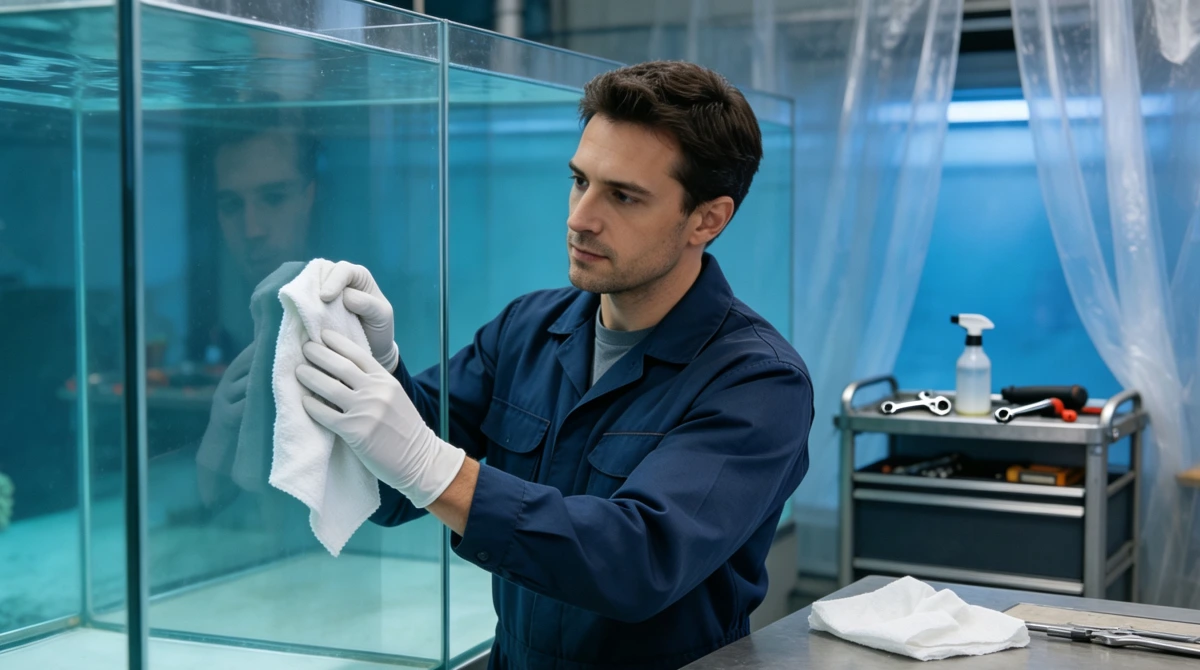
Behind every aquarium exhibit is a life support system (LSS) that’s significantly more complex than most visitors realize. Protein skimmers, biological filtration beds, UV sterilizers, ozone generators, heat exchangers, circulation pumps, automated dosing systems, water quality monitoring probes—each requiring regular maintenance, and each involving cleaning consumables.
Those consumables don’t touch the display water directly, but they still affect it indirectly.
The protein skimmer is a good example. The skimmer neck and collection cup accumulate organic waste—a mix of proteins, lipids, and biopolymers that looks and smells terrible. Technicians clean these components regularly, typically with warm water and a wipe. If that wipe contains phosphate surfactants or metal contaminants, the residue left on the skimmer surfaces gets dissolved into the water flowing through the skimmer—the same water that feeds the exhibit.
UV sterilizer quartz sleeves need periodic cleaning to maintain transmission efficiency. The sleeve accumulates a biofilm and mineral deposit layer that blocks UV light. Wipe it with an abrasive cloth and you scratch the quartz, permanently reducing UV transmission. Use a lint-free synthetic wipe with an appropriate descaling solution, and the sleeve stays clear and undamaged.
Dosing system heads and probe housings accumulate salt creep and chemical residue. The wipes used here should be compatible with the chemicals being dosed—typically calcium, alkalinity (sodium bicarbonate or kalkwasser), and magnesium solutions—and should not introduce contaminants that interfere with probe readings.
Lint fibers from a cheap wipe caught in a dissolved oxygen probe membrane can give you false readings for days before you figure out what’s wrong.
Quarantine and Biosecurity: Where Infection Control Meets Cleaning
Quarantine is the most biosecurity-critical area in any aquarium or aquaculture facility. New animals arriving from wild capture, other facilities, or aquaculture farms go through a quarantine period—typically 30–60 days—before entering the main system. During quarantine, animals are monitored for parasites, bacterial infections, fungal diseases, and viral pathogens.
The quarantine area must be physically and operationally isolated from the main system to prevent pathogen transfer. Your cleaning consumables are part of that isolation protocol.
A wipe used in the quarantine area cannot then be used in the main exhibit area. A wipe used on a system housing animals with a suspected bacterial infection cannot then be used on a healthy system. This sounds obvious, but in practice, cleaning consumables are one of the most common—and most overlooked—vectors for pathogen transfer between systems.
Single-use wipes are strongly preferred in quarantine and biosecurity zones. Use once, discard, grab a fresh one. No laundering, no risk of residual pathogen survival, no chance of the wipe being accidentally returned to general inventory.
Color-code your quarantine wipes—some facilities use a distinct color to clearly differentiate them from general-use cloths—and store them separately from main system cleaning supplies.
For disinfection in quarantine areas, the wipe must be compatible with your disinfectant of choice. Chlorine-based disinfectants (sodium hypochlorite at 100–200 ppm) are common in aquatic quarantine. Hydrogen peroxide at various concentrations is also used. Iodophors appear in some protocols. Each disinfectant has different material compatibility requirements—verify that your wipe survives contact with your chosen agent without degrading, shedding, or absorbing the active ingredient before it reaches the surface.
In aquaculture facilities, biosecurity extends to feed preparation areas, grading stations, and harvest areas. Each zone should have dedicated cleaning consumables. Cross-zone wipe use in aquaculture is how disease outbreaks propagate across production units—one infected pen’s cleaning supplies reaching a healthy pen through a shared cloth.
The economic impact of a disease outbreak in aquaculture can be catastrophic: mass mortality events at salmon farms regularly cost millions of dollars per incident.
Marine Facility Wipe Comparison
| Zone / Application | Recommended Wipe Type | Key Requirements | Avoid |
|---|---|---|---|
| Acrylic panel cleaning | Soft synthetic (polyester or polyester-viscose), non-abrasive | Copper & zinc-free, phosphate-free, non-abrasive to acrylic, lint-free | Cotton, cellulose, microfiber with metal contamination, abrasive cloths |
| Glass panel cleaning | Synthetic non-woven or microfiber (verified metal-free) | Streak-free, lint-free, no metal contamination | Unverified microfiber, wipes with surfactant residue |
| Life support system maintenance | Synthetic non-woven, chemical-compatible | Phosphate-free, metal-free, compatible with disinfectants and dosing chemicals | Cotton, wipes with phosphate processing, metal-containing cloths |
| Quarantine / biosecurity | Single-use synthetic, color-differentiated | Disinfectant-compatible, single-use only, dedicated color, segregated storage | Reusable cloths, shared inventory with main system |
| Equipment room / general | Standard industrial synthetic, absorbent | Copper & zinc-free, general absorbency, salt-tolerant | Metal-containing wipes, phosphate-laden cotton |
| Aquaculture production units | Single-use synthetic, zone-dedicated | Pathogen control, disinfectant-compatible, per-zone color coding | Cross-zone reusable cloths, shared wipes between pens |
Who You’ll Work With at WIPESTAR
We work with public aquariums, marine research labs, and aquaculture facilities where cleaning consumables must be safe for aquatic life. Our team understands the unique chemical restrictions of marine environments.

Juan — Purification Industry Specialist
Juan has rich experience in the purification industry, with professional command of clean products and purification process equipment, committed to providing optimized clean solutions.

Guan — Cleanroom Consumables Sales Specialist
Guan has 4.5 years in the semiconductor industry and over 5 years in cleanroom consumables sales, with deep understanding of semiconductor production cleanroom requirements.

Zhen — Account Manager
Zhen has rich experience in cleanroom consumables and contamination control solutions, proficient in WIPESTAR’s full product line across industries including microelectronics, optics, and aerospace.
Get Started with Marine Facility Cleaning Consumables
Whether you’re specifying wipes for a new aquarium build, upgrading your quarantine biosecurity program, or solving an unexplained water quality issue that might be wipe-related, we can help. Copper-free, zinc-free, phosphate-free wipes with ICP-OES metal content verification and acrylic abrasion testing available per lot.
- Cleanroom Wiper Selection Guide — Full technical guide covering wipe materials, contamination specs, and cleanroom class matching. Start here if you’re evaluating options.
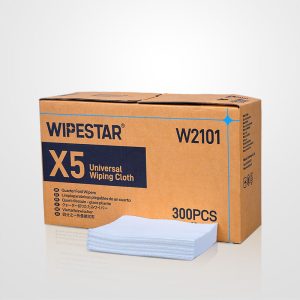
- Browse All Wiping Cloths — Full product range with specs, certifications, and material data sheets for marine-grade wipes.
- Request Technical Consultation — Need help matching a wipe to your specific aquarium or aquaculture environment? Our team can provide ICP-OES metal data and acrylic compatibility testing for your facility.
Browse Full Wiping Cloths Range → Request a Custom Quote
Frequently Asked Questions