English
 Chinese



Three weeks before Christmas, a prestige skincare brand pulled 12,000 jars of anti-aging cream from shelves across Europe. The formula was fine. The preservative system was fine, the filling equipment was fine, and the batch record was clean. What a customer in Düsseldorf found when she opened her €85 jar was a synthetic fiber about 4mm long, resting on top of the white cream. She photographed it before she contacted anyone. Sixty thousand shares later, the brand’s quality team spent three days tracing it back to Line 3, where an operator had been wiping cream off the fill nozzles with general-purpose shop towels from the maintenance store.
The recall, the destruction, the retailer penalties and the emergency third-party audit came to just under €2.3 million. The towels cost €0.04 a sheet. Nobody on that shift did anything unusual. They used the cloth that was closest to hand, on a job where “close enough” turned out to be nowhere near.
Cosmetics is punishing in a way most manufacturing isn’t. Creams, serums, mascaras, lipsticks — visual perfection is the entire value proposition, and the customer is the inspector. Shoppers forgive a foundation shade that drifts slightly between batches. They do not forgive a hair in their moisturizer, and these days they have a camera and an audience. There’s no downstream assembly to hide the defect inside an opaque housing. The product is the surface.
This guide is for production managers, quality teams and line supervisors in cosmetics and personal care plants. It covers where fibers actually come from, which wipe belongs in which area, and how to write a wiping protocol that holds up in a GMP audit without bloating the consumables budget.
Where the Fibers Actually Come From
Most plants blame their wipes first. Sometimes they’re right, but a contamination survey in a typical skincare or colour cosmetics facility usually turns up four sources, and the wipe is only one of them.
Gowns and gloves come first. Textile cleanroom garments, cotton lab coats and budget non-woven coveralls all shed, and so do gloves that are powdered, poorly made or simply old. Secondary packaging runs a close second: paperboard cartons, tissue paper, foam inserts and leaflets release fibers every time they’re handled, dropped or torn open. Powder processing is the third source — pressed powder, loose pigment and talc handling put dust in the air that carries fibers along with it. And then there’s the equipment: conveyor belts, chain drives, cap feeding bowls, anything that wears against itself.
Most cosmetics facilities aren’t classified cleanrooms. They’re “clean areas” with filtered air and controlled humidity, and the ISO class swings from room to room. That matters when you spec a wipe. A Class 5 wipe used on a corridor floor is money wasted; a general-purpose cloth used on a filling nozzle is a recall in waiting. Match the wipe to the zone.
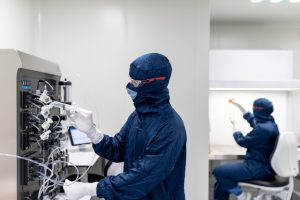
Gowning is the cheapest lever most plants have. Put operators in low-shedding garments and clean, unpowered gloves in the filling room and the airborne fiber load drops before you’ve changed a single wipe. If you’re still running fabric gowns in production zones, sorting out gowning and glove supply first will tell you how much of your contamination problem was ever about wipes at all.
Cream and Lotion Filling Lines
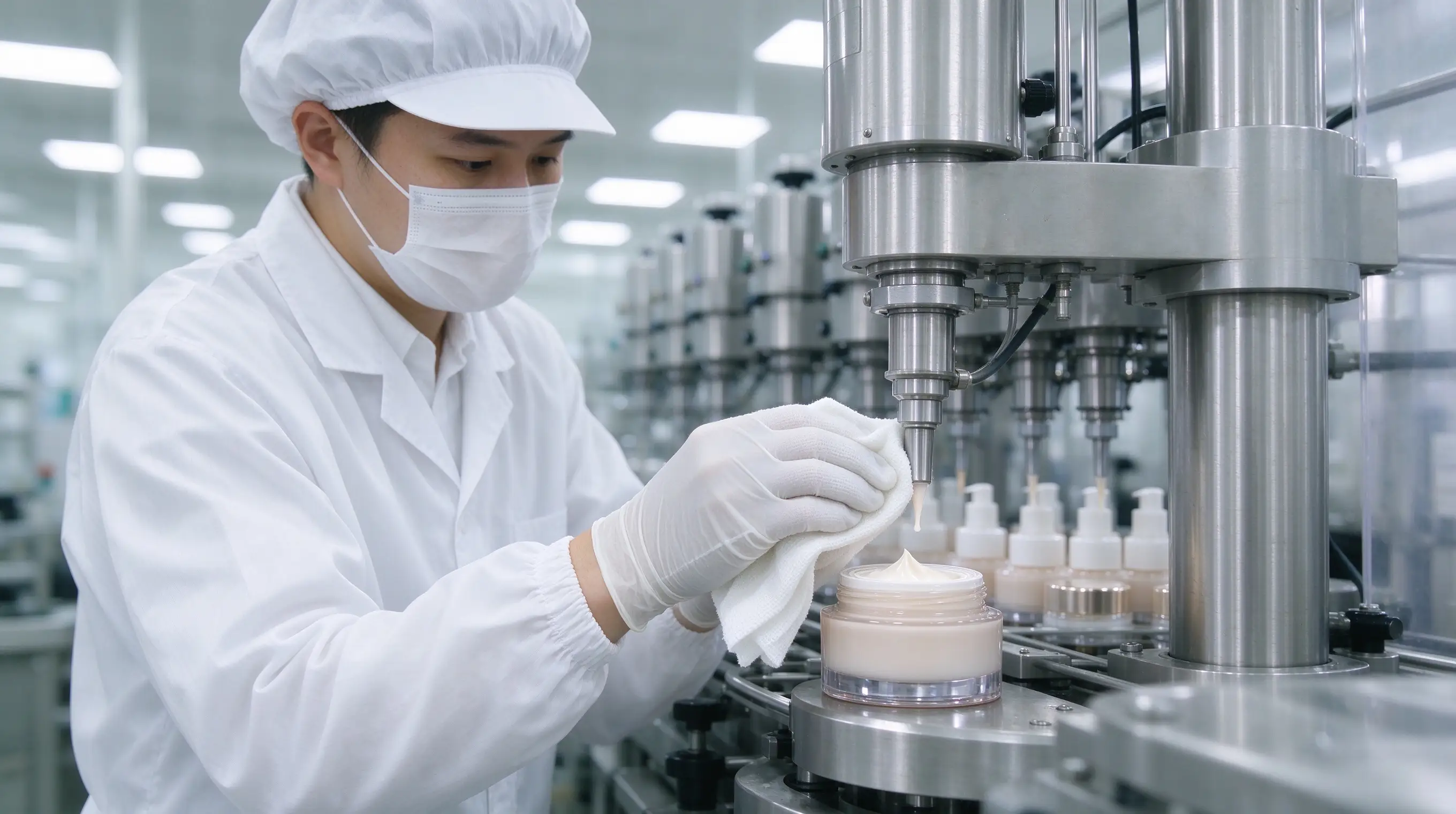
Piston and peristaltic fillers for creams and lotions are where most fiber complaints start. The product sits in open air during the fill cycle — half a second to two seconds per container, depending on volume and viscosity — and anything drifting in that window can land in the jar.
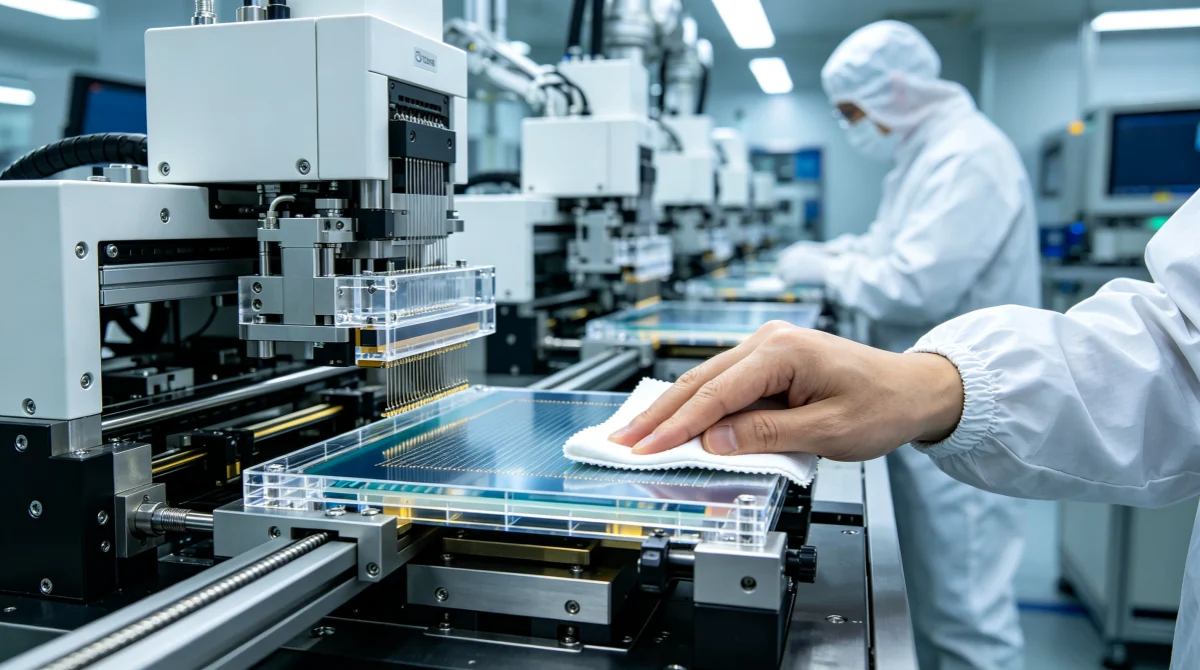
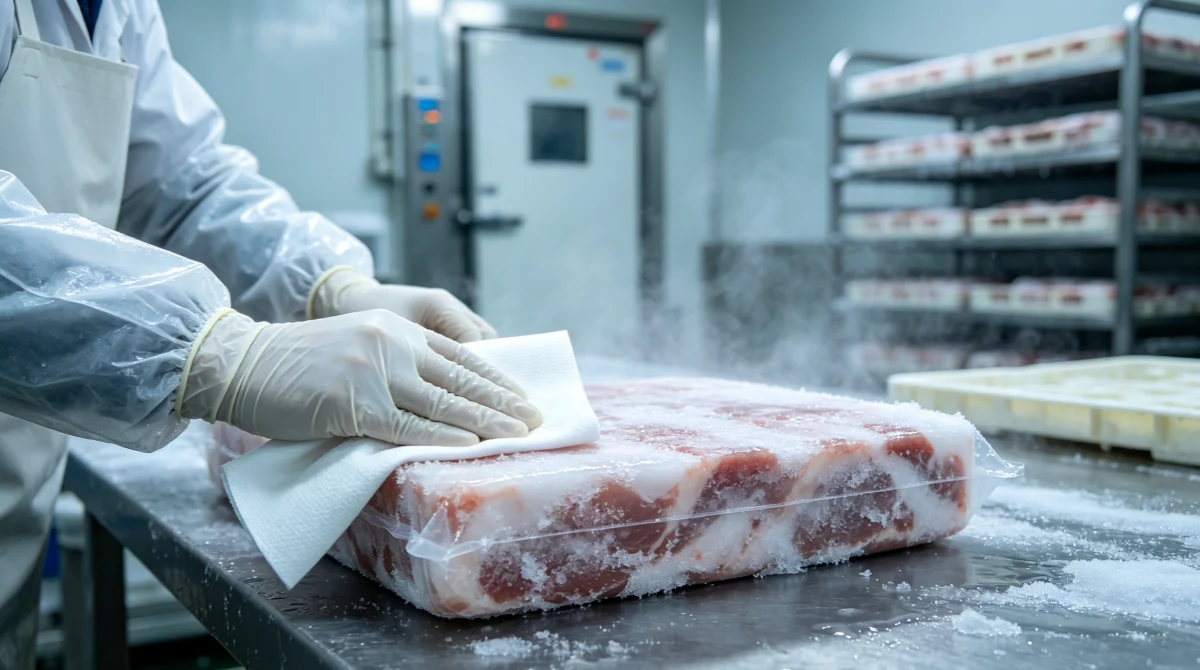
The nozzle is the hotspot. Cream builds up on the nozzle exterior as the run goes on, and operators wipe it off every 15 to 30 minutes during continuous production, more often for thick creams that string and drip. If the wipe sheds on contact with a wet nozzle, every wipe-down drops fibers straight into the fill zone, centimetres from an open container. That’s exactly how the €85 jar at the top of this page happened: the SOP called for a sealed-edge low-lint wipe, the store ran out, and a cellulose cloth took its place.
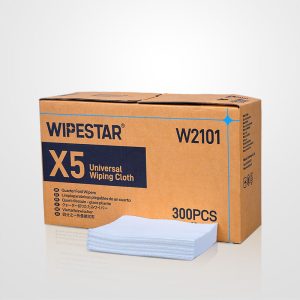
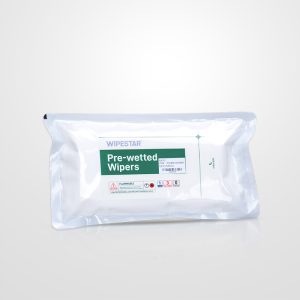
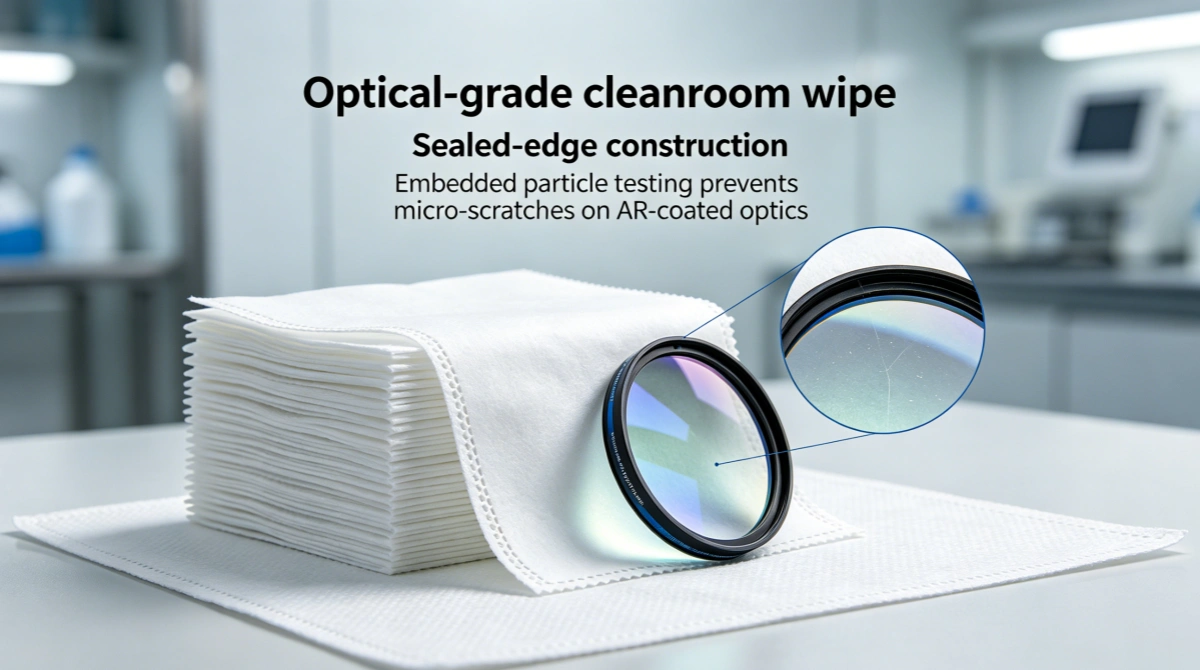
For this area, spec a sealed-edge synthetic wiping cloth rated for cleanroom use, typically ISO Class 5 compatible. The sealed edge is the detail people skip. Most lint from a standard wipe comes off the cut edge, and an ultrasonically or heat-sealed edge closes it. For nozzle work, a pre-saturated wipe of roughly 70% IPA and 30% DI water is the practical choice — it lifts cream residue fast and evaporates before the next fill.
Mascara, Eyeliner, and Anything Near the Eye
If cream filling is high-risk, eye-area production is zero-tolerance. A fiber in a mascara wand isn’t only an ugly product. It goes in someone’s eye, and depending on the market that means mandatory reporting to health authorities, potential injunctions, and in the worst cases a facility shutdown order. The commercial damage from a visible fiber in a jar is bad; the regulatory damage from one near the eye is a different category.
Mascara generates its own contamination. The wands are nylon or polyester bristle, trimmed in environments where bristle fragments are airborne, and the filling sequence — dipping the wand into a bulk vat, then seating it in the tube — gives fibers several chances to transfer. Liquid eyeliner has the opposite problem: it’s low-viscosity and fills through a narrow nozzle, so a single fiber caught in the tip changes the flow pattern and produces an uneven line on the consumer’s first use. That’s the fastest way to generate a one-star review with a photo attached.
Spec the top of the range here: sealed-edge, low-particle synthetic wipes with documented fiber release, tested per the IEST-RP-CC004 methods. The premium is small, roughly €0.01 to €0.03 per unit of consumable cost, which is cheap insurance on a line that can’t be shut down for a week.
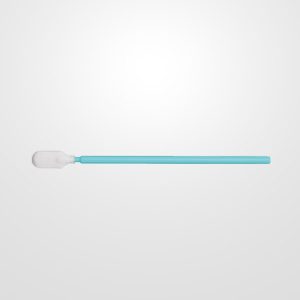
Wipe down at every changeover and every 20 to 30 minutes during runs. The obvious points are filling needles and reservoir openings, but the caps and wand storage trays are where fibers quietly accumulate and transfer during assembly. For the tight spots — inside needle guards, cap threading fixtures, the crevices of assembly tooling — cleanroom swabs reach where a folded wipe can’t.
Lipstick and Lip Products
Lipstick is a different animal. Wax-based formulas get heated to 75–85°C, poured or injected into aluminum or stainless molds, cooled, then mechanically finished — bullet twisted up, trimmed, inspected. The heat and the wax make the production environment sticky, and sticky surfaces hold particles in place instead of letting them blow away.
The mold stage is where it goes wrong. After filling, excess is scraped level with a heated blade. Any fiber on that blade or in a cavity gets pressed into the lipstick surface, and once the mass cools it’s locked in. It won’t shake loose in transit. The consumer finds it the first time she twists the bullet up, and by then the batch is in twenty countries.
Clean molds between batches with a pre-wetted wipe carrying a solvent compatible with your wax system, usually IPA or a cosmetic-grade blend. Dry wiping on wax residue is what pulls fibers out of the wipe matrix and buries them in the residue. Lip gloss and liquid lip products are closer to the cream-filling scenario — same nozzle wipe-downs, same sealed-edge requirement.
Packaging Areas and the Contamination Nobody Watches
Packaging is usually the cleanest-looking room in the plant and one of the dirtiest from a fiber standpoint. Paperboard cartons shed cardboard fibers. Tissue paper is essentially a fiber generator sold in sheets. Foam inserts shed static-charged particles that cling to every surface in the room, including the outside of finished jars.
It’s indirect contamination, and the consumer doesn’t care about the pathway. She lifts the jar out of a fiber-covered box, opens the lid with the same hands, and finds the fiber in the product. To her it’s one contamination event; to you it’s a packaging-area housekeeping failure that no one was monitoring.
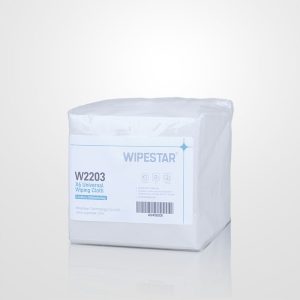
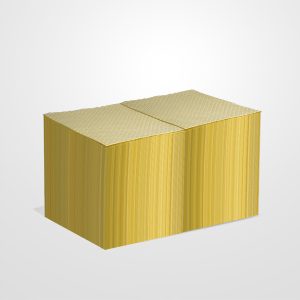
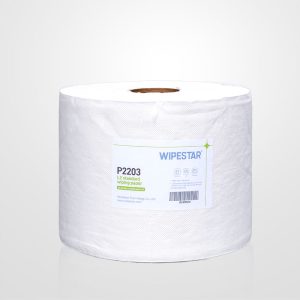
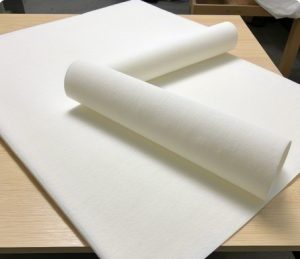
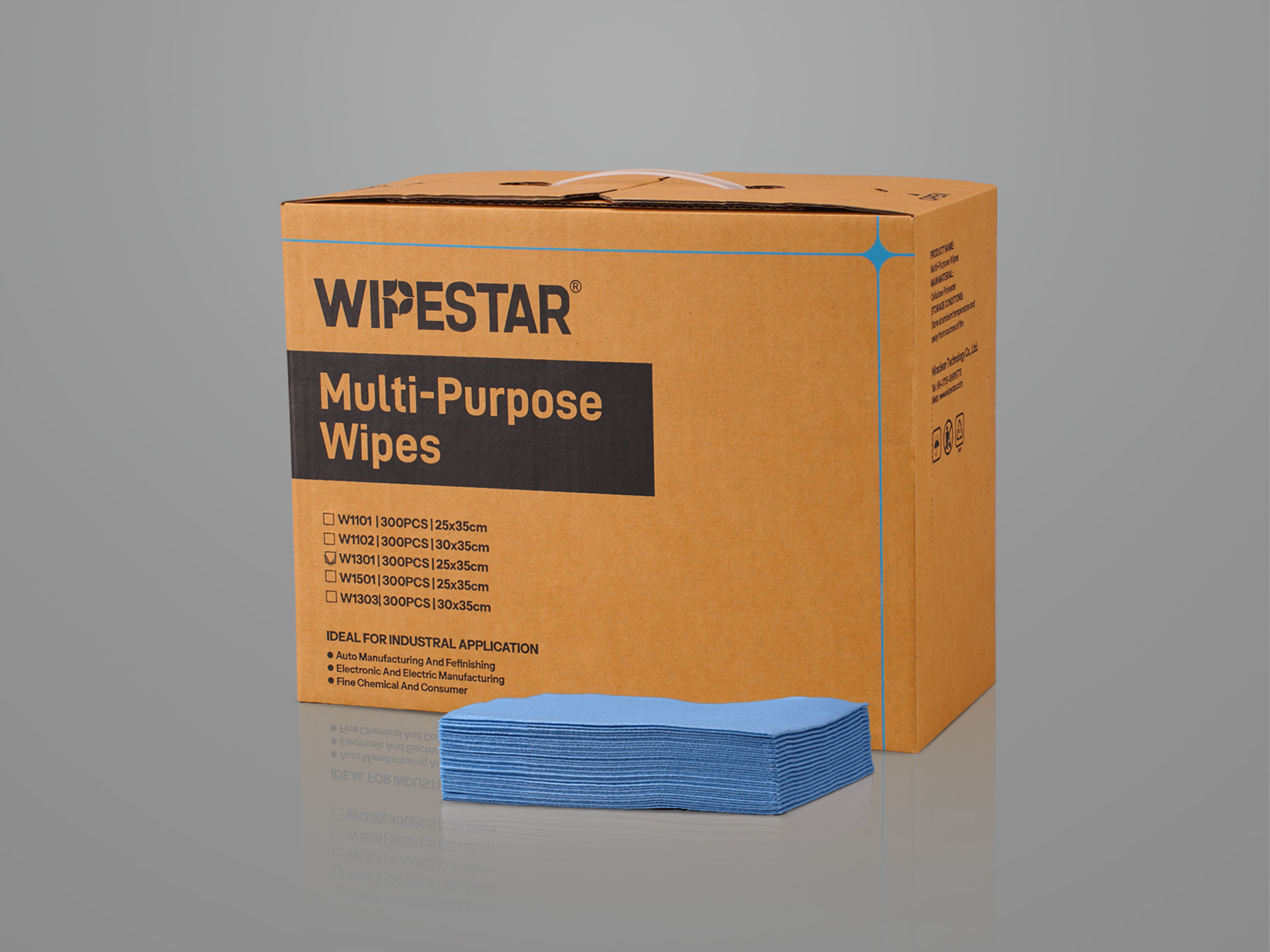
Separation works best. If secondary packaging can happen in its own room with its own air handling, most of this disappears. Where that isn’t possible, hold positive pressure in the filling area so the airflow moves away from open product. Wipe conveyors, tables and hopper feeds daily — a general-purpose wiping paper with decent lint control handles this well, since these aren’t direct product-contact surfaces. And keep cartons sealed until they’re needed on the line. An open box on a shelf above a conveyor is a fiber dispenser.
What GMP Auditors Actually Ask About Wipes
ISO 22716, the cosmetics GMP standard, never names a wipe type or a particle count. What it does require is documented cleaning procedures, validated cleaning methods, and evidence that every consumable used in production is suitable for its intended purpose. Auditors translate that into three questions.
Do you have a written specification? If the filling line uses “general-purpose industrial wipes” and nobody can say why that’s acceptable, that’s a finding. The answer “we’ve always used them” has never closed an audit finding in the history of auditing.
Have you qualified the supplier? ISO 22716 expects incoming materials — cleaning consumables included — to be specified, verified and traceable. For wipes that means a technical data sheet on file with fiber release and particle data, extractables (ions and non-volatile residue), basis weight and solvent compatibility, plus certificates of analysis per lot. If your current supplier can’t produce that, the gap is on your side of the table, not theirs.
Is the cleaning validated? Auditors want evidence that the procedure reliably leaves the surface clean — typically swab or rinse testing after wipe-down, with the results recorded. It takes fifteen minutes per test and it’s the single most common missing document in cosmetics cleaning files.
The regulatory picture is also tightening on both sides of the Atlantic. In the EU, compliance with ISO 22716 is a legal requirement under Article 8 of Regulation (EC) No 1223/2009. In the US, the Modernization of Cosmetics Regulation Act (MoCRA, December 2022) gave the FDA facility registration, product listing, adverse-event reporting and mandatory recall authority, and directed it to write federal cosmetics GMP rules. As of 2026 that GMP rule is still pending, and everyone expects it to track ISO 22716 — which is why most suppliers to US retail are already working to it. Building your wipe specification around ISO 22716 now is the cheapest way to be ready for either market.
Wipe Specs by Production Area
| Production Area | Recommended Wipe | Key Requirement | Avoid |
|---|---|---|---|
| Cream/lotion nozzle cleaning | Sealed-edge synthetic, pre-wetted with IPA/DI water | Low fiber release, consistent saturation | Cellulose wipes, cotton rags |
| Filling line surfaces | Low-lint synthetic cloth, dry or pre-wetted | ISO 5 compatible, sealed edge | General-purpose shop towels |
| Mascara / eyeliner production | Sealed-edge synthetic, fiber-release tested | Zero-tolerance control near the eye area | Any cellulose or unsealed wipe |
| Wand and cap assembly | Low-particle synthetic + cleanroom swabs | Lint-free contact in bristle and tray zones | Wiping with gloved hands only |
| Lipstick mold cleaning | Pre-wetted synthetic, wax-compatible solvent | No fiber embed in warm wax | Dry wiping on wax residue |
| Packaging conveyors and tables | Lint-control wiping paper | Contains cardboard and tissue fiber shed | Cotton rags, reused cloths |
| Packaging near open product | Low-lint synthetic | Stops fiber transfer to primary containers | Tissue paper, cellulose |
| Spill cleanup on production floors | High-absorbency spill control wipe | Fast uptake of viscous cream and lotion | Thin wipes that smear instead of absorb |
Most cosmetics plants end up running a three-tier system: premium sealed-edge synthetics where product is exposed, standard low-lint wipes for general production surfaces, and absorbent paper or cellulose for floors and non-critical cleanup. It concentrates the spend where it actually prevents contamination, and it’s easy to write into an SOP.
Who You’ll Work With at WIPESTAR
We supply wiping consumables to cosmetics and personal care manufacturers who live with fiber and microbial contamination risk every day. The team below works on filling lines, mold areas and packaging zones, and they know what an ISO 22716 audit file has to contain.

Lee — Key Account Sales Manager
Lee looks after multi-line cosmetics and personal care accounts, building consumable programmes that keep every filling and packaging line on the same specification, with delivery schedules matched to production planning.

Carolina — Product Specialist
Carolina matches wipe specifications to production requirements — sealed-edge synthetics for nozzle cleaning, pre-wetted wipes for wax molds, lint-control papers for packaging. She supplies the technical data sheets and fiber-release documentation your quality team needs for GMP compliance.

Juan — Purification Industry Specialist
Juan handles contamination control for controlled production areas: zoning the plant by risk, deciding where cleanroom-grade consumables are justified, and setting up wipe-down protocols that auditors accept.
Get Started with Cosmetics Manufacturing Wipes
If you’re rebuilding your wipe specification after a contamination event, preparing for a GMP audit, or setting up a new filling line, tell us what’s being produced where. We’ll match a wipe to each area and send the documentation your quality team will ask for later.
- Wiping Cloths — Sealed-edge, low-lint synthetics for filling nozzles and product-contact surfaces, with fiber-release data sheets.
- Pre-Wetted Wipes — Factory-sealed saturation for nozzle wipe-downs and wax mold cleaning, so every shift wipes the same way.
- Cleanroom Swabs — Needle guards, cap threading fixtures and the crevices where mascara assembly accumulates fibers.
- Spill Control — High-absorbency sheets for cream, lotion and emulsion spills on production floors.
- Request Technical Consultation — Send us your production areas and process chemistry; we’ll come back with specifications and compatibility data.
Browse All Products → Request a Custom Quote
Frequently Asked Questions