English
 Chinese


Last November a Tier 1 supplier in Changshu called us. Their clear coat reject rate had jumped from 2.1% to 6.8% in three weeks—no process changes, no new paint formulation, no staffing turnover. We asked one question: did you switch wipe suppliers? They had. The new vendor saved ¥0.03 per wipe. The rejects cost them ¥380,000 in rework before they switched back.
We supply industrial wiping cloths to automotive paint operations across Asia, Europe, and North America. This guide distills what we’ve learned from those partnerships—which wipe specs actually matter, where paint shops get burned, and how to run a qualification process that catches problems before they hit your line.
Where Contamination Actually Comes From in Paint Booths
Before you can choose the right wiping cloth, you need to understand what you’re fighting. Paint booth contamination breaks down into four categories, and each one demands a different wipe response:
- Particulate contamination — Dust, sanding residue, metal fines from stamping, and airborne particles that settle on panels between wash and spray. These are the defects you see as nibs or bumps in the finished coat.
- Fiber contamination — Loose fibers from the wiping cloth itself. This is the defect category most directly tied to your wipe selection. A single polyester fiber embedded in base coat becomes a visible defect under clear coat magnification.
- Chemical contamination — Silicone, oil, mold release agents, and fingerprint residue. These cause craters, fisheyes, and adhesion failures. The wipe needs to remove them, not redistribute them.
- Mechanical contamination — Overspray particles, dried paint chips, and debris from equipment. These require wipes with enough mechanical action to dislodge particles without scratching the substrate.
Most paint shops we audit are using a single wipe type for all four categories. That’s like using the same tool for every bolt on an assembly line—you’ll get some of them right, but you’re leaving quality to chance.
Matching Wiping Cloths to Each Stage of the Paint Process
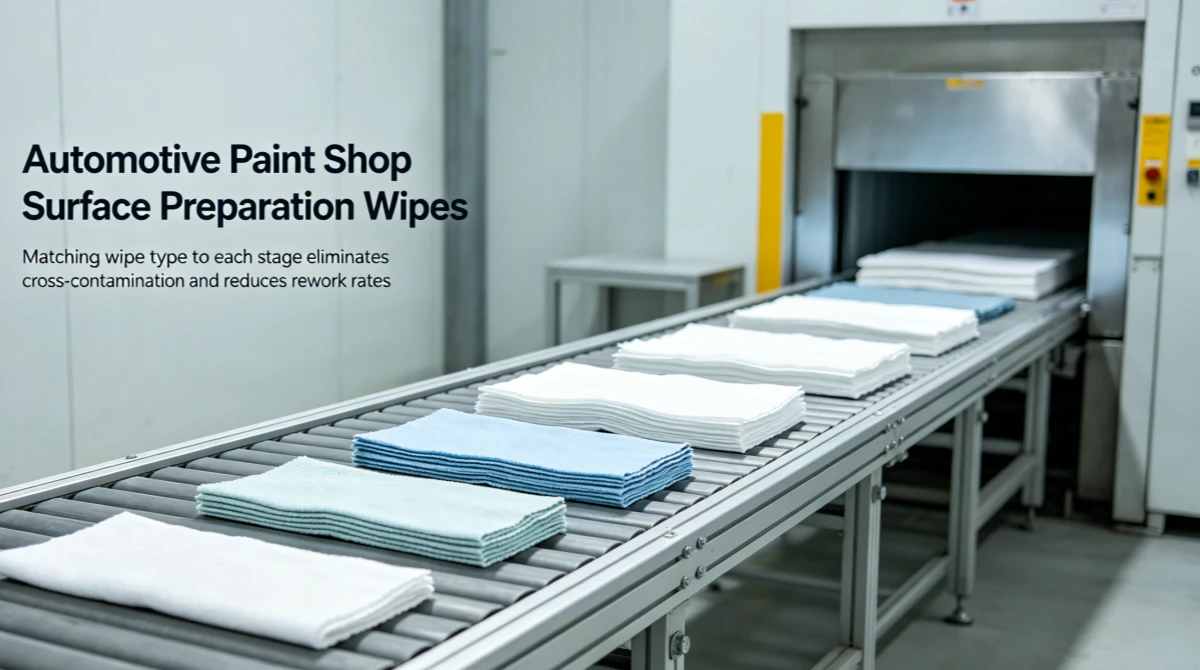
An automotive paint line has distinct zones, and each zone has different contamination risks. Here’s how we recommend mapping your industrial wiping cloths to each stage:
Stage 1: Post-Stamping and Body-in-White
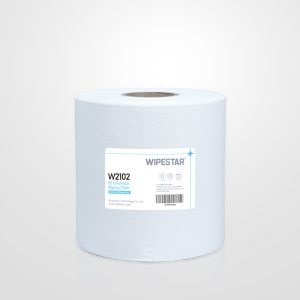
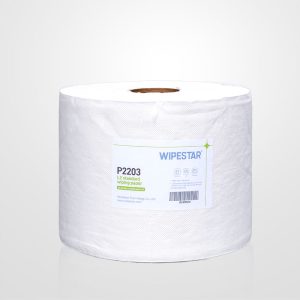
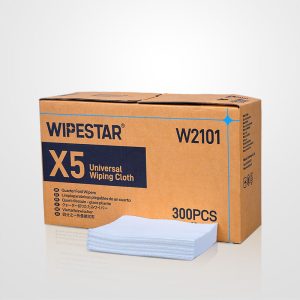
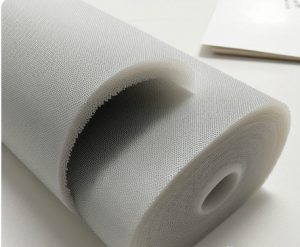
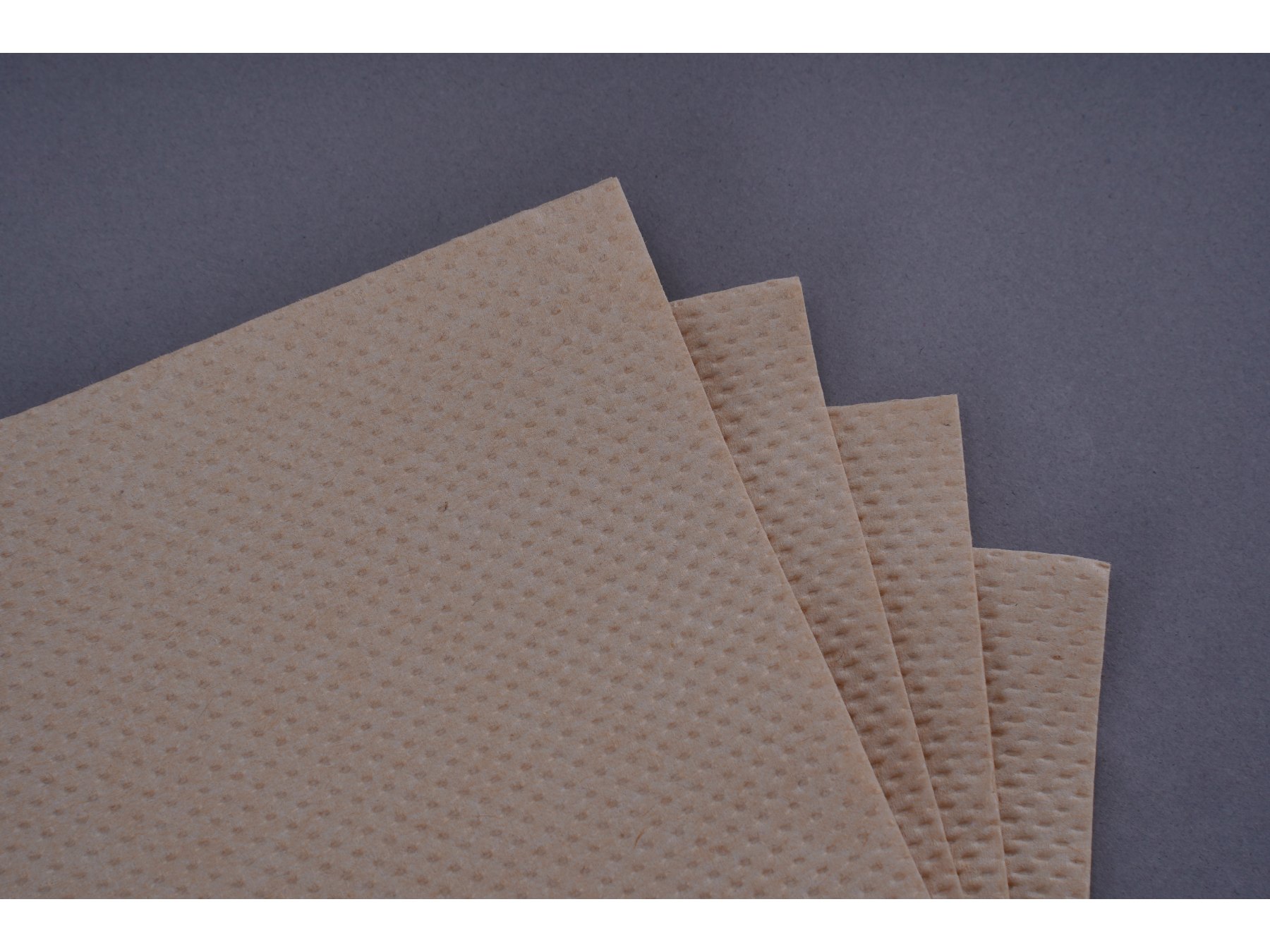
At this stage, you’re removing metal fines, stamping oils, and press lubricants. The wipe needs high absorption capacity and enough abrasion to lift oily residue without scratching bare metal. A wood pulp/polypropylene blend wiping cloth works well here—the pulp provides absorption while the polypropylene adds mechanical strength. Our W2101 Universal Wiping Cloth is the workhorse for this stage across dozens of automotive stamping facilities we supply.
Stage 2: Pre-Paint Surface Preparation
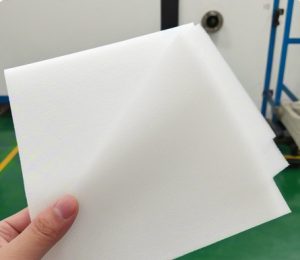
This is the critical handoff point. After e-coat and before primer, the panel surface must be free of fingerprints, dust, and any residual contaminants. The wipe must be low-lint, compatible with your surface prep solvents (typically IPA or dedicated prep solutions), and sized for efficient single-pass coverage. A high-friction surface preparation wipe like our W3501 Heavy Duty Surface Preparation Wipes provides the mechanical action needed to lift stubborn contaminants without leaving fibers behind.
Stage 3: Between Coats (Tack and Wipe-Down)
Between primer, base coat, and clear coat, you’re doing tack wiping to remove overspray dust and any particles that settled during flash-off. The wipe here must be ultra-low-lint and compatible with your booth environment. If you’re running a downdraft booth, even a single fiber from a cut-edge wipe can travel with the airflow and land on wet paint. This is where wipe edge construction becomes the deciding factor.
Stage 4: Final Inspection and Detailing
After clear coat cure, the detailing team wipes down finished panels to remove overspray masking residue and fingerprints before delivery. The wipe must be soft enough to avoid micro-scratching the cured clear coat while still providing enough cleaning action for light residue removal. Our W3401 Ultrasoft Surface Preparation Wipes were developed specifically for this kind of delicate post-cure surface work.
Surface Preparation Wipes: Why Standard Rags Fail
We hear this every month: “We’ve been using shop rags for twenty years and our paint quality is fine.” Then we look at their defect data and find that 30–40% of their paint rejects trace back to surface contamination that a proper wiping cloth would have caught.
Standard shop rags and recycled textile wipes fail in three ways:
- Inconsistent material composition — Recycled rags contain mixed fibers, unknown chemical residues, and variable absorption properties. You can’t build a repeatable surface prep process on a variable input.
- High particle shedding — Cut or torn edges release fibers with every wipe. In a downdraft paint booth, those fibers become airborne and land on wet paint surfaces.
- Chemical contamination — Recycled rags may carry residual silicone, solvent, or oil from their previous use. These contaminants are invisible until they cause a fisheye in your clear coat.
Engineered surface preparation wipes solve all three problems. The material is consistent, the edges are sealed to prevent fiber release, and the product arrives free of chemical contaminants. The per-unit cost is higher than recycled rags, but when you factor in paint defect reduction, the math shifts dramatically in favor of purpose-built wipes.
Particle Shedding: The Metric Your Wipe Supplier Doesn’t Want to Discuss
Ask your current wipe supplier for particle shedding data tested per IEST-RP-CC004. If they can’t provide it—or if they give you a generic spec sheet with no lot-level data—that’s a red flag.
Particle shedding is the single most important performance metric for paint shop wipes, and yet most procurement teams never ask about it. Here’s the hierarchy of edge construction and what it means for your paint quality:
| Edge Type | Particle Shedding | Paint Stage Suitability |
|---|---|---|
| Cut edge (raw) | High — visible fiber release on contact | Body-in-white only |
| Heat-sealed edge | Low — fused fibers at perimeter | Pre-paint prep, general wipe-down |
| Laser-sealed edge | Very low — clean fused edge | Between-coat tack wiping |
| Ultrasonic-sealed edge | Minimal — strongest seal available | Clear coat zone, final inspection |
If your paint rejects include fiber nibs, step one is upgrading your edge construction. We’ve seen facilities cut their fiber-related defects by 70% simply by switching from cut-edge to heat-sealed wiping cloths for their between-coat wipe-down stations.
Absorption and Solvent Compatibility in Real Paint Shop Conditions
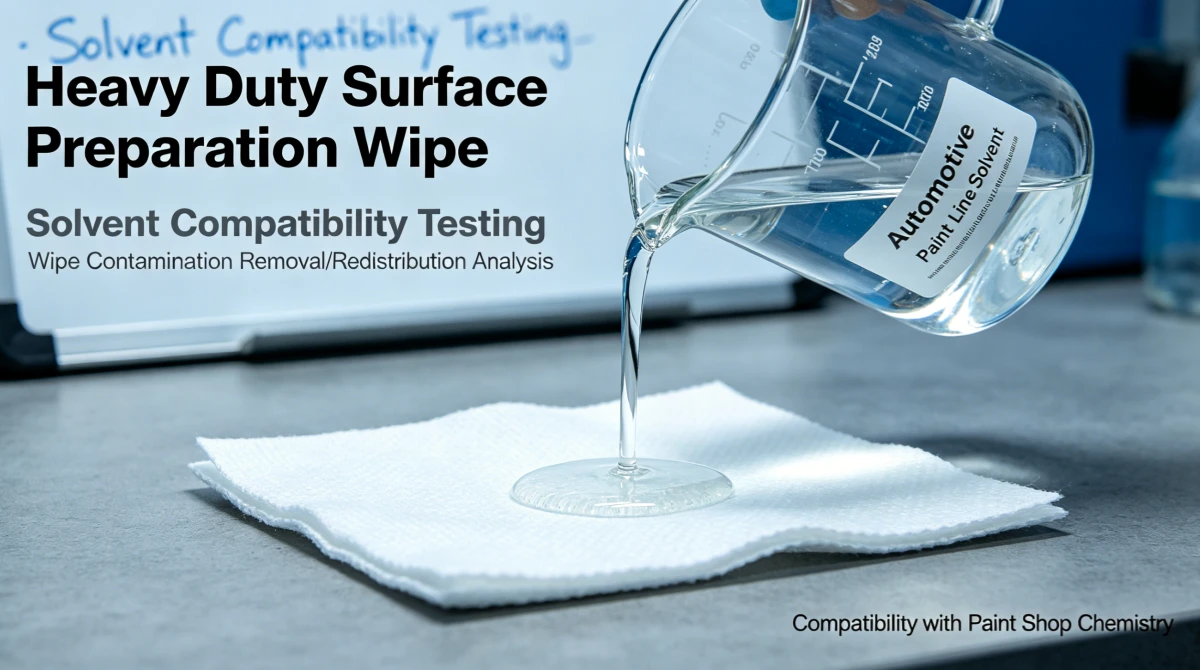
A wipe that doesn’t absorb your surface prep solvent is just pushing contamination around. We test every wiping cloth we supply against the most common automotive paint shop solvents:
- Isopropyl alcohol (IPA) — The industry standard for pre-paint surface prep. Most wood pulp/polypropylene blends handle IPA well, but absorption rate varies significantly between products.
- Dedicated surface prep solutions — Formulations like anti-static prep cleaners or silicone removers require wipes with specific chemical compatibility. A wipe that works with IPA may break down or lose absorbency with specialty solvents.
- Wax and grease removers — Heavy-duty degreasing applications need wipes with high wet strength and absorption capacity. The wipe must hold together when saturated with aggressive solvents without tearing or leaving residue.
Our recommendation: always test your actual solvent on the wipe before committing to a bulk order. Drop 0.5 mL on the wipe surface and measure absorption time. If it beads or sits for more than five seconds, the material blend isn’t right for your chemistry. This simple test takes thirty seconds and prevents weeks of production headaches.
Total Cost per Painted Panel: A Better Way to Evaluate Wipe Cost
Procurement teams evaluate wipes on unit price. Paint shop managers should evaluate wipes on cost per acceptable painted panel. Here’s why the cheapest wipe is almost never the lowest-cost option:
- Rework cost — Sanding and re-spraying a single panel runs 15–40× the cost of the wiping cloth that caused the defect. A stamping plant in Anhui tracked this for six months: their “cheap” wipe supplier cost them ¥12,000 per month in extra rework against ¥800 in wipe savings.
- Line stoppage — When contamination triggers a quality hold, the entire line stops. One contamination event wipes out months of “savings” from cheaper consumables.
- Consumption rate — Cheaper wipes that shed fibers or don’t absorb properly force operators to use more wipes per panel. We’ve tracked consumption differences of 2–3× between a low-cost cut-edge wipe and a properly specified sealed-edge product.
We run this math with every new automotive client. The wipe that costs 20% more per unit typically delivers 25–35% lower total cost per painted panel—fewer rework cycles, fewer line stoppages, and operators using fewer sheets per panel because the wipe actually works on the first pass.
Receiving Inspection: The 10-Minute Check That Prevents Line Stoppages
Don’t trust the Certificate of Analysis blindly. Run this quick receiving check on every incoming wipe lot:
- Visual check under task lighting — Open one bag per lot. Hold the wipe at arm’s length under standard work lighting. Look for uneven texture, discoloration, tears, or foreign particles. Thirty seconds.
- Weight spot-check — Weigh five random wipes on a postal scale. Compare to the spec sheet’s gsm rating. A wipe that underperforms on weight has a material consistency problem. Two minutes.
- Solvent absorption test — Drop 0.5 mL of your primary prep solvent onto a wipe. It should absorb within three to five seconds. Compare to your approved reference sample. Three minutes.
- Lint test on dark surface — Wipe a clean black glass panel or dark stainless steel. Count visible fibers under a basic magnifying lamp. More fibers than your reference means a production shift occurred. Five minutes.
- CoA cross-check — Verify lot numbers match. Check particle counts and extractable values fall within your acceptance range. We’ve seen CoAs shipped for the wrong product or wrong lot number. Two minutes.
Ten minutes per lot. No lab equipment required. This checklist catches 90% of incoming quality issues before wipes reach your paint line floor.
How to Qualify a Wipe Supplier for Automotive Paint Applications
Qualifying a new wiping cloth supplier isn’t a purchase order—it’s a project. Here’s the process we recommend:
Step 1: Define Your Actual Requirements
Walk the floor before you write the RFQ. Talk to operators, not just quality managers. Map your paint stages, solvents, booth airflow direction, and current defect data. Most facilities we visit are over-speccing on some parameters and under-speccing on others.
Step 2: Request 12 Months of CoA Data
A supplier can hit spec on a sample lot. The question is consistency over twelve months. Historical CoA data reveals lot-to-lot variation that a single sample can’t show.
Step 3: Trial in Your Actual Environment
Evaluate trial lots in your paint booth, not a conference room. Test particle shedding on your surfaces, confirm solvent compatibility, and track consumption rates across at least two production shifts.
Step 4: Establish a Quality Agreement
Define acceptance criteria, lot-level documentation requirements, escalation procedures for quality issues, and remedy clauses for missed deliveries. A quality agreement without teeth is just paper.
We’ve guided automotive paint facilities through this qualification process across three continents. If you need a supplier who understands paint shop requirements from day one, browse our wiping cloth range or contact our technical team directly.
The People Behind Your Wipe Supply
We don’t rotate account managers. When you work with us, you get named people who know your paint line, your defect history, and your solvent chemistry. Three you’ll likely interact with:

Vicky — Foreign Trade Sales Supervisor
Vicky runs point on overseas orders from first sample shipment through production scheduling and logistics. If you’ve ever had a container of wipes show up with wrong labeling or missing documentation, you know why detail-obsessed order management matters. She coordinates between our factory, freight forwarders, and your receiving dock to make sure what arrives matches what was specified—lot numbers, packaging format, paperwork, everything.

Yunyun — ESD Project Manager
Static charge is an underrated problem in paint booths—charged surfaces attract airborne particles faster than you can tack-wipe them away. Yunyun specializes in ESD-safe solutions for manufacturing environments, including anti-static wiping materials and surface charge neutralization. If your paint defects correlate with low-humidity days or you’re running electronic component cleaning alongside your paint line, she’s the one to talk to.

Juan — Purification Industry Specialist
Paint booths, prep stations, and clean zones all have air quality requirements that directly affect wipe performance. Juan’s background is in contamination control and cleanroom design—he understands how your HVAC airflow, booth classification, and particulate load interact with your consumable choices. He’s helped facilities redesign their wipe-down SOPs after discovering the booth’s airflow was defeating whatever the wipe was trying to accomplish.
Meet the full team and see who handles your region: WIPESTAR Team Page →
Frequently Asked Questions About Industrial Wiping Cloths for Automotive Paint Shops
Request a Quote for Automotive Paint Shop Wiping Cloths
We supply industrial wiping cloths direct from our factory—full technical documentation, custom sizing, private labeling, and fast global shipping. ISO 9001:2015 certified production. Free sample lots available for qualified automotive paint facilities.
Browse our wiping cloth product range →