English
 Chinese



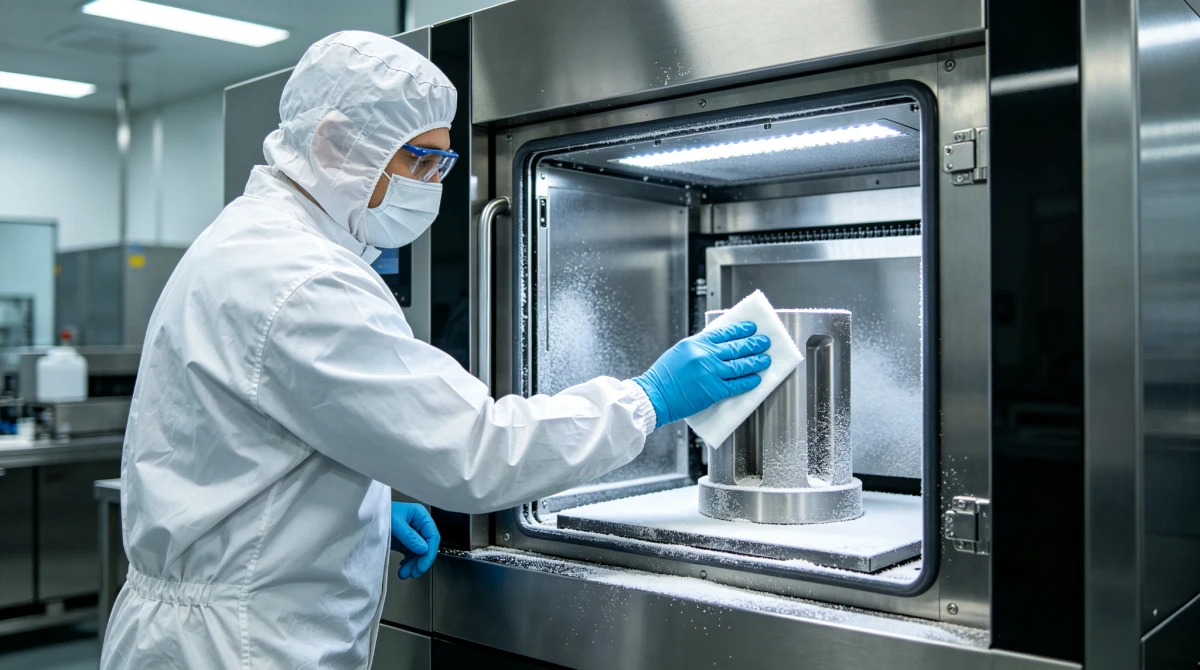
Last February, an additive manufacturing facility in Wuxi had a scare. A DMLS operator was cleaning the build chamber between prints using a standard polyester wipe. The wipe had been sitting on the workbench — not in sealed packaging — and had picked up ambient moisture.
When it contacted the residual titanium alloy (Ti-6Al-4V) powder on the chamber floor, there was a visible flash. Nobody was hurt. But the machine was down for two weeks while they replaced the recoater assembly and ran full safety diagnostics.
Metal additive manufacturing is growing fast. The global AM market hit $21.8 billion in 2025, and metal powder bed fusion alone accounts for roughly a third of that. Print shops that were running one or two machines five years ago are now operating fleets of 10, 20, even 50 systems.
And as production scales, the contamination control practices that worked for prototyping — wiping things down with whatever’s handy — start causing real problems. Failed builds. Contaminated powder batches. And, in the worst case, safety incidents.
This guide covers what cleanroom wipes actually need to do at each stage of industrial additive manufacturing. If you’re an AM engineer or production manager trying to stop scrap, protect your powder supply, and keep your operators safe, keep reading.
Metal Powder Is Not Your Friend on Surfaces
Metal powders used in additive manufacturing — titanium, aluminum, Inconel, stainless steel, cobalt-chrome — are engineered to be spherical, typically 15–45 µm in diameter for laser powder bed fusion. That particle size range is perfect for spreading into thin layers on a build plate.
It’s also perfect for embedding in wipe fibers, lodging in machine crevices, and contaminating recycled powder batches.
The problem is simple: powder on a wipe is powder that’s no longer where it should be. In DMLS (Direct Metal Laser Sintering) and SLM (Selective Laser Melting) systems, the powder handling loop is closed for a reason — every gram of powder is tracked, sieved, and recycled.
Cross-contamination between alloy grades is one of the most common causes of build failure in multi-alloy facilities. A wipe that was used to clean a Ti-6Al-4V build chamber and then, without thinking, gets used on an Inconel 718 machine? That can introduce enough titanium into the Inconel batch to change its mechanical properties.
We’re talking parts that fail tensile testing or, worse, pass testing but fail in service under creep conditions at 700°C.
The Explosion Risk Nobody Wants to Discuss
Here’s the part that safety managers know but production teams sometimes underappreciate: fine metal powders are combustible. Titanium powder below 50 µm, aluminum powder below 45 µm, and even stainless steel powder below 20 µm can deflagrate under the right conditions — a dust cloud, an ignition source, sufficient oxygen concentration.
The NFPA 484 standard (Standard for Combustible Metals) applies to metal additive manufacturing facilities. It covers everything from powder storage to housekeeping. Section 7.4 specifically addresses cleaning practices: surfaces must be kept free of combustible dust accumulation, and cleaning methods must not create dust clouds.
That means no compressed air blowdown of powder-contaminated surfaces. And no dry sweeping. Wet wiping with appropriate wipes is the recommended method.
But here’s the catch: the wipe itself can become a hazard if not handled properly. A wipe saturated with fine titanium powder is essentially a combustible dust collection medium. It needs to go into a sealed, labeled waste container immediately after use — not onto the workbench, not into a general waste bin, and definitely not into a pocket.
We’ve designed our metal AM wipes with a specific fiber structure that captures and holds powder particles rather than releasing them during handling. But safe disposal is still the operator’s responsibility.
Wipe Selection by AM Process Stage
Additive manufacturing isn’t one process — it’s a sequence of very different operations, each with its own contamination profile. Here’s a stage-by-stage breakdown:
| AM Process Stage | Recommended Wipe Type | Primary Contaminant | Key Concern | Special Requirements |
|---|---|---|---|---|
| Build chamber cleaning (between prints) | Low-particle polyester, sealed-edge, IPA-dampened | Residual metal powder (15–45 µm) | Cross-alloy contamination | Dedicated wipes per alloy; no fiber shedding into powder bed |
| Recoater blade and roller cleaning | Lint-free polyester knit, solvent-resistant | Fused powder agglomerates, metal spatter | Blade surface damage | Must not scratch precision-ground recoater surfaces |
| Build plate prep (pre- and post-build) | Heavy-duty non-woven, high-absorbency | Support material residue, metal oxides, release agents | Adhesion quality for next build | Compatible with ethanol, IPA, acetone |
| Post-processing (support removal, surface finishing) | Anti-static non-woven | Metal chips, abrasive media, surface oxides | Surface contamination on finished part | ESD-safe for sensitive aerospace parts |
| Powder recycling station | Low-particle polyester, moisture-sealed packaging | Cross-contamination powder, moisture | Powder batch integrity | Absolutely zero moisture ingress; vacuum-sealed packs |
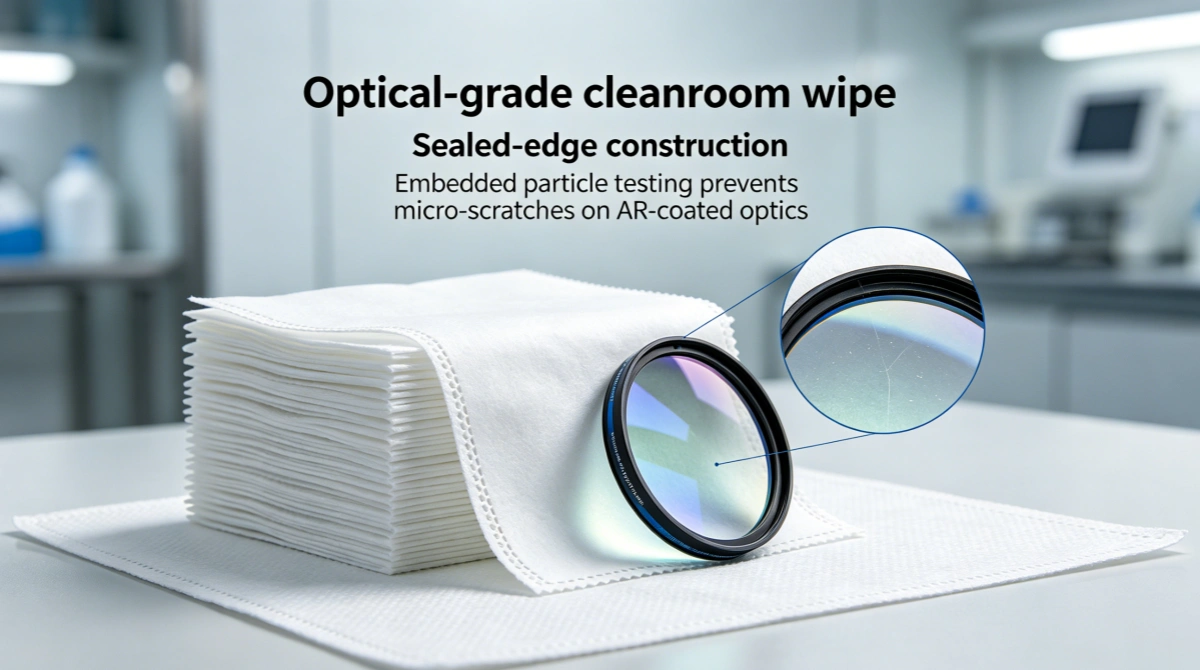
| Optical window / laser lens cleaning | Microfiber, ultra-low particle, lint-free | Soot, metal vapor deposits, fingerprints | Beam path clarity | Must not scratch anti-reflective coatings on optics |
That last row — optical window cleaning — is one that gets overlooked until it causes a build failure. In laser powder bed fusion, the laser beam passes through a protective glass window before entering the build chamber. Metal vapor and soot from the melting process gradually deposit on this window, reducing laser power at the build surface.
If you don’t clean it regularly and properly, your energy density drops, your melt pool quality degrades, and you start getting porosity in your parts. You might not catch it until the CT scan reveals internal voids in a part that looked fine on the outside.
Microfiber wipes designed for optics cleaning are essential here. A standard polyester wipe will leave micro-scratches on the window coating that scatter the laser beam, creating a diffuse spot instead of a focused one.
Over time, those scratches accumulate and permanently degrade the window. Replacement windows for industrial DMLS systems cost €500 to €2,000 each. A proper optics wipe costs a few yuan.
SLA and Resin-Based Systems: Different Powder, Different Problems
Not all additive manufacturing uses metal powder. Stereolithography (SLA), Digital Light Processing (DLP), and Material Jetting systems use photopolymer resins. The contamination profile is completely different — you’re dealing with viscous, sticky liquid resin instead of dry powder — but wipe selection still matters.
Residue on build platforms, vat surfaces, and optical elements degrades print quality. And uncured resin is a skin sensitizer — many formulations contain acrylates that cause contact dermatitis. Operators handling resin-contaminated wipes need nitrile gloves at minimum.
The wipe itself needs to be compatible with the resin solvent — usually isopropyl alcohol or specialized resin cleaning solutions like TPM (tripropylene glycol monomethyl ether).
For SLA/DLP post-processing, non-woven wipes with high absorbency work well for cleaning build platforms and vat walls. They absorb liquid resin effectively without leaving fibers on the platform surface — which would create defects in the next print.
For optical element cleaning — mirrors, galvo scanner lenses — the same microfiber wipe recommendation from the metal AM section applies.
Powder Recycling Area: The Contamination Bottleneck
In any serious metal AM operation, powder recycling is where quality either lives or dies. Used powder gets sieved (typically through a 63 µm mesh for 15–45 µm feedstock), analyzed for particle size distribution and oxygen content, and either blended with virgin powder or sent back into circulation.
The sieving and handling equipment — sieve shakers, powder hoppers, sample containers — all need to be wiped clean between alloy batches. This is where cross-contamination hides.
A thin film of Inconel powder left on a sieve shaker housing from yesterday’s batch gets picked up by today’s titanium run. The contamination level might be 50 ppm — undetectable by visual inspection, well within the noise of a typical particle size analysis. But absolutely enough to affect the mechanical properties of a flight-critical titanium aerospace component.
We recommend IPA-dampened sealed-edge polyester wipes for this application. The IPA helps dissolve any oxide films bonding the powder to the metal surface, and the sealed edge prevents fiber contamination of the recycled powder stream.
Cleanroom Classification for AM Facilities
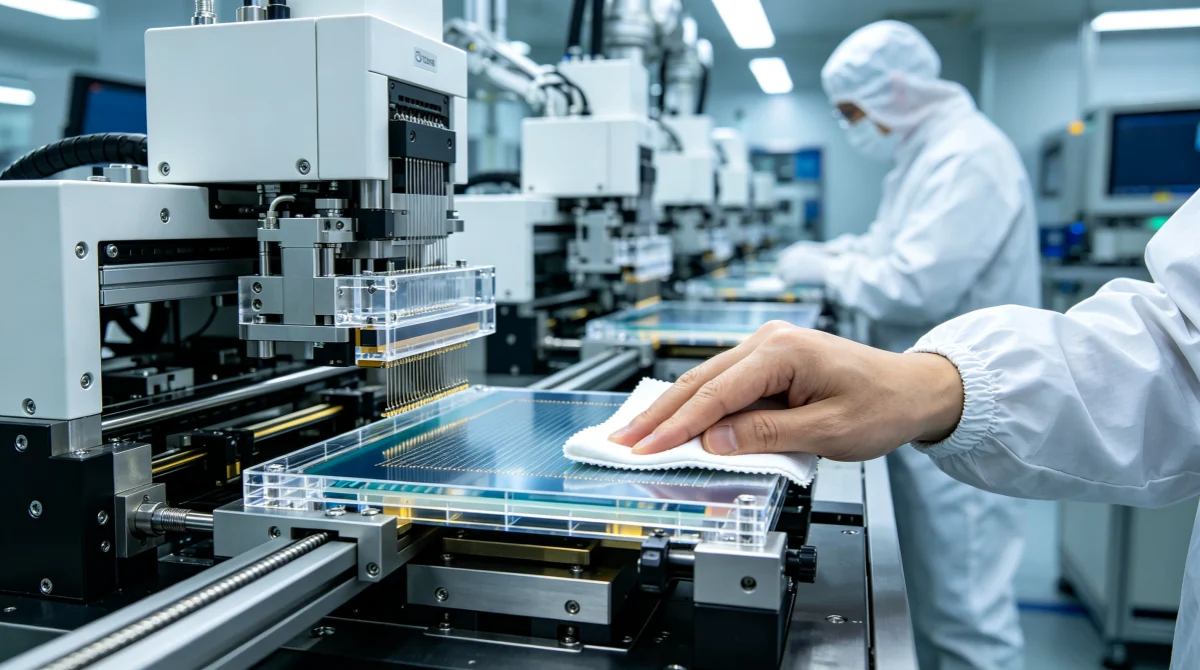
Most metal AM facilities don’t operate in true cleanrooms. They’re industrial environments with localized cleanliness zones — the build chamber itself is essentially an argon-filled micro-environment, while the surrounding powder handling area is a controlled but not cleanroom-grade space.
That said, the trend in aerospace and medical AM is toward cleaner facilities. ISO 8 (Class 100,000) for the general production floor and ISO 7 (Class 10,000) for powder handling and post-processing areas is becoming standard for AS9100D-certified AM shops.
NASA’s MSFC-STD-3029 (Standard for Additively Manufactured Spaceflight Hardware) specifies even tighter controls for flight hardware.
For facilities pursuing or maintaining these certifications, wipe selection needs to follow cleanroom protocols — even if the rest of the environment doesn’t. Using a cleanroom-grade wipe in a non-cleanroom area is fine (you’re just being extra careful). Using a non-cleanroom wipe in a cleanroom-grade area is an audit finding.
And if you’re producing medical implants under ISO 13485, using the wrong wipe can trigger a CAPA that shuts down your production line for weeks.
WIPESTAR Solutions for Additive Manufacturing
We supply wipes to AM facilities across China, Europe, and North America — from prototyping shops running two machines to production facilities with 50+ systems. Here’s our AM product range:
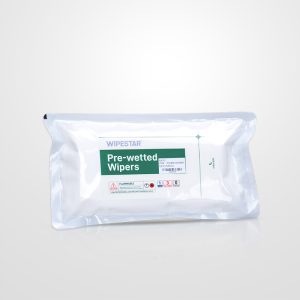
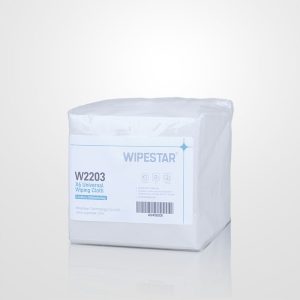
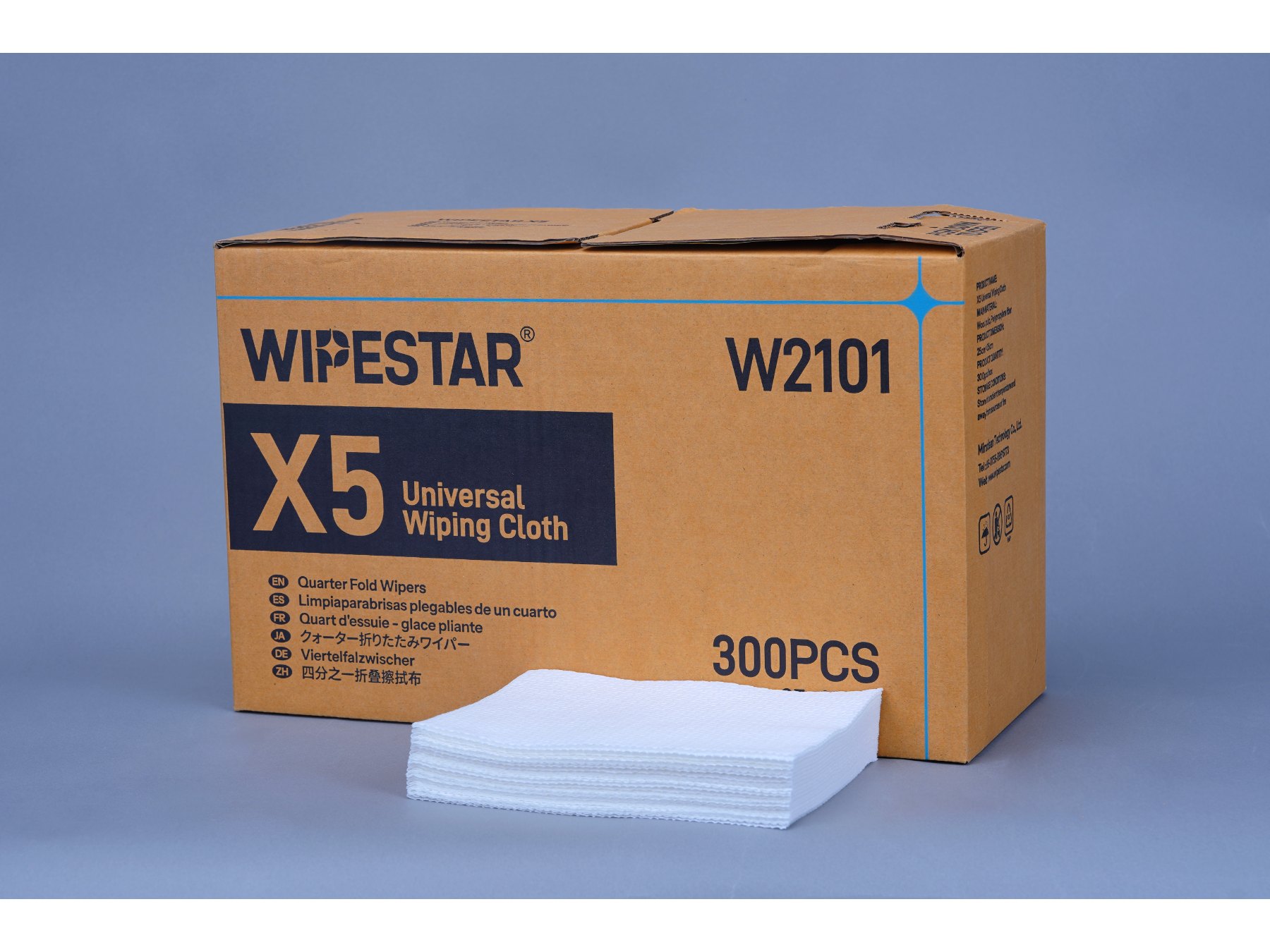
Sealed-Edge Polyester Knit Wipes — The primary wipe for build chamber cleaning and powder handling. Available in 90 g/m² and 110 g/m² weights. Sealed edges eliminate fiber release into powder beds. Compatible with IPA, ethanol, and acetone. Available in alloy-dedicated color-coded packaging (titanium = blue, aluminum = yellow, Inconel = red, stainless = green) to prevent cross-contamination.
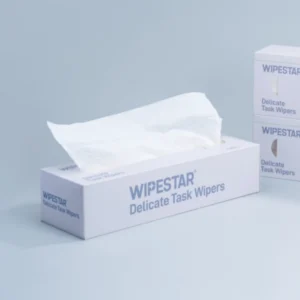
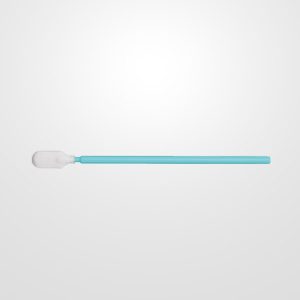
Microfiber Optics Wipes — Ultra-low particle, lint-free microfiber for laser lens and optical window cleaning. Non-abrasive fiber structure protects anti-reflective coatings. Pre-cut to standard lens sizes for convenient field use. Tested to IEST-RP-CC004.4 with particle counts below 1.0 × 10⁵ particles/m² (≥0.5 µm).
Anti-Static Non-Woven Wipes — ESD-safe wipes for post-processing areas and finished part handling. Surface resistivity 10⁹–10¹¹ Ω. Prevents static charge buildup that could attract powder particles to finished surfaces. Important for aerospace and medical parts where surface cleanliness is validated during QC inspection.
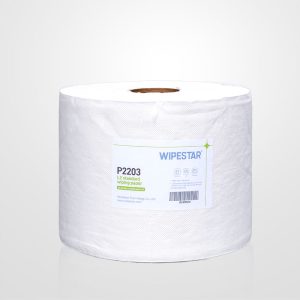
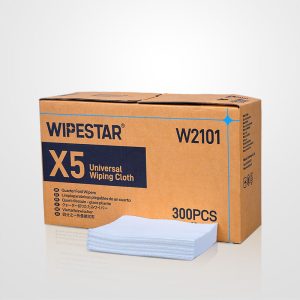
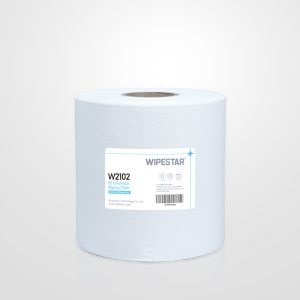
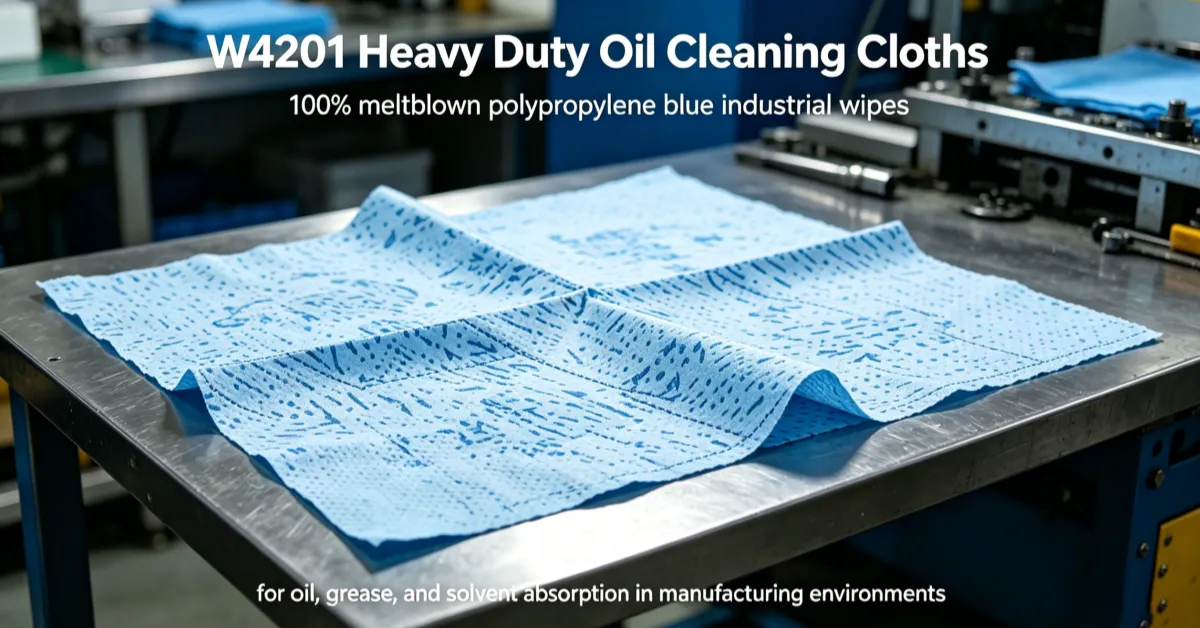
Heavy-Duty Non-Woven Wipes — High-absorbency wipes for build plate cleaning, resin system maintenance, and general shop surface cleanup. Compatible with common AM cleaning solvents. Good mechanical strength for scrubbing support material residue and fused powder agglomerates.
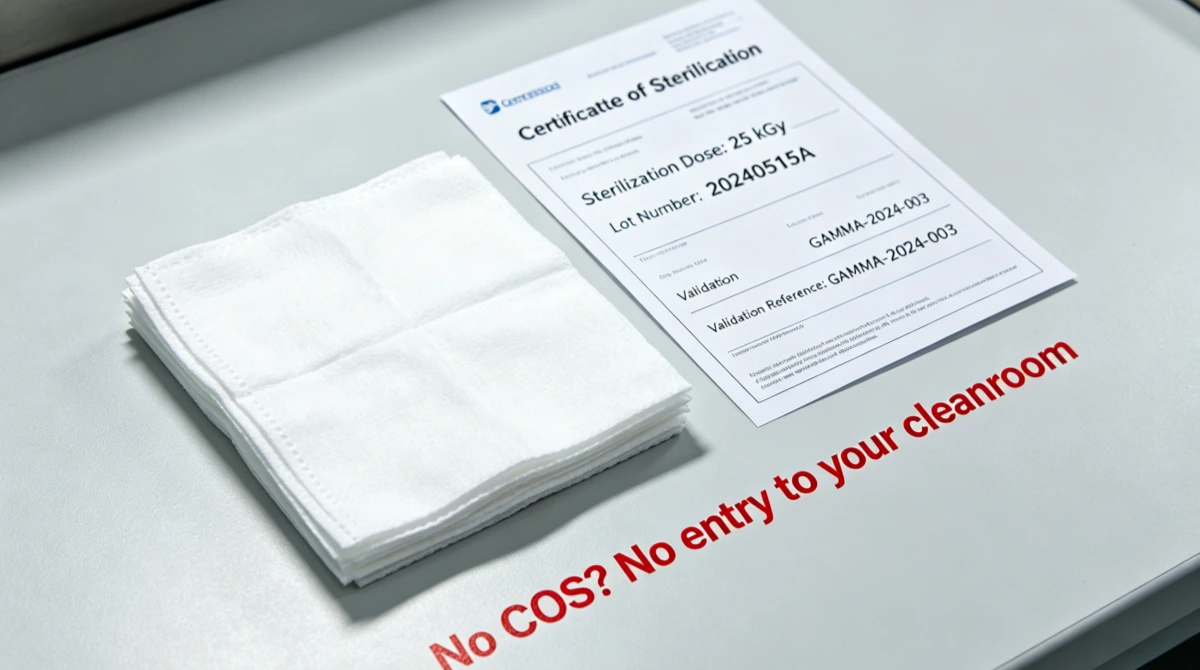
Every lot ships with a Certificate of Analysis. We provide free sample packs with alloy-specific color coding for evaluation. If you’re running a multi-alloy facility, we’ll set you up with a trial kit covering all your alloy designations.
Who You’ll Work With at WIPESTAR
We supply cleaning consumables to additive manufacturing and 3D printing facilities where metal powder contamination is a serious safety and quality concern. Our team understands the unique cleanliness requirements of industrial 3D printing operations.

Juan — Purification Industry Specialist
Juan has rich experience in the purification industry, with professional command of clean products and purification process equipment, committed to providing optimized clean solutions.

Guan — Cleanroom Consumables Sales Specialist
Guan has 4.5 years in the semiconductor industry and over 5 years in cleanroom consumables sales, with deep understanding of semiconductor production cleanroom requirements.

Zhen — Account Manager
Zhen has rich experience in cleanroom consumables and contamination control solutions, proficient in WIPESTAR’s full product line across industries including microelectronics, optics, and aerospace.
Running a multi-alloy AM facility? Let’s talk contamination control.
Send us your machine list, alloy portfolio, and current consumables. We’ll recommend a color-coded wipe program and send free evaluation samples within 48 hours.
Frequently Asked Questions