English
 Chinese



A shipyard in Dalian was finishing a 40,000-ton bulk carrier when the paint shop supervisor noticed something wrong with the final coat on the hull plates. The epoxy topcoat was fisheyeing—tiny circular craters forming in the wet paint film. They’d prepped the surface exactly per the paint manufacturer’s spec: blast cleaning to Sa 2.5, primer within four hours, topcoat within the recoat window. But the wipes used to do a final surface pass before topcoat application were generic industrial rags from a local supplier. Those rags contained trace silicone compounds from their manufacturing process. Silicone contamination on a steel surface is the number one cause of fisheye in marine coatings. The yard had to sand back and repaint 800 square meters of hull plate. Three days of work, 400 liters of wasted topcoat, and a delivery delay that triggered a contractual penalty.
Shipbuilding and marine vessel maintenance operate in some of the most aggressive environments on Earth. Saltwater corrosion, fuel oil contamination, hydraulic fluid spills, and constant exposure to wind and moisture create cleaning challenges that standard industrial consumables can’t handle. This guide is written for shipyard production managers, marine engineers, vessel superintendents, and procurement teams who need to get their consumable selection right—because in shipbuilding, a cleaning mistake doesn’t just cost you a rework. It costs you a delivery deadline.
Why Marine Environments Destroy Standard Cleaning Products
Walk through any shipyard and you’ll find the same scene: a pile of dirty rags next to a grinder, a bucket of solvent-soaked cloths near the paint booth, and a roll of paper towels on the engine room workbench. These products were chosen because they’re cheap and available. Nobody specified them. Nobody tested them. And when something goes wrong—a coating failure, a corrosion spot, a fuel system contamination—the rag pile is the last place anyone looks.
Marine environments are uniquely hostile to cleaning consumables:
- Salt exposure — Sodium chloride is everywhere in a shipyard. It’s in the air, on every steel surface, in the blast abrasive, and in the water used for washing. Chloride contamination on steel surfaces causes underfilm corrosion that destroys coating adhesion. Your wipes must not introduce additional chlorides.
- Hydrocarbon contamination — Fuel oil, hydraulic fluid, lubricating oil, and grease are present on every engine room surface, on deck machinery, and in bilge spaces. Standard cotton rags absorb these fluids but don’t release them—they become saturated and smear the contamination around.
- Abrasive particles — Grit blast residue, grinding dust, and metal filings are present in every fabrication area. These particles embed in soft wipes and scratch surfaces during wipe-down. A wipe that drags blast grit across a primed hull plate ruins the coating.
- Scale and temperature — Marine equipment operates in temperature extremes from Arctic cold to engine room heat. Wipe materials that perform well at room temperature may become brittle in cold or degrade in heat.
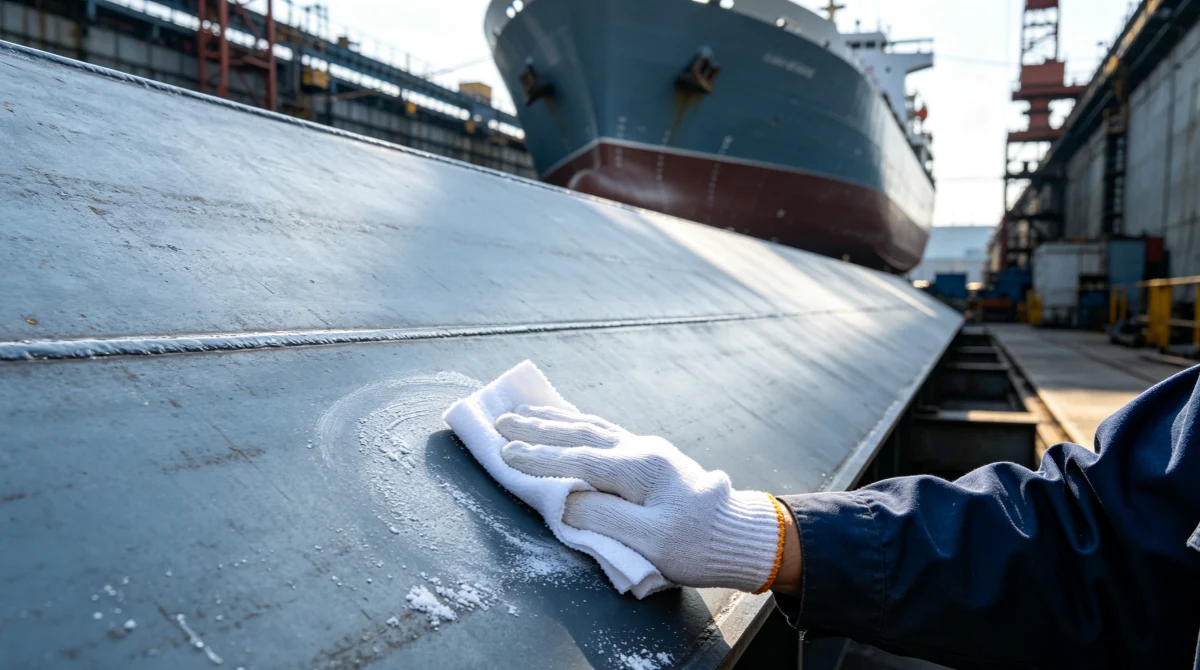
Wipe Selection by Shipyard Area: Hull Fabrication, Engine Room, Bridge, Deck
Hull Fabrication and Block Assembly
Steel plates and sections arrive at the shipyard covered in mill scale, rust, and shipping grease. After blast cleaning and priming, the surface must stay clean until the next coating step. Wipes used here are for removing blast dust, wiping down weld spatter, and doing a final surface pass before coating. The critical requirement: no silicone, no oil, no chlorides. A single silicone-contaminated wipe on a primed surface causes fisheye in the topcoat. A chloride-contaminated wipe causes underfilm corrosion that appears months later—long after the ship has left the yard.
Engine Room and Machinery Spaces
The engine room is a hydrocarbon-saturated environment. Fuel oil, lube oil, hydraulic fluid, and coolant coat every surface. Wipes here need high absorbency for oil and grease, chemical resistance to petroleum products, and durability for scrubbing carbon deposits from exhaust manifolds and turbocharger housings. Standard cotton rags reach saturation quickly and start smearing. Synthetic wipes with oleophilic properties absorb more oil per wipe and retain it without releasing.
Bridge and Accommodation
Interior spaces on a vessel have different requirements—electronics cleaning (navigation screens, communication equipment), galley surfaces (food-contact compliance), and accommodation areas (general hygiene). Bridge electronics need lint-free, antistatic wipes. Galley surfaces need food-safe wipes. These are closer to standard cleanroom or food-grade specifications.
Deck and External Surfaces
Deck machinery—winches, cranes, hatch covers—exposure to salt spray, rain, and UV radiation. Wipes used for deck equipment maintenance need to handle salt residue, grease, and weather exposure. Absorbency and durability are the priorities; particle control is less critical.
Surface Preparation for Marine Coatings: The Silicone Problem
Silicone contamination is the most expensive wipe-related failure in shipbuilding. Marine coating systems—epoxy primers, polyurethane topcoats, antifouling coatings—are extremely sensitive to silicone. Even trace amounts (below 1 ppm on the surface) cause fisheye, craters, and adhesion failure in the coating film.
Where does the silicone come from? Mostly from the wipes themselves. Many industrial rags are processed with silicone-based softening agents or contain residual silicone from their previous industrial life (recycled rags from automotive, textile, or personal care manufacturing). Some wipe packaging materials also contain silicone-based release agents.
For marine surface preparation, specify:
- Silicone-free wipes — Request a silicone-free declaration from your supplier. The declaration should cover the wipe material, processing aids, and packaging.
- Non-recycled wipes — Recycled rags are the biggest source of silicone contamination. Their previous life is unknown, and laundering doesn’t fully remove silicone residue. Use virgin-material wipes for surface preparation.
- Individual packaging — Wipes stored in open bins accumulate airborne silicone from nearby painting operations. Individually wrapped or sealed-dispenser wipes stay clean until point of use.
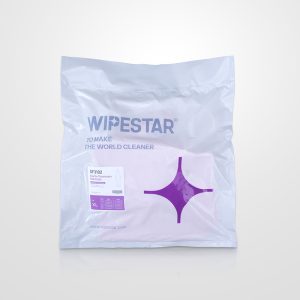
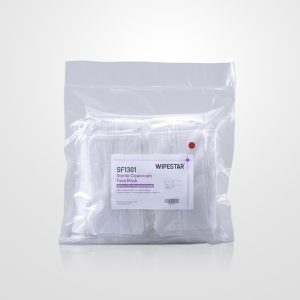
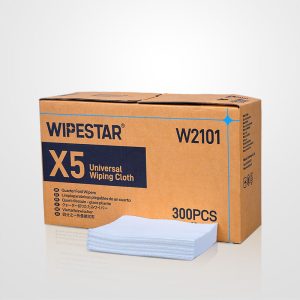
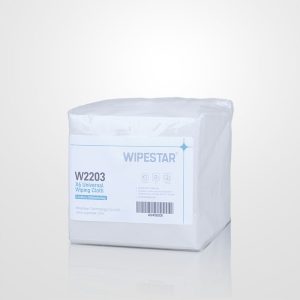
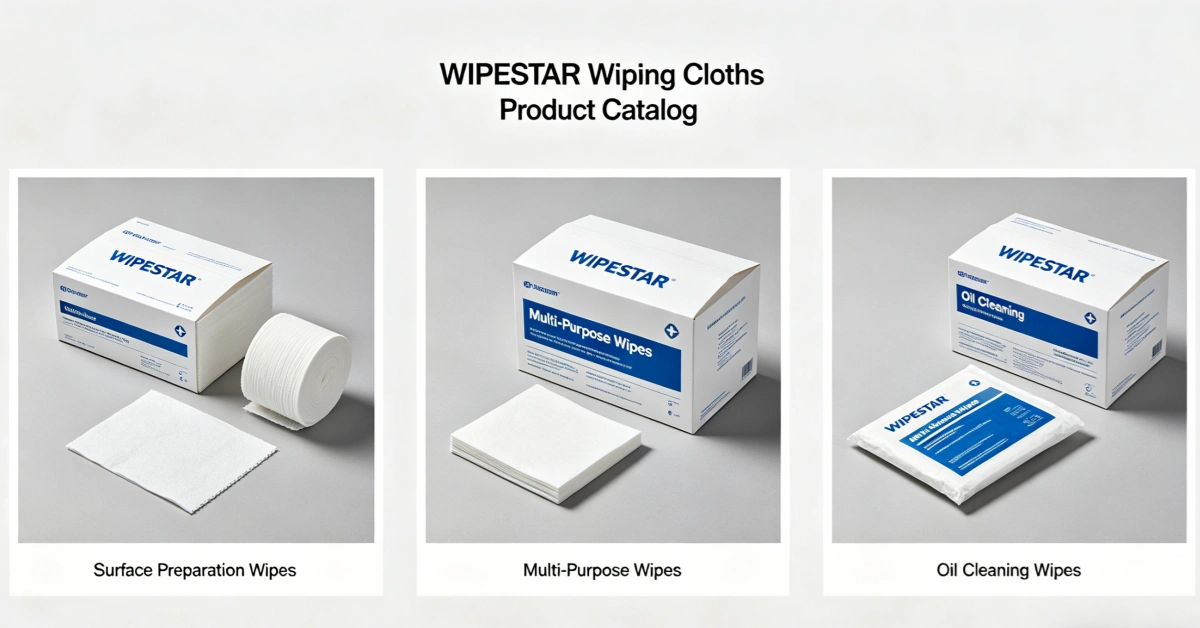
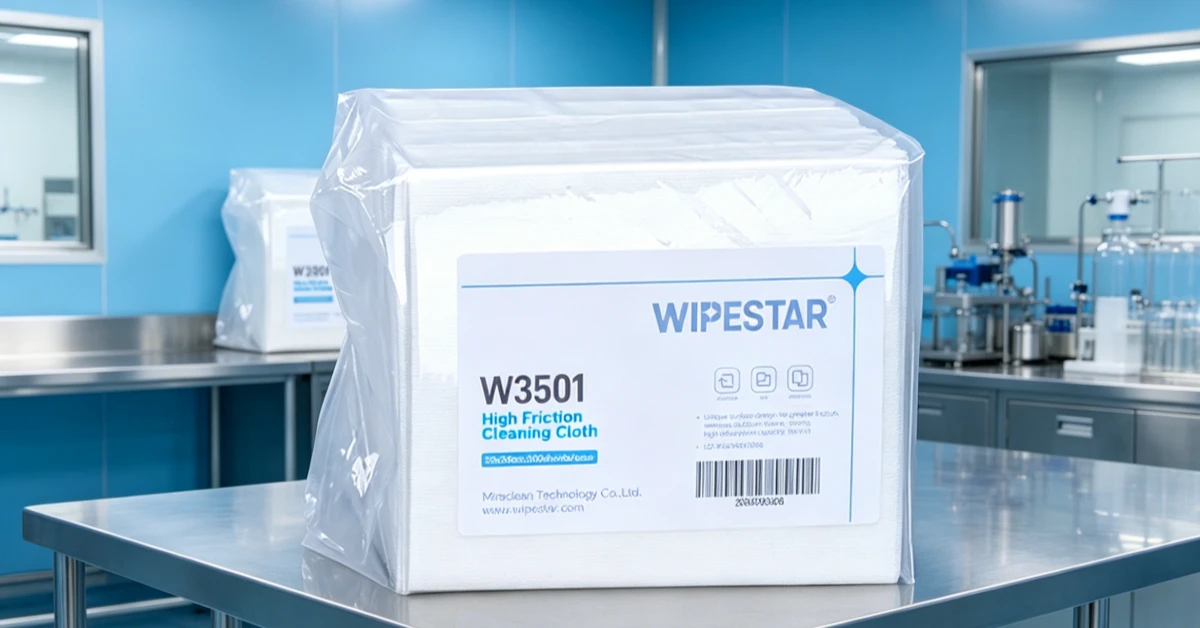
Our wiping cloths range includes silicone-free products specifically suited for marine surface preparation. Our technical team can provide silicone-free declarations and surface cleanliness test data.
Salt Corrosion Control: Chloride-Free Wipe Requirements
Chloride ions are the primary driver of corrosion in marine environments. Steel surfaces, aluminum structures, stainless steel fittings, and copper-nickel piping are all susceptible to chloride-induced corrosion. Your cleaning consumables must not introduce additional chlorides.
Standard cotton rags contain residual chlorides from bleaching (typically 50–200 ppm). When these rags are used on a damp steel surface, the chloride transfers to the metal and accelerates corrosion. On a freshly blasted hull plate, this corrosion starts within hours—before the primer is even applied.
For marine applications, specify wipes with verified chloride content below 50 ppm. Request halide analysis (chloride and fluoride) from your supplier per lot. This data isn’t standard on most industrial wipe COAs, but for marine applications it’s the difference between a coating that lasts 15 years and one that fails in 3.
Fuel Oil, Hydraulic Fluid, and Lubricant Cleanup
Engine room cleaning consumes more wipes than any other area of a vessel. A medium-speed diesel engine overhaul generates hundreds of kilograms of oil-soaked rags. The wipe selection here directly affects your maintenance efficiency and your waste disposal costs.
Key considerations for engine room wipes:
- Oil absorption capacity — Measured in grams of oil absorbed per gram of wipe material. Cellulose-based wipes absorb 4–6x their weight; synthetic wipes absorb 8–12x. Higher absorption means fewer wipes per job and less waste.
- Oil retention — A wipe that absorbs oil but releases it under pressure (wringing, stacking) is useless. Look for wipes with oleophilic treatment or fiber structure that locks oil in place.
- Solvent resistance — Engine room cleaning often involves solvent degreasing with kerosene, diesel, or commercial degreasers. The wipe must survive solvent contact without disintegrating.
- Disposal — Oil-soaked rags are classified as hazardous waste in most maritime jurisdictions. Your wipe supplier should provide disposal guidance, and your vessel’s waste management plan should account for used wipe disposal.
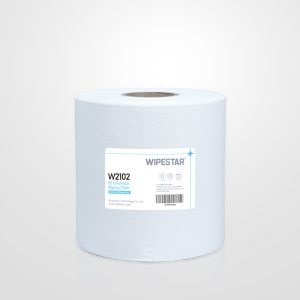
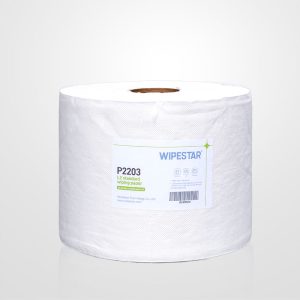
Our heavy-duty oil cleaning cloths are designed for engine room and machinery space applications, with high oil absorption and retention capacity.
Offshore Platform and FPSO Cleaning Considerations
Offshore platforms and FPSOs (Floating Production, Storage, and Offloading vessels) add another layer of complexity. Helicopter operations require anti-static consumables on the helideck. Process areas handle crude oil, natural gas condensate, and production chemicals at elevated temperatures and pressures. Living quarters need food-safe consumables for the galley and hygienic consumables for accommodation.
Offshore-specific wipe requirements:
- Helideck — Antistatic wipes for fuel spill cleanup. Static discharge near aviation fuel is a fire/explosion risk. Specify wipes with surface resistivity below 10⁹ ohms/square.
- Process area — Chemical-resistant wipes compatible with production chemicals (corrosion inhibitors, scale inhibitors, demulsifiers). Request chemical compatibility data for your specific production chemical package.
- Galley — Food-contact-compliant wipes per FDA 21 CFR or equivalent. Same requirements as any food service operation.
- NORM (Naturally Occurring Radioactive Material) — Some offshore facilities handle NORM-contaminated equipment. Wipes used for NORM decontamination must be disposable and handled as radioactive waste. Consult your radiation safety advisor for specific requirements.
Documentation for Marine Classification Society Requirements
Marine vessels are built and maintained under classification society rules (Lloyd’s Register, DNV, Bureau Veritas, ABS, ClassNK, and others). While classification societies don’t typically certify cleaning consumables directly, your quality system—which the classification society audits—needs to demonstrate that consumables used in critical applications meet defined specifications.
Documentation to maintain:
- Product specification sheet — Material composition, physical properties, and chemical resistance data for each wipe product used in the yard or on board.
- Silicone-free declaration — For wipes used in surface preparation before coating. Critical for coating adhesion assurance.
- Chloride/halide analysis — For wipes used on steel, aluminum, or stainless steel surfaces. Below 50 ppm chloride is the marine standard.
- Oil absorption data — For engine room wipes. Measured in grams of oil per gram of wipe, tested per a recognized method (ASTM F726 or equivalent).
- Supplier qualification — Your shipyard’s quality system should include the wipe supplier on the approved vendor list with documented qualification evidence.
The Problems We See in Shipyards and Vessel Operations
- Recycled rags for surface preparation — The single most common cause of marine coating failure from consumables. Recycled rags carry unknown contaminants from their previous industrial life—silicone, oil, solvents, food residue. Use virgin-material, silicone-free wipes for all surface preparation before coating.
- Chloride-containing rags on stainless steel — Cotton rags bleached with chlorine leave chloride residue that causes pitting corrosion on stainless steel fittings. This failure takes months to appear, by which time the vessel is in service and the repair cost is 10x what the wipe specification would have cost.
- Same wipe for everything — The engine room rag gets used on the bridge electronics. The bilge cleanup cloth gets used on the galley counter. Zone-specific wipe requirements, documented in your vessel’s planned maintenance system, prevent cross-contamination.
- No incoming inspection — Wipe lots are accepted on delivery without checking the COA or verifying the product specification. If your supplier changes their fiber source or processing chemistry, you won’t know until a coating fails or a surface corrodes.
- Storing wipes on deck — UV exposure, salt spray, and temperature extremes degrade wipe packaging and contaminate the product. Store consumables in enclosed, dry storage—not on open deck or in the chain locker.
Who You’ll Work With at WIPESTAR
We supply consumables to shipyards, marine vessel operators, and offshore facilities globally. Our team understands that marine cleaning is not just industrial cleaning with saltwater—it is a distinct discipline with its own chemistry and documentation requirements.

Ethan — Sales Director
Ethan has over 20 years in the industrial consumables industry and has worked with heavy industry clients including shipyards and offshore operators. He leads our marine accounts—facilities that need silicone-free surface prep wipes and classification society documentation.

Vicky — Foreign Trade Sales Supervisor
Vicky handles international shipyard and marine vessel accounts. She has worked with yards in Asia, Europe, and the Middle East, ensuring every order includes silicone-free declarations, chloride analysis, and oil absorption data.

Zhen — Account Manager
Zhen is an account manager who works with shipyard procurement programs and vessel outfitting supply chains. He ensures consistent consumable specifications across hull fabrication, engine room, and deck maintenance operations.
Get Started with Marine-Grade Industrial Wiping Cloths
Whether you’re qualifying wipes for hull surface preparation, outfitting an engine room consumable program, or upgrading your yard’s consumable specifications for classification society compliance, we can help. Full documentation packages including silicone-free declarations, chloride analysis, and oil absorption data.
Browse our wiping cloths range or contact our technical team to discuss your shipyard or vessel requirements.
Frequently Asked Questions About Wiping Cloths for Shipbuilding and Marine Maintenance
Request a Quote for Marine-Grade Industrial Wiping Cloths
We supply industrial wiping cloths from our ISO 9001:2015 certified factory with full marine documentation—silicone-free declarations, chloride analysis, oil absorption data, and chemical compatibility verification. Custom sizing and private labeling available. Fast global shipping to shipyards and vessel operators.