English
 Chinese


“The disinfectant is validated, so the program is fine.” I hear that at least once a quarter, usually a few weeks before someone files a CAPA that proves the opposite.
Here’s one I sat in on. A fill-finish plant changed its sporicide to a cheaper peracetic acid and hydrogen peroxide blend. Same kill claims, same ten-minute contact time on the label, microbiology signed the change. What nobody re-checked was the wipe. The floor ran a polyester-cellulose nonwoven — perfectly comfortable with quats and 70% IPA, badly mismatched with an oxidizer hitting it daily. Within a month, operators were complaining that wipes tore halfway down a wall panel. Then fibers started appearing on the filling line guards. Then a media fill review started asking questions about particle load near exposed stoppers. Eleven weeks of investigation, and the root cause wasn’t the chemistry. It was the fabric the chemistry was applied with.
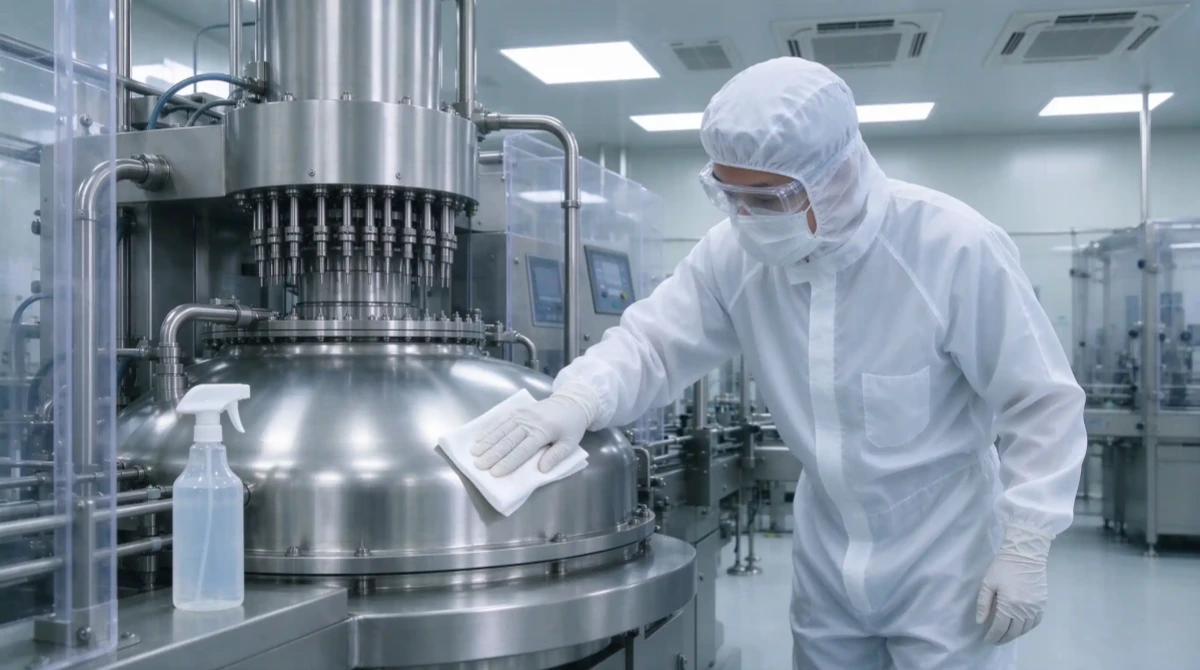
Rotation is written as a microbiology decision and executed as a materials decision. The wipe is the only tool in the room that meets every agent in the rotation, usually damp, usually under pressure. This guide is about its side of the program: what sporicides, quats, peroxide and alcohol actually do to cleanroom fabrics, and how to qualify the pair together instead of hoping.
Why Rotation Exists — and Why the Material Question Gets Skipped
The practical case for rotation is spectrum, not just resistance. Quats are easy on surfaces and people but don’t touch spores. Sporicides kill everything worth killing but are aggressive enough that nobody wants them as the daily cleaner. Alcohol is fast and leaves nothing behind but offers no residual protection at all. A scheduled rotation stacks those strengths instead of betting the room on one agent.
EU GMP Annex 1 expects the sanitation program to use more than one disinfectant with different modes of action, including a sporicidal agent applied on a defined schedule, and to document the whole thing inside the contamination control strategy. USP general chapter <1072> makes the same point from the technical side — selection should follow the isolates you actually recover in environmental monitoring, not the salesman’s brochure.
Notice what both documents spend their pages on: bugs, log reductions, contact times. Fabric compatibility gets a paragraph. So it gets a checkbox in the qualification, and a checkbox is how a validated program ends up running a wipe that’s slowly dissolving.
Four Workhorse Chemistries, Four Different Attacks on Fabric
Quaternary ammonium compounds. The daily driver in most plants. Good bacterial knock-down, no sporicidal claim, mild on almost every cleanroom fabric. Quats are cationic surfactants, which is also their weakness: they leave a film, they’re knocked back by organic soil, and the film builds up visibly if nothing ever takes it off.
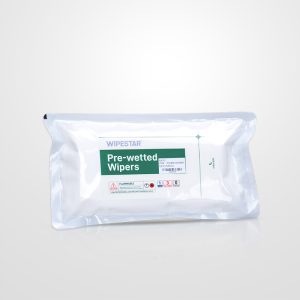
70% isopropyl alcohol. The finishing pass. Fast evaporation, essentially no residue, broad vegetative kill — and useless against spores, which is exactly why it can’t run solo. It’s compatible with every substrate we sell, which is why it dominates factory-saturated formats like the G2101 pre-wetted wipes (USP-grade 70/30 IPA/DIW, 0.2µm filtered).
Hydrogen peroxide and PAA blends. The scheduled sporicides. They break down to water, oxygen and traces of acetic acid, which is attractive from a residue standpoint. They’re oxidizers, though, and oxidizers go after the easy molecular targets first: natural fibers, cellulose, and cheap binders. A wipe held together by binder chemistry is a wipe that comes apart under a peracetic acid program.
Sodium hypochlorite. Still the cheapest broad-spectrum sporicide money can buy, and still the one that punishes laziness. Chlorine residues pit 316L over repeated contact when the rinse gets skipped, they age elastomers and seals, and they’re hard on anything containing cellulose. Bleach belongs in a rotation with a defined rinse step written into the SOP, not as a standing film.
Matching the Wipe to the Chemistry: A Working Table
The rule underneath the table is simple: synthetic backbones (polyester, polypropylene) shrug at oxidizers; cellulose blends earn their place where chemistry is gentle and absorbency and cost matter.
| Material | How It Handles the Rotation | Watch Out For | Where We Spec It |
|---|---|---|---|
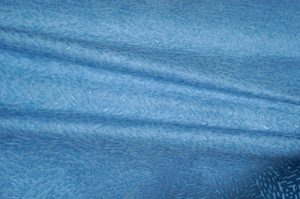
| Polyester double knit, sealed edge | Excellent with IPA, quats, peroxide and PAA; wet strength stays high | Lower absorbency — more passes on pooled liquid | SWP2402 sterile polyester wipers |
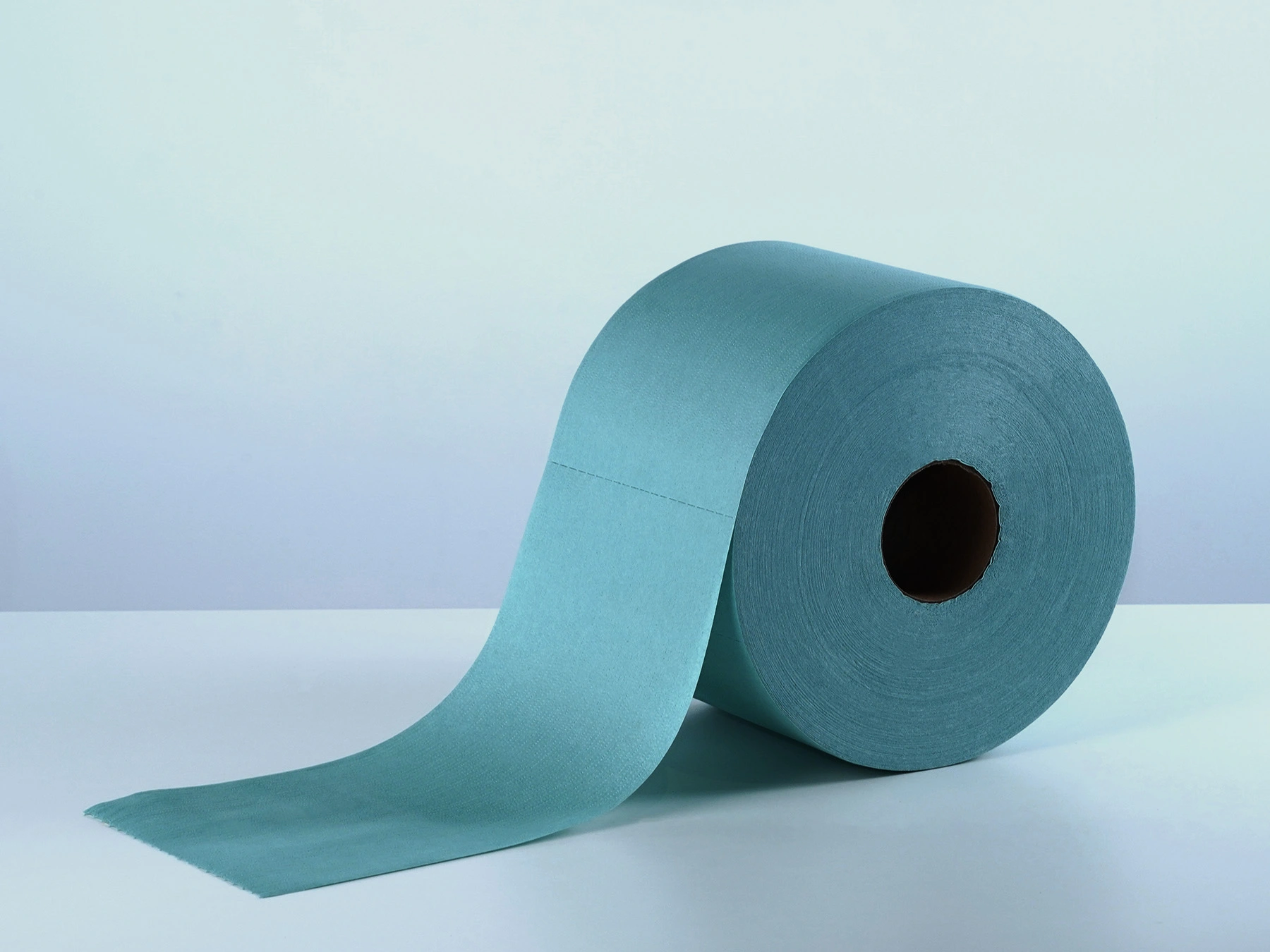
| 100% polypropylene, pre-saturated | Broad chemical resistance; controlled dose every pass | Built for finishing passes, not flood-and-scrub work | G2101 pre-wetted PP wipes |
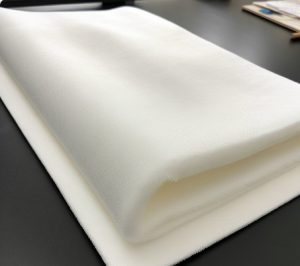
| Polyester/cellulose nonwoven | Strong with quats and IPA; absorbent and economical for volume work | Cellulose weakens under repeated PAA or hypochlorite exposure | SW5415 sterile nonwoven wipers |
| Microfiber | High particle and bioburden capture with routine chemistries | Hot oxidizer cycles shorten usable life on reusables | SW5603 antibacterial microfiber wipers |
“Polyester” on a bag isn’t enough by itself. Ask how the edges are finished — cut edges shed, thermal or ultrasonic seals don’t — and ask for ionic and non-volatile residue data, not just particle counts. IEST-RP-CC004 is the test framework most suppliers can produce data against. If a supplier can’t, that’s useful information too.
Contact Time, Residue, and the Final IPA Pass
A disinfectant only delivers the label kill claim if the surface stays visibly wet for the full contact time. Watch an actual shift and you’ll see the gap: a sporicide labeled for ten minutes dries in four on a warm stainless steel panel, and nobody reapplies. The fix is procedural — work smaller sections, re-wet as needed — and it’s where pre-wetted formats help, because a hand-dosed wipe either floods or starves depending on who’s holding it.
Residue problems come from three places, and only one of them is the chemistry:
- The disinfectant itself. Quat films and surfactant carriers are designed to linger. The answer is a residue-removing finishing pass — normally 70% IPA or a DI-water wipe — after contact time is met.
- The wipe. Binders, sizings and extractables leach out when an aggressive chemistry finds them. Low-NVR, low-ionics substrates don’t add to the surface they’re supposed to be cleaning.
- The combination degrading. A wipe breaking down in sporicide doesn’t send a warning. It just starts depositing more than it removes. If visual checks or residue swabs start drifting after a rotation change, inspect the material before you blame the chemistry.
How to Qualify the Pair — and Re-Qualify on Any Change
Efficacy and compatibility are two separate studies. The disinfectant efficacy study proves log reductions on your representative surface coupons. Compatibility proves the wipe survives the agent — wet strength, linting, NVR, ionics — over the contact time and the repeat cycle. Both belong in the same qualification package; they’re rarely scheduled that way.
A rotation that holds up on paper and on the floor has four written pieces:
- Sequence and contact time per agent. Sporicide, hold wet for the labeled time, rinse where the SOP requires, IPA finishing pass. The order removes residue and handles spores; it isn’t decoration.
- SKU-level assignment. Which wipe, which mop, which chemistry, which grade of room. “Approved polyester wipes” is not an assignment — a part number is.
- Evidence from both halves. Supplier data plus your own soak and residue results, filed against the actual rotation, not a single-agent best case.
- Joint change control. A new disinfectant formulation or a wipe substrate change triggers review of both. Substitutions driven by procurement — cheaper sporicide, “equivalent” wiper — are behind most of the deviation stories I know.
If you’re rewriting a rotation or digging out of a residue trend, our cleanroom wiper selection guide walks through substrate specs, and the full wiping cloths range covers the SKUs. Send us your chemistry list and contact times and we’ll map materials to it — talk to the team before you place the order, not after the deviation.
Who You’ll Work With at WIPESTAR
We supply facilities that run documented disinfectant rotations, and we’d rather answer the compatibility question before the purchase order than during a CAPA. These are the people that conversation usually starts with.

Juan — Purification Industry Specialist
Juan has years of experience in purification projects and clean process equipment, coordinating between customers, production teams and suppliers so the disinfection program specified on paper actually works in the room.

Carolina — Product Specialist
Carolina works directly with production technicians on how substrates behave under real chemistry, then drives raw-material and process improvements back through our suppliers. Compatibility data requests land on her desk.

Ethan — Sales Director
Ethan has over 20 years in the industrial wiping cloth and cleanroom consumables industry and leads our global team — handy when one material standard has to roll out across plants in different jurisdictions.
Get Started with Compatibility-Matched Consumables
New sporicide, residue trend, or first time writing material compatibility into the qualification — we can supply substrate data and soak-test samples against your exact rotation.
- SWP2402 Polyester Wipers — sealed-edge durability for peroxide, PAA and quat rotations.
- G2101 Pre-Wetted PP Wipes — controlled 70% IPA finishing pass, no bottles in the room.
- Request a Technical Consultation — send us the rotation; we’ll map each chemistry to a material.
Browse Wiping Cloths → Request a Custom Quote
Frequently Asked Questions